
Oral minoxidil vs finasteride: how they differ and when to combine them
Oral minoxidil regrows hair by boosting the growth phase, while finasteride blocks DHT. Compare how they work, evidence, side effects and using both.
The short answer
Finasteride slows male pattern hair loss by lowering DHT, the hormone that shrinks hair follicles. Low-dose oral minoxidil stimulates growth by extending the hair growth phase, so many clinicians use the two together. Finasteride 1 mg is FDA-approved for male hair loss, while oral minoxidil for hair is off label.
- Cedar Hair Tablet is $63.34/month (billed $190 every 90 days), charged only after a clinician approves it.
- Answer a few health questions online. A licensed clinician reviews them. If approved, it ships to your door.
- Adults 18 or older. A licensed clinician reviews your health history and decides whether treatment is appropriate for you. Availability depends on the state you live in.


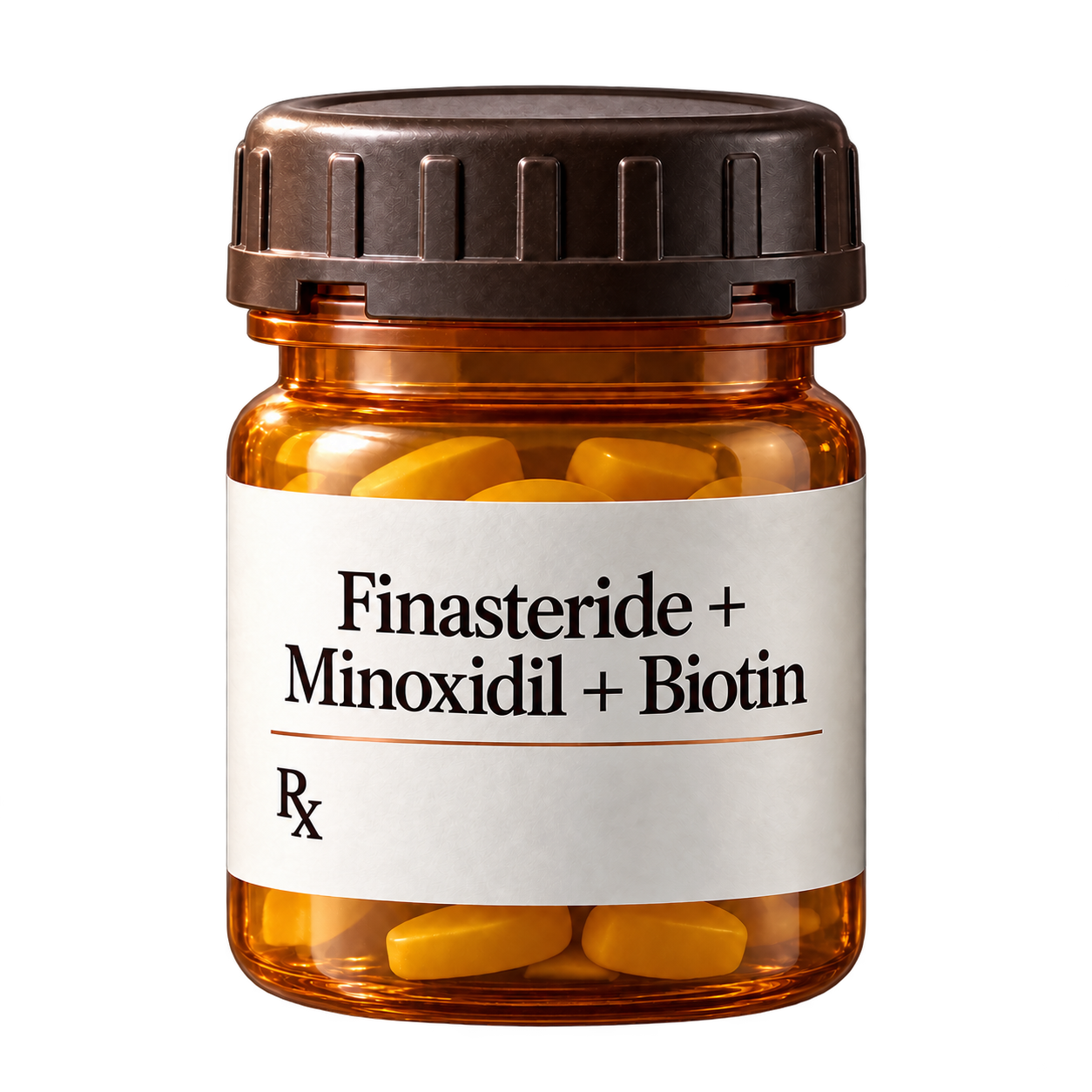
Finasteride and minoxidil are the two most used medicines for pattern hair loss. Finasteride removes a cause of loss, and minoxidil pushes growth, so they are often combined. This guide compares the two, including evidence, side effects, who each suits, and how a combined tablet works.
- Finasteride lowers DHT and is FDA-approved at 1 mg for male pattern hair loss.
- Low-dose oral minoxidil is off label for hair loss. A 1,404-patient study found it was well tolerated.
- They work differently, so combining them is common.
- Finasteride is not for anyone who is or may become pregnant.
Oral minoxidil vs finasteride at a glance
| Oral minoxidil (low dose) | Finasteride | |
|---|---|---|
| How it works | Widens blood vessels and extends the hair growth phase | Blocks 5-alpha reductase, lowering DHT |
| FDA status for hair loss | Off label (approved at higher doses for blood pressure) | Approved at 1 mg for male pattern hair loss |
| Who uses it | Men and women | Mainly men |
| Most common side effect | Unwanted hair growth on the face or body | Sexual side effects in a small share of men |
| Time to see results | Often 3 to 6 months | Often 3 to 12 months |
What the evidence shows
Finasteride
Large trials led to FDA approval of 1 mg finasteride for men with pattern hair loss. It slows loss in most men and regrows some hair in many.
Oral minoxidil
Low doses are used off label. Evidence comes mostly from case series and small trials, plus a large safety study, rather than large randomized trials.
Both together
Combination use is common in dermatology practice. Trials of the oral combination are limited.
Key differences that matter
Oral minoxidil
- Pushes new growth
- Works for men and women
- Can cause unwanted body hair, dizziness or swelling
Finasteride
- Slows the cause of male pattern loss
- FDA-approved for men at 1 mg
- Not for anyone who is or may become pregnant
Side effects and warnings
| Oral minoxidil | Finasteride | |
|---|---|---|
| Common | Unwanted hair growth (15% in a large study), lightheadedness, ankle swelling | Lower libido, erectile or ejaculation changes in a small share of men |
| Serious | Fast heartbeat, chest pain, swelling around the eyes | Depression and suicidal thoughts are listed on the label. Report mood changes right away. |
| Pregnancy | Not recommended | Can harm a male fetus. People who may become pregnant should not handle crushed tablets. |
Who may choose each
Men with early pattern loss
Finasteride is the approved first choice. Many clinicians add minoxidil.
Women with pattern hair loss
Oral minoxidil is often used. Finasteride is used only in select cases, never in pregnancy.
People who want both in one tablet
Vitals Vault's Cedar Hair Tablet combines finasteride, minoxidil and biotin. A clinician decides whether it fits.
People with heart conditions
Talk to a clinician before oral minoxidil. Topical minoxidil may be safer.
Frequently Asked Questions
Is oral minoxidil better than finasteride?
They do different jobs. Finasteride slows male pattern loss by lowering DHT. Minoxidil stimulates growth. Many people use both.
Can you take oral minoxidil and finasteride together?
Yes, clinicians commonly combine them. A clinician should check your blood pressure, heart history and medicines first.
Is oral minoxidil FDA approved for hair loss?
No. Oral minoxidil is approved for high blood pressure at higher doses. Low-dose use for hair is off label.
Can women take finasteride?
Rarely, and never during pregnancy or if pregnancy is possible. Oral minoxidil is more often used for women.
How long until results?
Expect at least 3 to 6 months, and up to a year, before judging results. Some shedding can happen early on minoxidil.