
Oral minoxidil: what it is and how to get it
Oral minoxidil is an off-label hair loss option that may help some people. Learn how it works, key risks, and how prescriptions work.
Key facts
- Answer a few health questions online. A licensed clinician reviews them. If approved, it ships to your door.
- Adults 18 or older. A licensed clinician reviews your health history and decides whether treatment is appropriate for you. Availability depends on the state you live in.


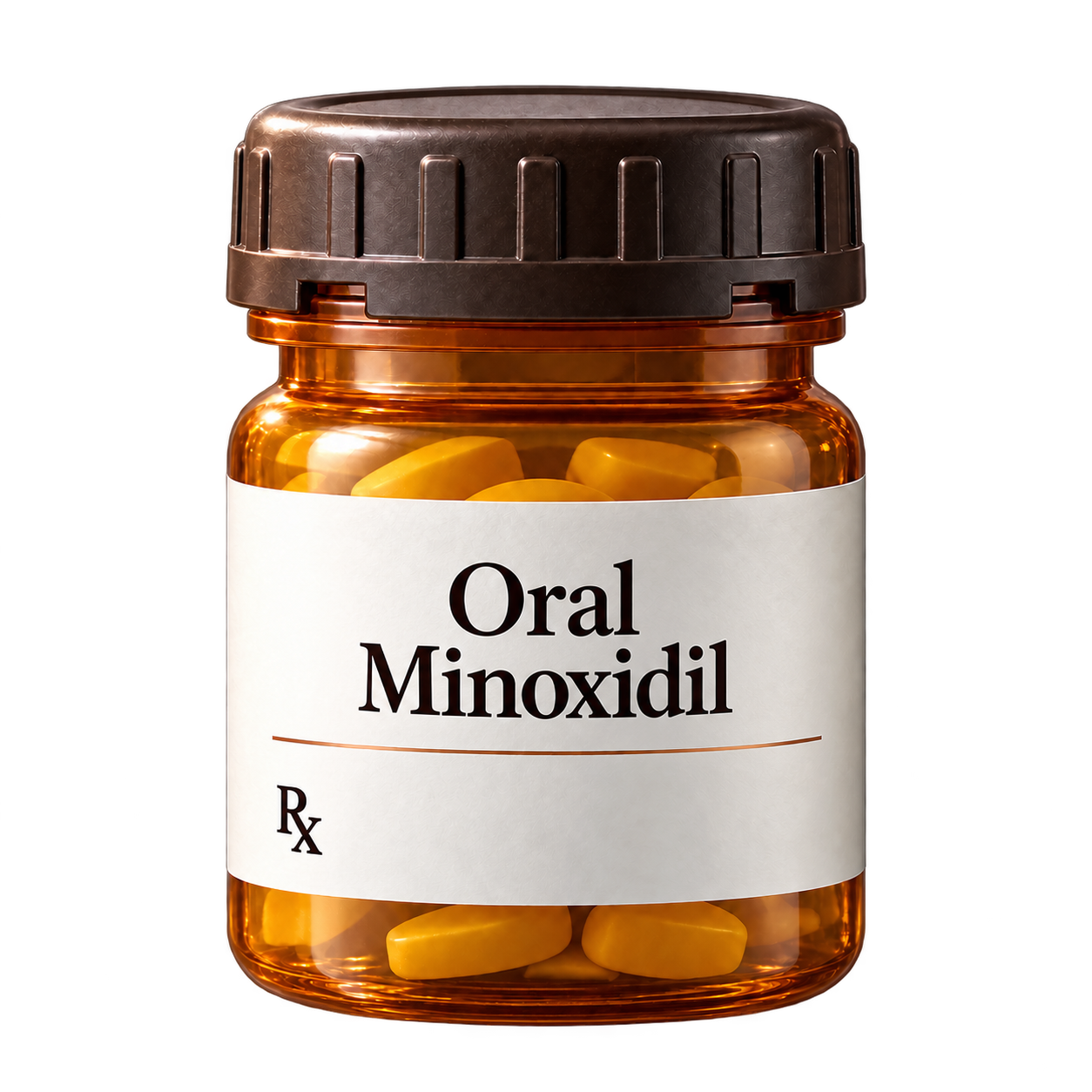
Oral minoxidil is a prescription medication that is sometimes used off-label to treat hair loss, especially androgenetic alopecia (pattern hair loss). It is not FDA-approved for hair loss, and it is different from topical minoxidil foam or solution. This page explains what oral minoxidil is, what the evidence suggests, and the main safety considerations to discuss with a clinician. If you are exploring care through Vitals Vault, a licensed clinician reviews your history to decide whether it fits and what monitoring you may need.
- Oral minoxidil is a prescription tablet used off-label for hair loss.
- It can help some people with pattern hair loss, but evidence is smaller than for topical minoxidil.
- Side effects can include unwanted hair growth and fluid retention; rare heart-related risks need screening.
- Because it is off-label, dosing and monitoring are individualized by a clinician.
What oral minoxidil is
A blood pressure drug
Minoxidil tablets were developed and FDA-approved to treat severe high blood pressure that has not responded to other medicines. In that setting, it is typically used with other medications to reduce fluid retention and fast heart rate. Hair growth was noticed as a medication effect.
Off-label for hair loss
Using oral minoxidil for hair loss is off-label, meaning it is not an FDA-approved indication. Clinicians may still prescribe it when they judge potential benefits outweigh risks for you. Off-label use can affect insurance coverage and how follow-up is handled.
Not the same as topical
Topical minoxidil is applied to the scalp and is FDA-approved for certain types of pattern hair loss. Oral minoxidil is swallowed and affects the whole body, which can change both side effects and monitoring needs. Some people consider oral therapy when topical is irritating or hard to use consistently.
Formulation matters
Some oral minoxidil hair loss prescriptions are prepared as individualized compounded medications, which are not FDA-approved. If your prescription is compounded, your clinician and dispensing pharmacy should explain the formulation and instructions specific to your prescription.
How oral minoxidil works for hair
Vasodilator effect
Minoxidil is a vasodilator, meaning it relaxes blood vessel walls and lowers blood pressure. In hair follicles, it is thought to improve follicle function through multiple pathways, including effects on blood flow and growth signaling. The exact hair-growth mechanism is not fully understood.
Hair cycle support
Pattern hair loss involves gradual miniaturization of hair follicles and a shortened growth phase. Minoxidil may help shift follicles toward the growth (anagen) phase and increase hair shaft diameter in some people. This is why changes, when they happen, usually take time.
Why clinicians use low doses
For hair loss, clinicians often use much lower doses than those used for severe hypertension, aiming to reduce systemic side effects. Because this is off-label, there is no single FDA-labeled hair-loss dose to follow. Your clinician may adjust based on response and tolerability.
Often discussed with antiandrogens
Minoxidil does not block dihydrotestosterone (DHT), a key driver of androgenetic alopecia. That is why some clinicians discuss combining it with a DHT-lowering medication such as finasteride for appropriate patients. Combination decisions depend on sex, pregnancy potential, and side effect tolerance.
Who oral minoxidil may be for
Pattern hair loss
Oral minoxidil is most often considered for androgenetic alopecia (male or female pattern hair loss). It may be discussed when you want a prescription option and topical minoxidil has not been effective, is irritating, or is hard to use consistently. A clinician should confirm the likely cause of hair loss first.
People who cannot tolerate topical
Some people develop scalp irritation, itching, or dermatitis with topical minoxidil or the vehicle ingredients. Oral therapy may be considered as an alternative, but it trades local irritation for systemic exposure. Your clinician may also discuss switching topical formulations before moving to oral.
Women with diffuse thinning
Oral minoxidil is commonly searched as an option for women with diffuse thinning, including female pattern hair loss. It still requires careful screening for low blood pressure, swelling, and heart-related symptoms. If you are pregnant or could become pregnant, discuss safer alternatives and contraception planning.
People needing a simple routine
A daily tablet can be easier than twice-daily topical application for some people. Adherence matters because hair growth changes are gradual and stopping treatment can lead to loss of any gains over time. Your clinician can help set realistic expectations and a follow-up plan.
Who should not take oral minoxidil
Pheochromocytoma
Minoxidil tablets are contraindicated in people with pheochromocytoma, a rare adrenal tumor that can cause dangerous blood pressure spikes. This is listed as a contraindication in FDA prescribing information. Tell your clinician if you have ever been evaluated for this condition.
Uncontrolled heart disease
Because minoxidil can cause fluid retention and increase heart rate, it can worsen certain heart conditions. People with heart failure, significant coronary artery disease, or pericardial disease may be at higher risk and need specialist input. Do not start or restart it without clinician oversight.
Very low blood pressure
Oral minoxidil lowers blood pressure, which can be risky if you already run low or have frequent dizziness or fainting. Your clinician may check baseline blood pressure and review other medications that also lower blood pressure. Report lightheadedness, fainting, or chest symptoms promptly.
Pregnancy and breastfeeding
Hair loss treatment choices during pregnancy and breastfeeding require extra caution. There is limited safety data for oral minoxidil in pregnancy, and clinicians generally avoid systemic hair-loss medications when pregnant. Discuss pregnancy plans and breastfeeding before considering treatment.
Drug interactions and monitoring
Minoxidil used for hypertension is often paired with a diuretic and a beta blocker to reduce fluid retention and fast heart rate, reflecting known physiologic effects. For off-label hair loss use, your clinician still needs to review your full medication list and medical history. This is especially important if you take other blood pressure medicines.
What to expect if you use oral minoxidil
A slow timeline
Hair growth treatments usually work gradually because hair cycles take months. Some people notice increased shedding early on as hairs shift through the growth cycle, which can be alarming but may be temporary. Your clinician can help you decide what changes are expected versus concerning.
Follow-up matters
Because oral minoxidil affects the whole body, follow-up is not just about hair. Clinicians may monitor blood pressure, heart rate, swelling, and symptoms such as dizziness or shortness of breath. If you have underlying cardiovascular risk, your clinician may coordinate with your primary care clinician or cardiologist.
Unwanted hair growth
Hypertrichosis, meaning increased hair growth on the face or body, is a known effect of systemic minoxidil. For some people it is mild; for others it can be bothersome and affect willingness to continue. Discuss how you would handle this possibility before starting.
Long-term maintenance
With pattern hair loss, benefits from treatment typically require ongoing use to maintain. If you stop, hair may gradually return toward its baseline pattern over time. A clinician can help you plan a maintenance approach that fits your goals and risk tolerance.
Oral minoxidil side effects and warnings
Unwanted hair growth
Hypertrichosis is a common reason people stop oral minoxidil for hair loss. It can show up as increased facial or body hair and may be more noticeable with higher systemic exposure. If it happens, a clinician can discuss whether dose adjustment or switching options makes sense.
Swelling and weight gain
Minoxidil can cause salt and water retention, leading to swelling (edema), especially in the legs or around the eyes. In the FDA label for minoxidil tablets, fluid retention is significant enough that a diuretic is typically used when treating hypertension. New or worsening swelling should be reported promptly.
Fast heart rate and palpitations
Minoxidil can increase heart rate and cause palpitations. In the hypertension label, a beta blocker is typically used to help control this effect. If you feel a racing heartbeat, chest discomfort, or faintness, contact a clinician right away.
Low blood pressure symptoms
Because it lowers blood pressure, oral minoxidil can cause dizziness, lightheadedness, or fainting, especially when standing up quickly. Risk can be higher if you also take other blood pressure lowering medications or are dehydrated. Persistent symptoms should be evaluated.
Pericardial effusion
The FDA prescribing information for minoxidil tablets warns about pericardial effusion, which is fluid around the heart, and possible progression to tamponade in rare cases. Symptoms can include shortness of breath, chest pressure, or swelling. This is a medical emergency and needs immediate care.
Worsening angina
The minoxidil tablet label warns that angina can worsen in some people, especially early in treatment, due to increased heart rate and workload. This matters most for people with known coronary artery disease or chest pain history. New chest pain should be treated as urgent.
Cost and access for oral minoxidil
What drives cost
Your out-of-pocket cost depends on whether you receive an FDA-approved minoxidil tablet product or an individualized compounded formulation, the pharmacy used, and whether your plan covers off-label prescriptions. Follow-up visit requirements can also affect total cost over time.
Insurance coverage varies
Because oral minoxidil is not FDA-approved for hair loss, insurance coverage can be inconsistent. Some plans may cover minoxidil tablets only for hypertension indications, while others may deny coverage for hair loss use. A clinician or pharmacy may be able to provide documentation, but coverage is not guaranteed.
Current prices on this page
If you are viewing this page through Vitals Vault, the price block below shows current catalog pricing for the associated treatment option. Prices can change, and availability depends on where you live.
How to get oral minoxidil safely
- 1
Start with a clinician evaluation
A licensed clinician reviews your hair loss pattern, medical history, and medications to decide whether oral minoxidil is reasonable.
- 2
Rule out common contributors
Hair shedding can be worsened by iron deficiency, thyroid disease, or other causes, so your clinician may recommend labs or a targeted workup.
- 3
Discuss options and monitoring
You and your clinician review expected benefits, side effects, and what symptoms should prompt urgent evaluation, plus a follow-up plan.
- 4
Fill the prescription through a pharmacy
If prescribed, you fill it through an appropriate pharmacy. If compounded, the dispensing pharmacy provides formulation-specific instructions.
Frequently Asked Questions
Does oral minoxidil work?
Oral minoxidil can improve hair growth for some people with pattern hair loss, but results vary. It is used off-label for hair loss, so the evidence base is smaller and less standardized than FDA-approved topical minoxidil. A clinician can help you compare options.
Is oral minoxidil safe?
Oral minoxidil can be safe for some people when prescribed and monitored, but it can affect blood pressure, heart rate, and fluid balance. Serious risks listed for oral minoxidil tablets include pericardial effusion and worsening angina. Screening and follow-up with a clinician are important.
How to get oral minoxidil?
Oral minoxidil requires a prescription. A clinician should evaluate the cause of hair loss, review your medical history and medications, and discuss monitoring and side effects. If prescribed, you fill it through a pharmacy, which may be an FDA-approved product or a compounded formulation.
Is oral minoxidil prescription only?
Yes. In the United States, oral minoxidil tablets are prescription-only medications. Because hair loss use is off-label, a clinician needs to decide whether it is appropriate for you and how to monitor for side effects.
Can you take oral minoxidil and finasteride together?
Some clinicians prescribe oral minoxidil with finasteride for pattern hair loss because they work through different mechanisms. Finasteride has important pregnancy-related precautions and potential sexual side effects, so the decision depends on your sex, pregnancy potential, and risk tolerance. Discuss combination therapy with a clinician.