
Minoxidil shedding: what it is and how long it lasts
Minoxidil shedding is often temporary early hair shedding as follicles shift into growth. Here is what it can mean, how long it may last, and when to call.
Key facts
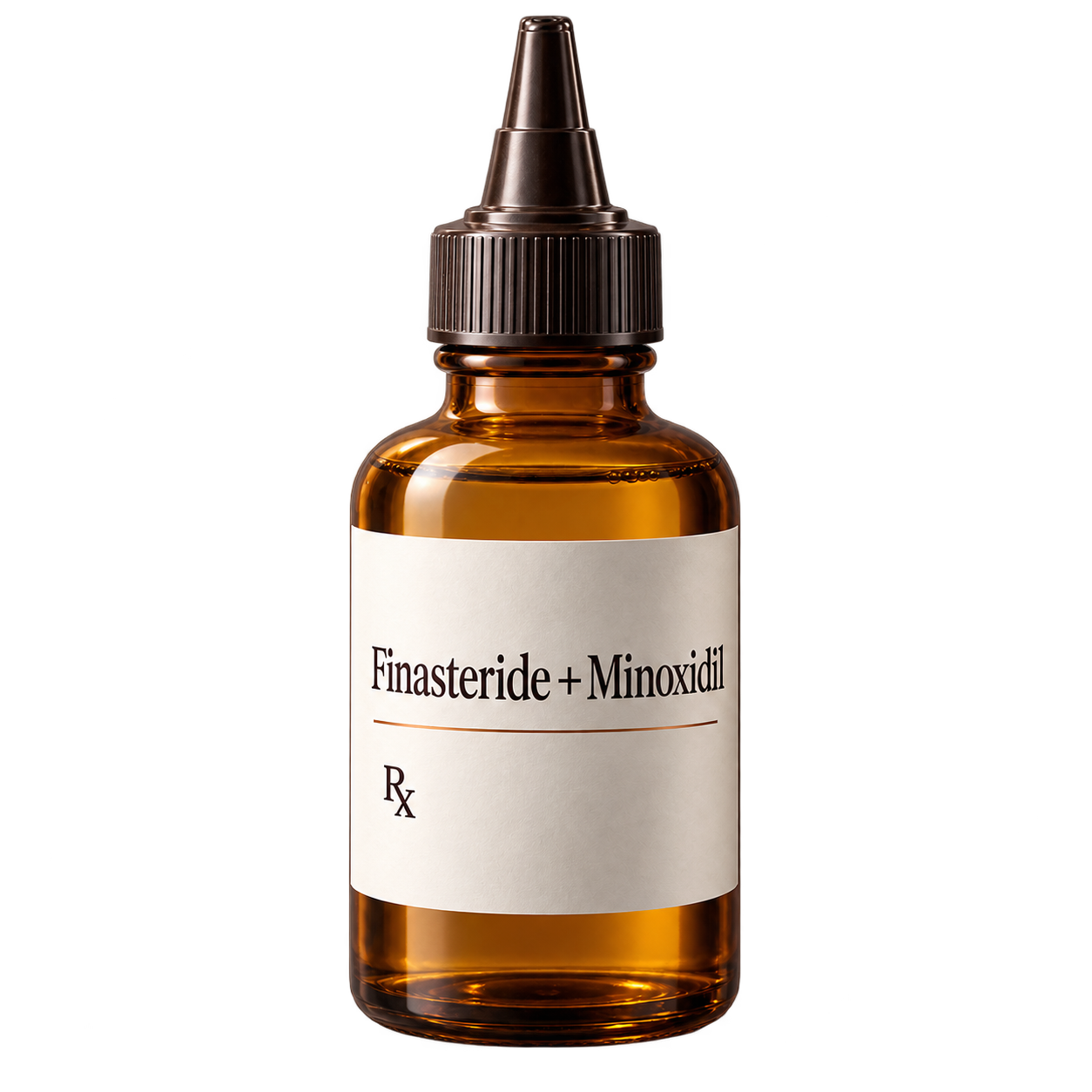
- Finasteride + Minoxidil Scalp Solution is $53.50/month (billed $107 every 50 days), charged only after a clinician approves it.
- Answer a few health questions online. A licensed clinician reviews them. If approved, it ships to your door.
- Adults 18 or older. A licensed clinician reviews your health history and decides whether treatment is appropriate for you. Availability depends on the state you live in.


Minoxidil shedding is increased hair shedding that some people notice after starting topical minoxidil for hair loss. It can be alarming, but it may happen because minoxidil can shift follicles into a new growth cycle, which can release older hairs first. If you are unsure whether what you are seeing is expected or a sign of something else, Vitals Vault can help you start with labs and share results with a clinician for next steps.
- Minoxidil shedding can happen early and is often temporary as hair cycles reset.
- The “minoxidil shedding phase” may reflect older hairs releasing before new growth appears.
- If shedding is sudden, patchy, painful, or comes with scalp symptoms, talk to a clinician.
- Other causes like low iron or thyroid disease can mimic or worsen shedding.
Is minoxidil shedding normal, and how long does it last?
Why it can happen
Hair follicles cycle through growth (anagen), transition (catagen), and resting (telogen). Minoxidil is thought to stimulate follicles and may shorten the resting phase, which can push older hairs out so a new growth cycle can start. This can look like worsening hair loss before improvement.
How long does it last?
There is no single timeline that fits everyone, and the label does not give a specific shedding duration. In clinical studies of topical minoxidil, visible effects on hair growth were assessed over months, not days, so early changes can take time to settle. If shedding continues or worsens over time, a clinician can help evaluate other causes.
When it is not “normal”
Shedding that is sudden and dramatic, occurs in patches, or is paired with scalp pain, redness, scaling, or signs of infection deserves medical evaluation. New shortness of breath, rapid weight gain, swelling of hands or feet, chest pain, dizziness, or fainting are not expected and need urgent care. These symptoms are listed as reasons to stop and seek medical help on topical minoxidil labeling.
Why the “minoxidil shedding phase” happens and what affects it
Hair cycling and telogen shedding
A common explanation for early shedding is telogen shedding, where hairs in the resting phase release as follicles re-enter a growth phase. This can happen with treatments that change follicle activity, but it can also happen from stress, illness, rapid weight change, childbirth, or medication changes. A clinician can help sort out whether minoxidil timing matches your pattern.
Underlying triggers can overlap
Minoxidil shedding can be confused with other causes of diffuse shedding, including iron deficiency (low ferritin), thyroid disease, and some nutritional deficiencies. If you have fatigue, cold intolerance, heavy periods, or other systemic symptoms, it is reasonable to discuss lab evaluation with a clinician. Treating the underlying issue can matter as much as topical therapy.
Scalp irritation can worsen shedding
Topical minoxidil can cause scalp irritation in some people, including itching, dryness, scaling, or redness. Irritation can increase breakage or make shedding more noticeable, and it can also make it harder to stick with treatment. If you develop significant irritation, a clinician can help you consider formulation changes or evaluate for dermatitis.
Systemic side effects are uncommon but important
Although topical minoxidil is applied to the scalp, labeling warns about possible systemic effects such as fast heartbeat, dizziness, fainting, chest pain, swelling of hands or feet, sudden unexplained weight gain, or shortness of breath. These are reasons to stop using the product and seek medical care. Tell a clinician about heart conditions or blood pressure issues before using minoxidil.
Oral minoxidil is different
Oral minoxidil is not FDA-approved for hair loss and has different risk considerations than topical minoxidil. If you are considering oral therapy or a compounded combination product, discuss benefits and risks with a licensed clinician, especially if you have cardiovascular risk factors. Do not assume side effects or timelines are the same as topical use.
| Pattern you notice | One possible explanation | What to do next |
|---|---|---|
| More hairs in brush or shower soon after starting | Hair cycle shift with treatment | Track changes and discuss if it persists or worsens |
| Diffuse shedding after illness, stress, or childbirth | Telogen effluvium (temporary shedding trigger) | Consider clinician evaluation and possible labs |
| Patchy hair loss or broken hairs | Alopecia areata, tinea, traction, or breakage | Seek clinician evaluation, especially if rapid or focal |
| Itchy, red, scaly scalp with shedding | Irritant or allergic dermatitis or seborrheic dermatitis | Discuss scalp exam and formulation options |
When to talk to a clinician or seek urgent care
Seek urgent care now
Get urgent medical help if you have chest pain, shortness of breath, fainting, severe dizziness, rapid heartbeat, swelling of hands or feet, or sudden unexplained weight gain while using minoxidil. These symptoms are listed on topical minoxidil labeling as reasons to stop use and seek medical attention.
Call a clinician soon
Check in if shedding is severe, continues to worsen, or lasts long enough that you are concerned, especially if you also have fatigue, heavy menstrual bleeding, recent illness, or dietary restriction. A clinician may consider labs to look for contributors like iron deficiency or thyroid disease. Bring a timeline of when you started treatment and when shedding changed.
Get evaluated for scalp symptoms
If you have scalp pain, burning, crusting, pus, spreading redness, or patchy hair loss, you may need an exam to rule out infection, inflammatory scalp disease, or alopecia areata. These conditions can require different treatment than minoxidil alone. Do not ignore new or worsening scalp inflammation.
Practical tips during the shedding phase
Document changes weekly
Take photos in the same lighting and part line to spot trends, not day to day noise.
Check for breakage
Short snapped hairs suggest breakage, not shedding from the root, and needs a different approach.
Watch your scalp
Itching, redness, or scaling can signal irritation or dermatitis that a clinician can treat.
Consider labs for contributors
Iron and thyroid issues can worsen shedding and are worth discussing if symptoms fit.
Ask before adding treatments
Combining products can increase irritation. A clinician can help you choose a plan.
Frequently Asked Questions
How long does minoxidil shedding last?
There is not a single fixed duration listed in labeling, and it can vary by person and by the cause of shedding. Because minoxidil studies evaluate hair outcomes over months, early changes may take time to stabilize. If shedding is severe or keeps worsening, talk with a clinician.
What is the minoxidil shedding phase?
The minoxidil shedding phase usually refers to early increased shedding after starting treatment. One explanation is that follicles shift through the hair cycle and release older hairs before new growth becomes visible. A clinician can help confirm whether your pattern fits this.
Is minoxidil shedding a sign it is working?
Shedding can happen early with minoxidil, but it is not a reliable proof that it will work for you. Some shedding may reflect hair cycle changes, while other shedding can come from unrelated triggers like illness, stress, iron deficiency, or thyroid disease. If you are unsure, a clinician can help evaluate.
When should I stop minoxidil and seek medical help?
Topical minoxidil labeling advises stopping and seeking medical care for symptoms such as chest pain, rapid heartbeat, fainting, dizziness, swelling of hands or feet, sudden unexplained weight gain, or shortness of breath. These are not expected cosmetic side effects. If you have these symptoms, get urgent evaluation.
Can labs help explain minoxidil shedding?
Labs cannot diagnose hair loss on their own, but they can help check for contributors that can worsen shedding, such as iron deficiency or thyroid disease. Sharing results with a clinician can help you decide what to address alongside topical treatment. Vitals Vault offers lab panels you can use to start that conversation.