
Minoxidil for hair loss: what to know
Minoxidil can help slow hair loss and support regrowth for some people. Learn how it works, who it fits, side effects, and access.
Key facts
- Finasteride + Minoxidil Scalp Solution is $53.50/month (billed $107 every 50 days), charged only after a clinician approves it.
- Answer a few health questions online. A licensed clinician reviews them. If approved, it ships to your door.
- Adults 18 or older. A licensed clinician reviews your health history and decides whether treatment is appropriate for you. Availability depends on the state you live in.
- A $20 clinician review, refunded if you don’t qualify.


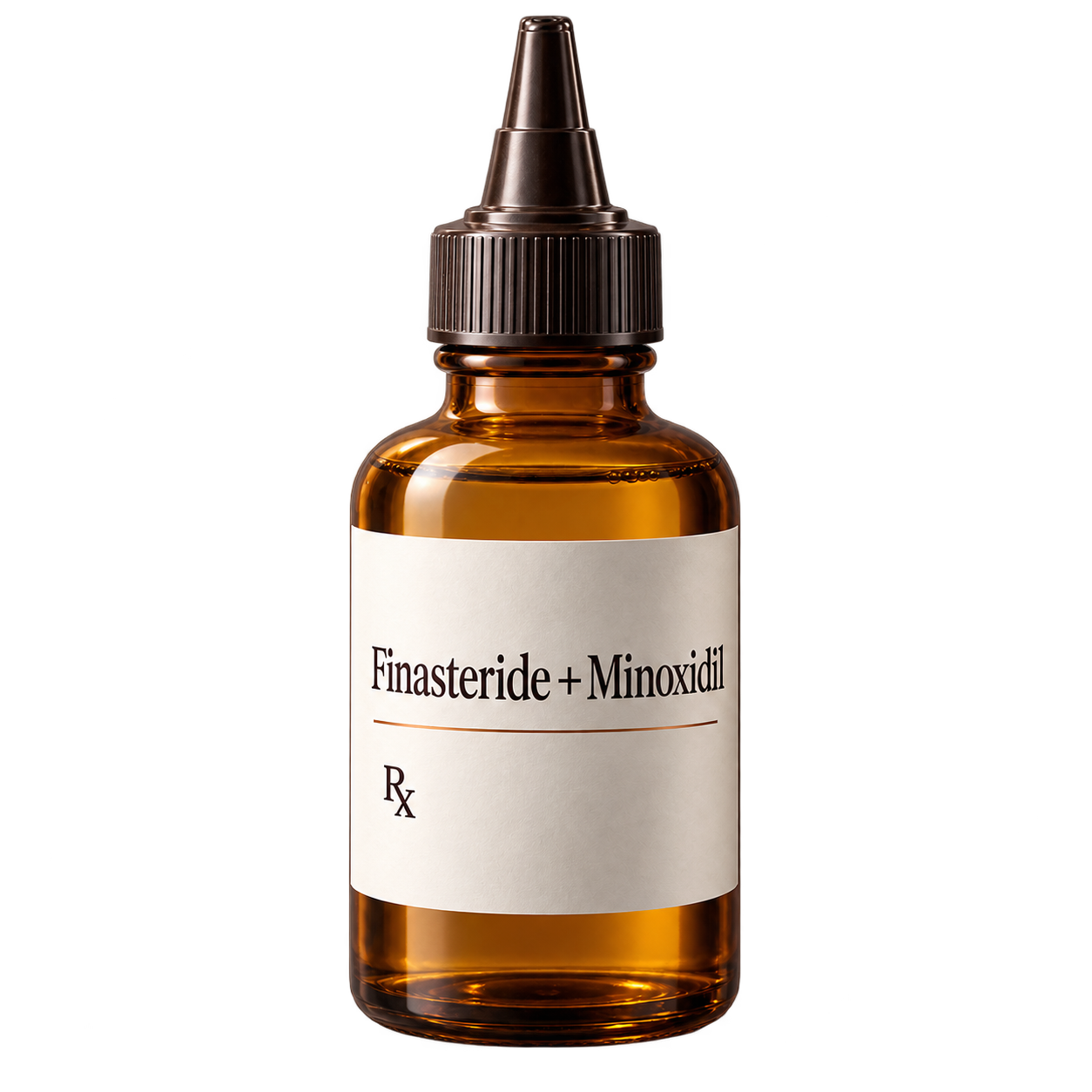
Minoxidil is a medication used to treat pattern hair loss (androgenetic alopecia). It is best known as a topical solution or foam applied to the scalp, and it can help slow shedding and support regrowth for some people when used consistently. This page explains how minoxidil works, what results to expect, and key safety issues like blood pressure effects and pet exposure.
- Minoxidil is a hair loss medication that can help some people regrow or keep hair.
- Topical minoxidil is FDA-approved for androgenetic alopecia; oral minoxidil for hair loss is off-label.
- It usually needs consistent, ongoing use; stopping can lead to loss of gained hair.
- Side effects are often local irritation, but rare systemic effects can include low blood pressure and fast heartbeat.
- Keep minoxidil away from pets, especially cats, because exposure can be dangerous.
What minoxidil is
A hair growth medication
Minoxidil is a medication that can promote hair growth in people with androgenetic alopecia. It is available as a topical product applied to the scalp, and as an oral tablet that is FDA-approved for high blood pressure but sometimes used off-label for hair loss.
Topical forms are FDA-approved
Topical minoxidil is FDA-approved for hair regrowth in androgenetic alopecia. Different strengths and formulations exist, and product labeling can vary by manufacturer.
Oral use for hair is off-label
Oral minoxidil tablets are FDA-approved to treat hypertension, not hair loss. Some clinicians prescribe low-dose oral minoxidil off-label for hair loss when they judge benefits may outweigh risks.
Often paired with other treatments
Minoxidil is sometimes combined with other hair loss treatments, such as finasteride for androgenetic alopecia. Combination products can be compounded by a pharmacy for an individual prescription and are not FDA-approved.
- FDA-approved indication (topical)
- Hair regrowth treatment for androgenetic alopecia (pattern hair loss).
- FDA-approved indication (oral tablet)
- Hypertension (high blood pressure) when other treatments are not sufficient.
- Common routes
- Topical scalp application; oral tablets (off-label for hair loss).
How minoxidil works for hair
May extend the growth phase
Hair follicles cycle through growth (anagen), transition, and resting phases. Minoxidil is thought to help by shifting follicles toward the growth phase and increasing follicle size, which can produce thicker-looking hair over time.
Affects blood vessels and signaling
Minoxidil is a vasodilator, meaning it can widen blood vessels. In the scalp, it may improve follicle environment and growth signaling, although the exact mechanism for hair regrowth is not fully understood.
Needs ongoing use
Minoxidil does not cure androgenetic alopecia. If it is helping you, continued use is typically needed to maintain the benefit, because the underlying hair loss process can resume when treatment stops.
Oral effects are systemic
Oral minoxidil works throughout the body and can lower blood pressure and increase heart rate. That is why oral minoxidil requires careful clinician oversight and is not simply a stronger version of topical minoxidil.
Who minoxidil may be for
Pattern hair loss
Minoxidil is most commonly used for androgenetic alopecia, which often shows up as thinning at the crown or widening part. It tends to work best when started earlier in the course of hair thinning.
People who can use it consistently
Consistency matters. If you are unlikely to apply a topical product regularly or follow up on side effects, you may not get much benefit and may be better served by discussing alternatives.
Those avoiding systemic meds
Topical minoxidil mainly acts locally on the scalp, which can be appealing if you want to avoid whole-body medication effects. Even topical products can rarely cause systemic effects, especially with overuse or broken skin.
Those considering combination therapy
Some people use minoxidil alongside other therapies such as finasteride. A clinician can help you weigh benefits and risks, including pregnancy-related precautions for certain medications.
Who should not use minoxidil without clinician guidance
Heart or blood pressure problems
Because minoxidil can affect blood pressure and heart rate, people with cardiovascular disease, arrhythmias, or low blood pressure should talk with a clinician before using it. Oral minoxidil has stronger systemic effects and is not appropriate for everyone.
Scalp infection or broken skin
Applying topical minoxidil to irritated, inflamed, sunburned, infected, or broken scalp skin can increase absorption and irritation. A clinician can help you treat the underlying scalp issue first.
Pregnancy or breastfeeding questions
If you are pregnant, trying to conceive, or breastfeeding, discuss minoxidil use with a clinician. Safety data are limited, and risk tolerance may differ depending on your situation and the product used.
Children and accidental exposure risk
Minoxidil products should be stored safely away from children. Accidental ingestion can be dangerous and needs urgent medical attention.
Pet exposure risk at home
Minoxidil exposure can be dangerous for pets, especially cats. If a pet may have licked, chewed, or had skin contact with minoxidil, contact a veterinarian or pet poison hotline right away.
What to expect when you use minoxidil
A gradual change, not overnight
Hair growth cycles are slow, so visible changes can take time. Many people need months of consistent use before they can judge whether it is helping, and a clinician can help you set realistic checkpoints.
Early shedding can happen
Some people notice increased shedding early on. This can happen when follicles shift cycles, but it is not always easy to tell normal shedding from worsening hair loss, so check in with a clinician if it feels dramatic.
Results vary by area
Minoxidil often performs better at the crown than at the frontal hairline, but individual response varies. If your main concern is the hairline, you may want to discuss additional options and expectations.
Stopping can reverse gains
If minoxidil is working for you, stopping it can lead to loss of the hair that was maintained or regrown. If you are considering stopping because of side effects, talk with a clinician about safer alternatives.
| Timeframe | What you might notice | What to do |
|---|---|---|
| First weeks | Scalp irritation or dryness; sometimes more shedding | Use as directed and monitor; contact a clinician for significant symptoms |
| Months | Possible reduction in shedding; early regrowth in some areas | Take photos under similar lighting to track changes |
| Ongoing | Maintenance of gains depends on continued use | Plan for long-term consistency and follow-up if side effects occur |
Minoxidil side effects and warnings
Scalp irritation and itching
Topical minoxidil can cause dryness, scaling, itching, or redness where it is applied. Some reactions are due to the vehicle (such as propylene glycol) rather than minoxidil itself. If irritation is persistent or severe, a clinician can help you choose a different formulation or rule out dermatitis.
Unwanted hair growth
Hair growth can occur in areas where the product spreads or drips, such as the face. Careful application and handwashing after use can reduce this risk. If it happens, talk with a clinician about adjusting the approach.
Headache or dizziness
Some people report headache or lightheadedness. Because minoxidil can affect blood pressure, dizziness can be a sign of systemic absorption or sensitivity, especially with oral minoxidil. Seek medical advice if symptoms are persistent or you feel faint.
Low blood pressure and fast heartbeat
Minoxidil is a vasodilator and can lower blood pressure and increase heart rate, particularly with oral tablets. If you develop chest pain, fainting, a racing heartbeat, or severe dizziness, seek urgent medical care.
Fluid retention and swelling
Oral minoxidil can cause fluid retention, which may show up as swelling in the legs or rapid weight gain from water. This can be more concerning in people with heart or kidney problems and needs prompt medical evaluation.
Allergic reactions
Rarely, minoxidil products can trigger allergic reactions. Stop exposure and seek urgent care for trouble breathing, facial swelling, or widespread hives.
Cost and access: what affects minoxidil pricing
Form matters most
Topical over-the-counter minoxidil products are priced differently than prescription oral tablets, and compounded combination formulas can have different costs than single-ingredient products. Compounded medications are prepared for an individual prescription and are not FDA-approved.
Strength and vehicle
Foam versus solution, concentration, and ingredients in the base (for example, alcohol or propylene glycol) can change both tolerability and price. If irritation is a problem, switching vehicles may help, but it can also change cost.
Where you get it
Retail pharmacies, online pharmacies, and clinician-directed programs can differ in what is included, such as follow-ups and support. When current prices are available for a specific plan, they are shown on this page in the price block.
Insurance coverage varies
Because many topical minoxidil products are over the counter and hair loss treatment is sometimes considered cosmetic, insurance coverage can be limited. Prescription products may still be covered depending on your plan and the indication.
How to get minoxidil safely
- 1
Decide which form you are considering
Topical minoxidil is available over the counter, while oral minoxidil for hair loss is off-label and requires a prescription.
- 2
Review your health history with a clinician
Discuss blood pressure, heart history, other medications, pregnancy plans, and scalp conditions so risks and alternatives are clear.
- 3
Set expectations and a follow-up plan
Agree on what changes you will track, what side effects to watch for, and when to reassess whether the approach is helping.
- 4
Use a reliable source and store it safely
Choose products from reputable pharmacies or programs and store them away from children and pets to prevent accidental exposure.
Frequently Asked Questions
Is minoxidil toxic to dogs?
Minoxidil exposure can be dangerous for pets, and cats appear especially sensitive. If a dog or cat may have licked, chewed, or had skin contact with minoxidil, contact a veterinarian or pet poison hotline right away.
Does minoxidil lower blood pressure?
Minoxidil is a vasodilator and can lower blood pressure, especially in oral tablet form. Topical products can rarely cause systemic effects, particularly with overuse or application to irritated skin, so dizziness or faintness should be discussed with a clinician.
Are minoxidil pills the same as topical minoxidil?
No. Oral minoxidil tablets are FDA-approved for hypertension, and using them for hair loss is off-label. Tablets have stronger whole-body effects on blood pressure and heart rate than topical scalp products.
What is the minoxidil brand name?
Minoxidil is the drug ingredient, and it is sold under multiple brand names and store brands depending on the product and manufacturer. Check the Drug Facts label (for OTC topical products) or the prescription label (for tablets) to confirm what you are using.
What affects minoxidil price?
Cost depends on whether you use an OTC topical product, a prescription tablet, or a compounded combination, plus the formulation and where you obtain it. If you are viewing a plan on this page, current prices are shown in the price block rather than in the article text.