
Zepbound maintenance dose after goal weight
For the Zepbound maintenance dose after goal weight, the label uses the same weekly maintenance doses. Your clinician chooses the lowest effective one.
Key facts
- Tirzepatide + B12 is $169/month (billed $169 every 4 weeks), charged only after a clinician approves it.
- Answer a few health questions online. A licensed clinician reviews them. If approved, it ships to your door.
- Adults 18 or older. A licensed clinician reviews your health history and decides whether treatment is appropriate for you. Availability depends on the state you live in.


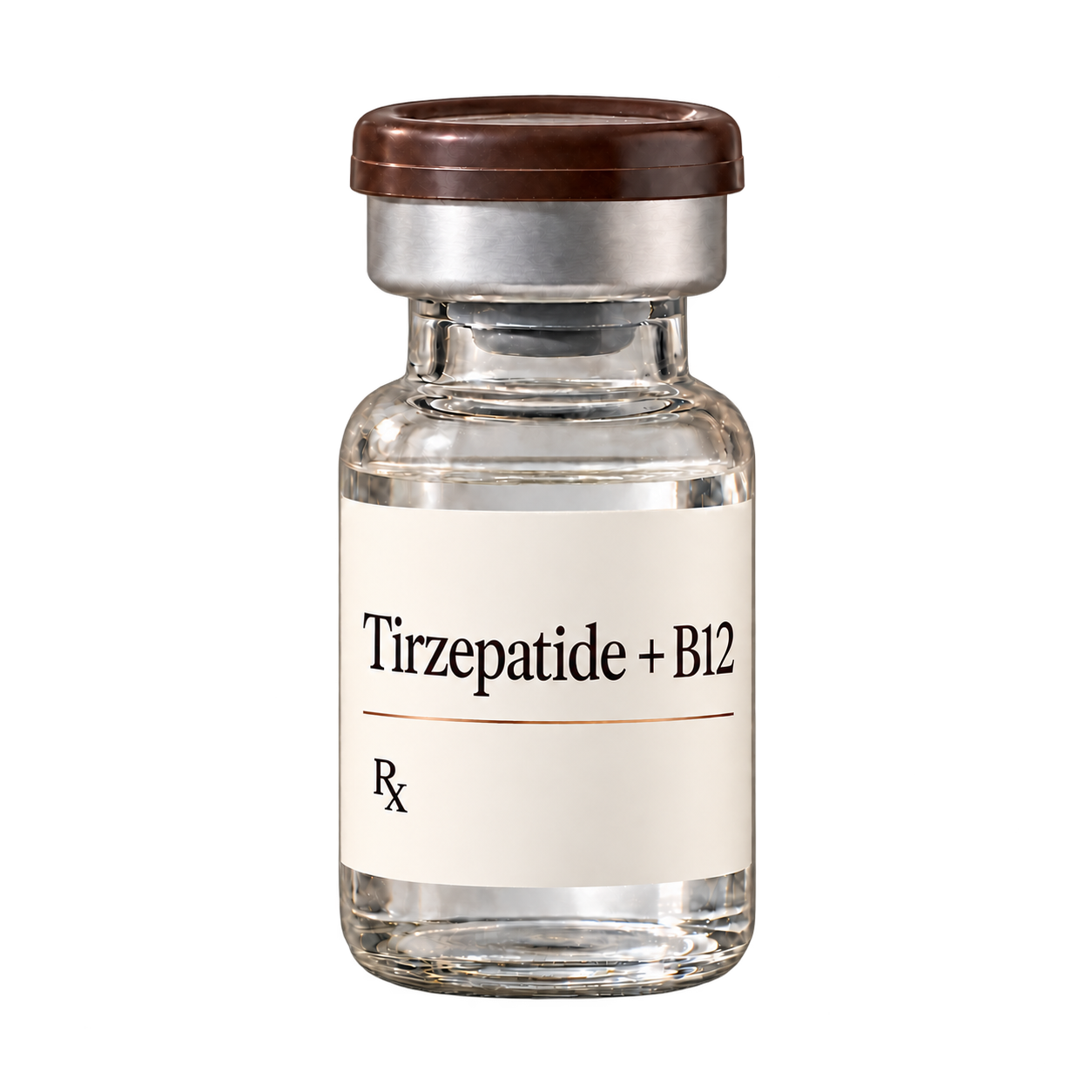
If you reached your goal weight and are wondering about a Zepbound maintenance dose after goal weight, the key point is that maintenance dosing is not a separate program. It is continuing tirzepatide at a weekly dose your clinician chooses from the labeled maintenance doses. This page summarizes what the FDA label says and what to discuss with your prescriber. Vitals Vault also offers PocketMD to help you ask maintenance questions using your own health history, but dose decisions stay with your clinician.
- Zepbound maintenance after goal weight is a weekly dose your clinician selects from labeled maintenance options.
- The label defines maintenance doses as 5 mg, 10 mg, or 15 mg once weekly after dose escalation.
- If side effects limit you, clinicians may pause increases or use a lower tolerated maintenance dose.
- Do not change dose or schedule on your own. Ask your prescriber if weight regain or side effects appear.
Answer: maintenance dose after goal weight
What the label says about maintenance dosing
| Label concept | What the label says | What it means for you |
|---|---|---|
| Maintenance doses | Recommended maintenance dosage is 5 mg, 10 mg, or 15 mg once weekly. | Maintenance is one of these weekly doses, not a separate medication phase. |
| How you get to maintenance | Dose escalation starts at 2.5 mg once weekly for 4 weeks, then increases in 2.5 mg steps after at least 4 weeks on the current dose. | Your clinician typically titrates up gradually to find a dose you can tolerate and that supports ongoing control. |
| If you cannot tolerate a higher dose | Consider treatment response and tolerability when selecting the maintenance dosage. | If side effects are limiting, your clinician may keep you at a lower maintenance dose or delay increases. |
Maintenance is individualized
The label gives several maintenance dose options rather than one fixed dose for everyone. In practice, your prescriber weighs appetite and weight trajectory, side effects, other conditions, and other medications before deciding whether to stay, increase, or decrease.
Do not self-adjust dosing
Changing dose or spacing injections differently can increase side effects or reduce effectiveness, and it can complicate monitoring. If you are thinking about lowering your dose after goal weight, bring it to your prescribing clinician so they can guide a safe plan.
If weight regain starts
Weight regain can happen for many reasons, including changes in appetite, activity, stress, sleep, or medication adherence. Your clinician may review lifestyle factors, side effects, and whether your current maintenance dose is still appropriate, rather than assuming you need the highest dose.
If nausea or GI symptoms persist
Gastrointestinal side effects are common with GLP-1 and GIP medicines like tirzepatide, especially during dose increases. Clinicians often manage this by slowing titration, using the lowest effective maintenance dose, and reviewing meal size, fat content, and hydration.
When to talk to your clinician
Severe stomach pain
Seek urgent medical care for severe abdominal pain that may radiate to the back, with or without vomiting. This can be a sign of pancreatitis, which is a known risk with tirzepatide-class medicines.
Gallbladder symptoms
Contact your clinician promptly for right upper abdominal pain, fever, yellowing of the skin or eyes, or clay-colored stools. GLP-1 class medicines can be associated with gallbladder problems, and symptoms should be evaluated.
Dehydration or kidney concerns
If vomiting or diarrhea is persistent, you cannot keep fluids down, or you have signs of dehydration, contact your clinician. Dehydration can contribute to kidney problems, and the label warns about acute kidney injury in the setting of severe GI reactions.
Neck lump or hoarseness
Tell your clinician if you notice a lump or swelling in your neck, trouble swallowing, or persistent hoarseness. Tirzepatide carries a boxed warning about thyroid C-cell tumors in rodents, and the label lists symptoms to report.
Low blood sugar symptoms
If you use insulin or a sulfonylurea, ask your clinician about hypoglycemia risk and monitoring. Tirzepatide can increase low blood sugar risk when used with insulin secretagogues or insulin, and dose adjustments of those medicines may be needed.
Practical tips for maintenance
Track trends, not single weigh-ins
Bring a few weeks of weights, appetite notes, and side effects to your check-in.
Ask what success means now
Maintenance goals may include waist size, labs, blood pressure, and function, not only weight.
Review other medications
Some medicines affect appetite, blood sugar, or nausea and can change what dose feels tolerable.
Plan for travel and routines
Ask how to handle missed doses using the label guidance for your product.
Know your red flags
Save the urgent symptoms list so you can act quickly if they occur.
Frequently Asked Questions
What is the Zepbound maintenance dose after goal weight?
On the FDA label, the recommended maintenance dosage is 5 mg, 10 mg, or 15 mg once weekly after dose escalation. Your prescriber chooses which maintenance dose fits your response and tolerability.
Is maintenance dosing different from the dose you used to lose weight?
Not necessarily. The label describes dose escalation to reach a maintenance dose, and you may stay on the lowest effective maintenance dose that you tolerate. Your clinician may adjust based on side effects and ongoing goals.
Can you go down to a lower dose for maintenance?
The label allows maintenance at more than one dose strength, and it emphasizes selecting based on response and tolerability. If you are considering a lower dose, discuss it with your prescriber rather than changing it yourself.
What should I do if I start regaining weight on a maintenance dose?
Bring it up at your next check-in so your clinician can review adherence, side effects, lifestyle factors, and whether your maintenance dose still makes sense. Do not increase or change your dosing schedule without medical guidance.
Does Vitals Vault offer Zepbound for maintenance?
Zepbound is a brand product. Vitals Vault offers tirzepatide (compounded, injectable) as a compounded medication, not Zepbound, and compounded medications are not FDA-approved. A licensed clinician reviews your history and decides whether treatment is appropriate for you.