01
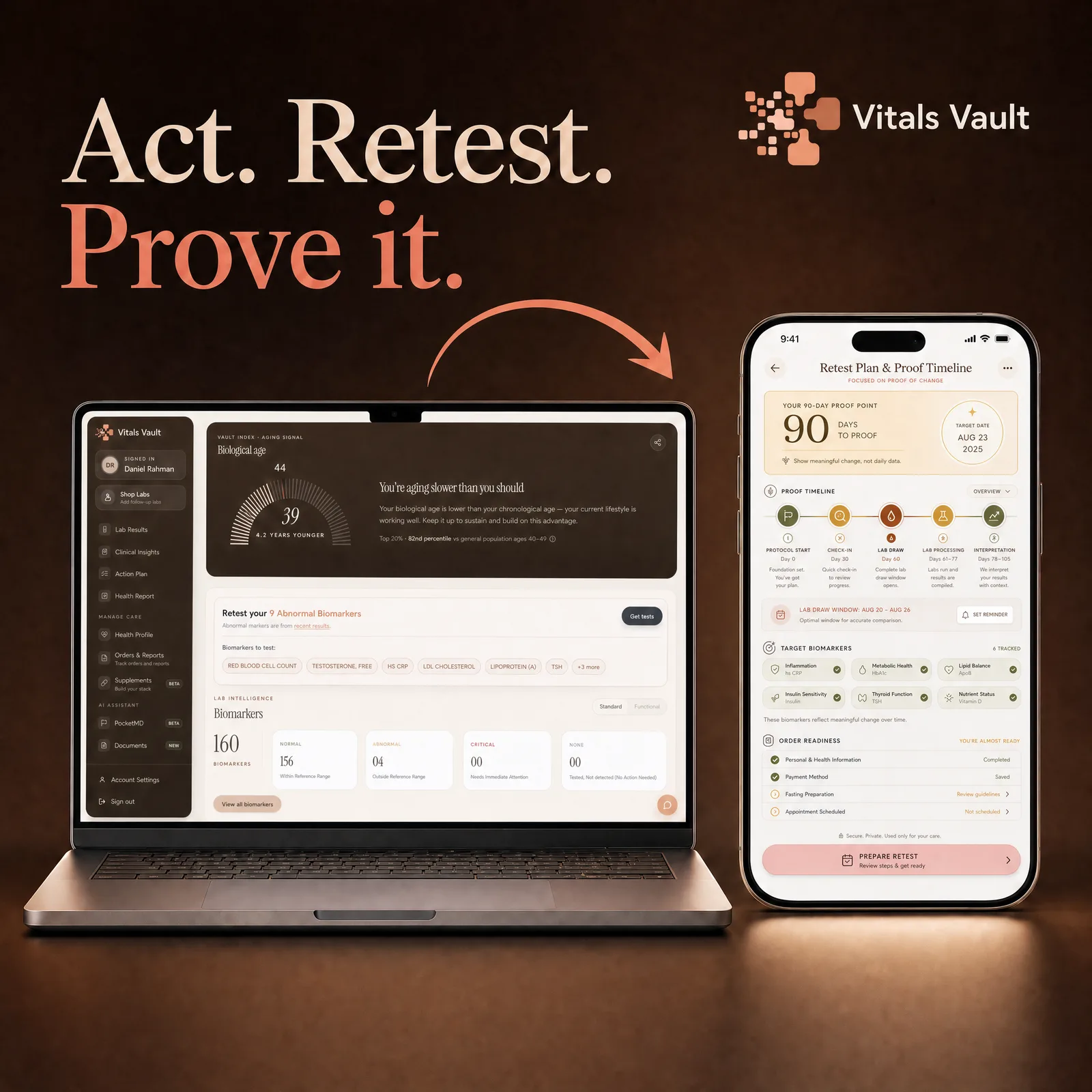
Biological age
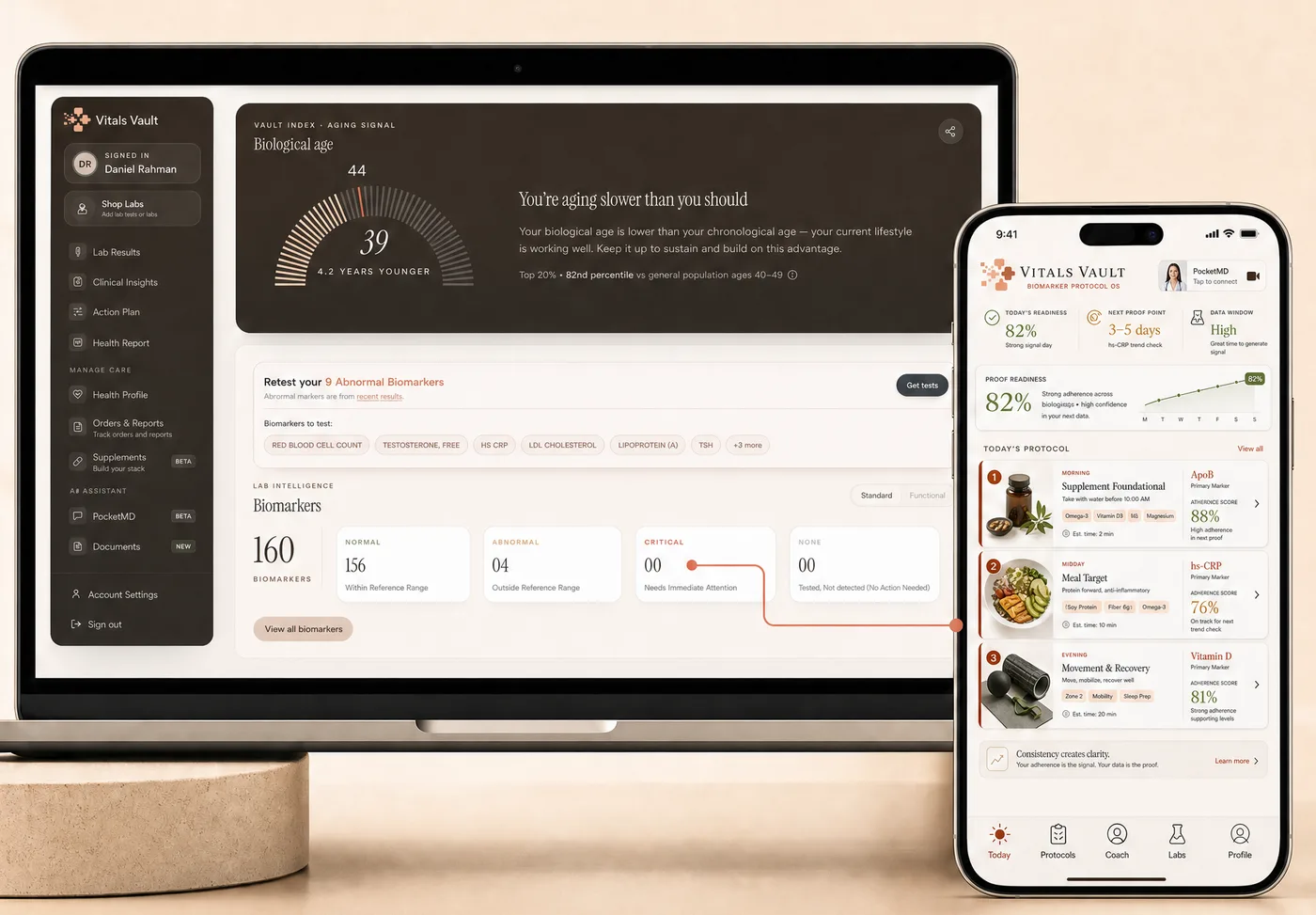
Find out if your body is aging faster or slower than your actual age — and see how you rank against the general population.
39
Biological age
44
Actual age
4.2
Years younger
Zinc
Results in about 3–7 days
Zinc Blood Test (Serum Zinc): How to interpret low, in-range, and high results. A zinc blood test estimates your current zinc status and helps explain deficiency risk; order through Vitals Vault with Quest labs and PocketMD support.
Zinc is a trace mineral, but it plays an outsized role in immune function, wound healing, taste and smell, skin health, and reproductive health. A zinc blood test is a quick way to estimate whether your current zinc status is likely low, adequate, or unusually high. Because most zinc lives inside cells rather than floating in your bloodstream, a single blood value is not a perfect “total body zinc” score. Your result is still useful when you interpret it alongside your diet, symptoms, medications, and related labs. If you are deciding whether to test, the most practical reasons are to confirm suspected deficiency, to check zinc status when absorption may be impaired, or to monitor levels if you are taking zinc regularly. Your clinician can help connect the number to a plan rather than treating it as a standalone diagnosis.
What to expect before and at your draw.
Sample Type
Blood
Collection Method
In person at a Quest Diagnostics location
Age
18+
This order includes the lab markers used for Zinc.
Zinc
Included in this Quest Diagnostics order and reported in your Vitals Vault account.
Order Zinc online.
Visit a Quest Diagnostics location near you for your blood draw. Appointments can be scheduled after checkout.
View easy-to-read results in your Vitals Vault account, with trends and a personalized action plan.
Included with every package
Function Health shows you numbers. Vitals Vault connects them — ratios, patterns, and a personalized action plan grounded in functional medicine.
Find out if your body is aging faster or slower than your actual age — and see how you rank against the general population.
39
Biological age
44
Actual age
4.2
Years younger
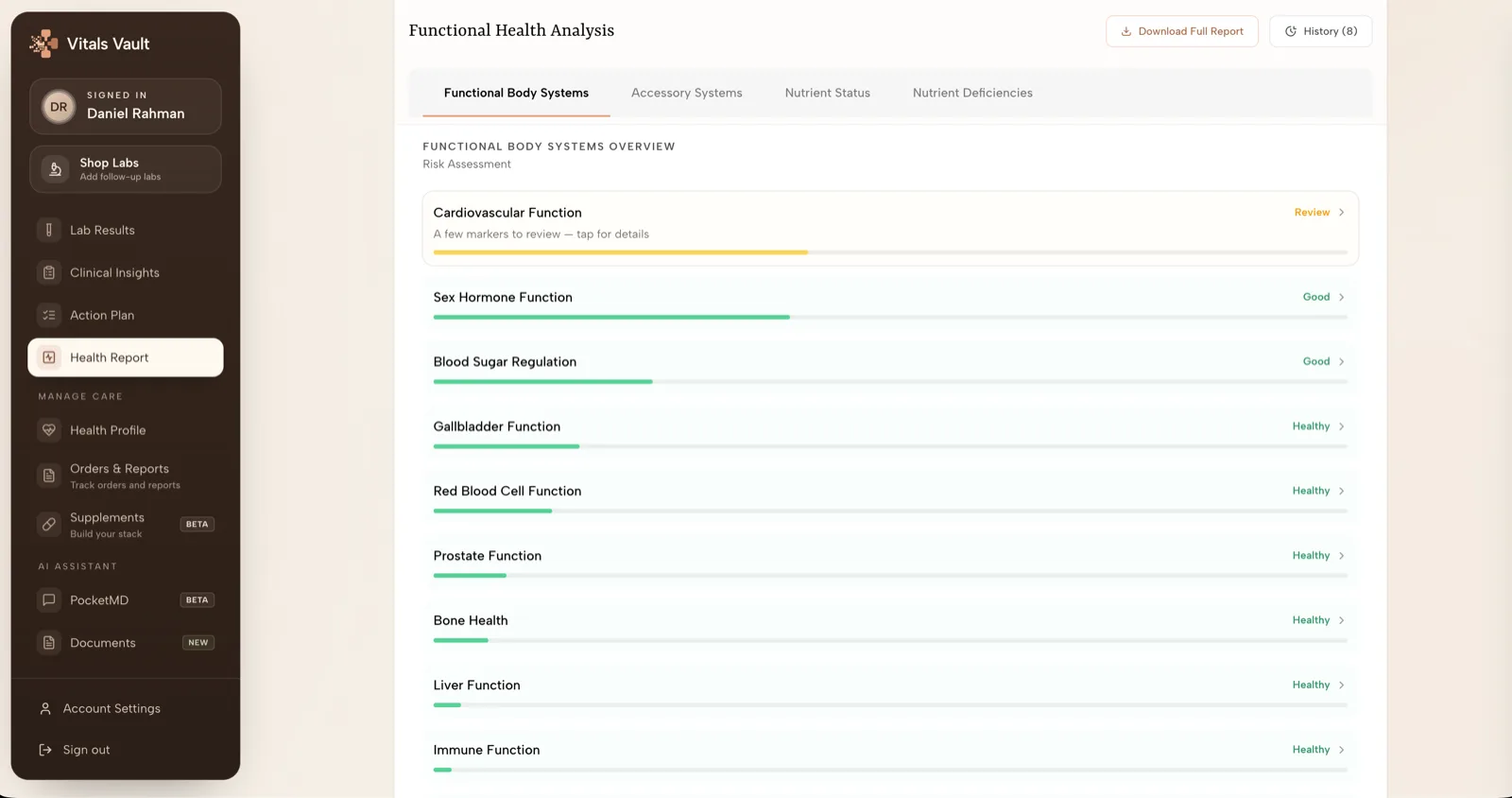
Turn lab data into what to do next—clear guidance on follow-ups, lifestyle context, and add-on testing when you need to go deeper. Make the healthy choice the obvious one.
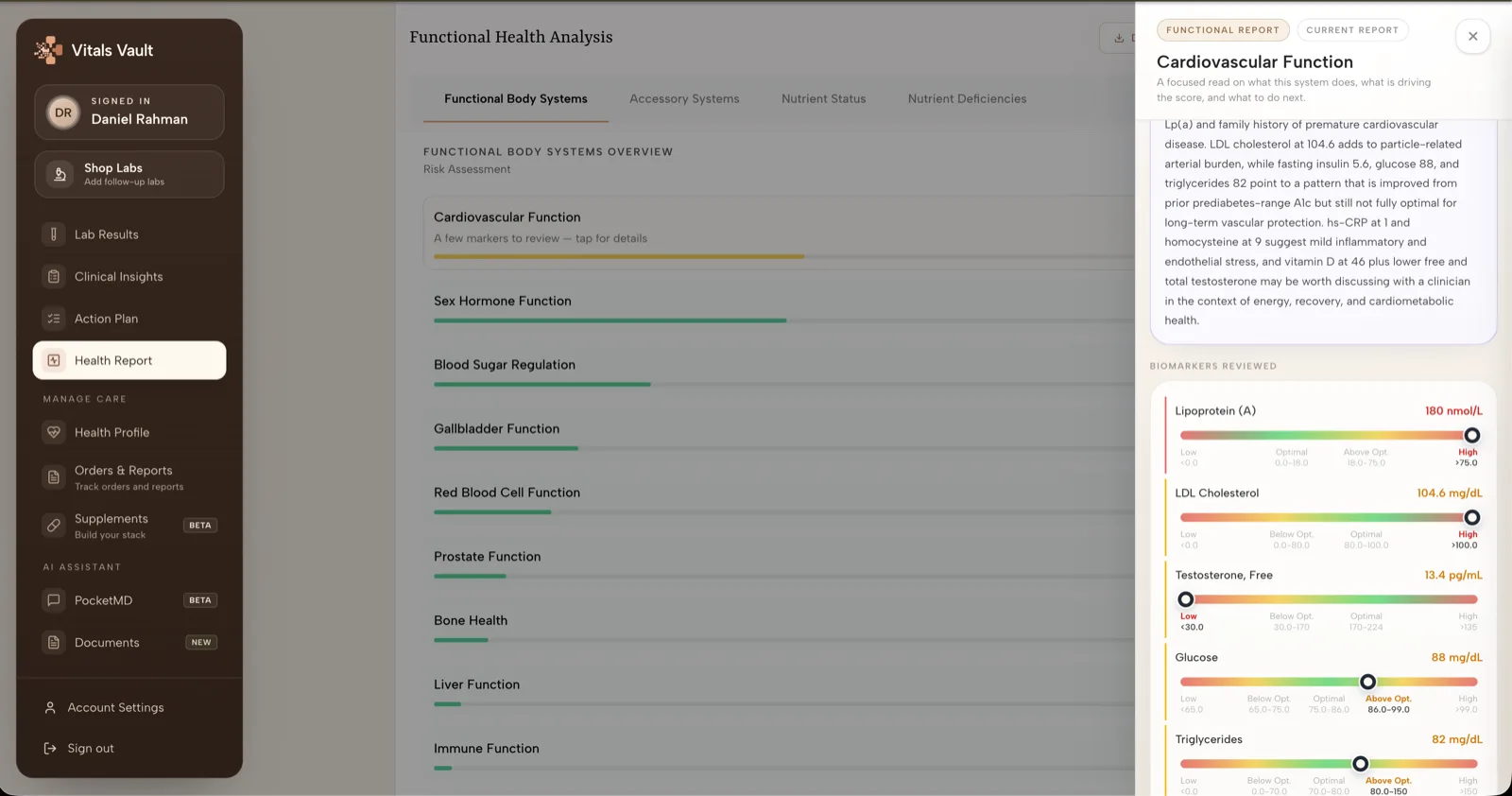
A personalized, plain-language walkthrough of your abnormal markers—reference ranges, pattern context, and what to watch next, grounded in your actual labs.
Personalized Insights
Clear Explanations
Actionable guidance
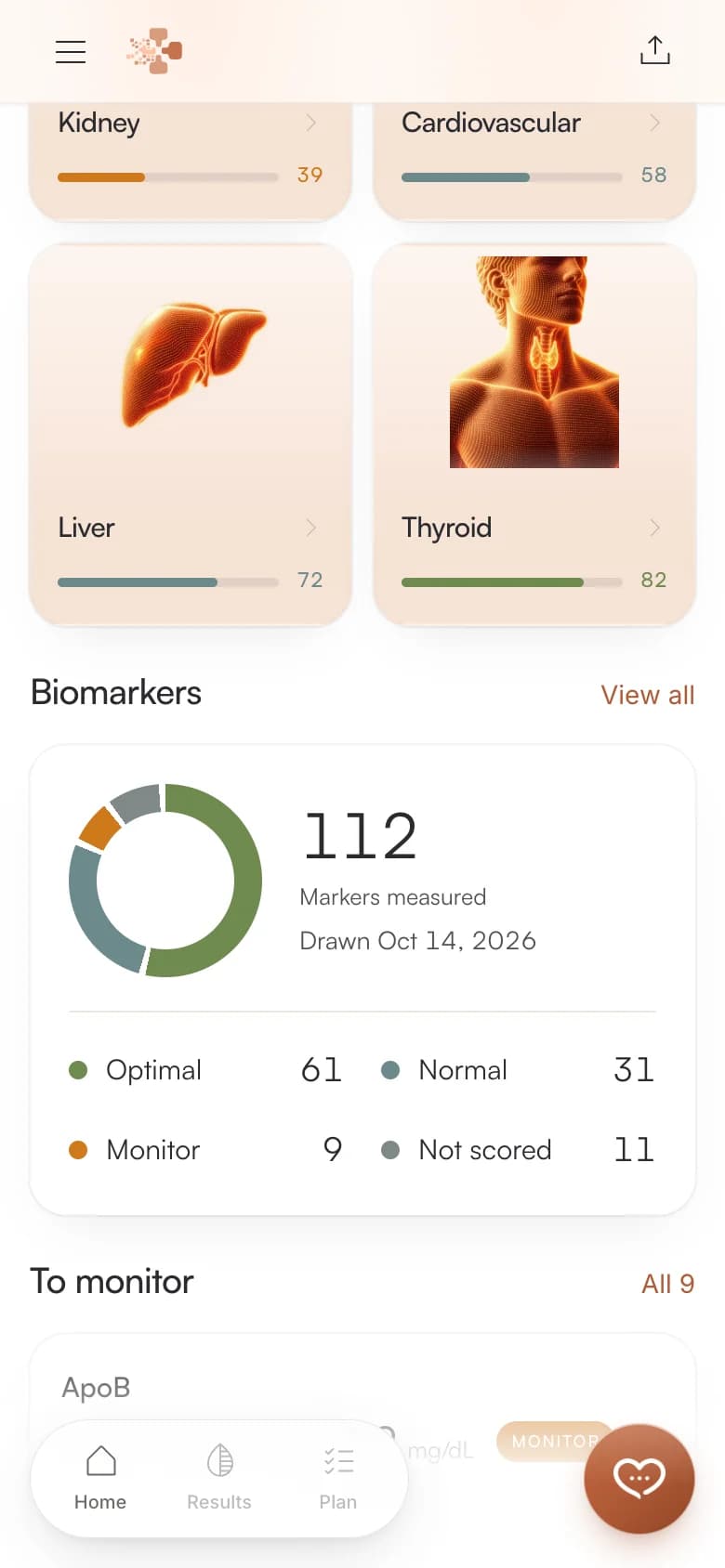
Explore your body systems with clear risk context — refresh your report, download the full PDF, and monitor hormones, heart, bone, and more in one place.
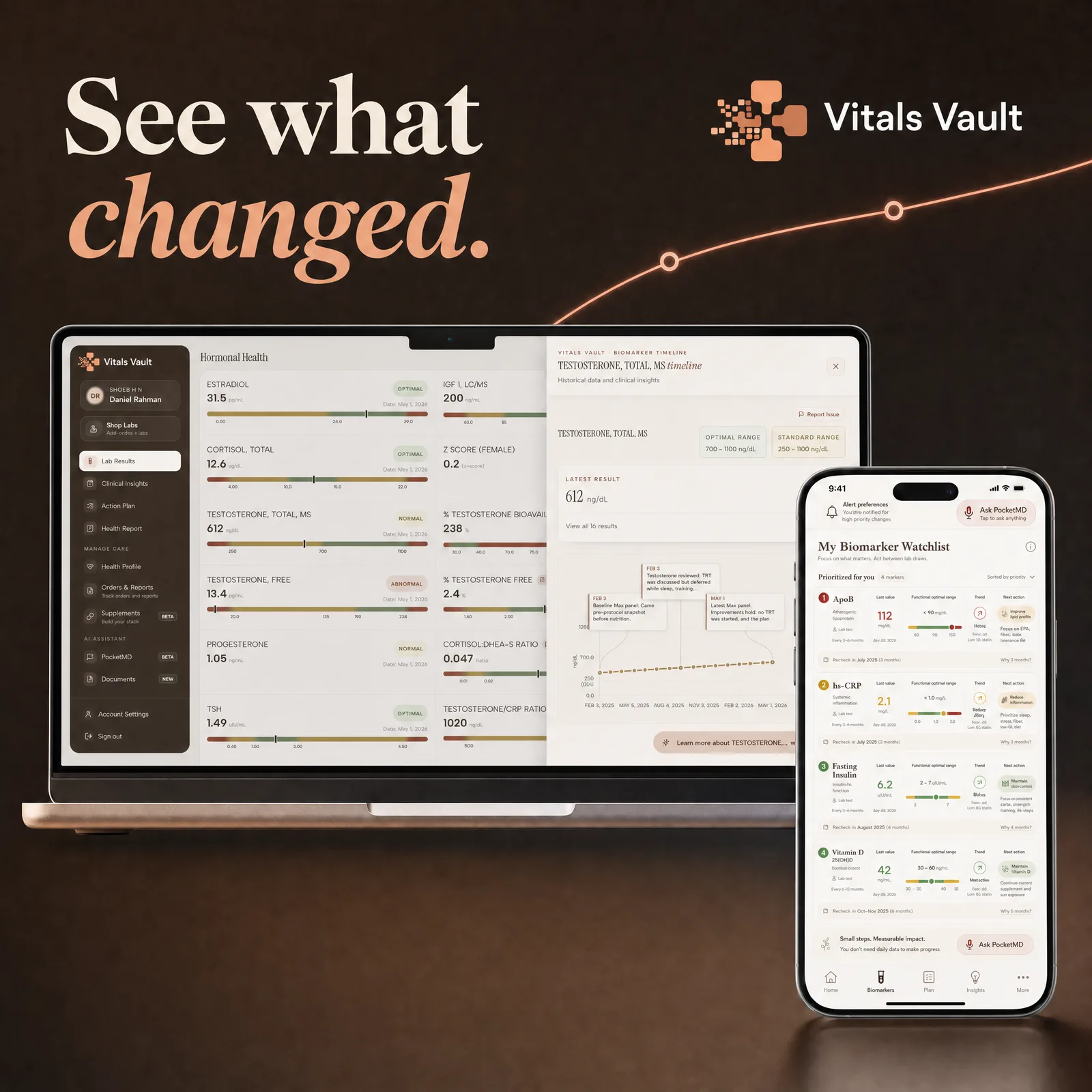
Explore hundreds of tests and panels, filter by concern, and manage your cart—member-exclusive pricing with quick checks and full-body options in one flow.
Wide test selection
300+ tests & panels available
Smart filtering
Find tests by symptoms or goals
Seamless ordering
Add to cart and manage easily
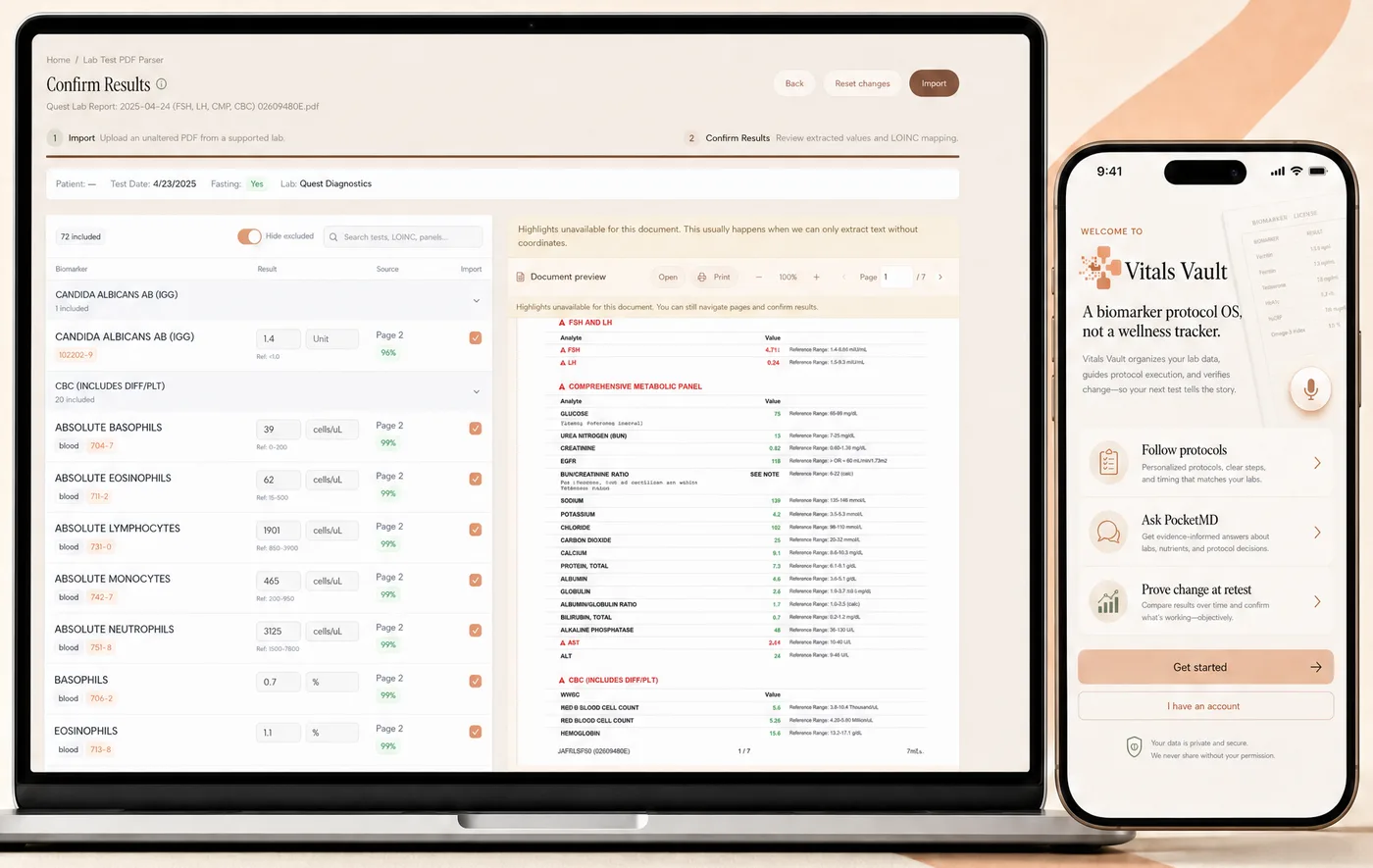
Upload past lab reports, search your documents, and keep appointments and results organized—our AI can extract biomarkers from PDFs so everything lives in one dashboard.
Browse longevity, nutrition, supplement, and movement protocols—structured plans you can follow with clear habits, labs, and targets tied to your profile.
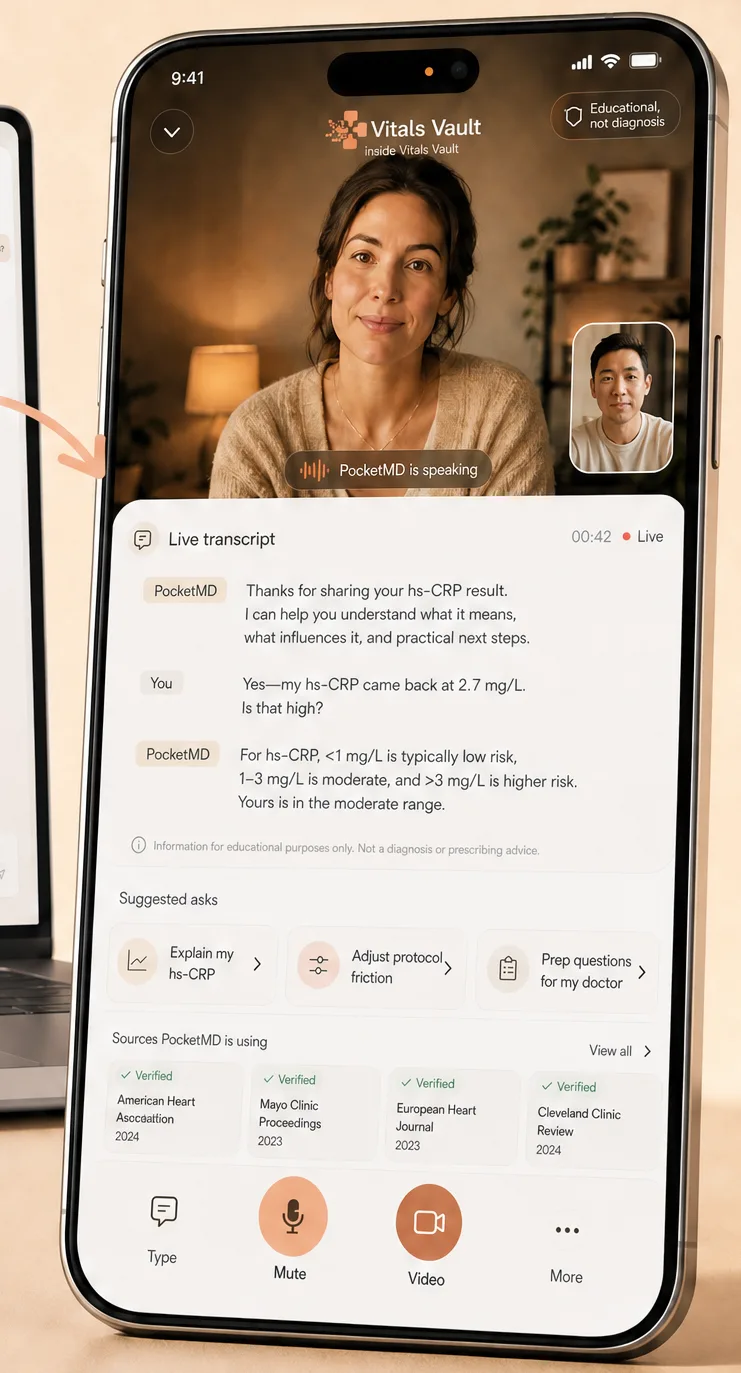
Ask for protocols, nutrition plans, supplement stacks, and education—context-aware suggestions powered by your labs and goals (beta experience).
Order online
Add Zinc to your cart and check out. No doctor referral is required.
Visit a Quest lab
Provide your blood sample at a Quest Diagnostics location. Appointments can be scheduled after checkout.
Review in Vitals Vault
Results in about 3–7 days. They stay in your Vitals Vault account for trends and follow-up.
No special preparation is usually needed unless noted at checkout.
This order includes the lab markers used for Zinc and reported in your Vitals Vault account.
Results
Results in about 3–7 days
HSA/FSA
Accepted
Who takes it
Must be taken by the purchaser
Preparation
No special preparation needed unless noted at checkout.
A zinc blood test estimates your current zinc status and helps explain deficiency risk; order through Vitals Vault with Quest labs and PocketMD support.


Zinc is a trace mineral, but it plays an outsized role in immune function, wound healing, taste and smell, skin health, and reproductive health. A zinc blood test is a quick way to estimate whether your current zinc status is likely low, adequate, or unusually high.
Because most zinc lives inside cells rather than floating in your bloodstream, a single blood value is not a perfect “total body zinc” score. Your result is still useful when you interpret it alongside your diet, symptoms, medications, and related labs.
If you are deciding whether to test, the most practical reasons are to confirm suspected deficiency, to check zinc status when absorption may be impaired, or to monitor levels if you are taking zinc regularly. Your clinician can help connect the number to a plan rather than treating it as a standalone diagnosis.
You might consider a zinc blood test if you have signs that could fit zinc deficiency, such as frequent infections, slow wound healing, new changes in taste or smell, persistent acne-like or rashy skin changes, hair shedding, or unexplained diarrhea. These symptoms are not specific to zinc, but testing can help you avoid guessing.
Testing is also reasonable if you have a higher risk of low zinc because of reduced intake or absorption. Common scenarios include restrictive diets with low animal protein, chronic gastrointestinal conditions that affect absorption, a history of bariatric surgery, heavy alcohol use, or long-term diarrhea.
If you already take zinc (including in multivitamins, “immune” products, or denture creams), a blood test can help you avoid overshooting. Too much zinc can interfere with copper absorption and may contribute to anemia or neurologic symptoms over time.
A zinc result is best used as part of clinician-directed care. It can support a targeted nutrition plan and follow-up testing, but it does not diagnose the underlying cause by itself.
Zinc is measured on a blood sample in a CLIA-certified laboratory; results should be interpreted with your clinical context and are not a standalone diagnosis.
from $45.99 at Quest Diagnostics
Results in days
Clear next steps
HSA / FSA
Vitals Vault makes it straightforward to order a Zinc Blood test and complete your draw at a participating Quest location. You get a clear lab report and a place to keep your results organized so you can compare trends over time.
If you are unsure how to read your number, PocketMD can help you turn the result into next-step questions for your clinician, such as whether you should check copper, iron studies, or inflammation markers, and when a retest would be meaningful.
Zinc is often most helpful when it is not viewed in isolation. If your history suggests absorption issues, restrictive intake, or long-term supplementation, you can pair zinc testing with companion labs to map the bigger picture before you make changes.
A Zinc Blood test typically measures zinc in serum (the liquid portion of blood). Zinc is an essential mineral that acts as a cofactor for hundreds of enzymes and supports DNA synthesis, cell division, antioxidant defenses, and normal immune signaling.
Your body does not store large, easily mobilized reserves of zinc the way it stores some vitamins. Most zinc is inside cells and tissues, so blood zinc can shift with stress, infection, inflammation, and recent intake. That is why your result is most meaningful when you interpret it with your overall health picture rather than treating it as a definitive measure of total zinc stores.
Zinc supports barrier tissues such as skin and the lining of the gut, which helps with wound healing and resilience against infections. It also plays roles in taste and smell, reproductive hormone function, and normal growth and development.
Because zinc is largely intracellular, serum zinc can look “normal” even when functional deficiency exists, especially early on. On the other hand, serum zinc can look lower during acute illness or inflammation even if your long-term intake is adequate.
Low zinc can come from low intake (especially low animal protein), poor absorption (GI conditions or surgery), increased losses (chronic diarrhea), or increased needs (growth, pregnancy, or recovery from illness). Certain medications and high-dose iron or calcium taken at the same time as zinc can also reduce absorption.
A low zinc result suggests you may not be meeting your body’s needs right now, either from low intake, reduced absorption, or increased losses. If you also have symptoms like frequent infections, slow wound healing, taste/smell changes, or persistent skin issues, your clinician may treat the result as more clinically meaningful. It is also worth asking whether inflammation or a recent illness could have temporarily lowered serum zinc. Follow-up often includes reviewing diet, checking for GI causes, and considering companion labs such as copper and iron studies.
An in-range zinc level generally means your current zinc status is adequate at the time of testing. If you still have symptoms, zinc may not be the main driver, or the issue may be related to absorption, inflammation, or another nutrient imbalance. If you supplement, an in-range result can support staying at a conservative dose or focusing on food sources rather than increasing intake. Trending results over time can be more informative than a single snapshot, especially if your diet or health status changes.
A high zinc result most often reflects recent or ongoing zinc intake from supplements, multivitamins, or zinc-containing products. High zinc is not always an emergency, but chronically elevated intake can reduce copper absorption and contribute to low copper over time, which can affect blood counts and nerve function. If your level is high, review all sources of zinc and discuss whether you should reduce or stop supplementation. Your clinician may recommend checking copper (and sometimes ceruloplasmin) if high intake has been ongoing.
Recent meals, supplements, and even the time of day can shift serum zinc, so consistent prep matters if you are retesting. Acute infection, inflammation, or major physiologic stress can lower serum zinc independent of long-term stores. Low albumin (a major zinc-binding protein) can also affect measured zinc, and hemolysis or sample handling issues can distort results. Finally, high-dose zinc can push the number up while simultaneously creating downstream copper deficiency risk, so interpretation should consider both minerals.
Fasting is not always required, but zinc can vary with recent intake and supplements. If you want the cleanest comparison between tests, ask your clinician or follow the lab instructions, and avoid taking zinc supplements right before the draw unless you were told otherwise.
“Normal” depends on the lab’s reference range and the units used on your report. Use the reference interval printed next to your result, and interpret it with your symptoms, diet, and whether you were recently ill, since serum zinc can shift with inflammation.
Retest timing depends on how low your level is and what changes you make. Many clinicians recheck in roughly 6–12 weeks after a consistent diet change or supplementation plan, because it takes time for intake and absorption changes to show up reliably in blood.
Yes. Chronically high zinc intake can reduce copper absorption in the gut, which may lead to low copper over time. If your zinc is high or you have been supplementing for months, ask whether copper (and sometimes ceruloplasmin) should be checked.
Serum zinc is commonly used and can be helpful, but it is an imperfect marker of total body zinc because most zinc is inside cells. If your symptoms and risk factors are strong but serum zinc is in-range, your clinician may look for other explanations, assess diet and absorption, or consider additional labs that reflect inflammation and related nutrient status.
Acute infections and inflammatory states can lower serum zinc temporarily. Chronic diarrhea, malabsorption conditions, and bariatric surgery can reduce absorption. Certain medications can also influence zinc status indirectly, and taking high-dose iron or calcium at the same time as zinc can reduce zinc absorption.
Purchase online through Vitals Vault. A licensed clinician reviews and approves your order, then you receive a digital requisition for a Quest Diagnostics blood draw.
Samples are collected in person at Quest Diagnostics locations nationwide. After checkout you can schedule your visit at a convenient site.
Most results in 3–5 business days. You can view them securely in your Vitals Vault account.
No separate referral appointment is required. Clinician review is included in the online order flow.
Yes. Eligible HSA/FSA cards can be used at checkout for qualifying lab orders.
Results are available in your secure Vitals Vault account. You control who you share them with, subject to applicable law.
Blood glucose shows the amount of sugar in your blood at a single moment. A1c (hemoglobin A1c) estimates your average blood sugar over roughly the past 8–12 weeks. Comparing them helps explain whether your long-term average lines up with your fasting glucose on draw day.
It helps you understand how this marker fits into your broader metabolic picture, with results tracked in your Vitals Vault account.
Elevated values can signal higher metabolic risk. Many people start with nutrition, activity, sleep, and weight management, then retest and review results with a clinician. This test is educational and does not replace medical advice or diagnosis.
Your sample is processed at CLIA-certified Quest Diagnostics laboratories. Results should still be interpreted with a qualified clinician alongside your history, symptoms, and other labs.
Consumer-initiated testing through Vitals Vault is limited to adults 18+ so ordering and interpretation stay aligned with clinical best practices for this channel.