
Finasteride used for: what is it for?
What is finasteride used for? Male pattern hair loss and benign prostatic hyperplasia (BPH). It works by lowering DHT, a hormone linked to both conditions.
Key facts
- Finasteride + Minoxidil Scalp Solution is $53.50/month (billed $107 every 50 days), charged only after a clinician approves it.
- Answer a few health questions online. A licensed clinician reviews them. If approved, it ships to your door.
- Adults 18 or older. A licensed clinician reviews your health history and decides whether treatment is appropriate for you. Availability depends on the state you live in.


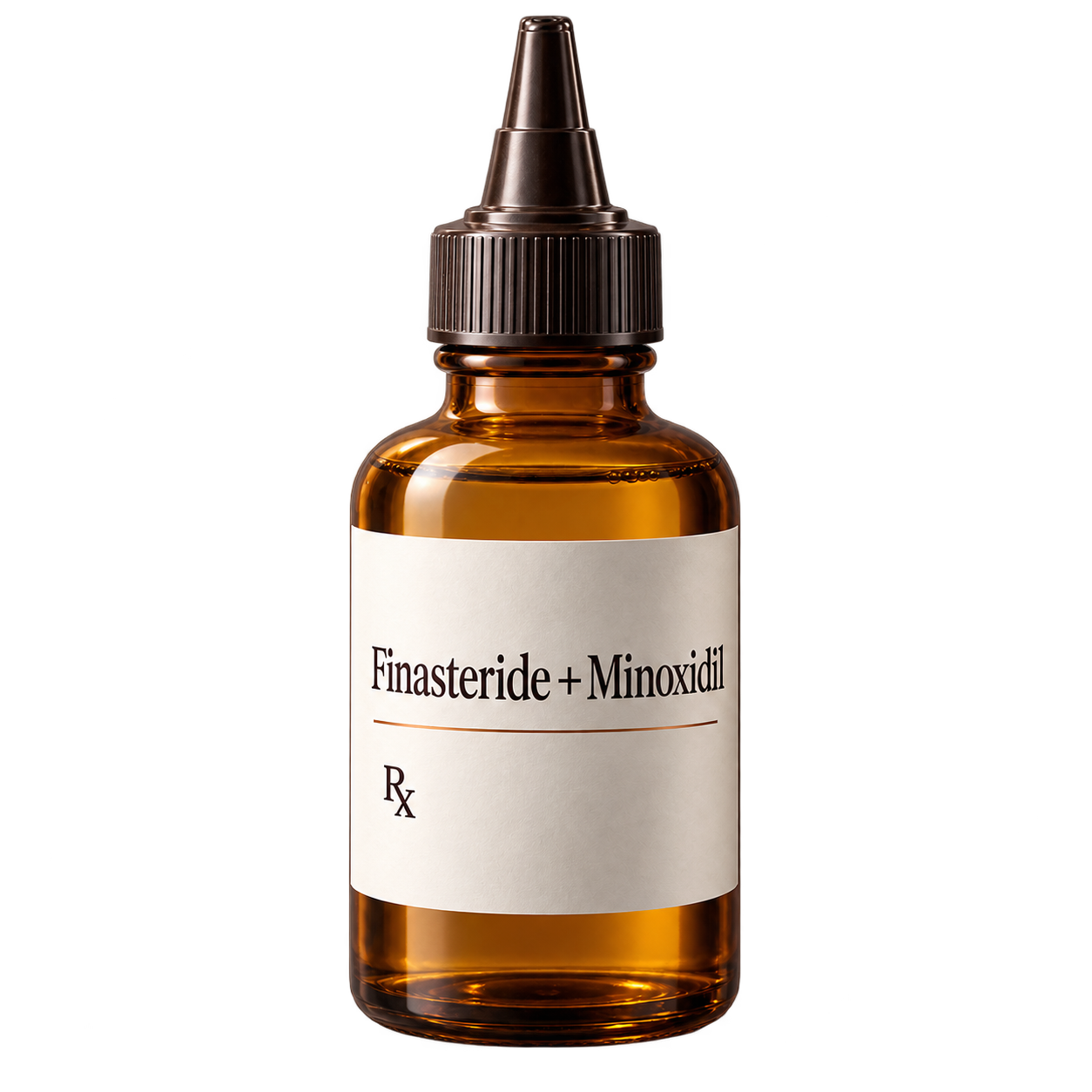
Finasteride is a prescription medication used for two main conditions: male pattern hair loss (androgenetic alopecia) and benign prostatic hyperplasia (BPH), an enlarged prostate. It works by lowering dihydrotestosterone (DHT), a hormone involved in both scalp hair thinning and prostate growth. If you are considering finasteride for hair loss, Vitals Vault can help you review options, including compounded topical combinations, with clinician oversight when appropriate.
- Finasteride is used for male pattern hair loss and benign prostatic hyperplasia (BPH).
- It lowers DHT, a hormone that contributes to scalp hair thinning and prostate growth.
- Finasteride can cause sexual side effects and is not for use in pregnancy.
- Topical combinations may be compounded and are not FDA-approved.
What is finasteride used for?
Male pattern hair loss
Finasteride is FDA-approved to treat male pattern hair loss in men. It is used to slow hair loss and can help increase hair growth in some men by lowering DHT in the scalp. This indication is based on finasteride 1 mg tablets (Propecia).
Enlarged prostate (BPH)
Finasteride is also FDA-approved to treat symptoms of benign prostatic hyperplasia (BPH) in men. By lowering DHT in the prostate, it can reduce prostate size over time and improve urinary symptoms. This indication is based on finasteride 5 mg tablets (Proscar).
Not a general hair loss drug
Finasteride is specifically studied and approved for androgenetic alopecia, not for every cause of shedding. If your hair loss is sudden, patchy, or accompanied by scalp symptoms, a clinician may look for other causes before considering finasteride.
How finasteride use differs by goal
| Use | Who it is for (label) | How it works (plain language) | Key safety notes |
|---|---|---|---|
| Male pattern hair loss (androgenetic alopecia) | Men | Lowers DHT, a hormone that can shrink hair follicles on the scalp | Sexual side effects can occur; not for use in pregnancy |
| Benign prostatic hyperplasia (BPH) | Men | Lowers DHT in the prostate, which can reduce prostate size over time | Can affect PSA test interpretation; not for use in pregnancy |
Oral finasteride
Oral finasteride is FDA-approved for male pattern hair loss (1 mg) and BPH (5 mg). The same active ingredient is used, but the approved dose and the condition being treated differ. A clinician chooses the approach based on your goal and risk profile.
Topical finasteride products
Some people use finasteride applied to the scalp, sometimes combined with minoxidil. These topical combinations are often compounded, meaning they are prepared by a pharmacy for an individual prescription and are not FDA-approved. Evidence and side effects may differ from oral use.
Combination with minoxidil
Minoxidil is a different hair loss medication that works through a separate pathway than finasteride. Some clinicians use both to target hair loss from more than one angle, but the best plan depends on your pattern of loss, tolerance, and preferences.
Pregnancy exposure warning
Finasteride can cause abnormalities of the external genitalia of a male fetus. People who are pregnant or may become pregnant should not take finasteride, and they should not handle crushed or broken finasteride tablets due to the possibility of absorption.
Sexual and mood side effects
Finasteride can cause sexual side effects such as decreased libido, erectile dysfunction, and ejaculation disorders. Depression has also been reported. If you notice sexual changes or mood symptoms, bring it up promptly with a clinician so risks and benefits can be reassessed.
When to talk to a clinician before using finasteride
You might be pregnant
Finasteride is contraindicated in pregnancy because it can harm a developing male fetus. If pregnancy is possible for you or your partner may be exposed to the medication, discuss safer alternatives and handling precautions with a clinician.
You have sexual symptoms
If you already have erectile dysfunction, low libido, fertility concerns, or ejaculation changes, discuss this before starting finasteride. A clinician can help you weigh potential benefits for hair or urinary symptoms against the possibility of worsening sexual side effects.
You have depression history
Depressed mood and suicidal thoughts have been reported with finasteride use. If you have a history of depression or new mood symptoms appear while using it, seek medical advice promptly and do not ignore the change.
Your hair loss is atypical
Sudden shedding, patchy hair loss, scalp pain, scaling, or hair loss with other symptoms can suggest causes other than androgenetic alopecia. A clinician may recommend an exam and possibly labs before deciding whether finasteride fits your situation.
Pro tips for using finasteride safely
Confirm the diagnosis
Finasteride is best supported for androgenetic alopecia and BPH, not every hair loss type.
Set expectations
Hair changes are gradual. Track photos monthly and review progress with a clinician.
Report side effects early
Sexual or mood changes are worth discussing promptly, even if they feel mild.
Ask about PSA testing
Finasteride can affect PSA results. Tell your clinician you take it before testing.
Handle tablets carefully
Pregnant people should not handle crushed or broken finasteride tablets.
Frequently Asked Questions
What is finasteride used for?
Finasteride is used for male pattern hair loss and benign prostatic hyperplasia (BPH) in men. It works by lowering DHT, a hormone involved in both scalp hair follicle miniaturization and prostate growth.
Is finasteride used for hair loss or hair regrowth?
Finasteride is used to treat male pattern hair loss by slowing progression and, in some men, improving hair growth. Results vary, and a clinician can help you set realistic expectations and monitor side effects.
Is finasteride used for an enlarged prostate?
Yes. Finasteride is FDA-approved for benign prostatic hyperplasia (BPH) in men, where it can reduce prostate size over time and improve urinary symptoms. It is the same ingredient as the hair loss product but used for a different condition and dose.
Can women use finasteride for hair loss?
Finasteride is not indicated for use in women, and it is contraindicated in pregnancy due to risk to a male fetus. In some situations clinicians may discuss off-label use, but this requires careful risk assessment and pregnancy precautions.
Is topical finasteride the same as oral finasteride?
Not necessarily. Many topical finasteride products are compounded and are not FDA-approved, so their formulation and evidence base may differ from oral tablets. Ask the prescribing clinician and dispensing pharmacy what side effects to watch for and how to use it.