
Saxenda dosing: labeled schedule and key rules
Saxenda dosing is increased weekly to the maintenance dose. Here is the FDA labeled titration schedule, missed dose rules, and pen basics.
Key facts
- Answer a few health questions online. A licensed clinician reviews them. If approved, it ships to your door.
- Adults 18 or older. A licensed clinician reviews your health history and decides whether treatment is appropriate for you. Availability depends on the state you live in.


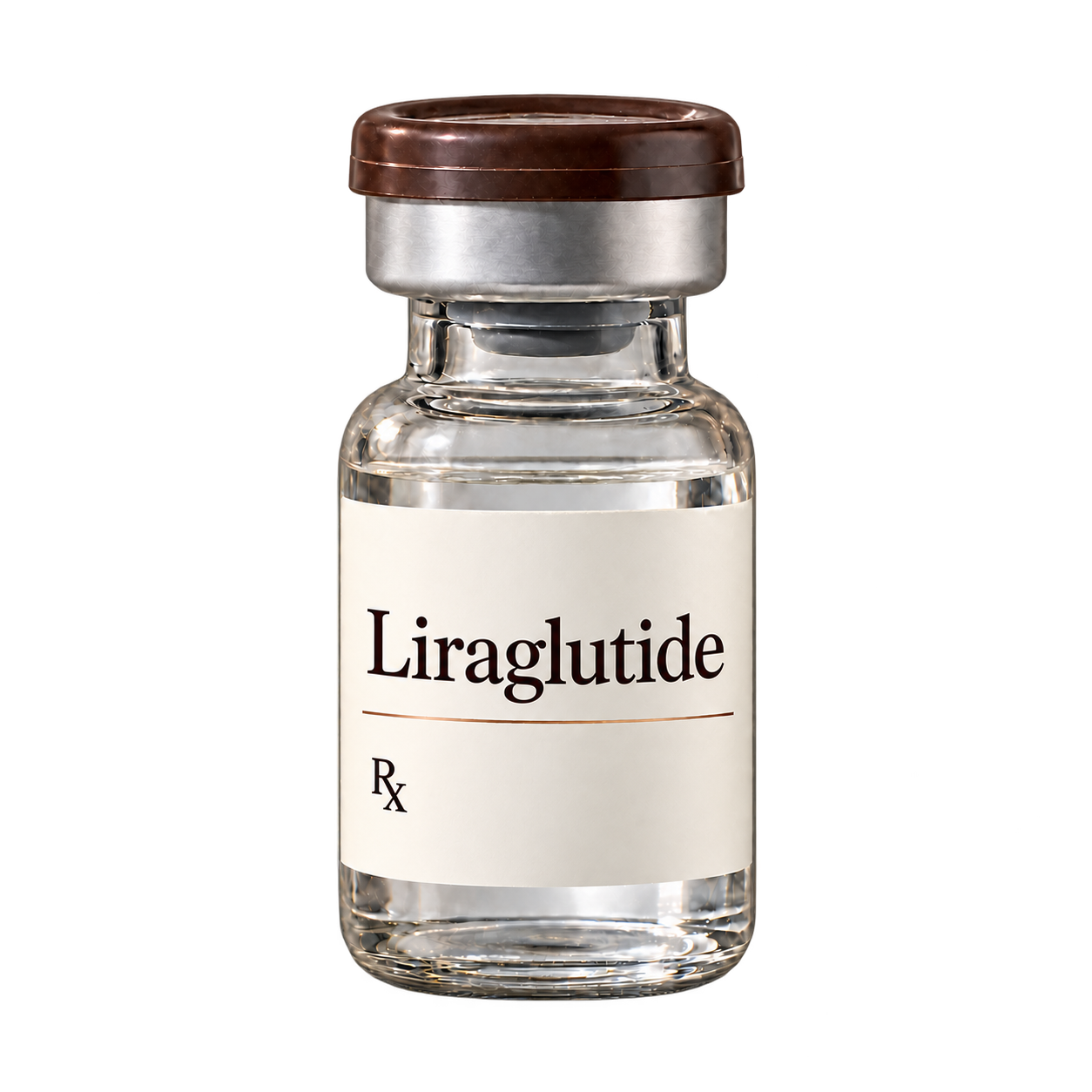
Saxenda (liraglutide) has a labeled dosing schedule that starts low and increases weekly to help your body adjust and reduce side effects. This page summarizes the FDA labeled titration schedule, what the pen delivers, and what the label says to do for missed doses. If you are using compounded liraglutide instead of the brand Saxenda, your prescribed dose and instructions can differ. Vitals Vault can help you understand questions to ask, but your prescribing clinician sets and adjusts dosing.
- Saxenda dosing is titrated weekly to a maintenance dose of 3 mg once daily.
- If you miss 3 or more days, the label says to restart at 0.6 mg and re-titrate.
- Saxenda is injected under the skin once daily, any time, with or without food.
- Saxenda is not used with other GLP-1 receptor agonists, per the FDA label.
Answer: what is the labeled Saxenda dosing schedule?
| Treatment week | Daily dose |
|---|---|
| Week 1 | 0.6 mg |
| Week 2 | 1.2 mg |
| Week 3 | 1.8 mg |
| Week 4 | 2.4 mg |
| Week 5 and onward (maintenance) | 3 mg |
Dose schedule, pens, and missed doses
How often it is taken
The FDA label describes Saxenda as a once-daily injection under the skin (subcutaneous). It can be taken at any time of day, with or without meals, but it should be taken around the same time each day.
What the pen delivers
Saxenda comes as a prefilled, multi-dose pen containing liraglutide solution. The label states the pen can deliver doses of 0.6 mg, 1.2 mg, 1.8 mg, 2.4 mg, or 3 mg.
If you miss a dose
If you miss a dose, the label says to take the next dose at the regular time and not to take an extra dose or increase the dose to make up for the missed one. If you miss more than 3 days, the label says to restart at 0.6 mg and follow the dose escalation schedule again.
When the label says to stop
The label says Saxenda should be discontinued if you cannot tolerate the 3 mg dose, because lower doses are not effective for chronic weight management. It also says to discontinue if you have not lost at least 4% of baseline body weight by 16 weeks on the 3 mg dose.
Injection sites (label-only)
The Instructions for Use state Saxenda is injected under the skin of the abdomen (stomach area), thigh, or upper arm. A pharmacist or prescribing clinician should show you how to use the pen, and the Instructions for Use provide the full steps.
Do not combine with similar drugs
The FDA label states Saxenda should not be used with other GLP-1 receptor agonists. The label also says it should not be used with insulin.
When to talk to a clinician about dosing or safety
Severe stomach symptoms
Nausea, vomiting, and diarrhea are common with liraglutide, especially during dose increases. Contact your clinician if symptoms are severe, persistent, or you cannot keep fluids down, because dehydration can increase kidney risk.
Possible pancreatitis
Seek urgent medical evaluation for severe abdominal pain that may radiate to the back, with or without vomiting. The Saxenda label warns about acute pancreatitis and says to discontinue if pancreatitis is suspected.
Gallbladder symptoms
Contact your clinician for right upper abdominal pain, fever, jaundice, or persistent nausea and vomiting. The label warns about acute gallbladder disease, including cholelithiasis and cholecystitis.
Low blood sugar risk
If you use diabetes medications, ask your clinician about hypoglycemia risk and monitoring. The label notes hypoglycemia can occur, particularly when Saxenda is used with insulin secretagogues such as sulfonylureas.
Thyroid or neck symptoms
Call your clinician for a lump or swelling in your neck, hoarseness, trouble swallowing, or shortness of breath. Saxenda has a boxed warning about thyroid C-cell tumors and is contraindicated with a personal or family history of medullary thyroid carcinoma or MEN 2.
Allergic reaction signs
Get emergency help for swelling of the face, lips, tongue, or throat, or trouble breathing. The label warns about serious hypersensitivity reactions, including anaphylaxis and angioedema.
Pro tips to discuss with your prescriber
Expect titration side effects
Dose increases are when nausea is most likely. Ask what to do if you cannot tolerate an increase.
Keep timing consistent
The label recommends taking it around the same time each day. Ask what time fits your routine.
Bring your med list
Ask about interactions and hypoglycemia risk if you use diabetes medicines, especially sulfonylureas.
Know missed dose rules
If you miss more than 3 days, the label restarts at 0.6 mg. Confirm your plan before restarting.
Ask about warning signs
Review pancreatitis, gallbladder symptoms, and thyroid warning signs so you know when to seek care.
Frequently Asked Questions
What is the Saxenda dosing schedule?
The FDA label titrates Saxenda weekly from 0.6 mg once daily to 3 mg once daily for maintenance. If you cannot tolerate an increase, the label allows delaying the increase by about one week. Your prescriber decides what is appropriate for you.
What is the liraglutide dosage for weight loss?
For the brand Saxenda (liraglutide), the FDA labeled maintenance dose for chronic weight management is 3 mg once daily after weekly titration. Other liraglutide products and compounded liraglutide may have different instructions. Follow your prescription and clinician guidance.
What happens if I miss a Saxenda dose?
The label says to take the next dose at the regular time and not to take an extra dose to make up for a missed one. If you miss more than 3 days, the label says to restart at 0.6 mg and follow the escalation schedule again. Confirm your plan with your prescriber.
Where do you inject Saxenda?
The Instructions for Use state Saxenda is injected under the skin of the abdomen (stomach area), thigh, or upper arm. A pharmacist or prescribing clinician should show you how to use the pen. Follow the Instructions for Use for the full method.
Can you take Saxenda with other GLP-1 medications?
The FDA label says Saxenda should not be used with other GLP-1 receptor agonists. It also says Saxenda should not be used with insulin. If you are switching therapies, your clinician should guide the transition.