
Retin a cream: what it is and how to get it
Retin a cream refers to tretinoin creams used for acne and photoaging. Here is what it does, who should avoid it, and side effects.
Key facts
- Tretinoin + Niacinamide is $43/month (billed $129 every 90 days), charged only after a clinician approves it.
- Answer a few health questions online. A licensed clinician reviews them. If approved, it ships to your door.
- Adults 18 or older. A licensed clinician reviews your health history and decides whether treatment is appropriate for you. Availability depends on the state you live in.
- A $20 clinician review, refunded if you don’t qualify.


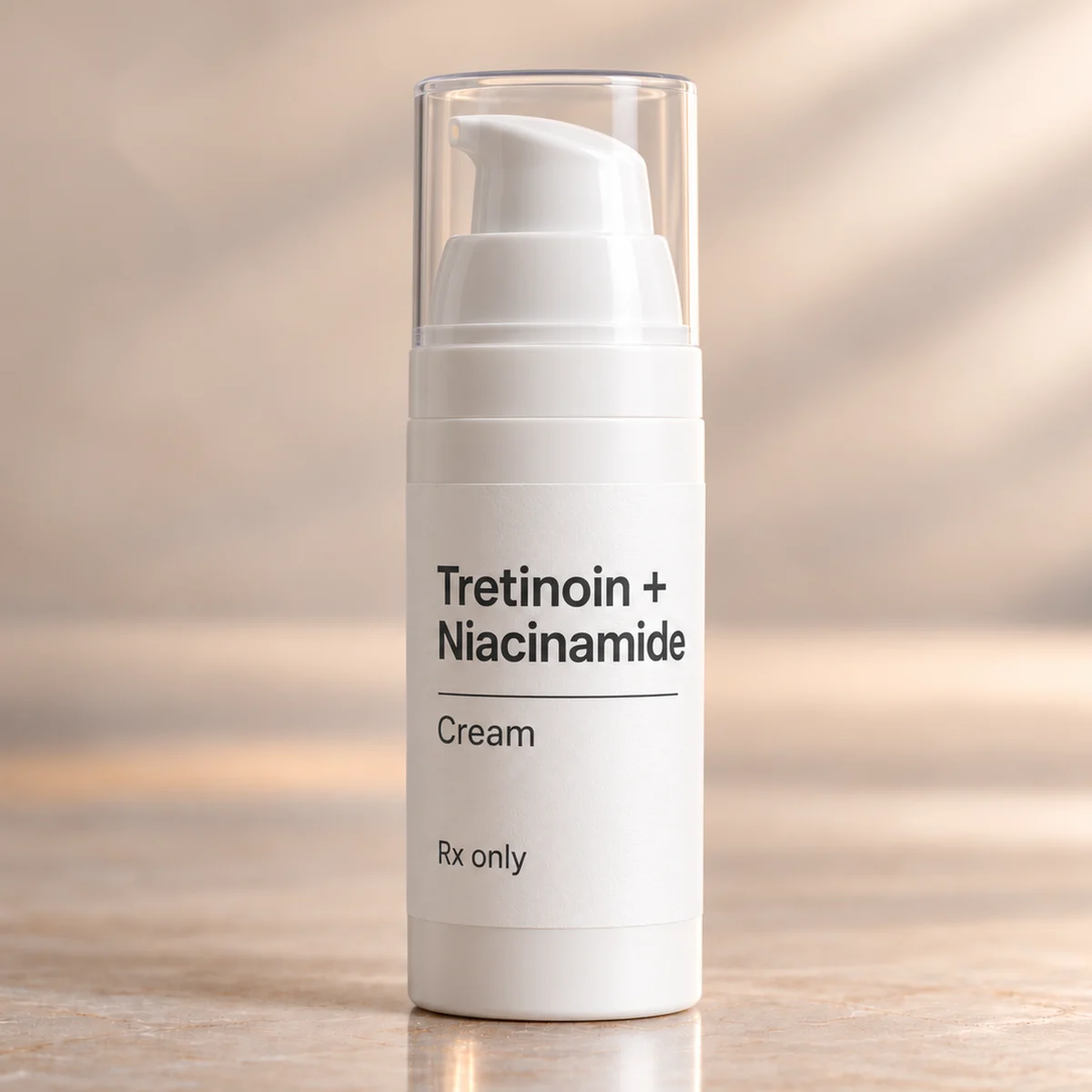
Retin a cream usually refers to topical tretinoin, a prescription retinoid used to treat acne and, in some products, photoaging (fine wrinkles and mottled dark spots from sun exposure). It is effective for many people, but it often causes irritation at first and it is not the right fit for everyone. On Vitals Vault, you can request a clinician reviewed plan for compounded tretinoin with niacinamide.
- Retin a cream is a tretinoin cream used for acne and sun related skin changes.
- Expect dryness, peeling, and irritation early, especially when starting or increasing strength.
- Tretinoin can make your skin more sun sensitive, so daily sun protection matters.
- Avoid use in pregnancy unless your clinician says otherwise, and tell them if you are trying to conceive.
- Vitals Vault offers compounded tretinoin with niacinamide, not the brand Retin-A.
What retin a cream is
A prescription retinoid
Retin-A is a brand name for tretinoin, a vitamin A derivative used on the skin. Many people use the term retin a cream to mean tretinoin cream in general, but products can differ by strength and vehicle (cream, gel, lotion).
Used for acne
Topical tretinoin is FDA approved for acne vulgaris. It is typically applied to the face, but clinicians may prescribe it for other acne prone areas based on your skin and routine.
Some products treat photoaging
A specific tretinoin cream product is FDA approved for mitigating fine facial wrinkles and certain mottled hyperpigmentation when used with a comprehensive skin care and sun avoidance program. It is not a spot treatment and it does not reverse all sun damage.
Not the same as retinol
Retinol is an over the counter ingredient that must be converted in the skin to retinoic acid to work. Tretinoin is already active, which is one reason it can be more effective but also more irritating.
How tretinoin works on skin
Normalizes skin cell turnover
Tretinoin affects how skin cells grow and shed. For acne, this helps keep pores from clogging and can reduce the formation of comedones (blackheads and whiteheads) over time.
Reduces inflammation in acne
By changing how the skin lining behaves and how clogged pores form, tretinoin can reduce the cycle that leads to inflamed pimples. Many clinicians combine it with other acne treatments depending on acne type and sensitivity.
Helps with sun related changes
In photoaging, tretinoin can improve the appearance of fine wrinkles and uneven pigmentation when paired with sun protection. The label emphasizes that results depend on ongoing sun avoidance and a comprehensive skin care program.
Niacinamide may improve tolerability
Niacinamide (vitamin B3) is commonly used in skin care for barrier support and calming redness. In compounded combinations, it may be included to support tolerability, but the compounded formula itself is not FDA approved.
Who retin a cream may be for
Comedonal acne
If your acne is mostly blackheads, whiteheads, or small bumps, tretinoin is often a core treatment. It works gradually, so it is usually chosen when you can commit to consistent use and gentle skin care.
Inflammatory acne
If you have red pimples or pustules, tretinoin may still help, but clinicians often pair it with other treatments. Your plan depends on severity, scarring risk, and how sensitive your skin is.
Photoaging concerns
Some tretinoin products are indicated to improve fine facial wrinkles and mottled hyperpigmentation from sun exposure when used with sun avoidance. If you want a cosmetic benefit, your clinician may discuss realistic expectations and irritation risk.
People who can use sunscreen daily
Tretinoin can increase sun sensitivity. It tends to fit best when you can use broad spectrum sunscreen and limit sun exposure, since sun can worsen irritation and counteract benefits.
Those needing tailored formulas
Some people do better with a specific vehicle or added ingredients for comfort. Compounded tretinoin with niacinamide may be considered when a clinician believes an individualized formulation is appropriate.
Who should not use retin a cream
Pregnancy
Topical tretinoin is generally avoided during pregnancy because retinoids are associated with fetal risk, and safer alternatives exist. If you are pregnant, trying to conceive, or could become pregnant, discuss options with your clinician.
Allergy to ingredients
Do not use tretinoin if you have had an allergic reaction to tretinoin or to ingredients in a specific product or compounded base. Allergic reactions can include rash, swelling, or severe irritation.
Severely irritated or sunburned skin
Applying tretinoin to sunburned, windburned, or eczematous skin can significantly worsen irritation. A clinician may advise waiting until the skin barrier has recovered before starting or restarting.
Certain concurrent topical products
Some products can increase irritation when used with tretinoin, including abrasive cleansers, astringents, alcohol based toners, or other peeling agents. Your clinician or pharmacist can help you build a routine that avoids unnecessary overlap.
What to expect when starting tretinoin
Irritation is common early
Dryness, peeling, redness, burning, or stinging are common when you first start tretinoin or move to a stronger product. This is sometimes called retinization, meaning your skin is adjusting to a retinoid.
Acne may look worse first
Some people notice a temporary flare in breakouts early on as clogged pores come to the surface. If worsening is severe or persistent, a clinician can reassess whether the product, strength, or routine needs to change.
Consistency matters more than intensity
Tretinoin works gradually with regular use. Using too much or combining it with multiple irritating products can backfire by causing inflammation and barrier damage that makes acne and discoloration harder to control.
Sun protection is part of treatment
Tretinoin can increase sensitivity to sunlight. The prescribing information recommends minimizing sun exposure and using protective measures such as sunscreen and protective clothing.
Strength and vehicle affect tolerability
People often search for retin a cream 0.025 or retin a cream 0.05 because strength can influence irritation and response. Your clinician can help match strength and formulation to your skin type and goals.
| What you notice | What it can mean | What to do |
|---|---|---|
| Dryness or peeling | Common adjustment effect, especially early | Use a gentle moisturizer and ask about routine changes if severe |
| Stinging with other products | Your barrier may be irritated | Simplify your routine and avoid harsh exfoliants unless advised |
| More sun sensitivity | Tretinoin can increase photosensitivity | Use daily sunscreen and limit direct sun exposure |
| Persistent severe redness or swelling | Possible intolerance or allergy | Stop and contact a clinician for evaluation |
Side effects and warnings
Dryness and peeling
Dry skin and peeling are among the most common effects of topical tretinoin. They are more likely when you start, increase strength, or combine with other irritating products. A clinician may suggest adjusting frequency, vehicle, or supportive skin care.
Redness, burning, or stinging
Mild to moderate redness, burning, or stinging can happen, especially on sensitive areas. If symptoms are intense, spread beyond the application area, or do not improve, contact your clinician to rule out dermatitis or an allergy.
Itching or irritation
Itching and general irritation can occur and may be worsened by harsh cleansers, alcohol based toners, or physical scrubs. If you develop significant scaling, swelling, or discomfort, your clinician may recommend pausing and reassessing your routine.
Increased sun sensitivity
Tretinoin can increase sensitivity to sunlight and the risk of sunburn. The label recommends minimizing sun exposure and using protective measures such as sunscreen and protective clothing.
Severe allergic reaction
Rarely, tretinoin or other ingredients can cause a serious allergic reaction. Get urgent help for trouble breathing, facial or throat swelling, or widespread hives, and contact your clinician for any severe or rapidly worsening skin reaction.
Cost and access
What drives cost
Cost depends on whether you use a brand product, an FDA approved generic tretinoin, or a compounded formula, plus the strength, vehicle, and pharmacy. Insurance coverage and prior authorization rules can also change what you pay.
Brand versus compounded access
Retin-A is a brand product that may be available through local pharmacies with a prescription. Vitals Vault offers compounded tretinoin with niacinamide, which is prepared for an individual prescription and is not FDA approved.
Insurance and reimbursement
Insurance may cover tretinoin for acne more often than for photoaging, and coverage varies by plan. If you are using a compounded medication, coverage is often different than for FDA approved products, so ask your plan and pharmacy.
Where to see current prices
If a price block appears on this page, it shows current catalog pricing for the Vitals Vault treatment option listed here. Your total cost can still vary based on clinician assessment and state availability.
How to get retin a cream safely
- 1
Decide what you mean by retin a cream
Many people mean tretinoin generally, while others mean the Retin-A brand. Your clinician can clarify options.
- 2
Share your history and skin goals
Tell a clinician about acne type, irritation history, pregnancy plans, and your current routine and products.
- 3
Get a prescription if appropriate
A licensed clinician reviews your health history and decides whether tretinoin is appropriate for you.
- 4
Follow clinician and pharmacy instructions
Use the product exactly as prescribed and ask about sun protection, moisturizers, and which products to avoid.
Frequently Asked Questions
What is retin a cream used for?
Retin a cream commonly refers to topical tretinoin, which is FDA approved to treat acne vulgaris. A specific tretinoin cream is also FDA approved to help improve fine facial wrinkles and mottled hyperpigmentation when used with sun avoidance and skin care.
What is the difference between retin a cream 0.05 and retin a cream 0.025?
Those numbers usually refer to different strengths of tretinoin, and higher strength often increases irritation risk. A clinician can help choose a strength and vehicle based on acne severity, skin sensitivity, and your routine.
How long does retin a cream take to work?
Tretinoin works gradually, and irritation can happen before you see improvement. The prescribing information emphasizes consistent use and sun protection, and your clinician can help set expectations based on your goal and skin type.
Can I use retin a cream during pregnancy?
Topical tretinoin is generally avoided in pregnancy because retinoids are associated with fetal risk and safer alternatives exist. If you are pregnant, trying to conceive, or could become pregnant, discuss options with your clinician.
Is Retin-A the same as compounded tretinoin from Vitals Vault?
No. Retin-A is a brand product, while Vitals Vault offers tretinoin with niacinamide as a compounded medication. Compounded medications are prepared by a licensed pharmacy for an individual prescription and are not FDA-approved.