
Oral finasteride: what it is and how it works
Oral finasteride is a prescription tablet for male pattern hair loss. See who it may fit, key risks, and how access typically works.
Key facts
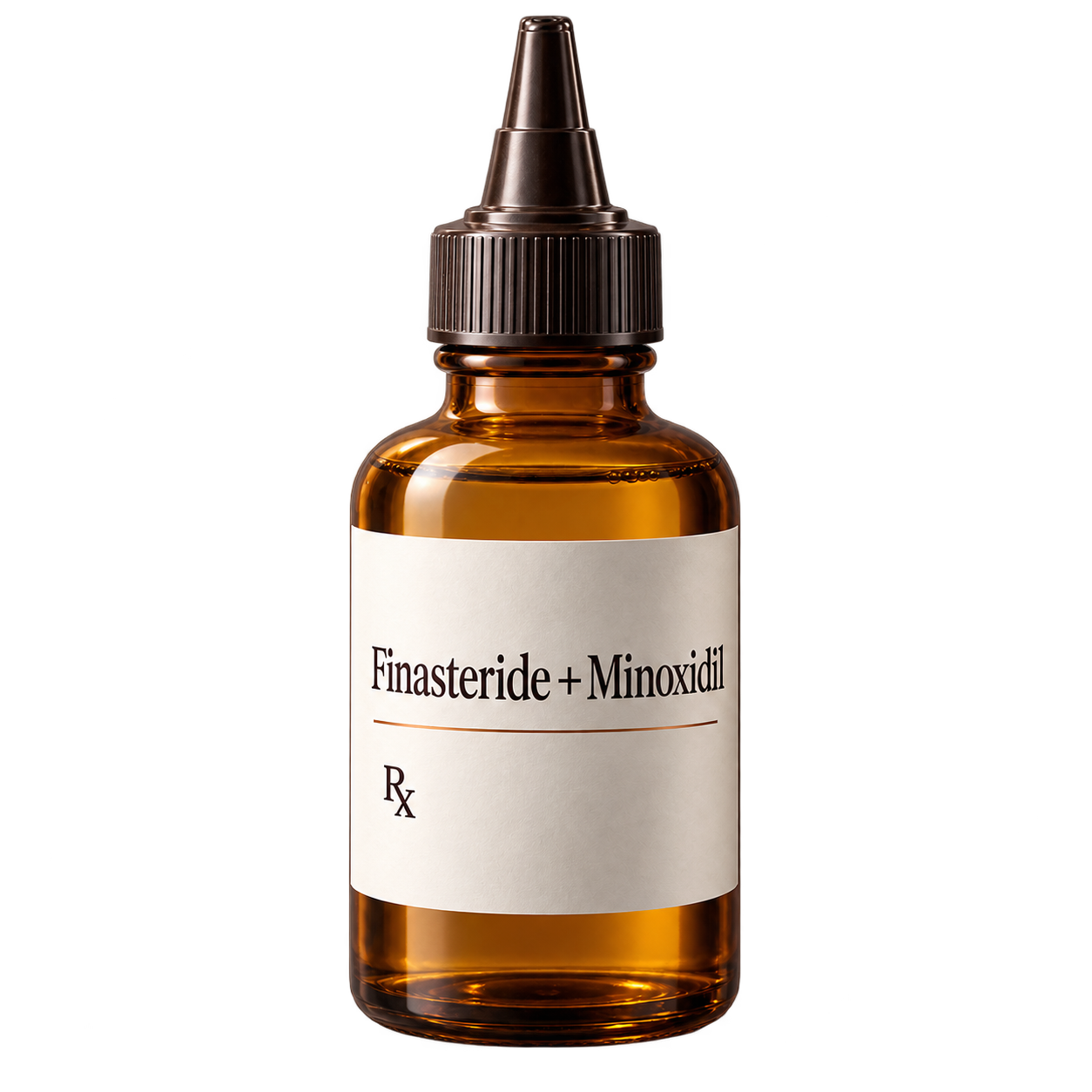
- Finasteride + Minoxidil Scalp Solution is $53.50/month (billed $107 every 50 days), charged only after a clinician approves it.
- Answer a few health questions online. A licensed clinician reviews them. If approved, it ships to your door.
- Adults 18 or older. A licensed clinician reviews your health history and decides whether treatment is appropriate for you. Availability depends on the state you live in.
- A $20 clinician review, refunded if you don’t qualify.


Oral finasteride is a prescription medication used for male pattern hair loss (androgenetic alopecia). It can slow hair loss and, for some people, improve hair growth by reducing dihydrotestosterone (DHT), a hormone involved in follicle miniaturization. This page explains what oral finasteride is, who it may or may not fit, what to expect, and key safety issues to discuss with a clinician.
- Oral finasteride is a prescription tablet used to treat male pattern hair loss in adult men.
- It lowers DHT, a hormone that shrinks scalp hair follicles in androgenetic alopecia.
- It is not for use in pregnancy, and tablets should not be handled by someone who is pregnant.
- Sexual side effects and mood changes can occur, and some effects may persist after stopping.
- Results take time and work best with consistent use and follow-up.
What oral finasteride is
A prescription 5-alpha reductase inhibitor
Finasteride is a prescription medicine that blocks an enzyme called type II 5-alpha reductase. That enzyme converts testosterone to dihydrotestosterone (DHT). Lowering DHT is the main reason finasteride is used for male pattern hair loss.
FDA-approved for male pattern hair loss
Finasteride tablets are FDA-approved to treat male pattern hair loss in adult men. It is not approved for use in women for hair loss, and it is not intended for children.
Not the same as topical finasteride
Oral finasteride is taken by mouth and affects DHT levels throughout the body. Topical finasteride is applied to the scalp and is used with the goal of more localized exposure, but topical formulations vary and may be compounded.
Sometimes paired with minoxidil
Some clinicians use finasteride alongside minoxidil, a separate hair loss medication that works through a different mechanism. Combination approaches can be considered when a clinician reviews your goals, risks, and other health factors.
- Generic name
- Finasteride
- Common brand name
- Propecia (finasteride)
- FDA-approved use (hair)
- Male pattern hair loss in adult men
- Drug class
- 5-alpha reductase inhibitor
How it works for hair loss
Targets DHT
In androgenetic alopecia, DHT contributes to progressive shrinking of susceptible scalp hair follicles. Finasteride reduces the conversion of testosterone to DHT, which can slow this process. Lower DHT can help preserve existing hair and may allow some follicles to produce thicker hair over time.
Works best for pattern hair loss
Finasteride is studied and approved for typical male pattern hair loss patterns. It is not a general hair growth drug for every cause of shedding. If hair loss is sudden, patchy, or accompanied by scalp symptoms, a clinician may look for other causes.
Does not work instantly
Hair growth cycles are slow, so benefits take time to show. Many people need months of consistent use before they can judge whether it is helping. A clinician can help set realistic expectations and decide how to track progress.
Stopping can reverse gains
Finasteride does not cure androgenetic alopecia. If you stop, DHT levels return toward baseline and hair loss can resume. Decisions about continuing should be made with a clinician, especially if side effects occur.
Who oral finasteride may be for
Adult men with male pattern hair loss
Oral finasteride is indicated for adult men with male pattern hair loss. It is typically considered when you want a medication that addresses the hormonal driver (DHT) of androgenetic alopecia. A clinician can confirm whether your pattern fits this diagnosis.
People early to mid progression
Finasteride is often used when you still have active follicles to preserve. If hair loss has been stable for a long time with extensive thinning, expectations may be different. A clinician may discuss whether other options or combination approaches make sense.
Those who can commit to follow-up
Because side effects are possible and hair changes are gradual, finasteride works best when you can check in with a clinician. Follow-up helps you weigh benefits against any sexual, mood, or other symptoms that may arise.
People considering combination therapy
Some people use finasteride with minoxidil, since they work differently. A clinician can help you understand what each medication contributes and how to monitor for side effects, especially if you are using more than one treatment.
Who should not take oral finasteride
Anyone who is pregnant
Finasteride is contraindicated in pregnancy because it can cause abnormalities of the external genitalia in a male fetus. People who are pregnant should not take finasteride. They should also not handle crushed or broken finasteride tablets due to potential absorption.
People with hypersensitivity
Do not use finasteride if you have had an allergic reaction to finasteride or any ingredient in the product. Seek urgent care for symptoms of a severe allergic reaction, such as swelling of the face or throat or trouble breathing.
Children and adolescents
Finasteride is not indicated for use in children. A clinician should evaluate other causes of hair loss in younger people rather than using finasteride.
People needing prostate cancer screening context
Finasteride lowers prostate-specific antigen (PSA) levels, which can affect how PSA test results are interpreted. If you are being monitored for prostate health, tell your clinician you take finasteride so they can interpret PSA appropriately.
What to expect with oral finasteride
A gradual timeline
Hair changes happen slowly because follicles cycle through growth and shedding phases. It can take several months to see whether shedding slows or density improves. Photos taken consistently can help you and your clinician evaluate change over time.
Possible early shedding
Some people notice increased shedding early in treatment. This can happen with hair loss therapies as follicles shift through cycles, but it is not always easy to tell what is medication-related versus the natural course of hair loss. Check in with a clinician if shedding is dramatic or distressing.
Ongoing use is typical
Finasteride is generally used as a long-term management medication for androgenetic alopecia. If you stop, the hormonal driver (DHT) is no longer suppressed and hair loss can progress again. A clinician can help you decide whether continuing is worth it for you.
Monitoring and shared decisions
The main tradeoff is balancing hair benefits against potential side effects, especially sexual and mood-related effects. Bring up any changes in libido, erections, ejaculation, mood, or breast tenderness early. Your clinician can discuss options and whether evaluation for other causes is needed.
Side effects and warnings
Lower libido
Decreased sex drive is a reported side effect of finasteride. If it happens, tell your clinician rather than trying to push through it. Sexual symptoms can have multiple causes, so your clinician may also consider stress, sleep, hormones, and other medications.
Erectile dysfunction
Difficulty getting or keeping an erection can occur with finasteride. For some people, symptoms improve after stopping, but persistent sexual side effects have been reported. If you notice a change, discuss it promptly with a clinician to weigh risks and benefits.
Ejaculation changes
Some people report decreased semen volume or changes in ejaculation. These effects may be reversible, but persistence has been reported. A clinician can help evaluate whether symptoms are likely medication-related and discuss next steps.
Mood changes and depression
Depressed mood has been reported with finasteride, and some labels include warnings about depression and suicidal thoughts. If you notice worsening mood, anxiety, or suicidal thoughts, seek immediate help and contact a clinician right away.
Breast changes
Breast tenderness or enlargement can occur. Rarely, breast lumps, pain, or nipple discharge may signal a more serious problem and should be evaluated promptly. Report any breast changes to a clinician.
Pregnancy exposure risk
Finasteride can harm a developing male fetus. People who are pregnant should not take finasteride and should not handle crushed or broken tablets. If exposure occurs, contact a clinician for guidance.
Cost and access
What drives cost
Your cost depends on whether you use an FDA-approved finasteride tablet or a compounded formulation, the dose and supply length prescribed, and whether a visit and follow-up are included. Shipping, pharmacy fees, and any required monitoring can also affect total cost. Current prices, when available, are shown on this page in the price block.
Insurance coverage varies
Coverage for hair loss treatment varies widely. Many plans treat male pattern hair loss medications as lifestyle or cosmetic and may not cover them, while some may cover generic finasteride depending on plan rules. A clinician or pharmacy can help you understand what your plan may require.
Compounded products are different
Compounded medications are prepared by a pharmacy for an individual prescription and are not FDA-approved. Because they are customized, they are often not covered by insurance. If you are considering a compounded option, ask what ingredients are included and how follow-up is handled.
Access requires a prescription
Oral finasteride requires a prescription. A licensed clinician should review your health history, goals, and risk factors, including pregnancy exposure risk in your household and any mood symptoms, before deciding whether it is appropriate.
How to get oral finasteride safely
- 1
Start with a medical intake
Share your hair loss history, current medications, and any sexual or mood symptoms with a licensed clinician.
- 2
Review risks and alternatives
Discuss expected benefits, possible side effects, pregnancy exposure precautions, and other options such as topical therapies.
- 3
Complete any recommended labs
If a clinician needs more context, they may request recent lab results before prescribing.
- 4
Follow up and reassess
Check in as directed to review progress, side effects, and whether the plan still fits your goals.
Frequently Asked Questions
What is oral finasteride used for?
Oral finasteride is used to treat male pattern hair loss (androgenetic alopecia) in adult men. It works by lowering DHT, a hormone that contributes to follicle miniaturization. A clinician can confirm whether your hair loss pattern fits this use.
How long does oral finasteride take to work?
Hair growth cycles are slow, so it often takes months of consistent use to judge benefit. Some people notice reduced shedding first, while visible density changes can take longer. A clinician can help you track progress with consistent photos and follow-up.
Can oral finasteride cause sexual side effects?
Yes. Decreased libido, erectile dysfunction, and ejaculation changes are reported with finasteride. If you notice sexual symptoms, discuss them promptly with a clinician, since persistence after stopping has been reported and other causes may also contribute.
Is oral finasteride safe for women or during pregnancy?
Finasteride is contraindicated in pregnancy because it can cause abnormalities of the external genitalia in a male fetus. People who are pregnant should not take it and should not handle crushed or broken tablets. Talk with a clinician about safer alternatives if pregnancy is possible.
How much does oral finasteride cost?
Cost depends on whether you use an FDA-approved tablet or a compounded formulation, the prescribed supply length, and what is included in your care plan. Insurance coverage varies and is often limited for hair loss. When available, current prices are shown on this page in the price block.