
Does minoxidil lower testosterone or cause sexual side effects?
Does minoxidil lower testosterone? It is not known to. Sexual side effects are uncommon, so consider other causes and seek care for urgent symptoms.
Key facts
- Finasteride + Minoxidil Scalp Solution is $53.50/month (billed $107 every 50 days), charged only after a clinician approves it.
- Answer a few health questions online. A licensed clinician reviews them. If approved, it ships to your door.
- Adults 18 or older. A licensed clinician reviews your health history and decides whether treatment is appropriate for you. Availability depends on the state you live in.


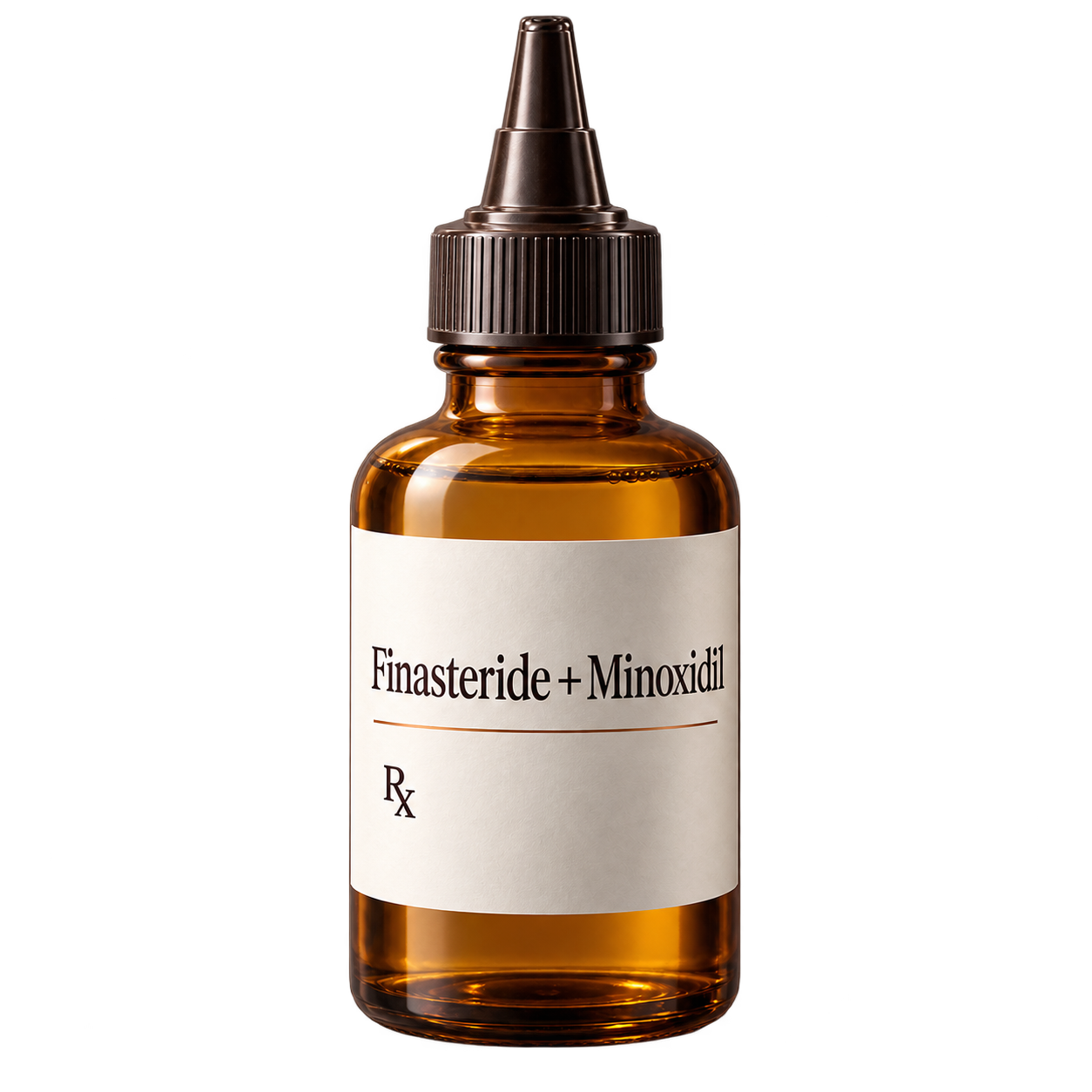
If you searched does minoxidil lower testosterone, you are probably trying to make sense of a new symptom or decide whether to start hair loss treatment. For most people, topical minoxidil is not associated with lowering testosterone, and sexual side effects are not a typical labeled effect. This page explains what the evidence and labeling do and do not show, what else can cause sexual symptoms, and when to get medical help. Vitals Vault also includes lab and clinician supported options to help you sort out possible causes safely.
- Minoxidil is not known to lower testosterone based on available labeling and evidence.
- Sexual side effects are not typical for topical minoxidil; other causes are often more likely.
- Oral minoxidil is prescription and off-label for hair loss, with more systemic risks.
- If you use finasteride too, it is the more common source of sexual side effects.
Does minoxidil lower testosterone?
What the evidence suggests and what else may be going on
What minoxidil does
Minoxidil is a vasodilator, meaning it can widen blood vessels. For hair loss, topical minoxidil is thought to act locally in the scalp and help support hair growth cycles. That mechanism is not the same as changing sex hormone production.
Topical minoxidil and sex hormones
The FDA labeling for topical minoxidil does not describe testosterone lowering or sexual dysfunction as expected effects. That does not prove it can never happen, but it makes a direct hormone lowering effect less likely. If symptoms appear, consider timing, other medications, and other health factors.
Oral minoxidil is different
Oral minoxidil is FDA approved for high blood pressure, not hair loss. Some clinicians prescribe low dose oral minoxidil off-label for hair loss, but it has more systemic exposure than topical products. Systemic effects like fluid retention, faster heart rate, and blood pressure changes are emphasized in oral labeling.
Finasteride is a common confounder
If you are using finasteride (alone or in a combination product), it can affect hormone pathways by inhibiting 5-alpha reductase and lowering dihydrotestosterone (DHT). Sexual side effects are listed in finasteride labeling and are a common reason people search for testosterone related concerns. A clinician can help separate which product is most likely involved.
Other common explanations
Sexual symptoms can be related to stress, sleep loss, depression, relationship factors, alcohol or cannabis use, and many medications. Medical contributors can include thyroid disease, diabetes, low iron, low testosterone, and cardiovascular disease. Because hair loss and sexual symptoms can share underlying causes, a broader check can be useful.
| Option | FDA approved for hair loss? | Hormone pathway effect | Sexual side effects in labeling | Key safety considerations |
|---|---|---|---|---|
| Topical minoxidil | Yes (androgenetic alopecia) | Not a hormone blocker | Not typical or expected | Local irritation possible; avoid use on broken scalp skin; systemic effects are uncommon but possible |
| Oral minoxidil | No (off-label for hair loss) | Not a hormone blocker | Not a typical labeled effect | Systemic cardiovascular effects and fluid retention are emphasized in labeling |
| Finasteride | Yes (male pattern hair loss, 1 mg) and BPH (5 mg) | Lowers DHT by inhibiting 5-alpha reductase | Listed in labeling | Pregnancy exposure risk for fetuses; discuss mood and sexual symptoms with a clinician |
When to talk to a clinician or seek urgent care
New or persistent sexual symptoms
If erectile dysfunction, reduced libido, or other sexual symptoms last more than a short period or are distressing, talk with a clinician. Ask about other causes such as stress, sleep, depression, thyroid disease, diabetes, medication effects, and cardiovascular risk.
Symptoms of low blood pressure
Seek medical advice promptly if you have dizziness, fainting, chest pain, shortness of breath, or a racing heartbeat, especially if you are using oral minoxidil or have heart disease. These can be signs of blood pressure or heart rhythm effects that need evaluation.
Swelling or rapid weight gain
Contact a clinician urgently if you notice swelling of the legs or sudden rapid weight gain, which can signal fluid retention. This is a known risk with systemic minoxidil and can be more concerning in people with heart or kidney problems.
Severe allergic reaction
Get emergency care for trouble breathing, facial or throat swelling, or widespread hives. Although uncommon, any medication or topical product can trigger a serious allergic reaction.
Practical tips if you are worried about sexual side effects
Separate products in your mind
If you use finasteride and minoxidil, ask which one best matches your symptom timing.
Track timing and triggers
Note when symptoms started, stress, sleep, alcohol, and any new medicines or supplements.
Review cardiovascular risk
Erectile dysfunction can be an early sign of vascular disease. Ask if you should be evaluated.
Ask about oral vs topical
Oral minoxidil has more systemic effects than topical. Discuss risks before considering it.
Bring your questions
A focused visit is easier if you list symptoms, current treatments, and what you want to rule out.
Frequently Asked Questions
Does minoxidil lower testosterone?
Topical minoxidil is not known to lower testosterone, and this is not described in FDA labeling. If you have sexual symptoms, consider other causes and review any other hair loss treatments you use with a clinician.
Can minoxidil cause erectile dysfunction?
Erectile dysfunction is not a typical labeled side effect of topical minoxidil. If ED occurs, it is important to look for other contributors such as stress, sleep, medications, cardiovascular risk, and conditions like diabetes or thyroid disease.
Is finasteride more likely than minoxidil to cause sexual side effects?
Yes. Finasteride affects the DHT pathway and sexual side effects are described in its labeling, while topical minoxidil does not typically list sexual side effects. If you use both, a clinician can help assess which is more likely related to your symptoms.
Does oral minoxidil affect hormones differently than topical minoxidil?
Oral minoxidil has more systemic exposure than topical minoxidil, but it is not a hormone blocker. Oral minoxidil is FDA approved for hypertension and is used off-label for hair loss, so its risk profile and monitoring considerations are different.
What labs can help if I have hair loss and sexual symptoms?
Depending on your history, a clinician may consider labs related to thyroid function, iron status, metabolic health, or hormones. Labs do not diagnose on their own, but they can help identify patterns that guide next steps. Vitals Vault lab panels can be shared with your clinician.