
Minoxidil dose for hair loss: what to use
Minoxidil dose for hair loss depends on the product and where you apply it. Here is what labels say, what to expect, and when to contact a clinician.
Key facts
- Finasteride + Minoxidil Scalp Solution is $53.50/month (billed $107 every 50 days), charged only after a clinician approves it.
- Answer a few health questions online. A licensed clinician reviews them. If approved, it ships to your door.
- Adults 18 or older. A licensed clinician reviews your health history and decides whether treatment is appropriate for you. Availability depends on the state you live in.


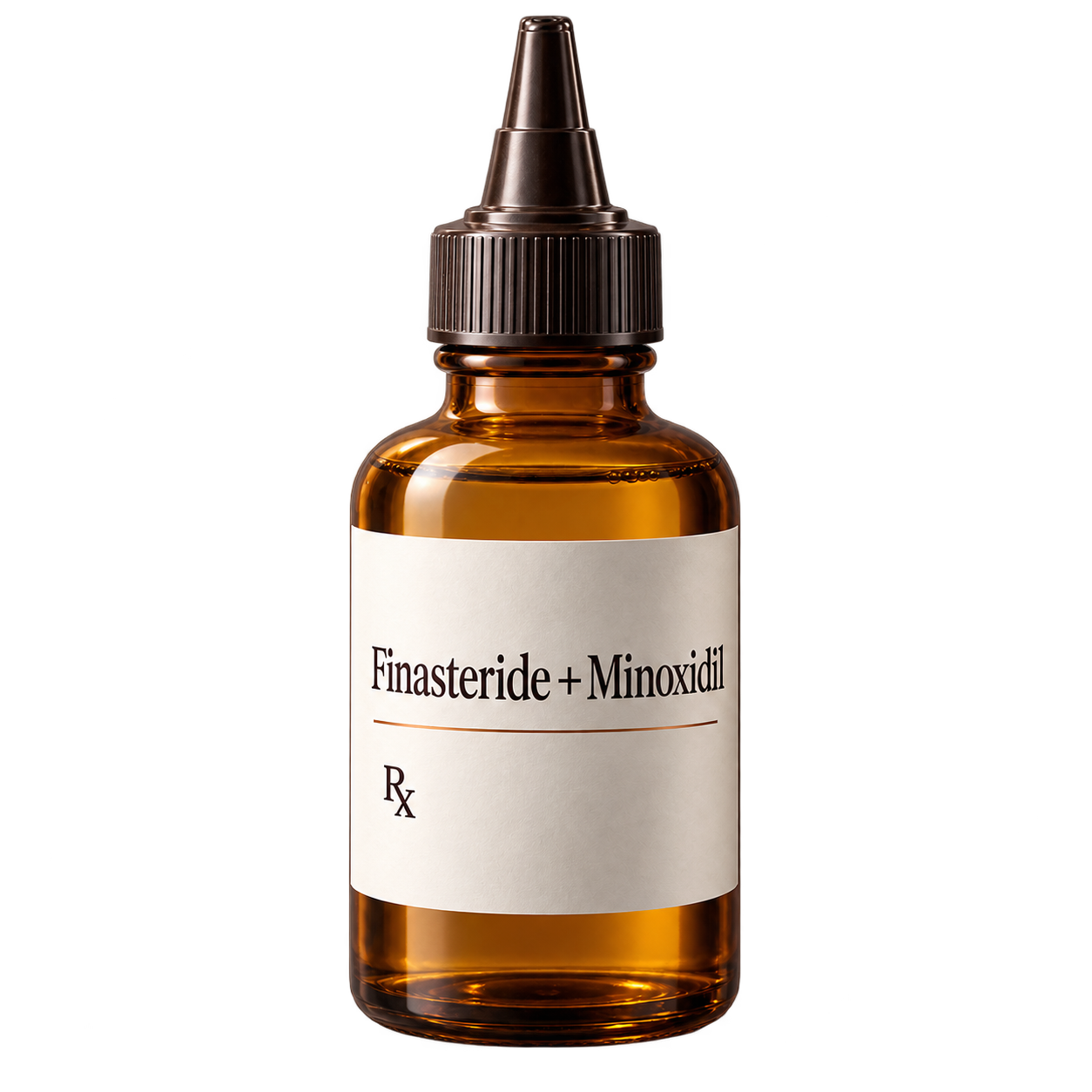
Your minoxidil dose for hair loss is determined by the specific product you use (solution or foam) and the instructions on its label. Because minoxidil can affect the skin and, rarely, the heart and blood pressure, it matters how you apply it and what symptoms to watch for. This guide summarizes label based dosing basics for topical minoxidil and explains why some people notice early shedding.
- A minoxidil dose for hair loss depends on the product label and where you apply it.
- Topical minoxidil is FDA-approved for androgenetic alopecia; oral minoxidil for hair loss is off-label.
- Temporary shedding can happen early as hairs shift into a new growth cycle.
- Stop and seek urgent care for chest pain, fainting, or severe swelling.
Minoxidil dose basics
Follow the exact label
Minoxidil products are not interchangeable. The labeled amount and how often you apply it depend on the specific formulation and strength, so use the package Drug Facts or prescribing information for your product.
Topical is the labeled route
For hair loss, minoxidil is commonly used as a topical solution or foam applied to the scalp. Oral minoxidil is a blood pressure medication and its use for hair loss is off-label, meaning it is not FDA-approved for that purpose.
Use is long-term
Minoxidil works only while you keep using it. If you stop, any benefit may gradually reverse over time, so discuss any changes with a clinician.
How to use it safely and what can happen
Temporary shedding can occur
Some people notice increased shedding when starting minoxidil. This can happen because hairs shift from a resting phase into a growth phase, and older hairs shed to make room for new growth. If shedding is severe, persistent, or comes with scalp symptoms, contact a clinician.
Scalp irritation is common
Itching, dryness, scaling, or redness can occur, especially with solutions that contain alcohol or propylene glycol. If irritation is significant, a clinician may suggest switching formulations or evaluating for dermatitis or another scalp condition.
Unwanted hair growth is possible
Hair growth can occur on areas where minoxidil repeatedly contacts skin, such as the face. Washing hands after application and avoiding spread to other areas can help reduce this risk.
Low blood pressure symptoms
Although topical minoxidil is intended to act locally, systemic absorption can happen. Stop using it and seek medical advice if you develop dizziness, lightheadedness, or fainting, especially if symptoms are new or worsening.
Chest pain or fast heartbeat
Chest pain, rapid heartbeat, or shortness of breath can be signs of a serious reaction. Stop the product and seek urgent evaluation, particularly if you have heart disease risk factors or symptoms are severe.
Swelling and rapid weight gain
Swelling of hands or feet or sudden weight gain can signal fluid retention. This is uncommon but important to address quickly, especially if you also have shortness of breath.
- FDA-approved hair loss use
- Topical minoxidil is approved for androgenetic alopecia (pattern hair loss).
- Oral minoxidil for hair loss
- Off-label use; oral minoxidil is approved for hypertension, not hair loss.
- Early shedding
- Can occur early as the hair cycle shifts; discuss persistent or severe shedding.
When to contact a clinician
Heart or blood pressure symptoms
Get urgent care for chest pain, fainting, severe dizziness, shortness of breath, or significant swelling. These symptoms need medical evaluation rather than self-troubleshooting.
Sudden or patchy hair loss
Rapid shedding, bald patches, scalp pain, or scaling may point to a different cause than pattern hair loss. A clinician can check for conditions like alopecia areata, tinea capitis, thyroid disease, or nutritional deficiencies.
Pregnancy or trying to conceive
If you are pregnant, planning pregnancy, or breastfeeding, ask a clinician before using minoxidil. If your regimen also includes finasteride, pregnancy exposure precautions are especially important.
No improvement over time
If you have used the product exactly as directed and are not seeing any benefit, a clinician can confirm the diagnosis and discuss other options, including prescription treatments and evaluation for reversible triggers.
Practical tips for better use
Be consistent
Use it on the schedule your product label states, not just when you remember.
Protect your skin
Let it dry and avoid spreading it to the face, neck, or pillowcases.
Do not stack products blindly
Adding multiple hair products can increase irritation. Ask a clinician what to combine.
Track shedding patterns
Note when shedding started and whether it is diffuse or patchy to guide evaluation.
Frequently Asked Questions
Can minoxidil cause hair loss?
Yes, temporary increased shedding can happen when you start minoxidil as hairs shift through the growth cycle. It should not be sudden patchy hair loss or scalp pain. If shedding is severe or persistent, contact a clinician.
Does minoxidil cause hair loss long term?
Minoxidil is intended to support hair growth in pattern hair loss, but it can cause early shedding in some people. If you stop using it, any benefit may gradually reverse. A clinician can help confirm whether minoxidil is a good fit.
What is the minoxidil dose for hair loss for men vs women?
The correct dose depends on the exact product and its label, not only sex. Some products are marketed separately for men and women with different instructions. Use the Drug Facts or prescribing information for your specific product and ask a clinician if you are unsure.
Can I use minoxidil with finasteride?
Some clinicians use topical minoxidil and finasteride together for androgenetic alopecia, but the plan should be individualized. Finasteride has important pregnancy exposure precautions and potential sexual side effects. Discuss risks, benefits, and monitoring with a licensed clinician.
When should I stop minoxidil and get medical help?
Stop and seek urgent care for chest pain, fainting, severe dizziness, shortness of breath, or significant swelling. Contact a clinician for severe scalp irritation, rash, or sudden patchy hair loss. Bring the product name and how you used it to your visit.