
Minoxidil gummies: what they are and safer options
Minoxidil gummies are not an FDA approved form of minoxidil. Here is what to know about safety, expectations, and clinician guided options.
Key facts
- Finasteride + Minoxidil Scalp Solution is $53.50/month (billed $107 every 50 days), charged only after a clinician approves it.
- Answer a few health questions online. A licensed clinician reviews them. If approved, it ships to your door.
- Adults 18 or older. A licensed clinician reviews your health history and decides whether treatment is appropriate for you. Availability depends on the state you live in.


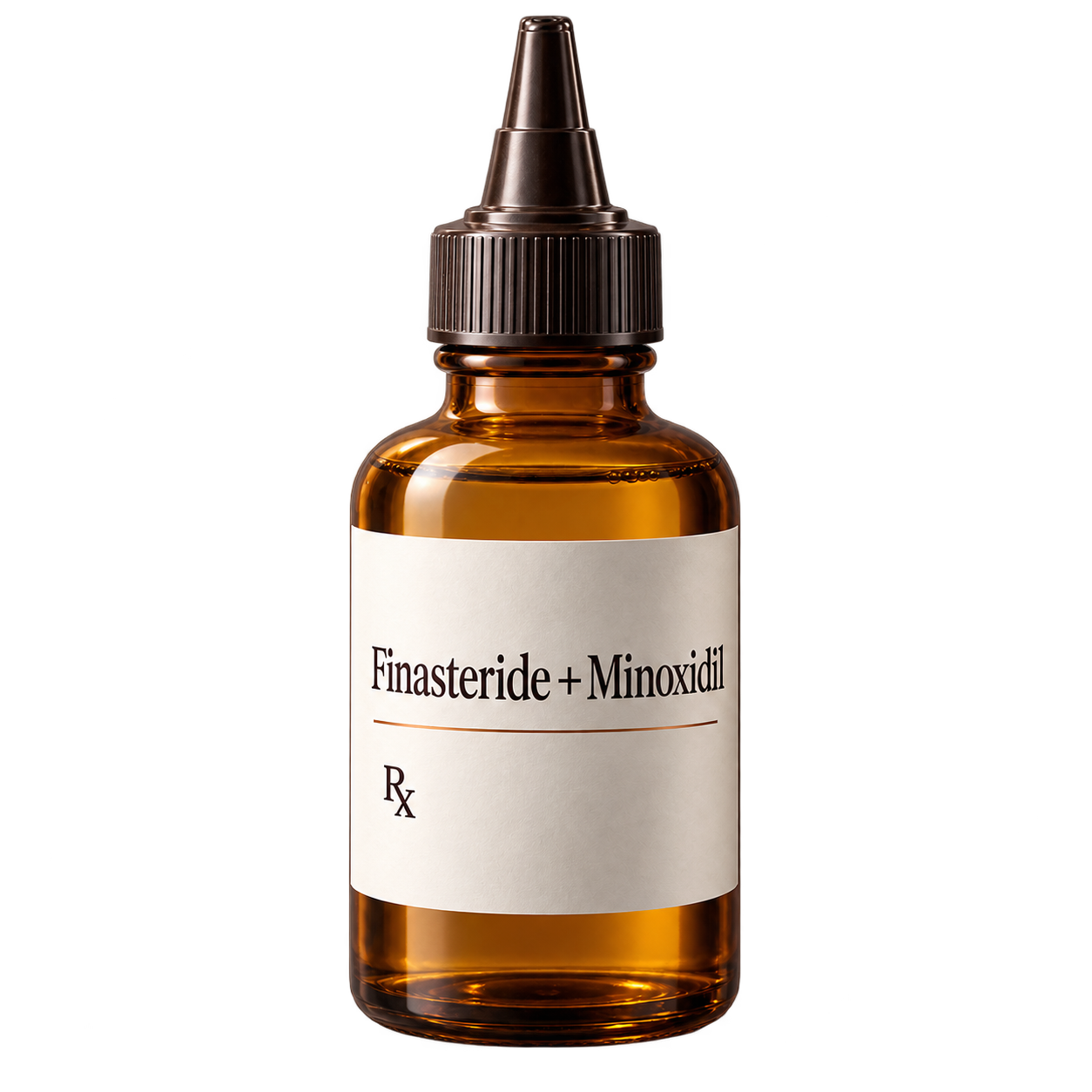
People search for minoxidil gummies because they want a simple way to treat thinning hair. The key issue is that minoxidil is FDA approved for hair loss as a topical medicine, not as a gummy, and swallowing minoxidil can carry different safety risks than applying it to the scalp. Vitals Vault can connect you with clinician guided options and, when appropriate, lab testing to check for common contributors to shedding before you commit to a plan.
- Minoxidil gummies are not an FDA approved form of minoxidil for hair loss.
- Evidence and labeling for hair regrowth are for topical minoxidil, not gummies.
- Oral minoxidil is prescription only and commonly used off label, with different risks.
- Biotin helps mainly when you are deficient, and high doses can affect lab tests.
- A clinician can help match hair loss type to the safest, evidence based option.
What minoxidil gummies are
A marketing term, not a labeled product
Minoxidil gummies are typically dietary supplements or compounded products marketed for hair growth. There is no FDA approved minoxidil gummy for hair loss, and supplement products are not evaluated like prescription drugs for effectiveness.
Minoxidil is a drug, not a vitamin
Minoxidil is an active medication that was originally developed for blood pressure and later used for hair loss in topical form. If a gummy contains an active drug ingredient, it should be treated as medication level risk, not a routine supplement.
Biotin is often added
Many hair gummies include biotin (vitamin B7). Biotin can be helpful if you are truly deficient, but it does not reliably treat androgenetic alopecia (pattern hair loss) on its own, and high intake can interfere with some lab tests.
What this page covers
This page explains what is known from FDA labeling and clinical evidence about minoxidil for hair loss, why gummy claims can be misleading, and what safer, clinician guided options usually look like.
How minoxidil works for hair loss
It supports hair cycling
Hair grows in cycles, and many types of hair loss involve shortened growth phases or miniaturization of follicles. Minoxidil is thought to help shift follicles into a growth phase and increase hair shaft size in some people, which can improve density over time.
Topical evidence is strongest
The best studied and FDA approved approach for hair regrowth is topical minoxidil applied to the scalp. That evidence does not automatically translate to a gummy or supplement format, which may not deliver a consistent or appropriate dose.
Oral exposure changes the risk profile
Taking minoxidil by mouth leads to systemic exposure, which is why oral minoxidil is a prescription medication with cardiovascular warnings. Even when clinicians use low dose oral minoxidil off label for hair loss, they do so with screening and monitoring.
Finasteride targets a different pathway
Finasteride works by lowering dihydrotestosterone (DHT), a hormone linked to male pattern hair loss. Combination approaches may be used under clinician supervision, but they are not the same as a gummy marketed as a simple add on.
Who may consider treatment
Pattern hair loss
Topical minoxidil is commonly used for androgenetic alopecia, also called pattern hair loss. A clinician can help confirm the pattern and rule out other causes that need different treatment.
People who can commit to consistency
Hair treatments usually require steady use for months because hair growth cycles are slow. If you stop effective therapy, any benefit typically fades over time as follicles return to their baseline cycle.
Those avoiding unverified supplements
If you are drawn to minoxidil gummies for convenience, it can help to compare them with options that have clearer labeling and evidence. Clinician guided plans can also address scalp irritation, shedding concerns, and realistic expectations.
People with possible deficiency or shedding triggers
If shedding is new, diffuse, or tied to stress, illness, postpartum changes, or diet, labs and history can matter. Checking for iron deficiency, thyroid issues, and other contributors can prevent months of trial and error.
Who should avoid or use extra caution
Pregnancy or trying to conceive
Finasteride can cause birth defects in a male fetus, and exposure during pregnancy is a known concern. If pregnancy is possible, discuss safer alternatives and contraception considerations with a clinician before using any finasteride containing product.
Breastfeeding
Ask a clinician before using minoxidil or finasteride while breastfeeding. Safety depends on the medication, formulation, and your individual situation.
Heart or blood pressure conditions
Oral minoxidil has cardiovascular effects and carries warnings related to fluid retention and heart effects. If you have heart disease, arrhythmias, swelling, or blood pressure concerns, do not use swallowed minoxidil without clinician oversight.
Scalp disease or sudden patchy loss
Pain, scaling, scarring, or sudden patchy hair loss can signal conditions that need diagnosis and targeted treatment. In those cases, a gummy or over the counter approach can delay appropriate care.
Allergy or sensitivity to ingredients
Gummies often contain flavorings, dyes, and other additives that can trigger reactions. Topical minoxidil products can also contain alcohol or propylene glycol, which may irritate sensitive scalps.
What to expect and how long it takes
Expect gradual change, not overnight growth
Hair growth is slow, so visible improvement typically takes months, not days. Early on, some people notice increased shedding as follicles shift cycles, which can be alarming but may be temporary.
Results vary by hair loss type
Pattern hair loss often responds better to evidence based therapies than scarring alopecia or inflammatory scalp disease. If you are not sure what type you have, a clinician evaluation can prevent wasted time.
Consistency matters more than stacking products
Using a proven treatment consistently is usually more important than adding multiple supplements. Adding biotin or other vitamins without a deficiency rarely addresses the underlying drivers of androgenetic alopecia.
Stopping can reverse gains
Minoxidil does not cure the underlying tendency toward pattern hair loss. If you discontinue an effective regimen, the hair that was being supported may gradually return to its prior state.
Side effects and warnings
Scalp irritation
Topical minoxidil can cause itching, dryness, scaling, or redness where it is applied. Sometimes the irritation is from inactive ingredients rather than minoxidil itself, so a clinician may suggest a different vehicle or routine.
Unwanted hair growth
Hair growth can occur in areas where minoxidil spreads, such as the face. Careful application and hand washing after use can help reduce this risk with topical products.
Initial shedding
Some people notice increased shedding early in treatment as follicles shift into a new growth cycle. If shedding is heavy, prolonged, or accompanied by other symptoms, check in with a clinician to rule out other causes.
Low blood pressure and dizziness
Minoxidil taken by mouth can lower blood pressure and cause lightheadedness or fainting, especially in people sensitive to blood pressure changes or taking other blood pressure medicines. This is one reason swallowed minoxidil should not be treated like a supplement.
Fluid retention and swelling
Oral minoxidil can cause salt and water retention, which may show up as swelling in the legs or rapid weight gain. This can be dangerous for people with certain heart conditions and needs prompt medical evaluation.
Fast heart rate or chest symptoms
Oral minoxidil can increase heart rate and has warnings related to heart effects. Seek urgent care for chest pain, shortness of breath, or fainting.
Cost and access
What drives cost
Cost depends on whether you use an over the counter topical product, a prescription plan, or a compounded formulation. Compounded medications are made for an individual prescription and pricing can vary based on ingredients and pharmacy preparation.
Why gummies can be a red flag
A gummy marketed for hair growth may not clearly state the active drug amount or may combine ingredients in ways that are not supported by FDA labeling for hair loss. If a product is effectively delivering oral minoxidil, it should be treated as a prescription level therapy.
Insurance and prescriptions
Many hair loss treatments are paid out of pocket, and coverage varies widely by plan and diagnosis. If you are prescribed a compounded product, it is typically not billed the same way as an FDA approved generic medication.
Where to see current pricing
If you are viewing this page through Vitals Vault, current prices for the associated treatment plan are shown on this page in the price block. A clinician can also explain what is included in a plan and what follow up looks like.
How to get it safely
- 1
Start with your hair loss pattern
Note whether thinning is gradual, patchy, sudden, or associated with scalp symptoms to share with a clinician.
- 2
Review medical history and medications
A licensed clinician should screen for pregnancy risk, heart or blood pressure issues, and potential interactions.
- 3
Use evidence based options first
Topical minoxidil is the FDA approved form for hair loss; oral approaches are prescription only and typically off label.
- 4
Follow up and reassess
Hair growth takes time, so check ins help confirm you are on track and address side effects or lack of response.
Minoxidil gummies vs other options
| Option | What it is | Evidence for hair loss | Key safety considerations |
|---|---|---|---|
| Minoxidil gummies | Gummy supplement or compounded product marketed for hair growth | Not FDA approved; evidence depends on actual contents and dose | If it delivers oral minoxidil, systemic cardiovascular risks apply |
| Topical minoxidil | FDA approved topical solution or foam applied to scalp | Supported by FDA labeling for androgenetic alopecia | Local irritation; avoid unintended spread to face |
| Oral minoxidil | Prescription tablet; off label for hair loss | Some clinical use and studies, but not FDA approved for hair loss | Blood pressure and heart related warnings; needs clinician oversight |
| Finasteride (oral) | Prescription medication that lowers DHT | FDA approved for male pattern hair loss | Sexual side effects possible; pregnancy exposure risk |
Frequently Asked Questions
Are minoxidil gummies FDA approved for hair loss?
No. FDA approval for minoxidil and hair loss is for topical products applied to the scalp, not gummies. If a gummy contains oral minoxidil, it should be treated as a prescription level medication with different safety considerations.
Do minoxidil gummies work better than topical minoxidil?
There is no FDA labeled evidence that a gummy form works better than topical minoxidil for hair loss. Topical minoxidil is the form supported by FDA labeling for androgenetic alopecia, while oral minoxidil for hair loss is generally off label and needs clinician oversight.
Are minoxidil gummies the same as oral minoxidil tablets?
Not necessarily. Oral minoxidil tablets are prescription medication with established labeling and warnings, while gummies may be supplements or compounded products with variable contents. If a gummy delivers oral minoxidil, the systemic risks can still apply.
Can biotin in hair gummies help with thinning hair?
Biotin can help if you are deficient, but it is not a proven standalone treatment for pattern hair loss. Also, high biotin intake can interfere with some lab tests, so tell your clinician about any biotin supplements you take.
How much do minoxidil gummies cost?
Cost depends on whether the product is a supplement, a prescription medication, or a compounded formulation, and what is included in your care plan. If you are on Vitals Vault, current prices for the associated treatment plan are shown on this page in the price block.