
Minoxidil before and after: what to expect
See what minoxidil results usually look like over the first year, why early shedding happens, and how to tell if it is working.
Key facts
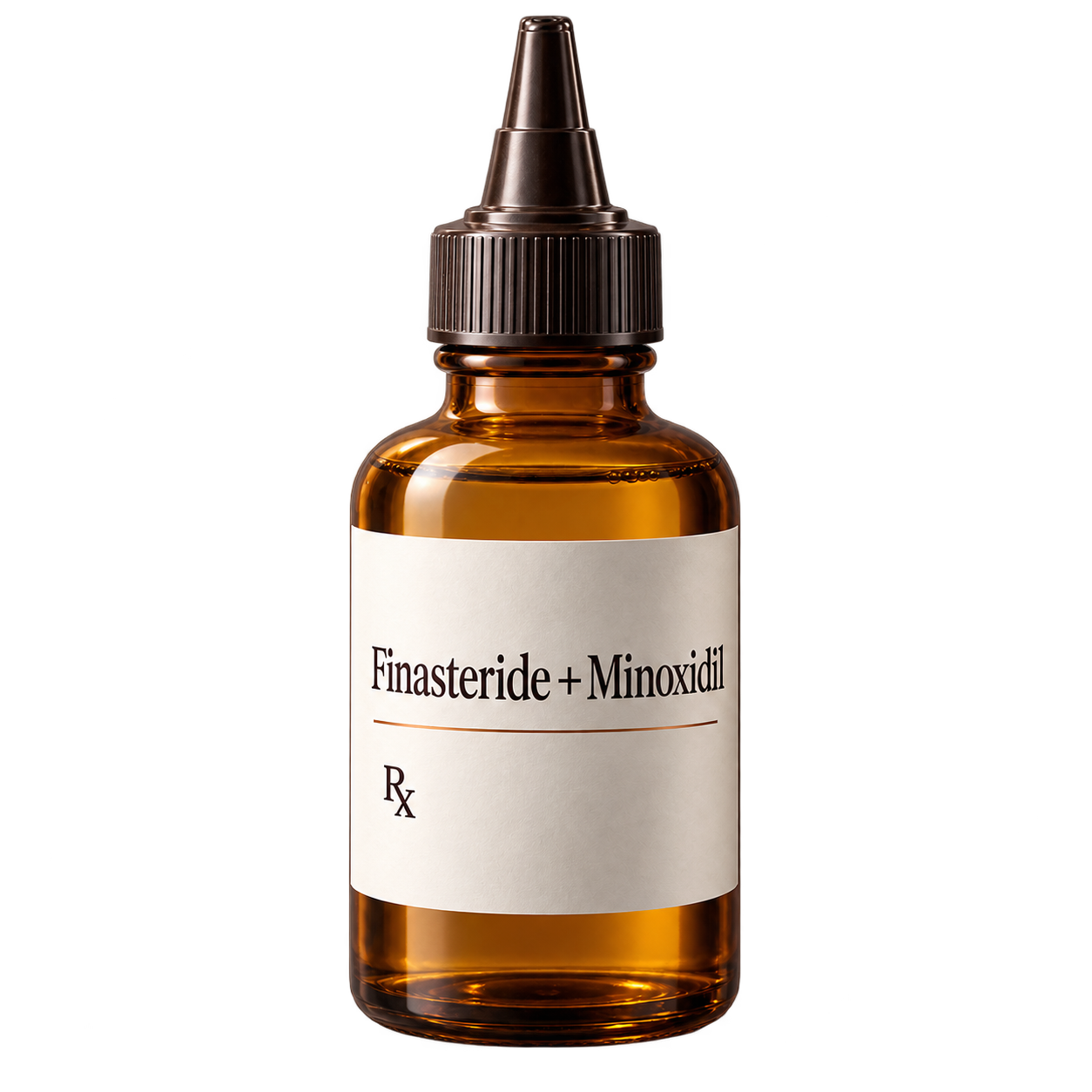
- Finasteride + Minoxidil Scalp Solution is $53.50/month (billed $107 every 50 days), charged only after a clinician approves it.
- Answer a few health questions online. A licensed clinician reviews them. If approved, it ships to your door.
- Adults 18 or older. A licensed clinician reviews your health history and decides whether treatment is appropriate for you. Availability depends on the state you live in.


If you searched “minoxidil before and after,” you are probably trying to set realistic expectations. In studies of topical minoxidil for pattern hair loss, changes tend to be gradual and depend on consistent use, with some people seeing stabilization first and regrowth later. This page explains what the evidence and product labeling suggest about timeline, what “progress” can look like, and why results vary. If you are considering a clinician guided plan, Vitals Vault can help you review options and decide what is worth trying.
- Minoxidil before and after changes are gradual, usually taking months of consistent use.
- Temporary shedding can happen early as hairs cycle into new growth.
- Results vary by cause of hair loss, how long it has been present, and adherence.
- Topical minoxidil can irritate the scalp; stop and seek care for severe reactions.
Minoxidil before and after: what to expect
Before: baseline varies
“Before” can mean early thinning, visible scalp, or widening part lines. Minoxidil tends to work best when follicles are still active, so earlier stages of pattern hair loss often have more room for visible improvement.
After: stabilization counts
A meaningful “after” is often slower loss or a fuller look rather than dramatic regrowth. In clinical trials, the main outcomes include hair count changes and investigator assessments, which may not match the lighting and styling effects seen in photos.
Consistency drives outcomes
Minoxidil is a maintenance treatment. If you use it inconsistently, it is harder to tell whether you are not responding or simply not getting enough exposure to see a change.
Combination therapy is common
Many people use minoxidil alongside other treatments for pattern hair loss, such as finasteride. Combination approaches can change what “before and after” looks like, so it helps to know which treatments were used and for how long.
What studies and labels show
- What minoxidil is
- Topical minoxidil is an FDA approved treatment for androgenetic alopecia (pattern hair loss) in men and women, depending on product strength and labeling.
- What it can do
- In clinical studies, topical minoxidil increased hair growth measures compared with placebo in androgenetic alopecia, with gradual changes over months.
- What it cannot do
- Minoxidil does not treat every cause of hair loss. If hair loss is due to scarring alopecia, untreated thyroid disease, iron deficiency, or medication effects, addressing the cause matters.
- What happens if you stop
- Labeling for topical minoxidil notes that hair regrowth may be lost after discontinuation, meaning ongoing use is typically needed to maintain benefit.
Why early shedding can happen
Some people notice increased shedding early in treatment. A common explanation is hair cycling: older hairs shed as follicles shift into a new growth phase, but this does not happen to everyone and is not a guarantee of future regrowth.
Scalp irritation and dryness
Topical minoxidil can cause scalp irritation, itching, dryness, or flaking. Switching formulations, reducing exposure to the scalp skin around the application area, or treating underlying dermatitis can help, but you should discuss persistent irritation with a clinician.
Unwanted facial hair
Unwanted hair growth can occur if minoxidil spreads beyond the scalp or transfers to other skin. Careful application and hand washing after use can reduce this risk.
Low blood pressure type symptoms
Although topical minoxidil is applied to the scalp, systemic effects are possible. Stop use and seek medical care if you develop chest pain, rapid heartbeat, fainting, dizziness, or swelling of hands or feet, as these are listed warnings on product labeling.
Allergic reactions
Stop and seek urgent care for signs of a severe allergic reaction such as trouble breathing, facial swelling, or widespread hives. Contact a clinician promptly for severe scalp inflammation, blistering, or rash that does not improve.
Typical timeline
| Time on treatment | What you might notice | What it means |
|---|---|---|
| First several weeks | No visible change, or temporary shedding in some people | Early shedding can be part of hair cycling, but not everyone experiences it. |
| Around 2 to 4 months | Shedding may stabilize; early thickening may be subtle | Many trials assess outcomes over months, so early changes can be hard to see in photos. |
| Around 4 to 6 months | More noticeable improvement for responders | This is a common window used in studies to evaluate response, but results vary. |
| 6 to 12 months | Best assessment of response for many people | If there is no improvement, a clinician may reassess diagnosis, adherence, and alternatives. |
Why photos can mislead
Lighting, hair length, styling products, and camera angle can create big differences that are not true regrowth. If you track progress, try to keep the same lighting and angle and look for changes in part width or scalp show-through.
Why results vary
Response depends on the type of hair loss, how long it has been present, and whether follicles are still producing hair. Coexisting issues like seborrheic dermatitis, iron deficiency, or thyroid disease can also affect perceived results.
What “plateau” can mean
A plateau does not always mean failure. For some people, maintaining what you have is a success, especially if hair loss was progressing quickly before treatment.
When to talk to a clinician
Sudden or patchy loss
If hair loss is sudden, rapidly worsening, or patchy, you may need evaluation for causes other than pattern hair loss. A clinician can check for autoimmune, infectious, medication-related, or nutritional causes.
Scalp pain or scarring
Pain, burning, pustules, or shiny scar-like areas can suggest inflammatory or scarring alopecia, which needs prompt care. Minoxidil alone may not address these conditions.
Symptoms of systemic effects
Stop minoxidil and seek medical care for chest pain, fast heartbeat, fainting, dizziness, or swelling of hands or feet. These are listed as warning symptoms on topical minoxidil labeling.
Pregnancy or trying to conceive
Discuss hair loss treatments with a clinician if you are pregnant, trying to conceive, or breastfeeding. Some hair loss medications have pregnancy-related restrictions, and the right approach depends on your situation.
No change after months
If you have used minoxidil consistently for several months without improvement, a clinician can reassess the diagnosis and consider other options. They may also recommend lab work if a medical cause is possible.
Pro tips for better consistency
Pick a routine you can keep
The best schedule is the one you can follow consistently for months.
Track the same way monthly
Use the same lighting, angle, and part line to reduce photo noise.
Treat scalp conditions too
Dandruff or dermatitis can worsen shedding and irritation. Ask about treatment.
Avoid mixing too many changes
Starting multiple hair products at once makes it hard to know what helped.
Ask about combination options
For pattern hair loss, clinicians may discuss adding another therapy like finasteride.
Frequently Asked Questions
What does minoxidil before and after usually look like?
Most people who respond see gradual change over months, often starting with less shedding or better coverage before obvious regrowth. Photos can exaggerate change due to lighting and styling, so consistent tracking matters. If you stop, labeling notes that regrowth may be lost over time.
Is shedding after starting minoxidil normal?
Some people notice increased shedding early, which can happen as hairs shift through the growth cycle. It is not a guarantee of future regrowth and does not happen to everyone. If shedding is severe, sudden, or patchy, talk with a clinician.
How long does minoxidil take to work?
Clinical studies and product labeling evaluate results over months, not days. Many people need several months of consistent use to judge response, and the best assessment may take longer. If there is no improvement after months, a clinician can reassess the cause and options.
What are the most common side effects of topical minoxidil?
Common effects include scalp irritation, itching, dryness, or flaking. Unwanted hair growth can occur if the product spreads beyond the scalp. Stop and seek medical care for chest pain, fainting, rapid heartbeat, dizziness, or swelling.
Can I use minoxidil with finasteride?
Clinicians sometimes use minoxidil and finasteride together for androgenetic alopecia because they work differently. Whether a combination is appropriate depends on your sex, pregnancy considerations, side effect risk, and medical history. Discuss options with a licensed clinician rather than adding medications on your own.