
Finasteride before and after: what to expect
Finasteride before and after results are gradual. Studies show changes can take months, and benefits depend on consistency, time, and hair loss pattern.
Key facts
- Finasteride + Minoxidil Scalp Solution is $53.50/month (billed $107 every 50 days), charged only after a clinician approves it.
- Answer a few health questions online. A licensed clinician reviews them. If approved, it ships to your door.
- Adults 18 or older. A licensed clinician reviews your health history and decides whether treatment is appropriate for you. Availability depends on the state you live in.


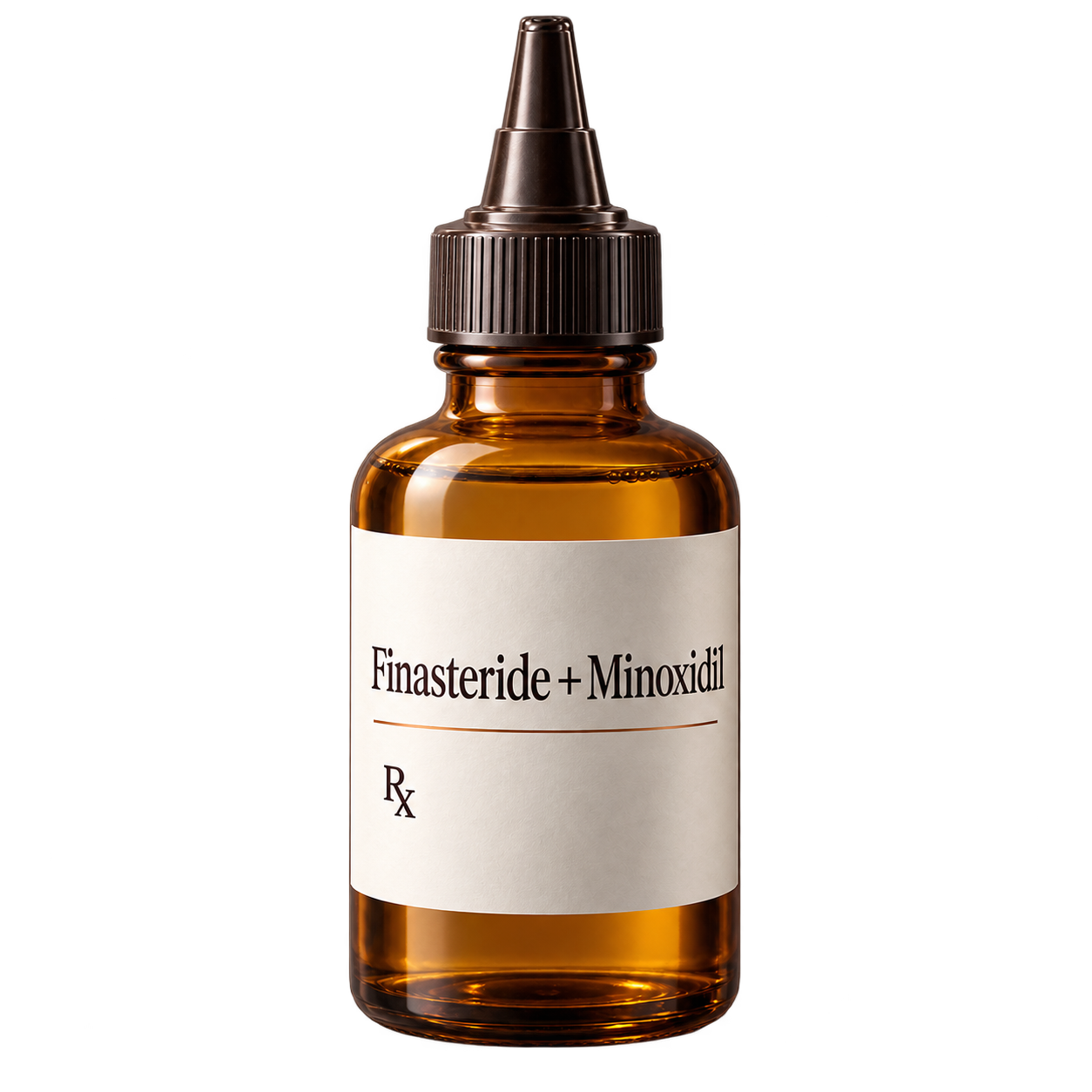
If you are searching for finasteride before and after photos, you are usually trying to answer two questions: how long it takes to notice change and what kind of change is realistic. The best way to set expectations is to look at clinical studies and the medication label, not single images. This page explains what research shows about timelines, why results vary, and what to watch for with finasteride, including when it is paired with minoxidil.
- Finasteride before and after changes are gradual, with clearer differences usually seen after months of consistent use.
- In studies, finasteride increased hair counts compared with placebo and helped maintain hair over time.
- Early shedding can happen with hair loss treatments and does not always mean it is failing.
- Results vary by genetics, how long hair loss has been happening, and whether you also use minoxidil.
Finasteride before and after: the realistic picture
- What finasteride is approved for
- Finasteride 1 mg is FDA-approved to treat male pattern hair loss (androgenetic alopecia) in men.
- What it targets
- It lowers dihydrotestosterone (DHT), a hormone that can shrink scalp hair follicles in androgenetic alopecia.
- How results are measured in studies
- Trials commonly track hair counts in a defined scalp area and investigator or patient assessments over time.
What drives your before and after results
Time on treatment matters
Hair grows in cycles, so changes are not immediate. In finasteride studies, outcomes were assessed at set timepoints over months and years, and benefits were maintained with continued use. If you stop, the label notes that benefits can reverse over time.
Your hair loss pattern
Finasteride is studied for androgenetic alopecia, which typically causes thinning at the crown and temples. If shedding is from another cause, such as telogen effluvium (stress related shedding) or a scarring alopecia, finasteride may not address the root problem. A clinician can help confirm the pattern.
Consistency and application routine
For combination plans that include topical minoxidil, consistency is a major driver of results because the effect depends on ongoing use. Missed applications can make progress look slower or uneven. Ask your clinician what a realistic routine looks like for you.
Early shedding can be confusing
Some people notice increased shedding early with hair loss treatments. This can reflect hairs shifting through the growth cycle rather than permanent loss, but it should be discussed if it is severe, prolonged, or paired with scalp symptoms.
Scalp and hair care factors
Irritation, dandruff, or dermatitis can worsen the appearance of thinning and make topical treatments harder to tolerate. If you have burning, rash, or scaling, a clinician can help you treat the scalp barrier so you can stay consistent.
Photos are not a perfect comparison
Lighting, hair length, styling, wet versus dry hair, and camera angle can make before and after photos look dramatically different. If you track progress, try to use the same lighting, angle, and hair length each time, and consider standardized scalp photos in clinic.
| Factor | How it can change your outcome |
|---|---|
| Stage of hair loss | Earlier thinning often responds better than long-standing miniaturization. |
| Diagnosis | Androgenetic alopecia responds differently than shedding from illness, stress, or inflammation. |
| Adherence | Inconsistent use can reduce or delay visible change. |
| Combination approach | Some people use finasteride plus minoxidil, which targets hair loss through different mechanisms. |
Timeline: when changes may show up
First few months
It is common for progress to be subtle early on. Studies evaluate finasteride outcomes at defined intervals over months, and many people need time before changes are noticeable in photos. If you are using minoxidil too, early shedding can occur and should be interpreted with your clinician.
Around 6 to 12 months
Clinical trials often assess hair count changes and global appearance around this timeframe. This is when many people are more likely to see a clearer before and after difference, especially in standardized photos. Your clinician may also reassess whether the diagnosis and plan still fit.
Longer-term use
Longer studies suggest finasteride can help maintain hair and slow progression when continued. If you stop, the label notes that the benefit can be lost over time, so long-term expectations should include maintenance.
When to talk to a clinician
You are not sure it is androgenetic alopecia
If your shedding is sudden, patchy, painful, or associated with scalp scaling or sores, you may need a different evaluation. A clinician can check for inflammatory or scarring causes and decide whether labs or a dermatology exam is appropriate.
Sexual or mood symptoms
Finasteride labeling includes sexual adverse reactions, such as decreased libido, erectile dysfunction, and ejaculation disorder, and notes reports of depression. If you notice new or worsening symptoms, discuss them promptly with a clinician so risks and alternatives can be reviewed.
Breast changes
The label describes breast tenderness or enlargement and notes rare reports of male breast cancer in postmarketing data. Seek medical evaluation for breast lumps, pain, nipple discharge, or swelling.
Fertility concerns
If you are trying to conceive or have concerns about semen parameters, bring this up before starting or while using finasteride. A clinician can help weigh benefits and risks and consider other approaches.
Frequently Asked Questions
How long does finasteride before and after take to see changes?
Finasteride changes are usually gradual because hair grows in cycles. Clinical trials assessed outcomes over months, and many people need sustained use before differences are noticeable. A clinician can help you set a check-in timeline based on your pattern of hair loss.
Can finasteride make you shed at first?
Some people notice increased shedding early with hair loss treatments, which can reflect hairs shifting through the growth cycle. Shedding that is severe, persistent, or paired with scalp pain, rash, or patchy loss should be evaluated by a clinician.
Does finasteride work better with minoxidil?
Finasteride and minoxidil work differently, so clinicians sometimes use them together for androgenetic alopecia. Whether combination therapy makes sense depends on your diagnosis, tolerance, and goals. Discuss expected benefits and side effects with your prescriber.
What side effects should I watch for with finasteride?
Finasteride labeling includes sexual side effects such as decreased libido, erectile dysfunction, and ejaculation disorder, and there are reports of depression. Breast tenderness or enlargement is also listed, and breast lumps or nipple discharge need prompt medical evaluation. Review risks with a clinician before starting.
Can women use finasteride for hair loss?
Finasteride is not indicated for use in women, and the label warns about the risk of fetal harm if exposed during pregnancy. If you are considering any antiandrogen approach for hair loss, a clinician should review pregnancy risk, contraception needs, and alternatives.