
Metformin dosage: IR vs ER dosing charts
Metformin dosage depends on IR vs ER form, kidney function, and tolerance. See FDA label starting doses, titration steps, missed-dose guidance, and max.
Key facts
- Answer a few health questions online. A licensed clinician reviews them. If approved, it ships to your door.
- Adults 18 or older. A licensed clinician reviews your health history and decides whether treatment is appropriate for you. Availability depends on the state you live in.





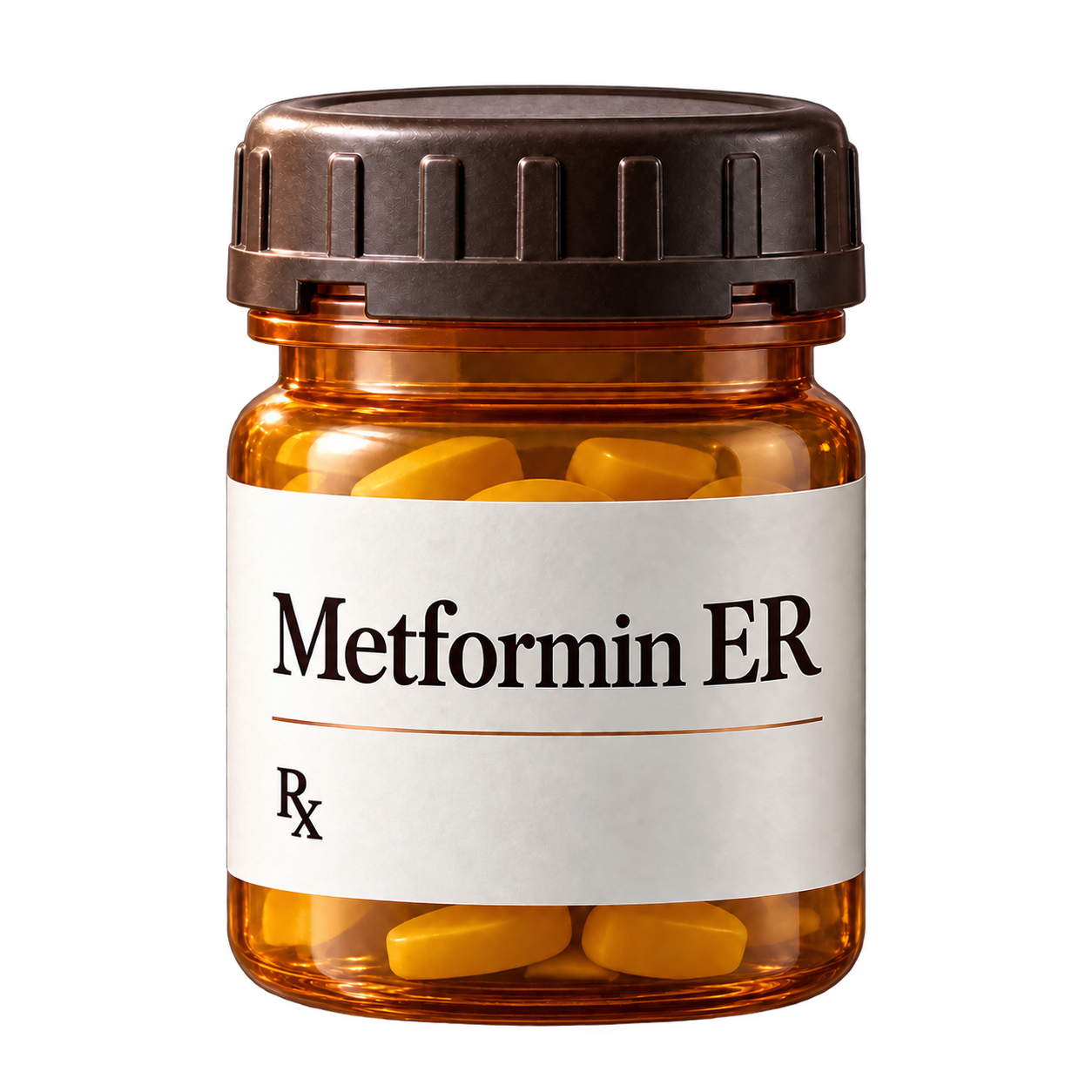
Metformin dosage depends on the formulation you take (immediate-release vs extended-release), how well you tolerate it, and your kidney function. FDA prescribing information supports starting with a lower dose and increasing gradually to reduce nausea, diarrhea, and other gastrointestinal side effects. This page summarizes label-based dosing for education only. If you want help turning metformin dosage questions into a plan to discuss with your prescriber, PocketMD from Vitals Vault can help you organize questions using your own health history and labs.
- Metformin dosage usually starts low and increases gradually to improve tolerability.
- IR and ER metformin have different FDA-labeled starting and maximum daily doses.
- Kidney function affects whether metformin is appropriate and how it is monitored.
- If you miss a dose, the label says do not double up.
Typical metformin dosage (what the label says)
IR vs ER matters
IR metformin is released quickly and is usually taken in divided doses with meals. ER metformin releases more slowly and is typically taken once daily with the evening meal. The labeled maximum daily dose is different for IR versus ER.
Titration is gradual
The label recommends increasing metformin in stepwise increments over time to reduce gastrointestinal side effects. Your clinician may adjust the pace based on your glucose results and how you feel. Do not change your dose without your prescriber.
Kidney function is central
Metformin is cleared by the kidneys. Prescribing information includes guidance to assess kidney function before starting and during treatment because reduced kidney function increases the risk of metformin accumulation and lactic acidosis.
Metformin dosage charts (from FDA prescribing information)
| Label topic | What the label says |
|---|---|
| Starting dose | 500 mg twice daily or 850 mg once daily, given with meals. |
| Dose increases (titration) | Increase by 500 mg weekly or 850 mg every 2 weeks, as tolerated. |
| Maximum daily dose | 2550 mg per day in divided doses. |
| Label topic | What the label says |
|---|---|
| Starting dose | 500 mg once daily with the evening meal. |
| Dose increases (titration) | Increase in 500 mg increments weekly, as tolerated. |
| Maximum daily dose | 2000 mg once daily with the evening meal. |
Is 500 mg a low dose?
On the FDA label, 500 mg is a common starting dose for both IR and ER metformin. Whether it is considered "low" depends on your formulation and your total daily dose. Many people start at 500 mg and increase gradually if needed and tolerated.
Prediabetes dosing is off-label
Metformin is FDA-approved to improve glycemic control in type 2 diabetes, not specifically for prediabetes. Some clinicians prescribe it off-label for prediabetes based on individual risk and guideline discussions. If you are using it for prediabetes, ask what goal is being targeted and how follow-up will be monitored.
Vitamin B12 can drop over time
Prescribing information warns that long-term metformin use may be associated with vitamin B12 deficiency. This matters because B12 deficiency can contribute to anemia and neuropathy symptoms such as numbness or tingling. Ask your clinician whether periodic B12 monitoring makes sense for you.
When to talk to a clinician about metformin dosing
Ongoing stomach side effects
Nausea, diarrhea, abdominal discomfort, and decreased appetite are common, especially during dose increases. If symptoms are not improving, your clinician may slow titration, change the formulation, or check for other causes. Seek care sooner if you cannot keep fluids down.
Possible lactic acidosis symptoms
Metformin has a boxed warning for lactic acidosis, a rare but serious emergency. Get urgent medical care for unexplained weakness, increasing sleepiness, trouble breathing, unusual muscle pain, stomach pain with nausea or vomiting, dizziness, or a slow or irregular heartbeat. Risk is higher with significant kidney impairment and certain acute illnesses.
Kidney changes or dehydration
Because metformin is cleared by the kidneys, changes in kidney function can change the safety profile. Tell your clinician if you have kidney disease, severe infection, vomiting or diarrhea with dehydration, or are scheduled for iodinated contrast imaging, since temporary interruption may be needed per prescribing information.
Low blood sugar on combinations
Metformin alone is less likely to cause hypoglycemia, but risk increases when combined with insulin or insulin secretagogues such as sulfonylureas. If you have shakiness, sweating, confusion, or fainting, contact a clinician promptly. Your prescriber may need to adjust the other diabetes medication.
Pro tips for tolerability and safe use
Take with meals
The label directs taking metformin with food to reduce stomach upset.
Expect gradual increases
Slow titration is a label strategy to limit nausea and diarrhea.
Ask about ER vs IR
If GI effects persist, ask whether ER could be appropriate for you.
Review alcohol use
Alcohol can increase lactic acidosis risk. Discuss your intake with your clinician.
Bring up numbness or fatigue
These can overlap with B12 deficiency symptoms. Ask if B12 testing is appropriate.
Frequently Asked Questions
Is 500mg of metformin a low dose?
On the FDA label, 500 mg is a common starting dose for both immediate-release and extended-release metformin. Whether it is "low" depends on your formulation and total daily dose. Your prescriber sets the dose based on response and tolerability.
What is the lowest dose of metformin you can take?
For adults with type 2 diabetes, prescribing information lists 500 mg as a starting dose for both IR and ER tablets. Some people may need a lower total daily dose due to side effects or kidney function. Your clinician decides what is appropriate.
How much metformin can you take in a day?
The labeled maximum daily dose depends on the formulation. IR metformin has a labeled maximum of 2550 mg per day in divided doses, while ER metformin has a labeled maximum of 2000 mg once daily with the evening meal. Your prescriber may use lower limits for safety.
What is the difference between metformin IR and ER dosing?
IR metformin is labeled to start at 500 mg twice daily or 850 mg once daily with meals, while ER is labeled to start at 500 mg once daily with the evening meal. The labeled maximum daily dose is higher for IR than ER. Your clinician chooses based on goals and tolerability.
Is there a metformin dosage chart I can follow?
A metformin dosage chart can summarize the FDA-labeled starting doses, titration steps, and maximum daily doses for IR and ER tablets. It is not a substitute for a prescription plan, because kidney function, other medicines, and side effects can change what is safe.