
OTC estrogen: what it is and how to get it
OTC estrogen is limited in the US, and the most effective estrogen is prescription estradiol. Here is what to know about risks and access.
Key facts
- Estradiol Oral Capsules is $66.34/month (billed $199 every 90 days), charged only after a clinician approves it.
- Answer a few health questions online. A licensed clinician reviews them. If approved, it ships to your door.
- Adults 18 or older. A licensed clinician reviews your health history and decides whether treatment is appropriate for you. Availability depends on the state you live in.





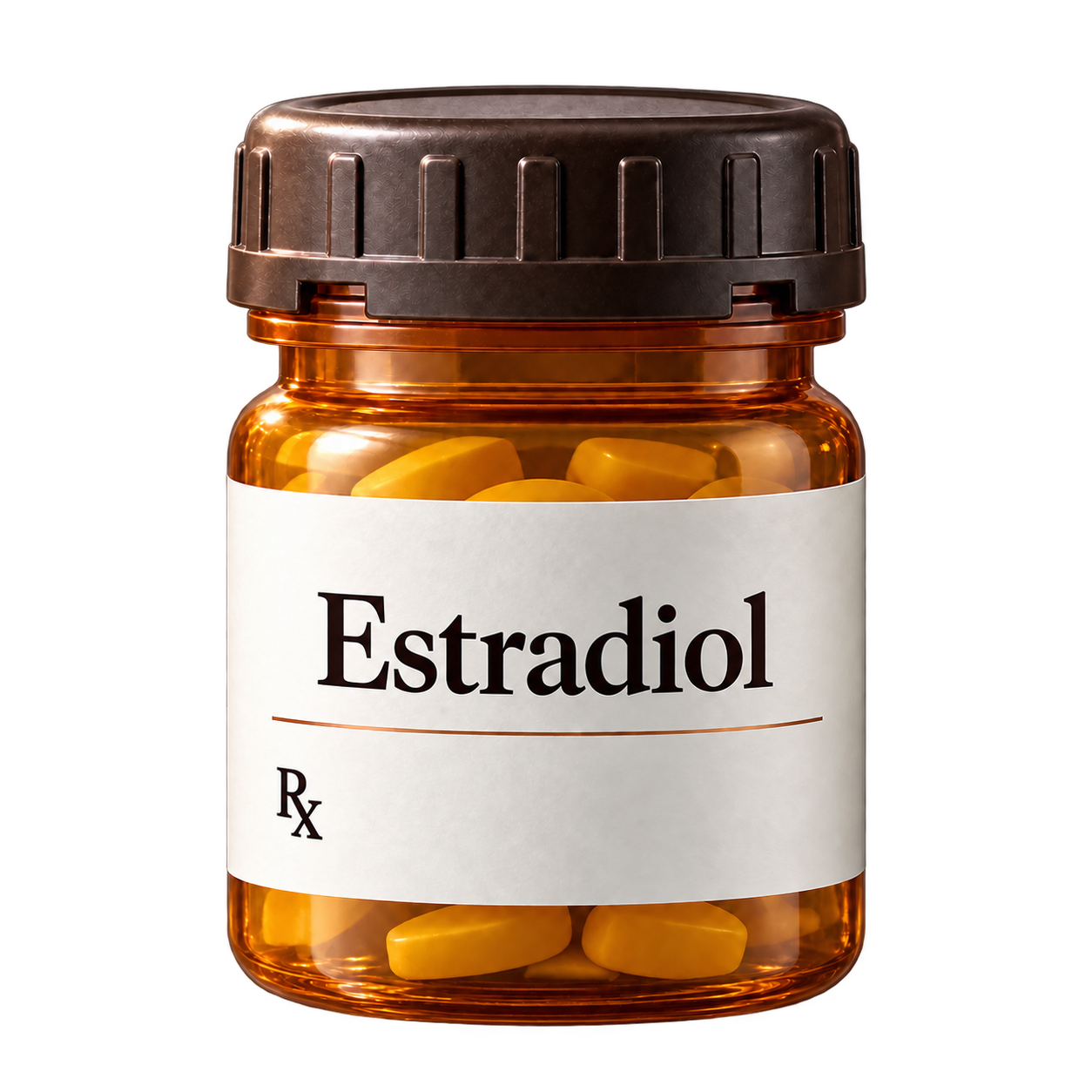
When people search for otc estrogen, they are often trying to relieve menopause symptoms or vaginal dryness without a prescription. In the US, most estrogen that meaningfully treats symptoms is prescription estradiol, available as tablets, patches, and vaginal products. This guide explains what is and is not truly over the counter, how estradiol works, who should avoid it, and what to expect.
- OTC estrogen is very limited; most effective estrogen is prescription estradiol.
- Soy foods contain phytoestrogens, not human estrogen, and effects are modest.
- Estrogen can raise risks like blood clots and stroke in some people.
- If you have a uterus, estrogen is often paired with a progestogen to protect the lining.
- A clinician can match the safest form, dose, and monitoring to your history.
What OTC estrogen means
Prescription estrogen vs OTC
In the US, estrogen used for menopause hormone therapy is typically prescription. The most commonly prescribed estrogen for menopause symptoms is estradiol, which comes in multiple forms such as oral tablets, transdermal patches, and vaginal creams, tablets, or rings. These products have FDA reviewed labeling that describes benefits, risks, and contraindications.
What you can buy without a prescription
Many nonprescription products marketed for menopause do not contain prescription strength estradiol. Some contain plant compounds (phytoestrogens) such as soy isoflavones, while others are moisturizers or lubricants that help dryness without acting like estrogen. If a product claims to contain estradiol or other prescription estrogens without a prescription, treat that as a safety red flag.
Soy is not estrogen
Soy foods contain isoflavones, which are phytoestrogens that can weakly bind estrogen receptors. They are not the same as the estrogen your body makes, and they do not deliver the same predictable symptom relief as prescription estradiol. If you are considering soy supplements, discuss them with a clinician, especially if you have a history of hormone sensitive cancer.
Why form matters
Estradiol can be delivered through the skin, taken by mouth, or applied locally in the vagina. The form affects how much reaches the bloodstream and what risks are emphasized in labeling. A clinician uses your symptoms and medical history to choose the safest approach.
- Medication discussed
- Estradiol (oral / patch / cream)
- Common uses in labeling
- Moderate to severe vasomotor symptoms of menopause; vulvar and vaginal atrophy; hypoestrogenism; prevention of postmenopausal osteoporosis (selected products)
- Key boxed warning theme
- Estrogens, with or without progestins, should not be used for prevention of cardiovascular disease or dementia.
- Uterus consideration
- Adding a progestogen reduces endometrial cancer risk in women with a uterus.
How estrogen works in your body
Replaces declining estradiol
During perimenopause and menopause, ovarian estradiol production declines. Prescription estradiol provides estrogenic activity that can reduce symptoms driven by low estrogen, such as hot flashes and vaginal tissue changes. The goal is symptom relief using the lowest effective dose for the shortest duration consistent with treatment goals.
Acts on estrogen receptors
Estradiol binds to estrogen receptors in many tissues, including the brain, blood vessels, bone, breast, and the lining of the uterus. That broad activity is why estrogen can help symptoms but also why it has important risks and contraindications. Your personal risk profile matters as much as your symptoms.
Local vs systemic effects
Vaginal estrogen products are designed to treat vulvar and vaginal symptoms and may have less systemic exposure than oral estrogen, depending on the product and dose. Systemic estrogen, such as oral tablets or patches, is used for symptoms like hot flashes. A clinician can help match the route to your main symptoms.
Soy phytoestrogens work differently
Soy isoflavones have weaker estrogen receptor activity than estradiol and may act differently across tissues. For some people, dietary soy is reasonable as part of a balanced diet, but it should not be viewed as equivalent to estrogen medication. Supplements can vary widely in content and quality.
Who estrogen may be for
Hot flashes and night sweats
Systemic estrogen therapy is FDA approved for moderate to severe vasomotor symptoms of menopause, such as hot flashes and night sweats. If symptoms are affecting sleep, mood, or daily function, it is reasonable to discuss prescription options rather than relying on OTC supplements. A clinician can also review nonhormonal alternatives when estrogen is not a fit.
Vaginal dryness and pain
Vaginal estrogen products are FDA approved for moderate to severe vulvar and vaginal atrophy due to menopause. If your main symptoms are dryness, burning, recurrent discomfort with sex, or urinary symptoms related to menopause, local therapy may be considered. OTC moisturizers and lubricants can help, but they do not treat the underlying tissue changes like estrogen can.
Low estrogen from other causes
Some estradiol products are labeled for hypoestrogenism due to hypogonadism, castration, or primary ovarian failure. These are medical diagnoses that require clinician evaluation and follow up. Do not try to self treat low estrogen with OTC products.
Bone protection in select cases
Some estrogen products are labeled for prevention of postmenopausal osteoporosis, typically when other therapies are not appropriate. This use requires a careful risk benefit discussion because estrogen has important long term risks. A clinician can help you compare options for bone health.
Who should not take estrogen
Estrogen dependent cancer
Estradiol is contraindicated in known, suspected, or history of breast cancer and in estrogen dependent neoplasia. If you have had breast cancer or are being evaluated for it, do not start estrogen without oncology and clinician guidance. Ask about nonhormonal options and, when appropriate, specialist input.
Blood clots or stroke history
Systemic estrogen is contraindicated in active or past deep vein thrombosis or pulmonary embolism, and in active or recent arterial thromboembolic disease such as stroke or myocardial infarction. If you have a clotting disorder or strong family history, your clinician may recommend avoiding systemic estrogen or choosing alternatives. Seek urgent care for sudden chest pain, shortness of breath, or one sided weakness.
Unexplained vaginal bleeding
Estradiol is contraindicated with undiagnosed abnormal genital bleeding. Bleeding after menopause needs evaluation to rule out endometrial problems before any hormone therapy is considered. Report new or unusual bleeding promptly.
Liver disease or allergy
Estradiol is contraindicated in liver dysfunction or disease and in known hypersensitivity to the product. Tell your clinician about liver conditions, past reactions to hormones, and all medications and supplements. This helps reduce avoidable risks and interactions.
Pregnancy
Estradiol is contraindicated in pregnancy. If pregnancy is possible, discuss contraception and pregnancy testing with your clinician before starting any estrogen medication. Do not use estrogen as a fertility aid unless specifically directed by a specialist.
What to expect if you use estradiol
Evaluation first
A clinician typically reviews your symptoms, medical history, and risk factors before prescribing estrogen. If you have a uterus, they may discuss whether you also need a progestogen to reduce the risk of endometrial cancer. They may also review blood pressure, smoking status, migraine history, and clot risk.
Symptom focused goals
Estrogen therapy is generally used to treat specific symptoms, not to “optimize hormones.” Your clinician will focus on the symptoms you want to improve, such as hot flashes or vaginal discomfort, and choose a route that fits those goals. You should expect periodic reassessment of whether the benefits still outweigh the risks.
Ongoing monitoring
Follow up is important because risks and needs can change over time. Monitoring may include reviewing side effects, blood pressure, and any new bleeding or breast changes. If you are using estrogen with a progestogen, your clinician will also review how you are tolerating the combination.
OTC supplements are unpredictable
If you try OTC products marketed as “soy estrogen” or “menopause support,” you may not get consistent dosing or predictable effects. Supplements can also interact with medications and may not be appropriate with certain cancer histories. Bring the label or ingredient list to your visit so a clinician can review it.
| Route | Typical focus | Notes to discuss with a clinician |
|---|---|---|
| Oral tablet | Systemic symptoms (hot flashes) | Systemic exposure; review clot and stroke risks |
| Transdermal patch | Systemic symptoms (hot flashes) | Systemic exposure; route may differ in risk profile |
| Vaginal cream, tablet, or ring | Vaginal and urinary symptoms | Often used for local symptoms; still follow labeling and monitoring |
Side effects and warnings
Breast tenderness and nausea
Breast tenderness, nausea, and headache can occur with systemic estrogen therapy. If side effects are persistent or bothersome, a clinician may consider a different route or formulation. Report new breast lumps or concerning breast changes promptly.
Irregular bleeding or spotting
Estrogen can cause bleeding or spotting, especially early in treatment or with certain regimens. Any unexpected bleeding after menopause needs clinical evaluation because it can signal endometrial changes. Do not ignore bleeding, even if it seems mild.
Blood clots (DVT or PE)
Estrogen therapy is associated with an increased risk of venous thromboembolism, including deep vein thrombosis and pulmonary embolism. Seek urgent care for leg swelling or pain, sudden shortness of breath, or chest pain. Your clinician will weigh this risk against benefits based on your history.
Stroke and heart attack
Systemic estrogen, with or without a progestin, can increase the risk of stroke and myocardial infarction in some populations. Call emergency services for sudden weakness, trouble speaking, severe headache, or chest pressure. Risk depends on age, time since menopause, and cardiovascular risk factors.
Endometrial cancer risk
In women with a uterus, using estrogen alone increases the risk of endometrial cancer. Adding a progestogen reduces this risk. Report any abnormal bleeding right away so your clinician can evaluate it.
Gallbladder disease
Estrogen therapy can increase the risk of gallbladder disease requiring surgery in some people. Contact a clinician for severe right upper abdominal pain, fever, or jaundice. Your clinician may review your gallbladder history when choosing therapy.
Cost and access
What drives the cost
The cost of estradiol depends on the form (tablet, patch, or vaginal product), the specific product and strength, and whether you use insurance. Pharmacy pricing can vary by location and supply. Current prices for the Vitals Vault product are shown on this page in the price block.
Insurance coverage varies
Many estradiol products are covered by commercial insurance plans, but coverage can differ by route and by formulary. Prior authorization may be required, especially for certain patches or vaginal products. If a product is not covered, your clinician may discuss alternatives within the same class.
OTC supplements are not equivalent
OTC products marketed as “estrogen” or “soy estrogen” are not interchangeable with prescription estradiol. Even if they seem less expensive, they may not address symptoms effectively and can complicate care if they contain hormone like ingredients. Tell your clinician what you are taking so they can assess safety.
Access requires the right screening
Because estrogen has meaningful risks for some people, safe access usually includes a clinical history review and sometimes labs or other evaluation. This is especially important if you have bleeding, clot risk, migraines with aura, or a history of cancer. A clinician can help you choose the lowest risk option for your situation.
How to get estrogen safely
- 1
Clarify your main symptoms
Note whether your main issue is hot flashes, sleep disruption, mood changes, or vaginal dryness and pain.
- 2
Review your risk factors with a clinician
Share your history of clots, stroke, cancer, migraines, liver disease, and any abnormal bleeding.
- 3
Choose the route and plan together
Discuss oral, patch, and vaginal options, and whether you need a progestogen if you have a uterus.
- 4
Follow up and reassess
Plan check ins to review symptom relief, side effects, and whether the benefits still outweigh risks.
Frequently Asked Questions
Does soy increase estrogen?
Soy contains isoflavones, which are phytoestrogens that can weakly interact with estrogen receptors. They are not the same as human estradiol, and their effects are generally modest compared with prescription estrogen therapy. If you have a hormone sensitive cancer history, ask your clinician before using supplements.
Does soy milk have estrogen?
Soy milk does not contain human estrogen, but it can contain soy isoflavones, which are plant compounds with estrogen like activity. The amount varies by product and processing. For most people, soy foods can be part of a balanced diet, but they are not a substitute for prescription estradiol.
How to get estrogen?
If you need estrogen for menopause symptoms, the safest path is a clinician evaluation to see whether prescription estradiol is appropriate and which form fits your risks. In the US, most effective estrogen therapy is prescription, not truly OTC. Avoid products that claim prescription strength estrogen without a prescription.
Does soy have estrogen?
Soy does not contain estradiol, the primary human estrogen, but it does contain phytoestrogens called isoflavones. These can have weak estrogen receptor effects and may affect people differently. Discuss soy supplements with a clinician if you take other medications or have cancer risk concerns.
Does tofu have estrogen?
Tofu is made from soybeans and can contain soy isoflavones, which are phytoestrogens. They are not the same as prescription estrogen medication and do not provide predictable symptom relief for menopause. If you are using tofu or other soy foods specifically for symptoms, consider discussing evidence based options with a clinician.