Blood Pressure Spikes in Men: What They Mean and What Helps
Blood pressure spikes in men often come from stress surges, medication effects, or sleep apnea. Targeted blood tests available—no referral needed.






Blood pressure spikes in men usually happen when your nervous system hits the gas pedal, when a medication or stimulant pushes your pressure up, or when an underlying issue like sleep apnea keeps your body in a constant “fight-or-flight” state. The pattern matters: a true spike is different from a bad reading, and labs can help sort out whether hormones, kidneys, or thyroid changes are contributing. If you have ever seen a number like 180/110 and felt your stomach drop, you are not alone. The tricky part is that blood pressure is a moving target, so a single high reading can be real, or it can be caused by pain, anxiety, caffeine, a too-small cuff, or taking the measurement the wrong way. This guide walks you through the most common reasons men get sudden jumps, what you can do in the moment, and which blood tests can make the “why” clearer. If you want help interpreting your pattern, PocketMD can talk it through with you, and Vitals Vault labs can help you check a few high-yield causes without turning it into a months-long guessing game.
Why your blood pressure spikes in the first place
Adrenaline surge from stress
When your body senses threat, it releases stress hormones that tighten blood vessels and speed up your heart, which can push your numbers up fast. It can feel like a pounding pulse, chest tightness, or a “wired” feeling even if nothing is physically wrong. The takeaway is that the spike is real, but the driver may be your nervous system rather than your arteries being permanently damaged, so tracking what you felt right before the reading is surprisingly useful.
Sleep apnea driving nighttime pressure
If you stop breathing repeatedly during sleep, your oxygen dips and your body responds with repeated stress bursts that raise blood pressure. Men often notice morning headaches, dry mouth, or blood pressure that is fine at the doctor but high at home in the morning. If your partner has noticed loud snoring or pauses in breathing, treating sleep apnea can lower both spikes and your long-term risk.
Medication and stimulant effects
Some common meds and supplements raise blood pressure by narrowing blood vessels or increasing fluid retention, even if you are taking them “as directed.” Decongestants, NSAID pain relievers, stimulant ADHD meds, testosterone misuse, and high-caffeine pre-workouts are frequent culprits in men. A practical move is to look at what you took in the 6–12 hours before the spike and bring the exact product names to your clinician so you can adjust safely.
Kidney-related blood pressure swings
Your kidneys control salt and water balance, so when they are under strain, your pressure can jump around more than you expect. You might notice swelling in your ankles, foamy urine, or blood pressure that rises after salty meals and does not settle down quickly. Because kidney issues can be silent, checking kidney function and urine protein can be a high-value next step when spikes are recurring.
Hormone-driven secondary hypertension
Sometimes a hormone signal keeps your blood vessels too tight or your body holding onto too much salt, which creates sudden, hard-to-predict spikes. Examples include an overactive thyroid (your body’s “metabolic accelerator”), or an aldosterone problem (your salt-retention hormone) that can also drive low potassium and muscle cramps. If your spikes come with tremor, heat intolerance, unexplained weight change, or persistent low potassium on past labs, it is worth asking about targeted testing rather than assuming it is “just stress.”
What helps stop the spikes (and prevent the next one)
Recheck correctly before you panic
A lot of “spikes” are measurement problems, especially if you are using a cuff that is too small or you took the reading right after moving around. Sit quietly for five minutes, keep your feet flat, support your arm at heart level, and then take two readings one minute apart. If the second number drops a lot, you just learned that your body settles quickly and your technique matters.
Use a simple “spike plan”
If you see a high number, your next step should be consistent, not improvised. Many clinicians use a practical threshold: if your reading is around 180/120 or higher and you have symptoms like chest pain, shortness of breath, weakness on one side, confusion, or vision changes, that is emergency territory. If you feel okay, you can recheck after 15–30 minutes of quiet breathing and hydration, and then message your clinician with the series rather than a single scary number.
Cut the hidden pressor triggers
For many men, the biggest wins come from removing a specific trigger rather than “living healthier” in general. If your spikes cluster after decongestants, NSAIDs, nicotine pouches, energy drinks, or pre-workout powders, try a two-week elimination experiment and watch what happens to your peak readings. You are not proving willpower here—you are running a clean test on your own body.
Treat sleep like a blood pressure therapy
If sleep apnea is in the picture, blood pressure meds alone often feel like pushing a boulder uphill. Getting evaluated and using CPAP or another appropriate treatment can reduce the repeated nighttime stress surges that set you up for morning spikes. A concrete step is to track your morning blood pressure for a week and compare it to nights when you slept poorly or drank alcohol, because the pattern is often obvious once you look.
Ask about medication timing and type
If you already take blood pressure medication, spikes can mean the dose wears off before the next pill, or that one class is not addressing your main driver. Some people do better when at least one medication is taken at night, especially if morning readings are highest, but this should be individualized. Bring a home log that includes time-of-day, because it gives your clinician something concrete to adjust instead of guessing.
Useful biomarkers to discuss with your clinician
Creatinine
Creatinine is a waste product of muscle metabolism that is filtered by the kidneys and serves as the primary marker of kidney function. In functional medicine, creatinine levels reflect not only kidney health but also muscle mass and protein metabolism. Elevated creatinine indicates reduced kidney filtration capacity, while very low levels may indicate muscle wasting or poor protein intake. Creatinine is used to calculate eGFR and helps assess long-term kidney health and detoxification capacity. Creatinine measu…
Learn moreSodium
Sodium is the primary extracellular electrolyte essential for fluid balance, nerve transmission, muscle contraction, and blood pressure regulation. In functional medicine, sodium balance reflects kidney function, adrenal health, and hydration status. Low sodium (hyponatremia) can cause neurological symptoms and may indicate SIADH, adrenal insufficiency, or excessive water intake. High sodium may indicate dehydration, diabetes insipidus, or excessive salt intake. Optimal sodium levels support cellular energy prod…
Learn moreCortisol, Total
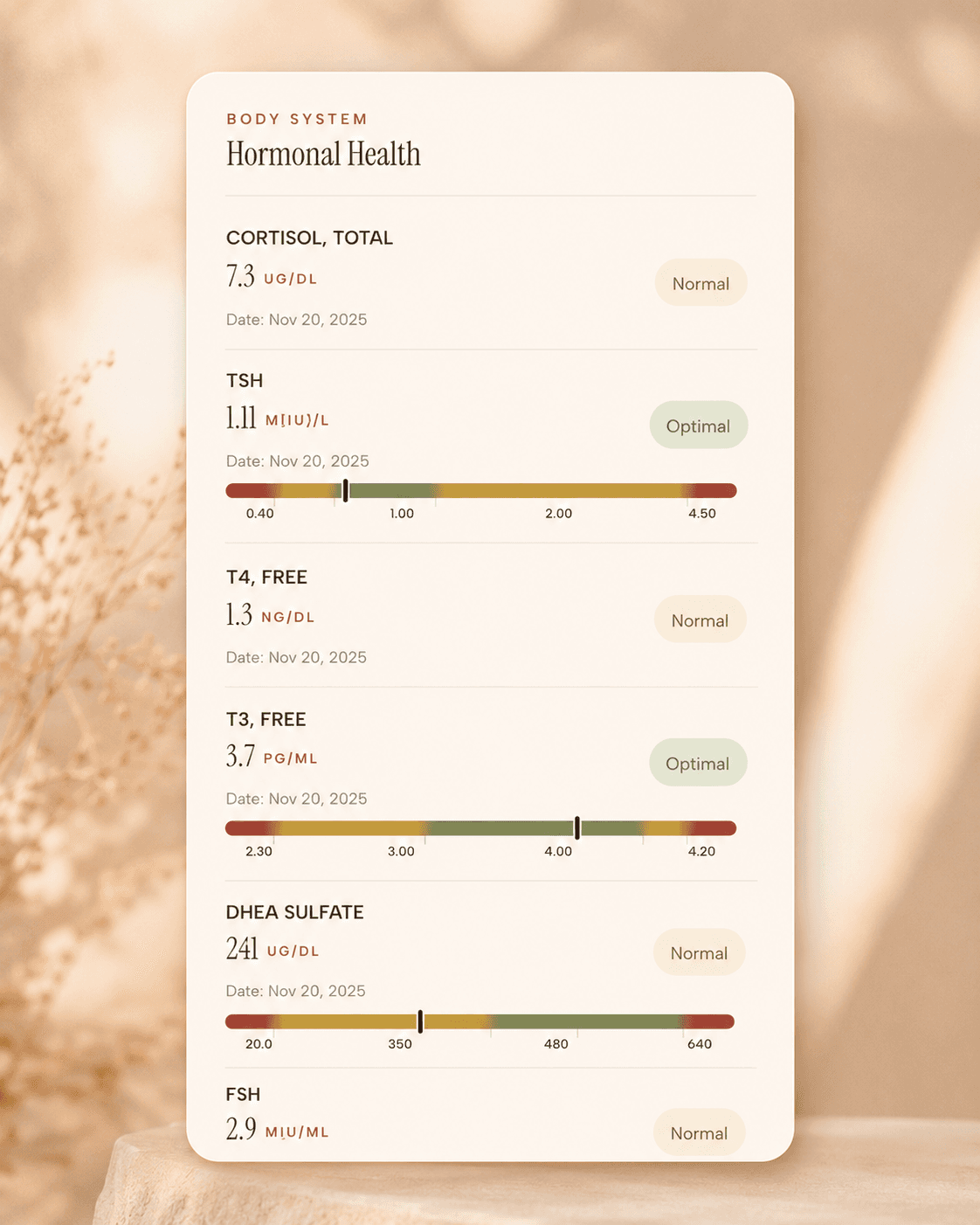
Cortisol is the primary stress hormone that regulates metabolism, immune function, and blood pressure. In functional medicine, cortisol assessment is crucial for understanding stress response and its impact on overall health. Chronic elevation suppresses testosterone production and immune function, while low cortisol indicates adrenal insufficiency. Optimal cortisol rhythm supports energy, mood stability, and hormone balance. Cortisol orchestrates the body's stress response and daily energy rhythms. Balanced cor…
Learn moreLab testing
Check kidney strain, hormone signals, and thyroid drive
starting from $99 panel with 100+ tests, one visit
No referral needed
About 1 week
Schedule online — results typically within a week
Clear next steps
Guidance included, with follow-up care available
HSA / FSA
Eligible for pre-tax health spending accounts
Pro Tips
Do a 7-day “same-time” experiment: take your blood pressure within 30 minutes of waking and again before bed, and write down sleep quality and alcohol. Morning-high patterns often point toward sleep apnea or medication wearing off.
If you get a scary number, take a second reading after five minutes of quiet sitting and slow breathing, and write down both. The difference between reading #1 and #2 tells you whether your nervous system is amplifying the spike.
Check your cuff fit once, because it changes everything. If the cuff is too small for your upper arm, it can read falsely high, which can send you into a spiral that raises your pressure for real.
When you suspect a trigger, run a clean two-week trial rather than guessing. For example, stop decongestants and energy drinks completely, then see if your peak systolic readings drop by 10–20 points.
If your spikes happen with headaches, flushing, or a racing heart, note the exact timing and duration. Short, intense episodes that come out of nowhere are a different pattern than “high all day,” and your clinician will evaluate them differently.
Frequently Asked Questions
How high is too high for a blood pressure spike?
If your blood pressure is around 180/120 or higher and you have symptoms like chest pain, shortness of breath, severe headache, weakness on one side, confusion, or vision changes, treat it as an emergency. If you feel okay, sit quietly and repeat the reading in 5–10 minutes, because technique and adrenaline can inflate the first number. Either way, document the series and contact your clinician for next-step guidance.
Can anxiety cause blood pressure spikes even if I’m healthy?
Yes. Anxiety can trigger a stress-hormone surge that tightens blood vessels and increases heart rate, which can raise systolic pressure quickly. The clue is often that the number comes down after 10–20 minutes of calm sitting and a correct recheck. Keeping a log of what you were feeling right before the reading helps you and your clinician separate anxiety-driven spikes from persistent hypertension.
Why are my blood pressure readings normal at the doctor but high at home?
Sometimes it is the reverse of “white coat” and your home setup is the problem, especially if the cuff is the wrong size or you measure right after activity. It can also be a real pattern, such as morning hypertension from sleep apnea or medication wearing off overnight. Bring your home cuff to an appointment to compare it against the clinic device, and consider tracking morning versus evening readings for a week.
What tests help find the cause of sudden high blood pressure episodes?
High-yield starting labs often include kidney function (creatinine with eGFR), electrolytes like potassium, and a thyroid signal test (TSH), because kidney strain, hormone-driven salt retention, and thyroid overactivity can all drive spikes. If potassium is low or TSH is abnormal, your clinician may add more specific hormone testing. If you want to be efficient, get the basics checked and bring the results along with a time-stamped home blood pressure log.
Can sleep apnea really cause blood pressure spikes in men?
It can, and it is one of the most common “hidden” drivers in men who snore or feel unrefreshed. Each breathing pause triggers a stress response that raises blood pressure, and the effect can show up as high morning readings or stubborn spikes despite medication. If you have loud snoring, witnessed pauses, or daytime sleepiness, ask for a sleep evaluation, because treating apnea can lower both spikes and long-term cardiovascular risk.