Blood Pressure Spikes in Women: What They Mean and What Helps
Blood pressure spikes in women often come from stress surges, hormone shifts, or medication effects. Targeted labs available at Quest—no referral needed.






Blood pressure spikes in women usually happen when your body gets a sudden “fight-or-flight” surge, when hormones shift (especially around perimenopause), or when a medication or stimulant pushes your pressure up. The tricky part is that a single scary number can be real, but it can also be a measurement issue or a temporary trigger that settles once you calm down. A few targeted labs and a better home-monitoring plan can help you figure out which bucket you’re in. If you’ve ever seen your cuff jump from “fine” to “what is happening?” you’re not overreacting. Sudden spikes can feel like pounding in your chest, a headache, flushing, or a wave of anxiety that makes it hard to think clearly. Sometimes it’s harmless and short-lived, but sometimes it’s a clue that your baseline blood pressure is creeping up or that something secondary is driving it. This guide walks you through the most common reasons women get spikes, what to do in the moment, and which blood tests can help. If you want help sorting your pattern quickly, PocketMD can talk it through with you, and Vitals Vault labs can help confirm or rule out common medical drivers.
Why your blood pressure suddenly spikes
Stress surge and adrenaline rush
When your nervous system flips into “fight-or-flight,” stress hormones tighten blood vessels and speed up your heart, which can spike your top number fast. It can feel like a panic wave, but the blood pressure change is real even if the trigger is emotional. The takeaway is practical: sit, breathe slowly, and recheck after 5–10 minutes because the first reading often captures the peak of the surge.
Perimenopause and hormone shifts
As estrogen levels fluctuate, your blood vessels can become less “relaxed” and your stress response can feel louder, which makes spikes more likely even if your average blood pressure used to be normal. You might notice it clusters with hot flashes, poor sleep, or a racing heart at night. If your spikes started in your 40s or early 50s, tracking them alongside sleep and symptoms can be as revealing as tracking them alongside food.
Medication or supplement side effects
Some common products raise blood pressure by narrowing blood vessels or increasing fluid retention, especially decongestants, stimulant weight-loss products, and certain anti-inflammatory pain medicines. The frustrating part is that you can take them “as directed” and still see a jump if you’re sensitive. Bring the exact product names and doses to your clinician, and if you’re using a cold medicine, look for versions without pseudoephedrine.
Sleep apnea and poor sleep nights
If you stop breathing briefly during sleep (sleep apnea), your body repeatedly releases stress hormones to jolt you back into breathing, and those surges can carry into the morning as high readings. You may not notice the breathing pauses, but you might wake with a headache, dry mouth, or feel unrefreshed even after “enough” hours. If your spikes are worst on waking or you snore, it’s worth asking about a sleep study because treating apnea can lower both spikes and baseline pressure.
Kidney or thyroid-driven hypertension
Your kidneys control salt and fluid balance, and your thyroid sets your body’s “speed,” so problems in either system can push your pressure up in bursts or as a new steady trend. This matters because lifestyle changes alone may not fix it if the driver is medical, and you’ll keep feeling blindsided by readings. If spikes are new, frequent, or paired with swelling, muscle weakness, heat intolerance, or unexplained weight change, labs can help you rule in or rule out these causes quickly.
What to do when a spike hits
Recheck the right way, once
A lot of “spikes” are partly technique: a cuff that’s too small, talking during the reading, or measuring right after climbing stairs can add 10–20 mmHg. Sit with your back supported and feet flat, rest your arm at heart level, and take one repeat reading after 1–2 minutes. If the second number drops meaningfully, you’ve learned that your body settles with a short pause.
Use a 5-minute downshift routine
Slow breathing can lower the stress signal that tightens your blood vessels, which is why it’s one of the fastest non-drug tools for sudden spikes. Try inhaling for 4 seconds and exhaling for 6 seconds for five minutes, and keep your shoulders relaxed because tension keeps the surge going. Then recheck and write down both numbers so you can see the “peak vs settled” pattern over time.
Set a clear urgent-care threshold
If your blood pressure is at or above 180/120 and you also have chest pain, shortness of breath, one-sided weakness, trouble speaking, confusion, or a severe new headache, treat it as an emergency and get help right away. If the number is high but you feel okay, rest and recheck in 5–10 minutes, and contact your clinician the same day for guidance. Having this decision rule ahead of time reduces the panic loop that can keep readings high.
Adjust salt and alcohol for spikes
Some people are “salt sensitive,” which means a salty meal can pull fluid into your bloodstream and raise pressure for the next day or two. Alcohol can also trigger spikes by disrupting sleep and activating stress hormones as it wears off, even if it initially makes you feel relaxed. If you suspect either, run a two-week experiment where you keep salt and alcohol steady and see whether your readings stop swinging.
Ask about meds if spikes persist
If your home average is consistently above about 130/80, or if you’re having repeated big jumps despite good technique, it’s reasonable to discuss treatment rather than waiting for it to “settle.” Some people do best with a long-acting medication that smooths the day-to-day swings, while others need a workup for secondary causes first. Bring a simple log with dates, times, and what you were doing right before the spike so the plan is based on your real pattern.
Useful biomarkers to discuss with your clinician
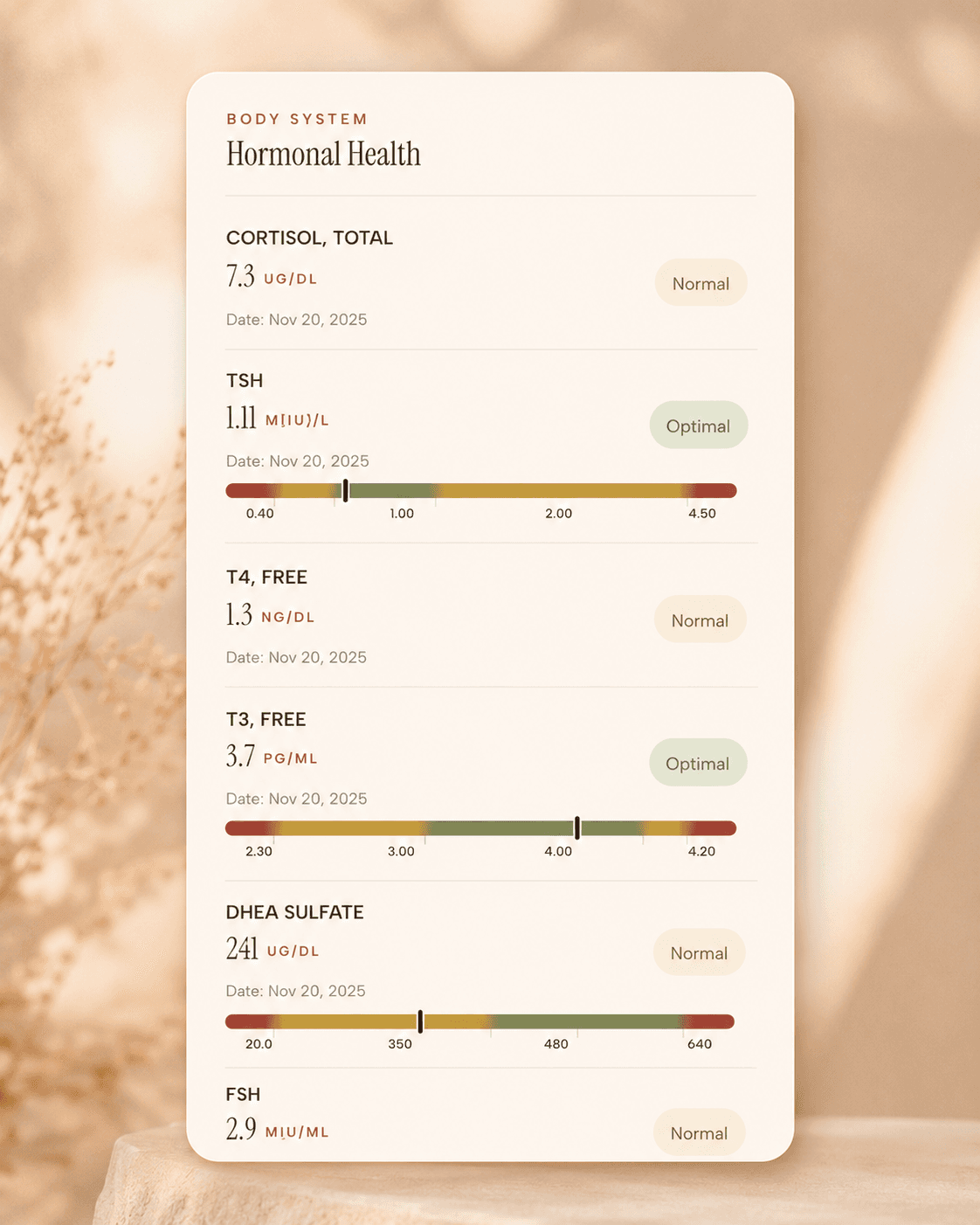
Cortisol, Total
Cortisol is the primary stress hormone that regulates metabolism, immune function, and blood pressure. In functional medicine, cortisol assessment is crucial for understanding stress response and its impact on overall health. Chronic elevation suppresses testosterone production and immune function, while low cortisol indicates adrenal insufficiency. Optimal cortisol rhythm supports energy, mood stability, and hormone balance. Cortisol orchestrates the body's stress response and daily energy rhythms. Balanced cor…
Learn moreEstradiol
Estradiol in men is produced from testosterone via aromatase enzyme. In functional medicine, we recognize that men need optimal estradiol levels for bone health, cognitive function, and cardiovascular protection. However, excessive estradiol can suppress testosterone production and cause feminizing effects. The testosterone-to-estradiol ratio is crucial for male health, with optimal balance supporting vitality while preventing estrogen dominance. Balanced estradiol levels in men support bone health and cognitive…
Learn moreSodium
Sodium is the primary extracellular electrolyte essential for fluid balance, nerve transmission, muscle contraction, and blood pressure regulation. In functional medicine, sodium balance reflects kidney function, adrenal health, and hydration status. Low sodium (hyponatremia) can cause neurological symptoms and may indicate SIADH, adrenal insufficiency, or excessive water intake. High sodium may indicate dehydration, diabetes insipidus, or excessive salt intake. Optimal sodium levels support cellular energy prod…
Learn moreLab testing
Get TSH, a basic metabolic panel (kidney function + potassium), and fasting glucose checked at Quest
starting from $99 panel with 100+ tests, one visit
No referral needed
About 1 week
Schedule online — results typically within a week
Clear next steps
Guidance included, with follow-up care available
HSA / FSA
Eligible for pre-tax health spending accounts
Pro Tips
Do a “three-reading set” once a day for a week: take a reading, wait one minute, take another, then a third. Use the average of the last two, because the first is often your nervous system reacting to the cuff.
If your spikes feel random, add one extra note to your log: “What was I doing 10 minutes before?” That single line often reveals patterns like rushing, arguing, driving, or checking stressful messages.
If you suspect perimenopause, track spikes next to sleep quality and hot flashes rather than only next to your cycle dates. Hormone-related spikes often follow bad sleep nights more than they follow a specific day of bleeding.
Check your cuff fit once: the bladder should wrap around about 80% of your upper arm. A too-small cuff can falsely read high, which can send you into a panic spiral that makes the next reading even higher.
If you get a scary number, avoid taking repeated readings every few minutes for an hour. Pick one calm recheck after 5–10 minutes, write it down, and then switch to a plan (rest, call your clinician, or urgent care) based on symptoms.
Frequently Asked Questions
How high is too high for a blood pressure spike?
A reading at or above 180/120 is a red flag, especially if it is new for you. If that number comes with chest pain, shortness of breath, fainting, weakness on one side, trouble speaking, confusion, or a severe sudden headache, get emergency care. If you feel okay, rest quietly and recheck once after 5–10 minutes, then contact your clinician the same day for next steps.
Can anxiety cause blood pressure spikes even if I’m healthy?
Yes. Anxiety can trigger an adrenaline surge that tightens blood vessels and raises your heart rate, which can push blood pressure up quickly even in otherwise healthy people. The key clue is that the number often falls after 5–10 minutes of quiet rest and slow breathing. If spikes happen often, it’s still worth tracking your home average because frequent surges can hide early hypertension.
Why do my blood pressure spikes happen at night?
Night spikes are often tied to poor sleep, alcohol wearing off, pain, or sleep apnea, where your body repeatedly releases stress hormones to restart breathing. You might notice morning headaches, dry mouth, or feeling unrefreshed even after a full night in bed. If this sounds like you, ask about a sleep study and bring a week of morning readings to your appointment.
Could my thyroid be causing blood pressure spikes?
It can. Thyroid imbalance can make your heart feel like it is racing and can raise blood pressure, especially the top number, which can look like “spikes.” A TSH test is a common starting point, and many clinicians consider a TSH around 0.5–2.5 mIU/L a helpful target zone for many adults, depending on context. If you also have heat intolerance, tremor, or unexplained weight change, mention those symptoms when you get tested.
What’s the best way to track blood pressure spikes at home?
Use an upper-arm cuff, sit quietly for five minutes, and take two readings one minute apart, then record the second number along with what you were doing right before the measurement. For most people, a 7-day log with morning and evening readings is enough to show whether you have true hypertension or mostly situational spikes. Bring the log to your clinician so decisions are based on your trend, not one scary moment.