Mood Swings in Men: What They Mean and What Helps
Mood swings in men often come from sleep loss, testosterone shifts, or thyroid problems. Get targeted labs and next steps—no referral needed.






Mood swings in men are most often driven by a few fixable body-level issues: not enough quality sleep, hormone shifts such as low testosterone, or an overactive or underactive thyroid. Stress, alcohol, and certain medications can amplify those swings by pushing your nervous system into “fight-or-flight” more easily. The right labs can help you figure out which of these is actually happening in your body. If your emotions feel unpredictable, it can mess with work, relationships, and your confidence fast. The tricky part is that “mood swings” is a symptom, not a diagnosis, and very different problems can feel the same from the inside. This guide walks you through the most common causes in men, what tends to help in real life, and which blood tests are worth checking. If you want help sorting your pattern and deciding what to do next, PocketMD can talk it through with you, and Vitals Vault labs can help you confirm (or rule out) the common medical drivers.
Why mood swings happen in men
Sleep debt and circadian disruption
When you’re short on sleep, your brain’s “brakes” on emotion get weaker, and small frustrations can feel huge. You might notice you snap faster, feel more anxious in the afternoon, or crash into a flat, numb mood at night. The most useful takeaway is to treat sleep like a medical variable: if your mood is worse after late nights, shift work, or scrolling in bed, that pattern is a clue—not a character flaw.
Low testosterone (male hypogonadism)
Testosterone supports motivation, energy, and stress tolerance, so when it’s low you can feel irritable, down, or unusually sensitive to criticism. A lot of men expect low testosterone to look like “low sex drive only,” but mood changes can be the first thing you notice. The key is that testosterone changes across the day, so a morning blood draw and a repeat test when borderline are often needed to make the result meaningful.
Thyroid imbalance affecting your “speed”
Your thyroid acts like a metabolic dial, and when it runs too high you can feel wired, impatient, and emotionally reactive. When it runs too low, you can feel slowed down, foggy, and more prone to low mood. If your mood swings come with heat intolerance, tremor, constipation, or unexplained weight change, it’s worth checking thyroid labs because treating the thyroid problem often steadies mood more than any “willpower” strategy.
Blood sugar swings and skipped meals
If you go too long without eating, your body releases stress hormones to keep your blood sugar stable, and that can feel like irritability, shakiness, or sudden anger. This is especially common if you rely on coffee, do intense workouts fasted, or eat a big carb-heavy meal and then crash a couple hours later. A practical takeaway is to test the theory for a week by adding protein and fiber earlier in the day and noticing whether the “edge” comes off your mood swings.
Depression or bipolar spectrum symptoms
Sometimes mood swings are less about hormones and more about a mood disorder pattern, especially if you have episodes that last days to weeks. Warning signs for bipolar-type patterns include periods of unusually high energy, reduced need for sleep, racing thoughts, impulsive spending, or feeling “invincible,” followed by a crash. If any of that fits, it’s worth getting a professional evaluation sooner rather than later because the right treatment plan is very different from standard depression care.
What actually helps you feel steadier
Run a two-week mood pattern check
Mood swings feel random until you track them in a way your brain can’t argue with. For two weeks, rate mood 1–10 twice a day and write one sentence about sleep length, alcohol, workouts, and the biggest stressor. Bring that pattern to a clinician or PocketMD, because it often points directly to the driver—like late-night sleep loss, post-workout crashes, or weekend drinking.
Stabilize sleep before you “optimize”
If your sleep timing is inconsistent, your mood will be inconsistent too, even if you’re doing everything else right. Pick a wake time you can keep seven days a week, then build bedtime around it, because your body anchors on wake time. If you snore, wake up choking, or feel unrefreshed after 7–8 hours, ask about sleep apnea testing, since untreated apnea can look like irritability and depression.
Eat to prevent the afternoon crash
If your mood dips or you get short-tempered between 2–6 pm, it’s often a blood sugar and stress-hormone problem, not a personality problem. Try a lunch that includes protein plus a slow carb (like beans or whole grains) and add a planned snack before the crash window. If that single change noticeably smooths your mood, you’ve found a lever you can keep using.
Review alcohol, cannabis, and stimulants
Alcohol can feel like it takes the edge off, but it fragments sleep and can trigger next-day irritability and low mood. Cannabis can blunt anxiety for some people, but it can also worsen motivation and emotional flatness, especially with frequent use. If you’re using caffeine or pre-workout to “push through,” try cutting it after noon for two weeks and see whether your evening mood becomes less reactive.
Treat the medical driver you find
If labs show low testosterone, thyroid imbalance, or vitamin D deficiency, treating that root issue often makes your mood feel more predictable within weeks to a few months. The goal is not to chase a perfect number, but to match treatment to symptoms and repeat labs to confirm you’re moving in the right direction. If your mood swings are severe or include thoughts of self-harm, reach out for urgent help the same day, because you deserve support right now, not later.
Lab tests that help explain mood swings in men
Testosterone, Total, Ms
Total testosterone is the primary male sex hormone responsible for muscle mass, bone density, libido, energy levels, and cognitive function. In functional medicine, we recognize testosterone as a key marker of vitality and aging. Low testosterone (hypogonadism) affects up to 40% of men over 45 and is linked to metabolic syndrome, cardiovascular disease, depression, and reduced quality of life. Optimal testosterone levels support healthy body composition, sexual function, motivation, and overall masculine vitalit…
Learn moreTSH
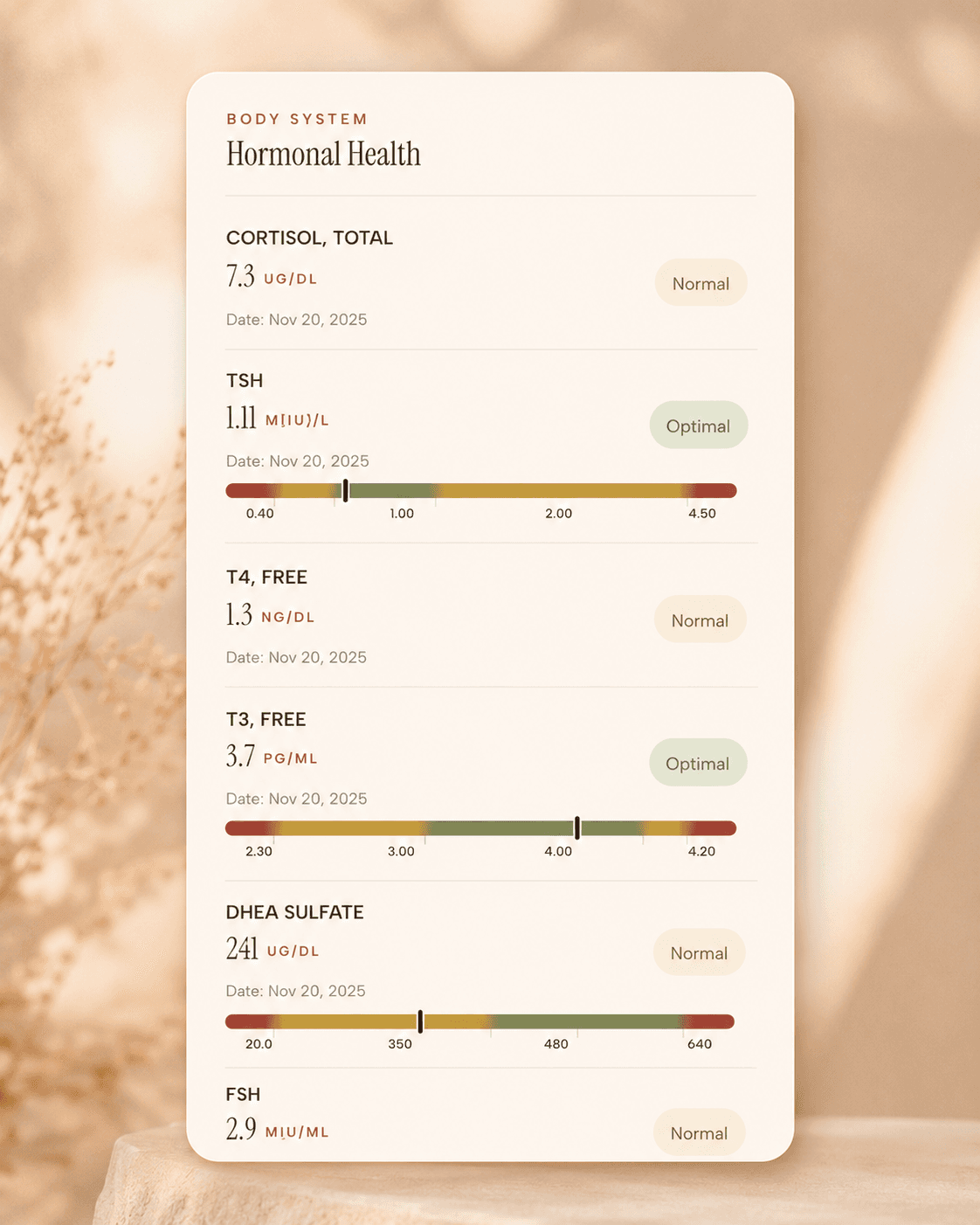
TSH is the master regulator of thyroid function, controlling the production of thyroid hormones T4 and T3. In functional medicine, we use narrower TSH ranges than conventional medicine to identify subclinical thyroid dysfunction early. Even mildly elevated TSH can indicate thyroid insufficiency, leading to fatigue, weight gain, depression, and metabolic dysfunction. TSH levels are influenced by stress, nutrient deficiencies, autoimmune conditions, and environmental toxins. Optimal TSH supports energy, metabolism…
Learn moreGlucose
Fasting glucose is a fundamental marker of glucose metabolism and insulin function. In functional medicine, we recognize that even 'normal' glucose levels in the upper range may indicate early insulin resistance. Optimal fasting glucose reflects efficient glucose regulation and insulin sensitivity. Elevated fasting glucose suggests the body's inability to maintain normal glucose levels overnight, indicating hepatic insulin resistance or insufficient insulin production. This marker is essential for early detectio…
Learn moreLab testing
Get testosterone, TSH, and vitamin D checked at Quest
starting from $99 panel with 100+ tests, one visit
No referral needed
About 1 week
Schedule online — results typically within a week
Clear next steps
Guidance included, with follow-up care available
HSA / FSA
Eligible for pre-tax health spending accounts
Pro Tips
If your mood swings feel “out of nowhere,” set a phone reminder for a 10-second check-in at 11 am and 4 pm. When you catch the early signs—tight jaw, racing thoughts, impatience—you can intervene before it turns into an argument.
Try a simple rule for two weeks: no big decisions after 9 pm. Sleep-deprived brains are confident and wrong, and this one boundary prevents a lot of regret when you’re in a reactive state.
If you suspect low testosterone, schedule your blood draw between 7–10 am and avoid heavy training the day before. That timing reduces false lows and makes the result easier to interpret.
Use the “HALT” reset when you feel a swing starting: ask yourself if you are Hungry, Angry, Lonely, or Tired, and fix the easiest one first. It sounds basic, but it works because those states share the same stress-hormone pathways.
If your partner notices your mood shifts before you do, ask them for a neutral signal phrase like “yellow light.” Agree ahead of time that it means you take a 10-minute break, not that you’re “in trouble.”
Frequently Asked Questions
Are mood swings in men a sign of low testosterone?
They can be, especially if you also have low libido, fewer morning erections, reduced exercise recovery, or a drop in motivation. The most useful first step is a morning total testosterone test, and if it is borderline low, repeating it on another morning helps confirm it. If it is consistently low, ask your clinician about checking related hormones and discussing treatment options.
Can thyroid problems cause irritability and mood swings in men?
Yes. An overactive thyroid can make you feel anxious, impatient, and “wired,” while an underactive thyroid can feel like depression with brain fog and low energy. A TSH blood test is a good screening tool, and persistent results outside roughly 0.5–2.5 mIU/L often deserve a closer look in the context of symptoms. If you also have weight change, heat or cold intolerance, or palpitations, mention that when you get tested.
How do I tell the difference between mood swings and bipolar disorder?
Bipolar-type patterns usually involve episodes that last days to weeks, not just hours, and they often include decreased need for sleep, unusually high energy, racing thoughts, or impulsive behavior. Mood swings from sleep loss or stress tend to track with your schedule and improve when you stabilize sleep and routines. If you have any history of manic symptoms or risky behavior during “up” periods, it is worth getting a formal mental health evaluation.
Why do I get angry when I haven’t eaten?
When your blood sugar drops, your body releases stress hormones to keep you functioning, and those hormones can feel like irritability, shakiness, and a short fuse. This is more likely if you start the day with coffee only, skip lunch, or eat a high-sugar meal that leads to a crash. Try eating protein within a couple hours of waking and adding a planned afternoon snack, then see if your mood becomes more stable within a week.
What labs are most useful for mood swings in men?
A practical starting trio is morning total testosterone, TSH for thyroid function, and 25-hydroxy vitamin D. Those tests help identify common, treatable drivers that can show up as irritability, low mood, or emotional reactivity. If results are abnormal or your symptoms are severe, use the labs as a starting point for a targeted plan rather than trying to self-treat.