01
Biological age
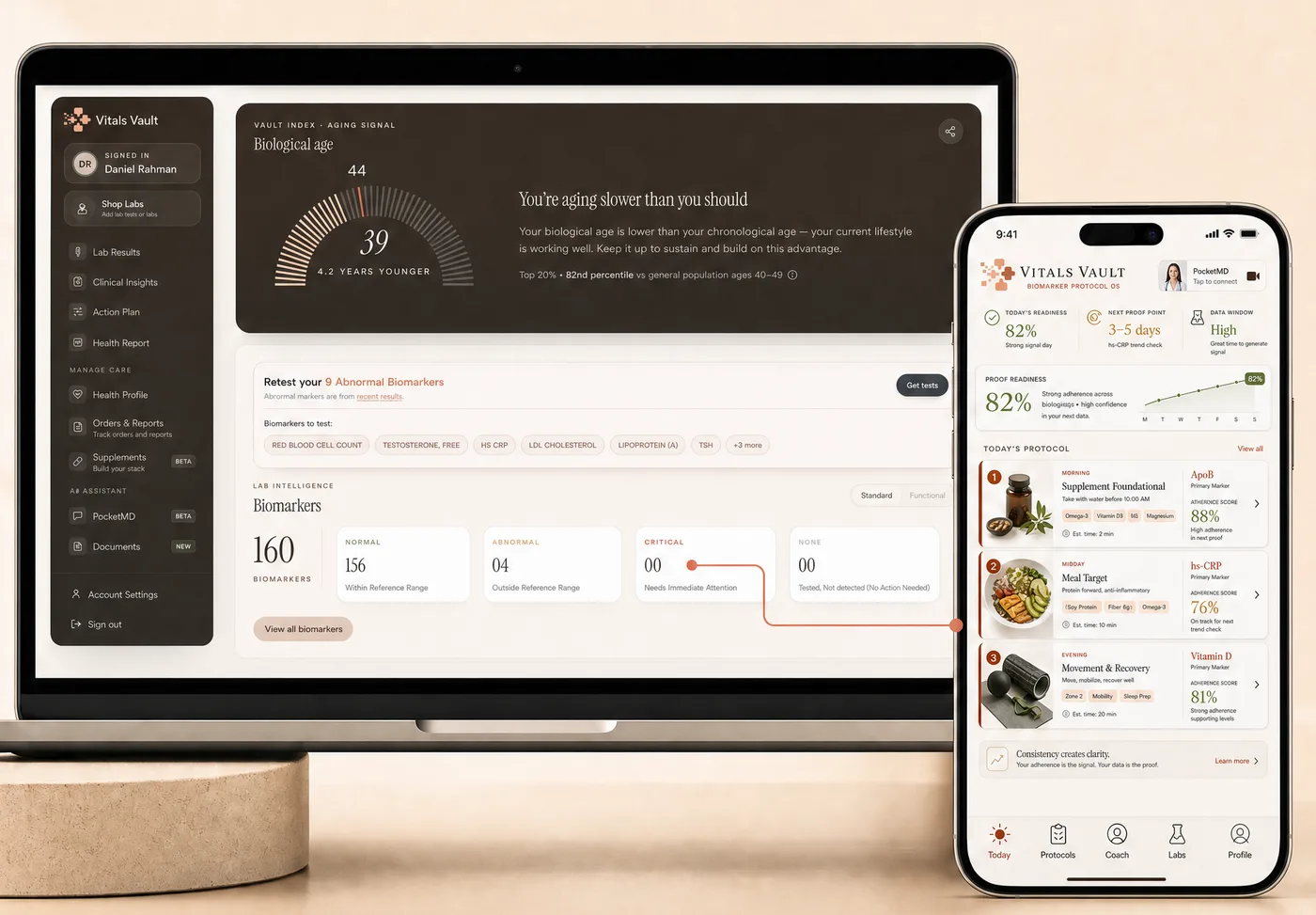
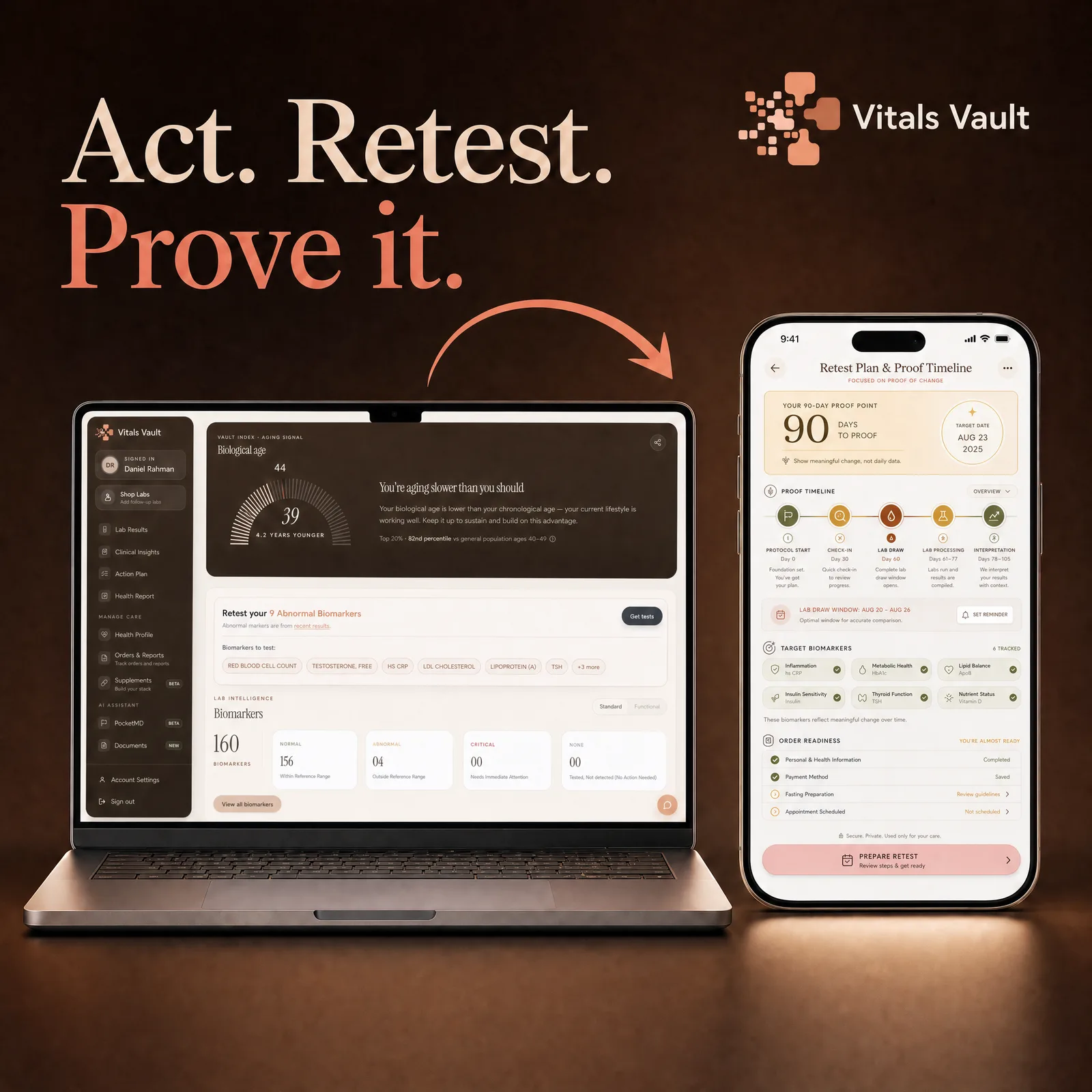
Find out if your body is aging faster or slower than your actual age — and see how you rank against the general population.
39
Biological age
44
Actual age
4.2
Years younger
Oral Contraceptive Nutrient Panel
Results in about 8 days
Nutrient Deficiency Panel For Oral Contraceptive Patients: what it includes and how to interpret patterns. This blood test panel checks key vitamins, minerals, and related markers often affected by oral contraceptives, helping you spot deficiency patterns.
Oral contraceptives (OCPs) can be a great fit for cycle control and pregnancy prevention, but they can also change how your body absorbs, stores, and uses certain nutrients. This lab panel bundles multiple blood tests into one order so you can look for nutrient patterns—rather than guessing based on symptoms or taking supplements blindly.
What to expect before and at your draw.
Sample Type
Blood
Collection Method
In person at a Quest Diagnostics location
Age
18+
This order includes the lab markers used for Oral Contraceptive Nutrient Panel.
Folate, Serum
Included in this Quest Diagnostics order and reported in your Vitals Vault account.
Vitamin E, Alpha Tocopherol
Included in this Quest Diagnostics order and reported in your Vitals Vault account.
Vitamin E, Beta Gamma Tocopherol
Included in this Quest Diagnostics order and reported in your Vitals Vault account.
Selenium
Included in this Quest Diagnostics order and reported in your Vitals Vault account.
Order Oral Contraceptive Nutrient Panel online.
Visit a Quest Diagnostics location near you for your blood draw. Appointments can be scheduled after checkout.
View easy-to-read results in your Vitals Vault account, with trends and a personalized action plan.
Included with every package
Function Health shows you numbers. Vitals Vault connects them — ratios, patterns, and a personalized action plan grounded in functional medicine.
Find out if your body is aging faster or slower than your actual age — and see how you rank against the general population.
39
Biological age
44
Actual age
4.2
Years younger
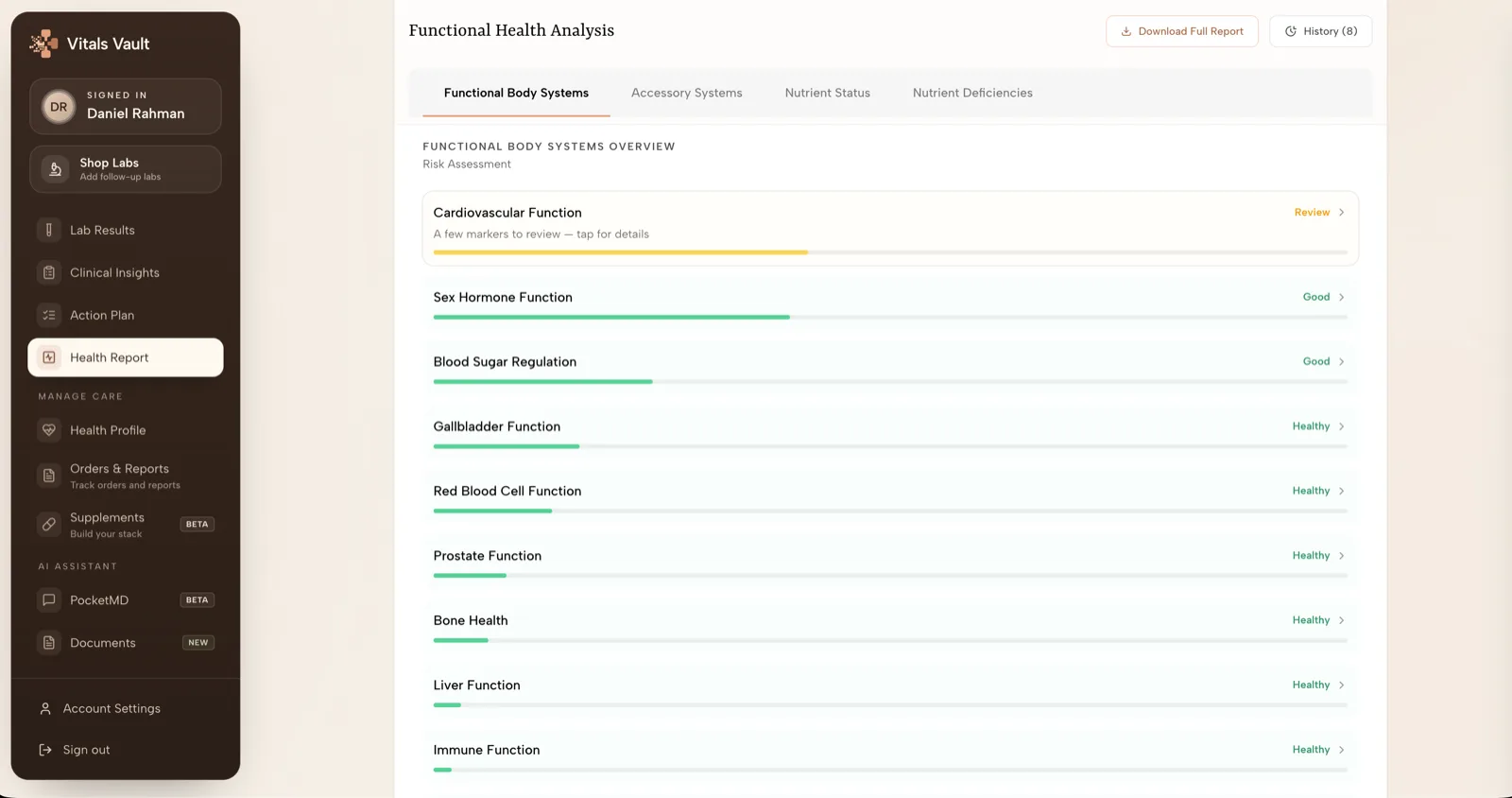
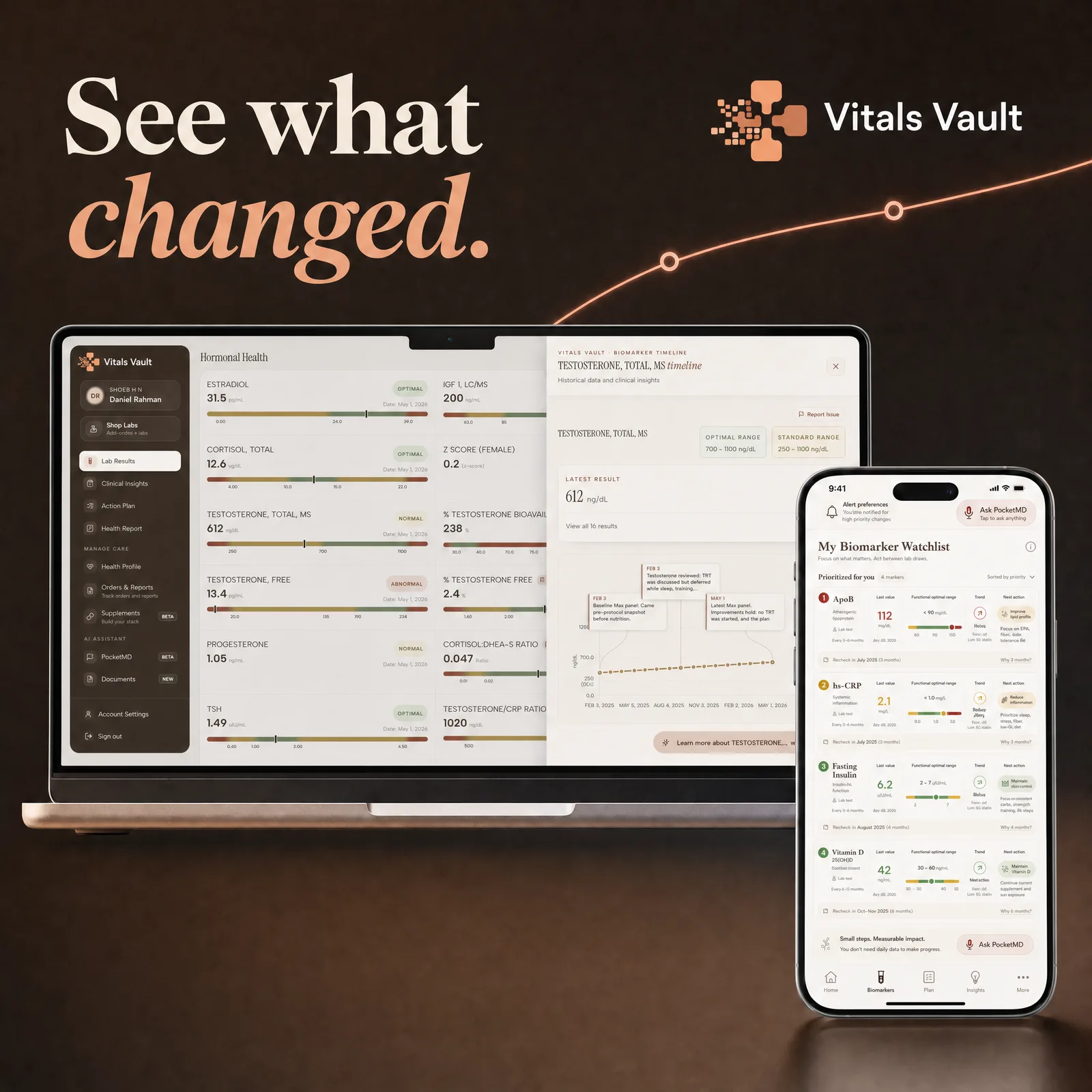
Turn lab data into what to do next—clear guidance on follow-ups, lifestyle context, and add-on testing when you need to go deeper. Make the healthy choice the obvious one.
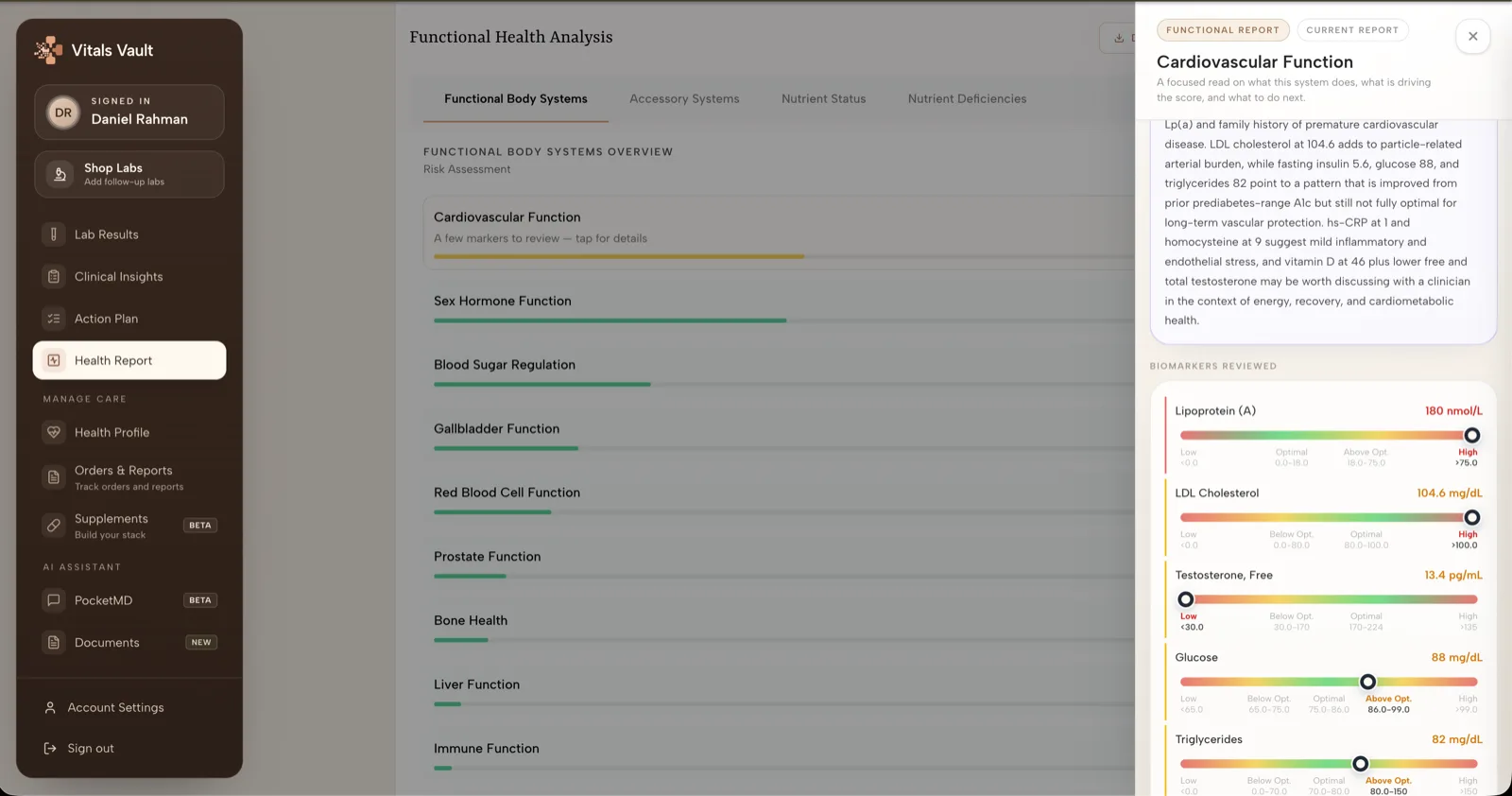
A personalized, plain-language walkthrough of your abnormal markers—reference ranges, pattern context, and what to watch next, grounded in your actual labs.
Personalized Insights
Clear Explanations
Actionable guidance
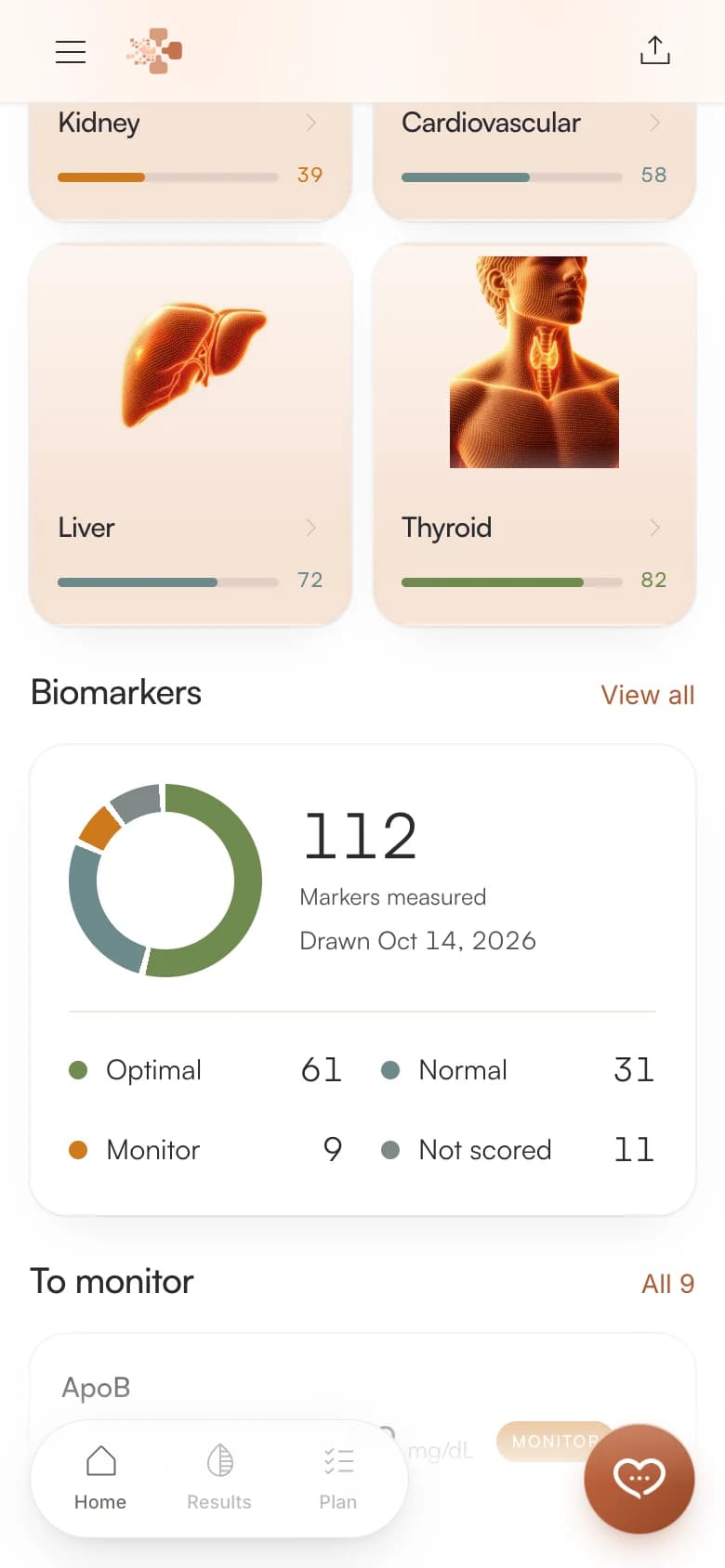
Explore your body systems with clear risk context — refresh your report, download the full PDF, and monitor hormones, heart, bone, and more in one place.
Explore hundreds of tests and panels, filter by concern, and manage your cart—member-exclusive pricing with quick checks and full-body options in one flow.
Wide test selection
300+ tests & panels available
Smart filtering
Find tests by symptoms or goals
Seamless ordering
Add to cart and manage easily
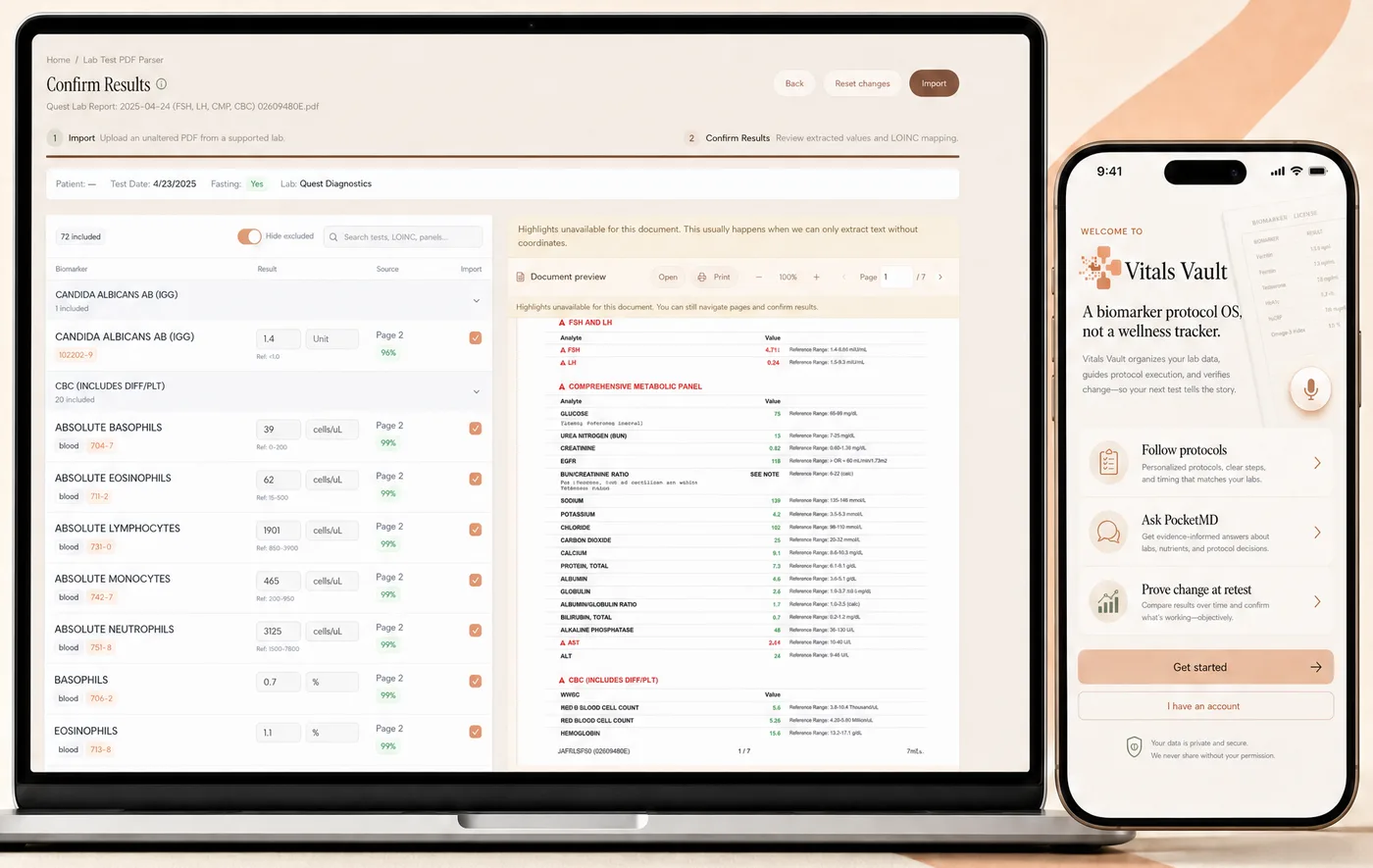
Upload past lab reports, search your documents, and keep appointments and results organized—our AI can extract biomarkers from PDFs so everything lives in one dashboard.
Browse longevity, nutrition, supplement, and movement protocols—structured plans you can follow with clear habits, labs, and targets tied to your profile.
Ask for protocols, nutrition plans, supplement stacks, and education—context-aware suggestions powered by your labs and goals (beta experience).
Order online
Add Oral Contraceptive Nutrient Panel to your cart and check out. No doctor referral is required.
Visit a Quest lab
Provide your blood sample at a Quest Diagnostics location. Appointments can be scheduled after checkout.
Review in Vitals Vault
Results in about 8 days. They stay in your Vitals Vault account for trends and follow-up.
No special preparation is usually needed unless noted at checkout.
This order includes the lab markers used for Oral Contraceptive Nutrient Panel and reported in your Vitals Vault account.
Results
Results in about 8 days
HSA/FSA
Accepted
Who takes it
Must be taken by the purchaser
Preparation
No special preparation needed unless noted at checkout.
Magnesium
Included in this Quest Diagnostics order and reported in your Vitals Vault account.
Phosphate (As Phosphorus)
Included in this Quest Diagnostics order and reported in your Vitals Vault account.
Zinc
Included in this Quest Diagnostics order and reported in your Vitals Vault account.
Vitamin B6, Plasma
Included in this Quest Diagnostics order and reported in your Vitals Vault account.
This blood test panel checks key vitamins, minerals, and related markers often affected by oral contraceptives, helping you spot deficiency patterns.





Oral contraceptives (OCPs) can be a great fit for cycle control and pregnancy prevention, but they can also change how your body absorbs, stores, and uses certain nutrients. This lab panel bundles multiple blood tests into one order so you can look for nutrient patterns—rather than guessing based on symptoms or taking supplements blindly.
You might consider this nutrient deficiency lab panel if you use oral contraceptives and you are dealing with fatigue, low energy, brain fog, headaches, mood changes, hair shedding, brittle nails, restless legs, frequent mouth sores, or exercise intolerance. These symptoms can overlap with stress, sleep issues, thyroid problems, and many other causes, so a panel is useful when you want objective data before making changes.
This panel is also reasonable if you have dietary restrictions (vegan/vegetarian, low-calorie dieting, limited red meat), heavy training, frequent blood donation, a history of anemia, or gastrointestinal issues that can affect absorption. If you are “methylation-curious” and trying to make sense of B12 vs folate vs homocysteine (without getting pulled into fear-based narratives), a bundled approach helps you see whether there is a real functional pattern.
You do not need to self-diagnose from one number. This panel is designed to support clinician-directed care by showing how multiple nutrient-related markers fit together, so you and your clinician can decide whether food changes, targeted supplementation, or follow-up testing makes sense.
This panel combines standard blood tests; reference ranges and units can vary by lab, so interpretation should focus on patterns across markers and your clinical context.
from $192.67 at Quest Diagnostics
Results in days
Clear next steps
HSA / FSA
Vitals Vault lets you order a multi-marker nutrient deficiency panel built for oral contraceptive users, then review the results in one place. Because this is a panel, you are not just checking a single vitamin—you are looking at related nutrients and downstream markers that help explain whether a “borderline” result is likely meaningful.
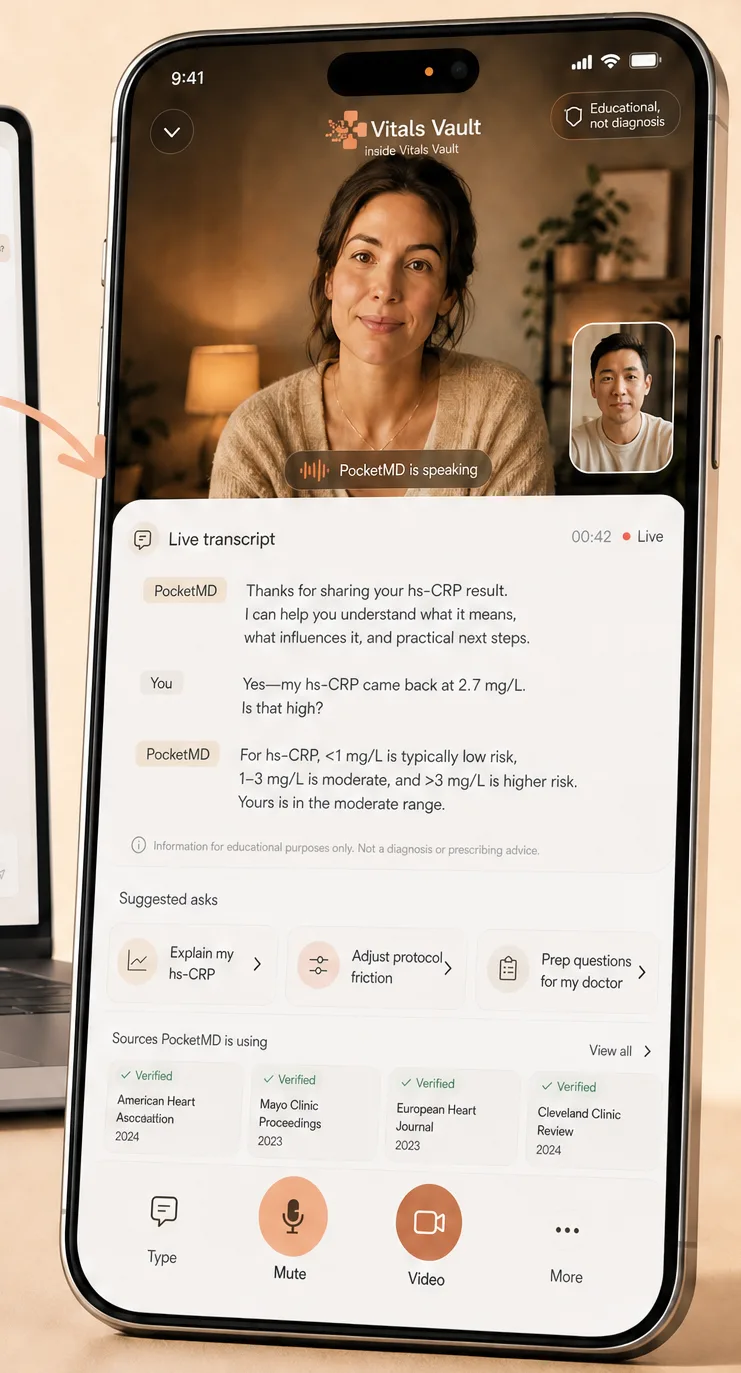
After your blood draw, you can use PocketMD to walk through your results with plain-language explanations and next-step questions to bring to your clinician. This is especially helpful when you have mixed findings (for example, normal B12 but elevated methylmalonic acid, or normal hemoglobin with low ferritin).
If you are making changes—diet, supplements, or medication adjustments—retesting the same panel later can help you confirm whether the pattern is improving rather than relying on symptoms alone.
This is a bundled lab panel that measures a set of vitamins, minerals, and related “functional” markers that can shift with oral contraceptive use, diet patterns, and individual absorption. Oral contraceptives can influence nutrient status in several ways: changes in liver protein production, altered metabolism of certain vitamins, and indirect effects on appetite, gut function, or inflammation. None of this means OCPs automatically “cause deficiencies,” but it does mean your nutrient picture can be different on OCPs than off them.
A key advantage of a panel (instead of ordering one or two nutrients) is context. For example, a B12 value can look normal while a functional marker suggests your tissues are not getting enough active B12. Iron deficiency can exist even when hemoglobin is still in range. Vitamin D status is easier to interpret alongside calcium and parathyroid hormone (PTH) patterns. Seeing these markers together helps you avoid overreacting to a single borderline result.
This panel is not a substitute for evaluating other drivers of symptoms (sleep, thyroid function, depression/anxiety, chronic infection, inflammatory disease), and it is not designed to diagnose a specific condition on its own. It is a practical way to check whether nutrient gaps are likely contributing—and to prioritize what to address first.
A “low” pattern on this panel usually means one or more nutrient measurements are below range and the surrounding markers point in the same direction. Examples include low ferritin with low serum iron and higher total iron-binding capacity (TIBC), which can suggest low iron stores; low or borderline vitamin B12 with elevated methylmalonic acid (MMA) and/or elevated homocysteine, which can suggest functional B12 insufficiency; or low 25-hydroxy vitamin D with a compensatory rise in PTH. When several related markers line up, it is more likely that the finding is clinically meaningful and worth addressing with diet changes, targeted supplementation, or evaluation for absorption issues.
An “optimal” pattern generally means key nutrients are in range and functional markers do not show stress signals. For example, ferritin and iron studies look consistent with healthy iron stores, red blood cell indices (like MCV) do not suggest a deficiency pattern, B12 and folate are supported by normal MMA and homocysteine, and vitamin D is in range without a PTH pattern that suggests compensation. If your symptoms persist despite an overall reassuring panel, it is a sign to broaden the conversation beyond nutrients rather than escalating supplements.
A “high” pattern on a nutrient panel does not always mean toxicity, but it often reflects supplementation, recent injections, or shifts in binding proteins. For example, high serum B12 can occur after supplements or injections and does not automatically mean your cells are using B12 well; you still look at MMA and homocysteine for functional context. Ferritin can be high from inflammation, liver stress, or iron overload—so it is interpreted alongside iron, transferrin saturation, and inflammatory context. Very high vitamin D can occur with aggressive dosing and should be reviewed with calcium and symptoms. If multiple markers are high, it is a good moment to review your supplement list, doses, and timing before the blood draw.
Oral contraceptives can change liver-produced proteins and hormone-binding dynamics, which may shift some lab values without reflecting a true deficiency. Diet, alcohol intake, recent illness, inflammation, heavy training, and gastrointestinal conditions (celiac disease, inflammatory bowel disease, chronic gastritis) can also affect nutrient markers. Supplements matter a lot: biotin can interfere with some immunoassays, and recent B12, folate, iron, vitamin D, zinc, or magnesium supplements can raise blood levels even if tissue status is still catching up. Timing and prep can influence results too—fasting status, time of day, and whether you took supplements the morning of the draw. If a result surprises you, the most useful next step is usually to confirm the pattern (repeat or add a functional companion marker) rather than making big changes based on one isolated number.
Not automatically. OCPs can be associated with changes in certain nutrient markers in some people, but diet quality, baseline stores, absorption, inflammation, and supplement use often matter more. This panel helps you check your personal pattern instead of assuming depletion.
B12 alone can miss functional issues. MMA and homocysteine are “downstream” markers that can rise when B12 (and sometimes folate or B6) is not meeting cellular needs. Looking at the trio can reduce confusion when B12 is borderline or when symptoms don’t match a single value.
Yes. Hemoglobin can stay normal while iron stores are dropping. Ferritin and iron studies can show low iron reserves earlier, which is one reason this panel includes more than a CBC.
Fasting requirements depend on the exact lab methods and what else you are bundling with the order. If you are unsure, a practical approach is to do a morning draw and avoid taking supplements (especially B vitamins, iron, zinc, magnesium, and vitamin D) until after the blood draw unless your clinician told you otherwise.
Do not stop prescribed medications or clinician-directed supplements without guidance. For over-the-counter supplements, many people pause the morning dose until after the draw to reduce short-term spikes. If you want a “true baseline,” ask your clinician whether a longer washout period is appropriate for your situation.
Mixed results are common. Start by grouping markers: iron status (ferritin/iron/TIBC/transferrin saturation), B-vitamin status (B12/folate with MMA and homocysteine), and vitamin D–calcium regulation (25-OH vitamin D with calcium and PTH). Patterns across a group are usually more informative than a single flagged value.
No. MTHFR testing looks at a genetic variant, not your current nutrient status. Many people with MTHFR variants have normal folate and normal homocysteine, and many people with elevated homocysteine do not need genetic testing to take action. If you are considering MTHFR testing, pairing it with real nutrient and functional markers is usually more useful than genetics alone.
Purchase online through Vitals Vault. A licensed clinician reviews and approves your order, then you receive a digital requisition for a Quest Diagnostics blood draw.
Samples are collected in person at Quest Diagnostics locations nationwide. After checkout you can schedule your visit at a convenient site.
Most results in 3–5 business days. You can view them securely in your Vitals Vault account.
No separate referral appointment is required. Clinician review is included in the online order flow.
Yes. Eligible HSA/FSA cards can be used at checkout for qualifying lab orders.
Results are available in your secure Vitals Vault account. You control who you share them with, subject to applicable law.
Blood glucose shows the amount of sugar in your blood at a single moment. A1c (hemoglobin A1c) estimates your average blood sugar over roughly the past 8–12 weeks. Comparing them helps explain whether your long-term average lines up with your fasting glucose on draw day.
It helps you understand how this marker fits into your broader metabolic picture, with results tracked in your Vitals Vault account.
Elevated values can signal higher metabolic risk. Many people start with nutrition, activity, sleep, and weight management, then retest and review results with a clinician. This test is educational and does not replace medical advice or diagnosis.
Your sample is processed at CLIA-certified Quest Diagnostics laboratories. Results should still be interpreted with a qualified clinician alongside your history, symptoms, and other labs.
Consumer-initiated testing through Vitals Vault is limited to adults 18+ so ordering and interpretation stay aligned with clinical best practices for this channel.