01
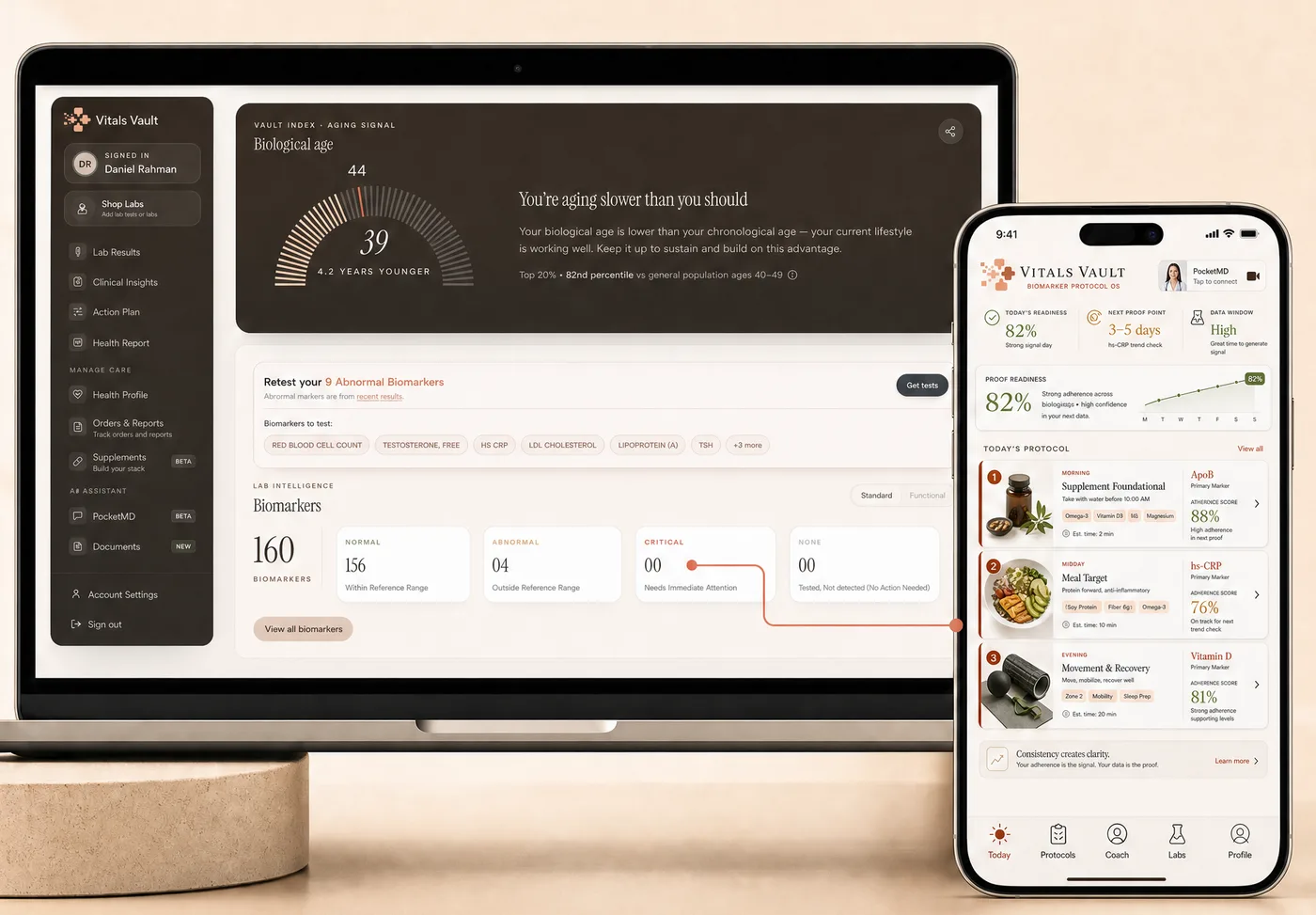
Biological age
Find out if your body is aging faster or slower than your actual age — and see how you rank against the general population.
39
Biological age
44
Actual age
4.2
Years younger
Lead
Results in about 3–7 days
Lead Blood (Blood Lead Level) Test. A blood lead test measures recent lead exposure and body burden risk, with clear next steps for retesting and follow-up through Vitals Vault labs via Quest.
A Lead Blood test measures the amount of lead circulating in your bloodstream (often reported as a blood lead level, or BLL). It is one of the most direct ways to check for recent or ongoing lead exposure. Lead exposure is not always obvious. You can feel completely fine, or you can have vague symptoms that overlap with many other issues, such as fatigue, headaches, irritability, stomach discomfort, or trouble concentrating. Because lead can affect the nervous system, kidneys, blood production, and pregnancy outcomes, testing is most useful when you have a realistic exposure risk or you need to confirm that an exposure has stopped.
What to expect before and at your draw.
Sample Type
Blood
Collection Method
In person at a Quest Diagnostics location
Age
18+
This order includes the lab markers used for Lead.
Lead (Venous)
Included in this Quest Diagnostics order and reported in your Vitals Vault account.
Order Lead online.
Visit a Quest Diagnostics location near you for your blood draw. Appointments can be scheduled after checkout.
View easy-to-read results in your Vitals Vault account, with trends and a personalized action plan.
Included with every package
Function Health shows you numbers. Vitals Vault connects them — ratios, patterns, and a personalized action plan grounded in functional medicine.
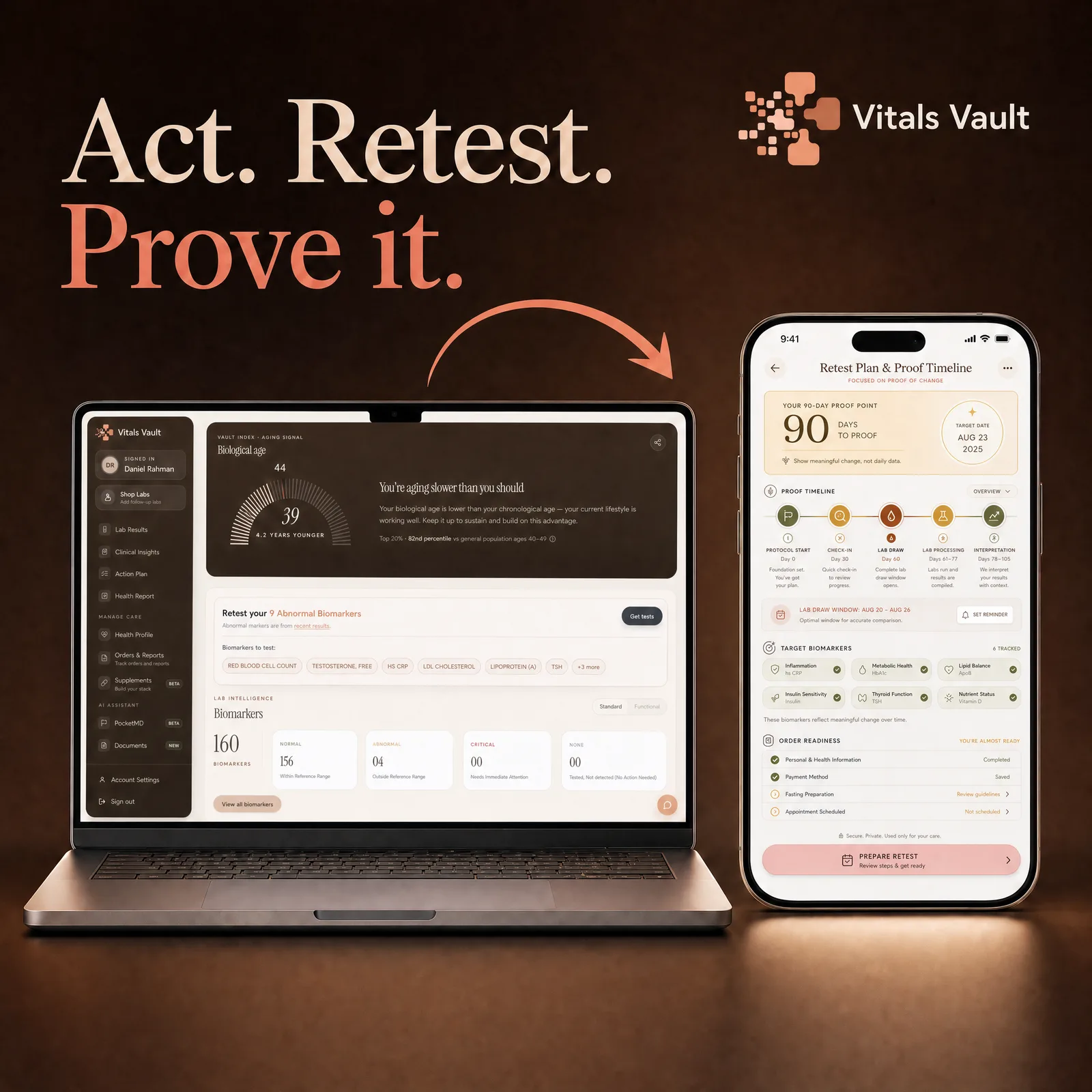
Find out if your body is aging faster or slower than your actual age — and see how you rank against the general population.
39
Biological age
44
Actual age
4.2
Years younger
Turn lab data into what to do next—clear guidance on follow-ups, lifestyle context, and add-on testing when you need to go deeper. Make the healthy choice the obvious one.
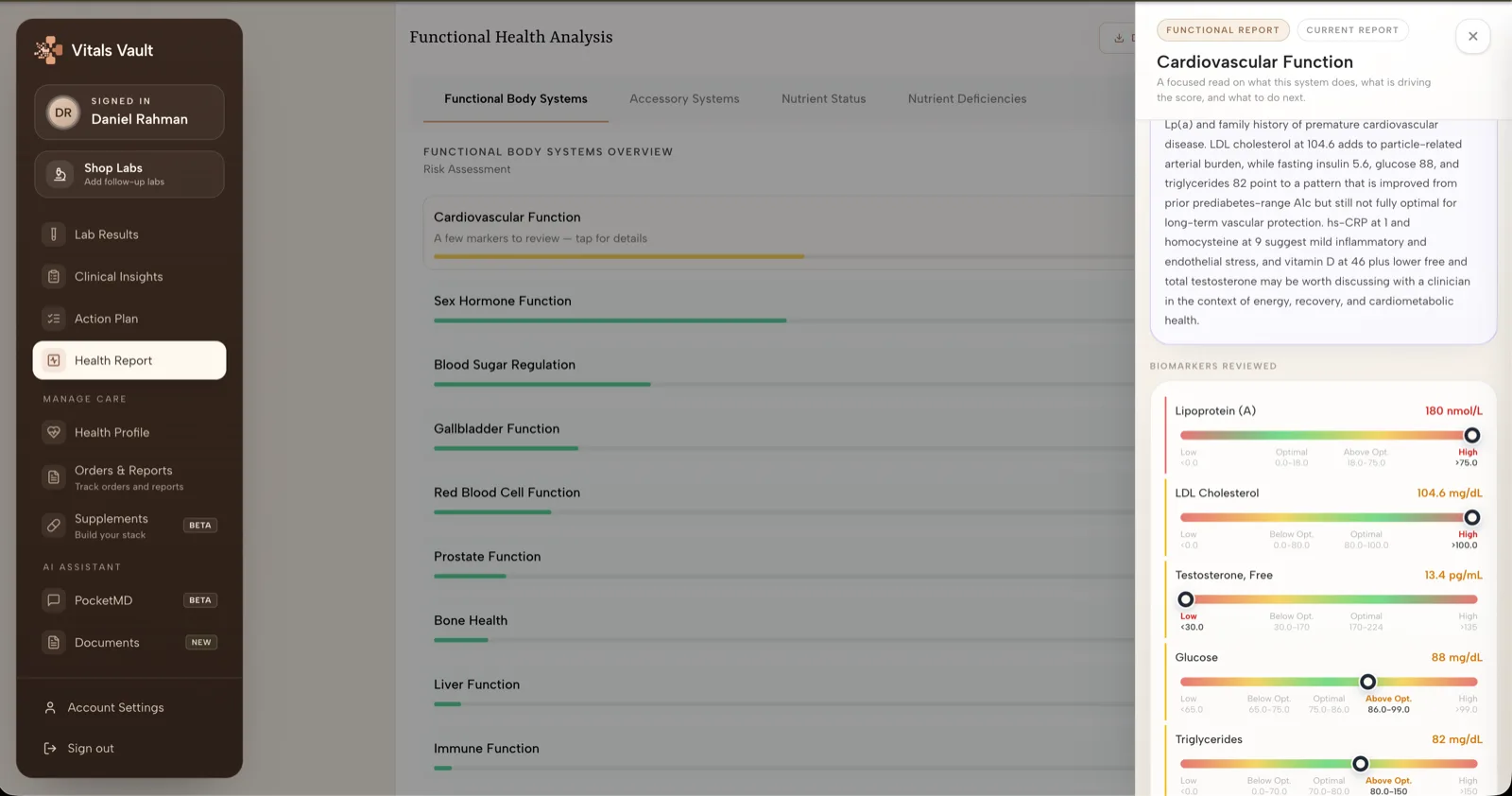
A personalized, plain-language walkthrough of your abnormal markers—reference ranges, pattern context, and what to watch next, grounded in your actual labs.
Personalized Insights
Clear Explanations
Actionable guidance
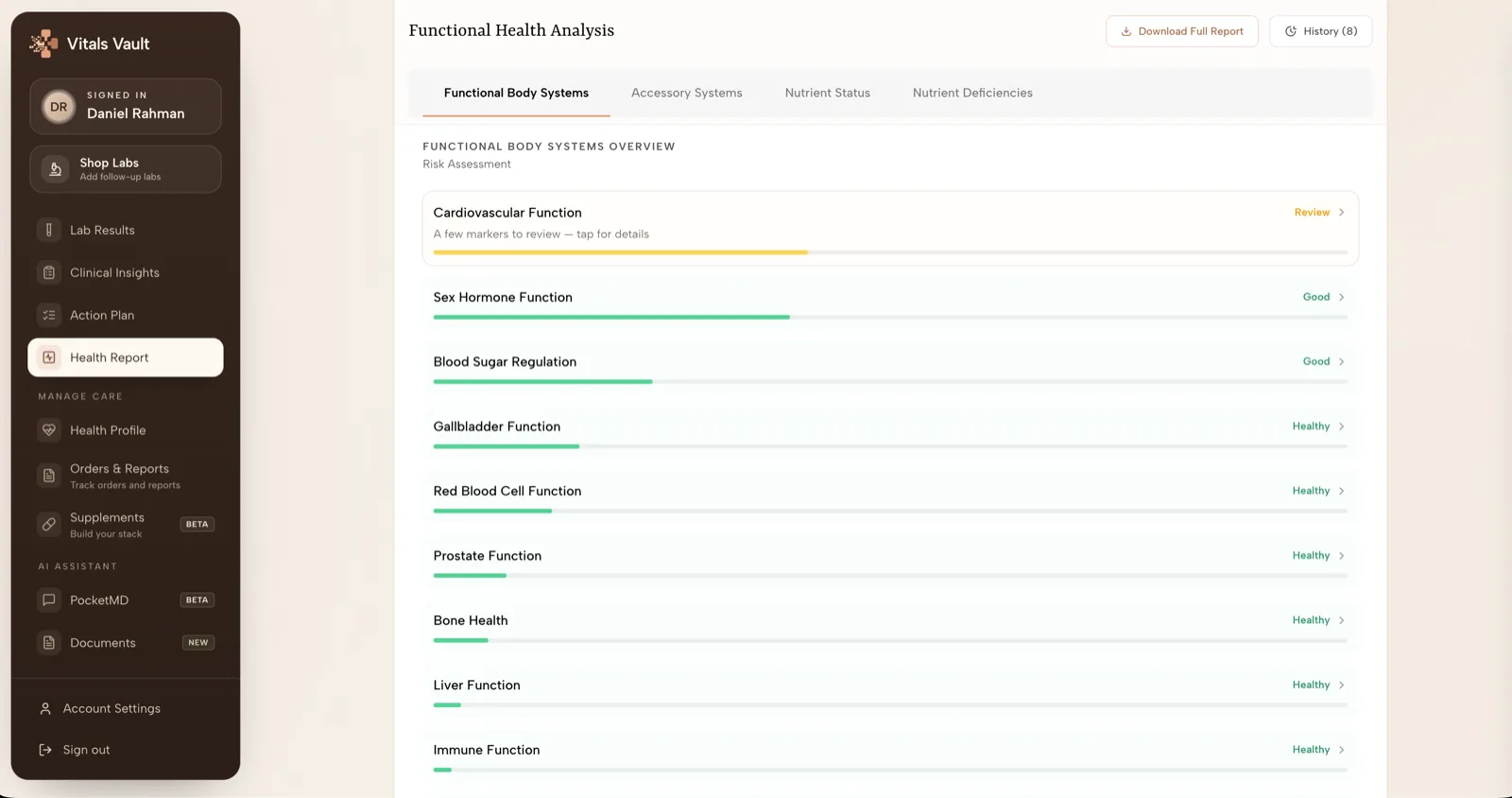
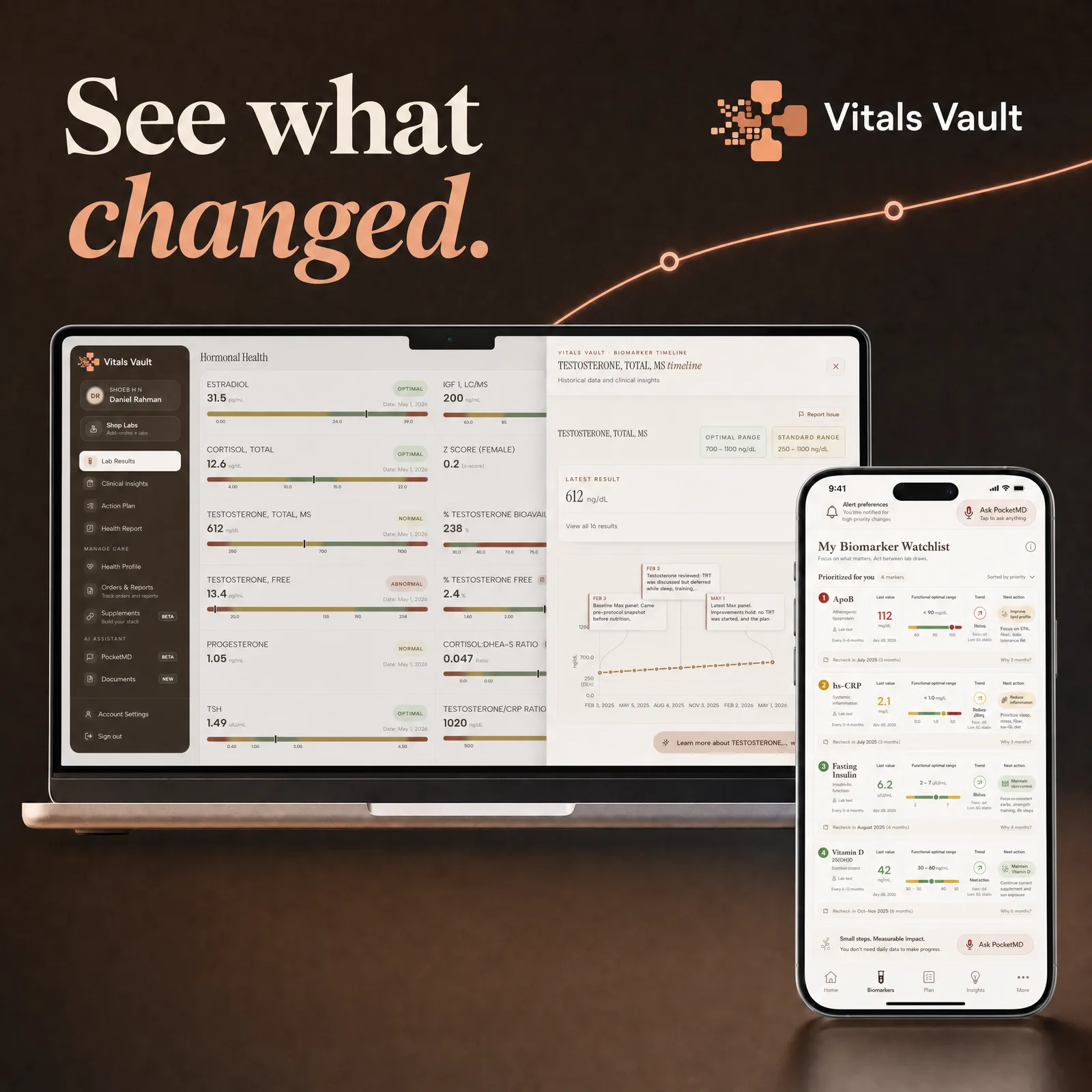
Explore your body systems with clear risk context — refresh your report, download the full PDF, and monitor hormones, heart, bone, and more in one place.
Explore hundreds of tests and panels, filter by concern, and manage your cart—member-exclusive pricing with quick checks and full-body options in one flow.
Wide test selection
300+ tests & panels available
Smart filtering
Find tests by symptoms or goals
Seamless ordering
Add to cart and manage easily
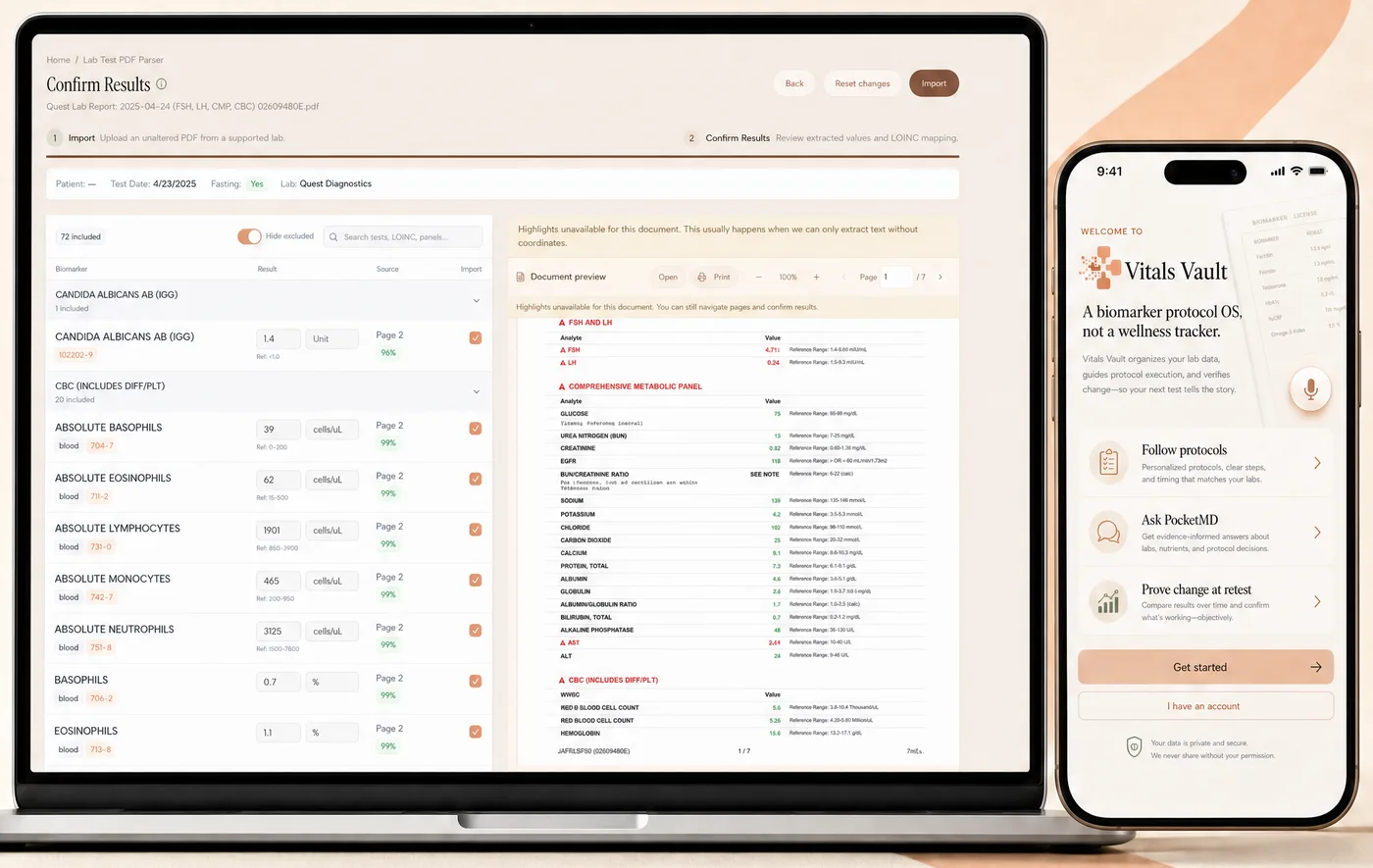
Upload past lab reports, search your documents, and keep appointments and results organized—our AI can extract biomarkers from PDFs so everything lives in one dashboard.
Browse longevity, nutrition, supplement, and movement protocols—structured plans you can follow with clear habits, labs, and targets tied to your profile.
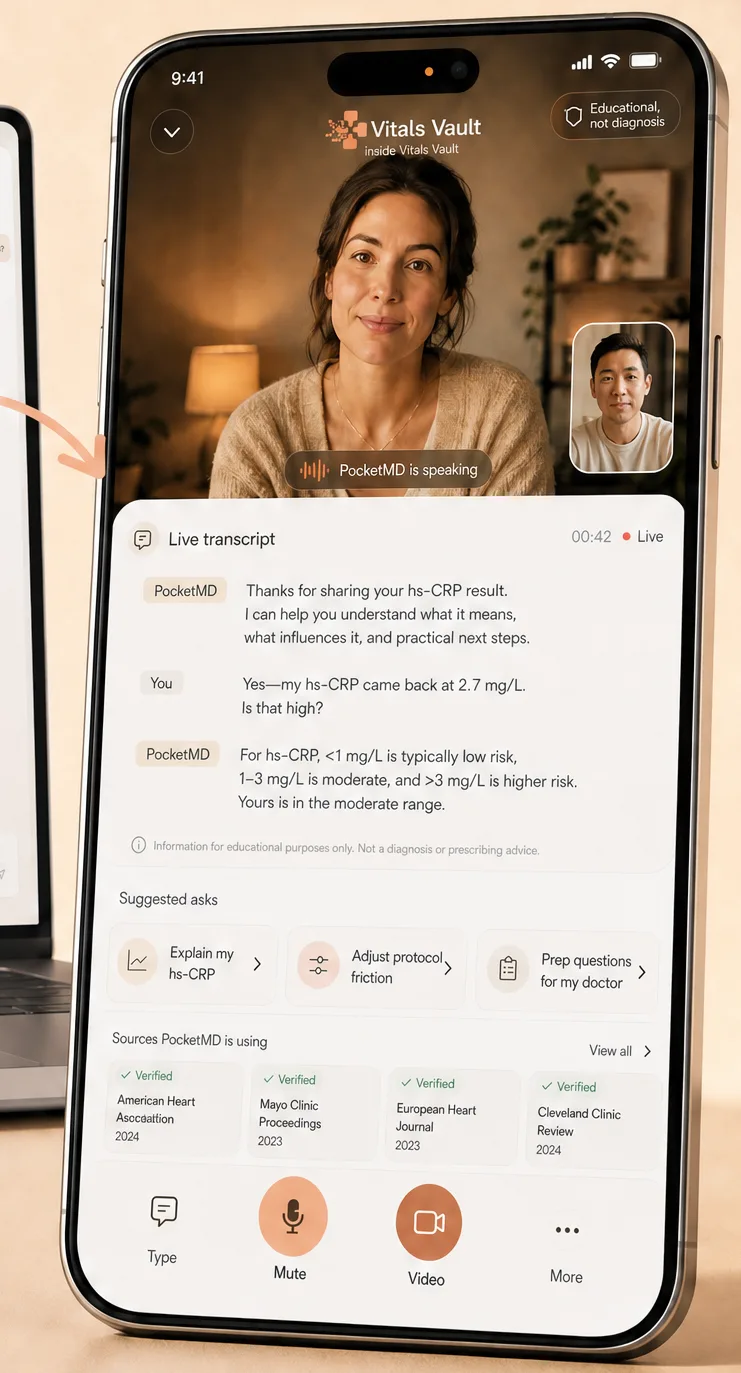
Ask for protocols, nutrition plans, supplement stacks, and education—context-aware suggestions powered by your labs and goals (beta experience).
Order online
Add Lead to your cart and check out. No doctor referral is required.
Visit a Quest lab
Provide your blood sample at a Quest Diagnostics location. Appointments can be scheduled after checkout.
Review in Vitals Vault
Results in about 3–7 days. They stay in your Vitals Vault account for trends and follow-up.
No special preparation is usually needed unless noted at checkout.
This order includes the lab markers used for Lead and reported in your Vitals Vault account.
Results
Results in about 3–7 days
HSA/FSA
Accepted
Who takes it
Must be taken by the purchaser
Preparation
No special preparation needed unless noted at checkout.
A blood lead test measures recent lead exposure and body burden risk, with clear next steps for retesting and follow-up through Vitals Vault labs via Quest.





A Lead Blood test measures the amount of lead circulating in your bloodstream (often reported as a blood lead level, or BLL). It is one of the most direct ways to check for recent or ongoing lead exposure.
Lead exposure is not always obvious. You can feel completely fine, or you can have vague symptoms that overlap with many other issues, such as fatigue, headaches, irritability, stomach discomfort, or trouble concentrating.
Because lead can affect the nervous system, kidneys, blood production, and pregnancy outcomes, testing is most useful when you have a realistic exposure risk or you need to confirm that an exposure has stopped.
You may want a Lead Blood test if you have a credible source of exposure. Common scenarios include living in or renovating an older home with lead-based paint, working in construction, battery manufacturing or recycling, firing ranges, stained glass or ceramics, or hobbies that involve soldering or melting metals.
Testing is also reasonable if you are pregnant or planning pregnancy and you have potential exposure, because lead can cross the placenta. For children, even low levels can affect learning and behavior, so clinicians often have a lower threshold to test when there is environmental risk.
You might also consider testing if you have unexplained anemia, persistent abdominal symptoms, new neurologic symptoms (like numbness or weakness), or kidney concerns and your history suggests possible lead contact.
A Lead Blood result supports clinician-directed decisions about exposure reduction, follow-up testing, and when additional evaluation is needed; it is not meant to be used for self-diagnosis.
This test is performed in a CLIA-certified laboratory; results should be interpreted with your clinician in the context of symptoms, exposure history, and local public health guidance.
from $35.99 at Quest Diagnostics
Results in days
Clear next steps
HSA / FSA
If you are trying to confirm an exposure, document a baseline, or decide when to retest, Vitals Vault lets you order a Lead Blood test without needing a separate lab visit arranged by a clinic.
After your draw, you can use PocketMD to walk through what your number means, what exposures commonly drive it, and what follow-up questions to bring to your clinician or workplace safety team.
If your result is elevated, the next step is usually not guesswork. It is a structured plan: confirm the sample type, reduce exposure, consider companion labs (like a complete blood count or kidney markers), and repeat testing on a timeline that matches your risk and starting level.
Lead is a toxic heavy metal that your body does not need. When lead enters your body (most often through inhalation of dust or fumes, or ingestion of contaminated dust, soil, water, or products), some of it circulates in your blood. A Lead Blood test measures that circulating amount, typically reported in micrograms per deciliter (µg/dL).
Your blood lead level reflects relatively recent exposure because lead moves out of the blood over time and can be stored in bone and other tissues. That means a single blood test is very good at detecting ongoing exposure, but it may not fully capture long-term body stores if exposure happened in the distant past.
Lead can interfere with enzymes involved in making hemoglobin, contribute to anemia, affect the nervous system and cognition, raise blood pressure, and stress the kidneys. In children and during pregnancy, the nervous system is especially sensitive, and even low levels can matter.
If you are trying to understand a possible exposure, it helps to think in two parts: (1) the number itself, and (2) whether your day-to-day environment still contains a lead source. The test answers the first part; your exposure history and, when needed, environmental assessment address the second.
Blood lead is the most practical marker for current exposure. Bone can store lead for years, and it can be released back into the bloodstream during pregnancy, lactation, osteoporosis, or significant weight loss. That is one reason a blood lead level can rise even when you do not identify a new exposure source.
Fingerstick (capillary) tests can be useful for screening, but they are more vulnerable to contamination from lead dust on the skin. If a screening result is elevated, clinicians often confirm with a venous blood draw because it is more reliable for decision-making.
A low or undetectable result generally suggests you do not have meaningful recent exposure. It does not guarantee that you have never been exposed, because older exposures can be stored in bone and may not show up strongly in blood. If you still have a high-risk environment (for example, ongoing renovation of an older home or regular range time), your clinician may still recommend periodic retesting.
Many labs report a reference interval, but for lead, “lower is better” is the practical interpretation because there is no known beneficial level. An “in-range” result usually means your current exposure is low enough that immediate intervention is less likely, but your personal goal should still be minimizing exposure. If you are pregnant, have kidney disease, or are testing a child, your clinician may use more conservative thresholds and follow-up plans.
An elevated blood lead level suggests recent or ongoing exposure and should trigger a search for the source. Next steps often include confirming the sample type (venous if needed), reviewing occupational and hobby exposures, and checking whether anyone else in the household is at risk. Depending on the level and your symptoms, your clinician may order additional labs (such as a complete blood count and kidney function tests) and recommend a specific retesting interval to ensure the level is falling after exposure reduction.
Your result can be influenced by where and how the sample was collected, especially with capillary testing where skin contamination can falsely raise the number. Recent high-exposure events (sanding old paint, casting bullets, working with lead solder) can temporarily increase blood levels. Pregnancy, lactation, and increased bone turnover can mobilize stored lead and raise blood lead even without a new external source. Iron deficiency can also increase lead absorption, which is one reason clinicians may evaluate iron status when lead is elevated.
Labs may show a reference interval, but clinically the goal is as low as possible because lead is toxic and has no beneficial level. What counts as “concerning” depends on age (child vs. adult), pregnancy status, symptoms, and exposure context, so it is best to review your exact number with your clinician.
Fasting is not typically required for a Lead Blood test. If your clinician orders other labs at the same time (such as lipids or glucose), those tests may have different preparation instructions.
Blood lead reflects relatively recent exposure because lead gradually moves from blood into tissues, including bone. If you remove the exposure source, blood levels often decline over weeks to months, but the timeline varies with the starting level, ongoing exposure, and whether stored lead is being released from bone.
Often, yes. Capillary (fingerstick) samples can be contaminated by lead dust on the skin and may read higher than your true blood level. A venous blood draw is commonly used to confirm an elevated screening result before making major decisions.
Adults can have no symptoms, or they may develop nonspecific issues such as fatigue, headaches, irritability, abdominal pain or constipation, muscle or joint aches, and difficulty concentrating. Higher levels can contribute to anemia, nerve problems (like numbness or weakness), kidney stress, and increased blood pressure, which is why follow-up testing is often broader than lead alone.
Retesting depends on your exposure risk and your starting result. If you have ongoing risk (for example, workplace exposure) or an elevated level, clinicians often recommend repeat testing on a defined schedule to confirm the level is falling after exposure reduction. PocketMD can help you map questions for your clinician, but your clinician should set the final interval.
Common companion labs include a complete blood count (to look for anemia), kidney function markers such as creatinine and BUN, and sometimes iron studies because iron deficiency can increase lead absorption. If exposure is suspected from a specific source (workplace or home), environmental assessment is also a key part of the workup.
Purchase online through Vitals Vault. A licensed clinician reviews and approves your order, then you receive a digital requisition for a Quest Diagnostics blood draw.
Samples are collected in person at Quest Diagnostics locations nationwide. After checkout you can schedule your visit at a convenient site.
Most results in 3–5 business days. You can view them securely in your Vitals Vault account.
No separate referral appointment is required. Clinician review is included in the online order flow.
Yes. Eligible HSA/FSA cards can be used at checkout for qualifying lab orders.
Results are available in your secure Vitals Vault account. You control who you share them with, subject to applicable law.
Blood glucose shows the amount of sugar in your blood at a single moment. A1c (hemoglobin A1c) estimates your average blood sugar over roughly the past 8–12 weeks. Comparing them helps explain whether your long-term average lines up with your fasting glucose on draw day.
It helps you understand how this marker fits into your broader metabolic picture, with results tracked in your Vitals Vault account.
Elevated values can signal higher metabolic risk. Many people start with nutrition, activity, sleep, and weight management, then retest and review results with a clinician. This test is educational and does not replace medical advice or diagnosis.
Your sample is processed at CLIA-certified Quest Diagnostics laboratories. Results should still be interpreted with a qualified clinician alongside your history, symptoms, and other labs.
Consumer-initiated testing through Vitals Vault is limited to adults 18+ so ordering and interpretation stay aligned with clinical best practices for this channel.