01
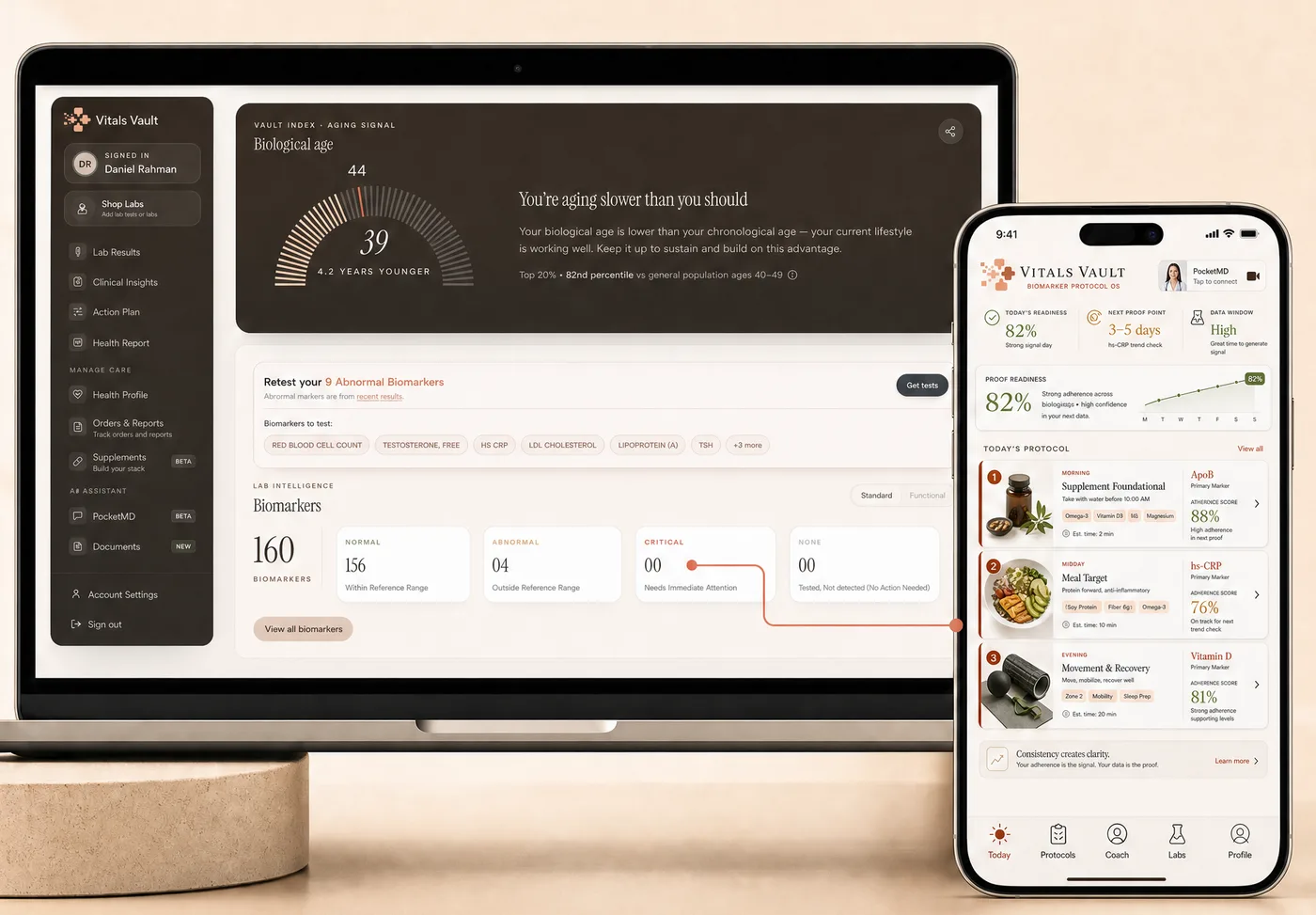
Biological age
Find out if your body is aging faster or slower than your actual age — and see how you rank against the general population.
39
Biological age
44
Actual age
4.2
Years younger
Amylase
Results in about 4 days
Amylase test (blood): what it measures and how to interpret your result. An amylase test measures a digestive enzyme linked to pancreas and salivary gland issues, with convenient ordering and Quest lab access via Vitals Vault.
Amylase is a digestive enzyme that helps break down carbohydrates. In your blood, it can rise when the pancreas is irritated or injured, and it can also change with salivary gland problems and a few other conditions. An amylase test is most useful when you have symptoms such as sudden upper abdominal pain, nausea, vomiting, or pain that radiates to your back, especially if a clinician is considering pancreatitis. It can also be part of a broader workup when the cause of abdominal pain is not clear. Your number is not a diagnosis by itself. It becomes meaningful when it is interpreted alongside your symptoms, timing, and related labs such as lipase and liver tests.
What to expect before and at your draw.
Sample Type
Blood
Collection Method
In person at a Quest Diagnostics location
Age
18+
This order includes the lab markers used for Amylase.
Amylase
Included in this Quest Diagnostics order and reported in your Vitals Vault account.
Order Amylase online.
Visit a Quest Diagnostics location near you for your blood draw. Appointments can be scheduled after checkout.
View easy-to-read results in your Vitals Vault account, with trends and a personalized action plan.
Included with every package
Function Health shows you numbers. Vitals Vault connects them — ratios, patterns, and a personalized action plan grounded in functional medicine.
Find out if your body is aging faster or slower than your actual age — and see how you rank against the general population.
39
Biological age
44
Actual age
4.2
Years younger
Turn lab data into what to do next—clear guidance on follow-ups, lifestyle context, and add-on testing when you need to go deeper. Make the healthy choice the obvious one.
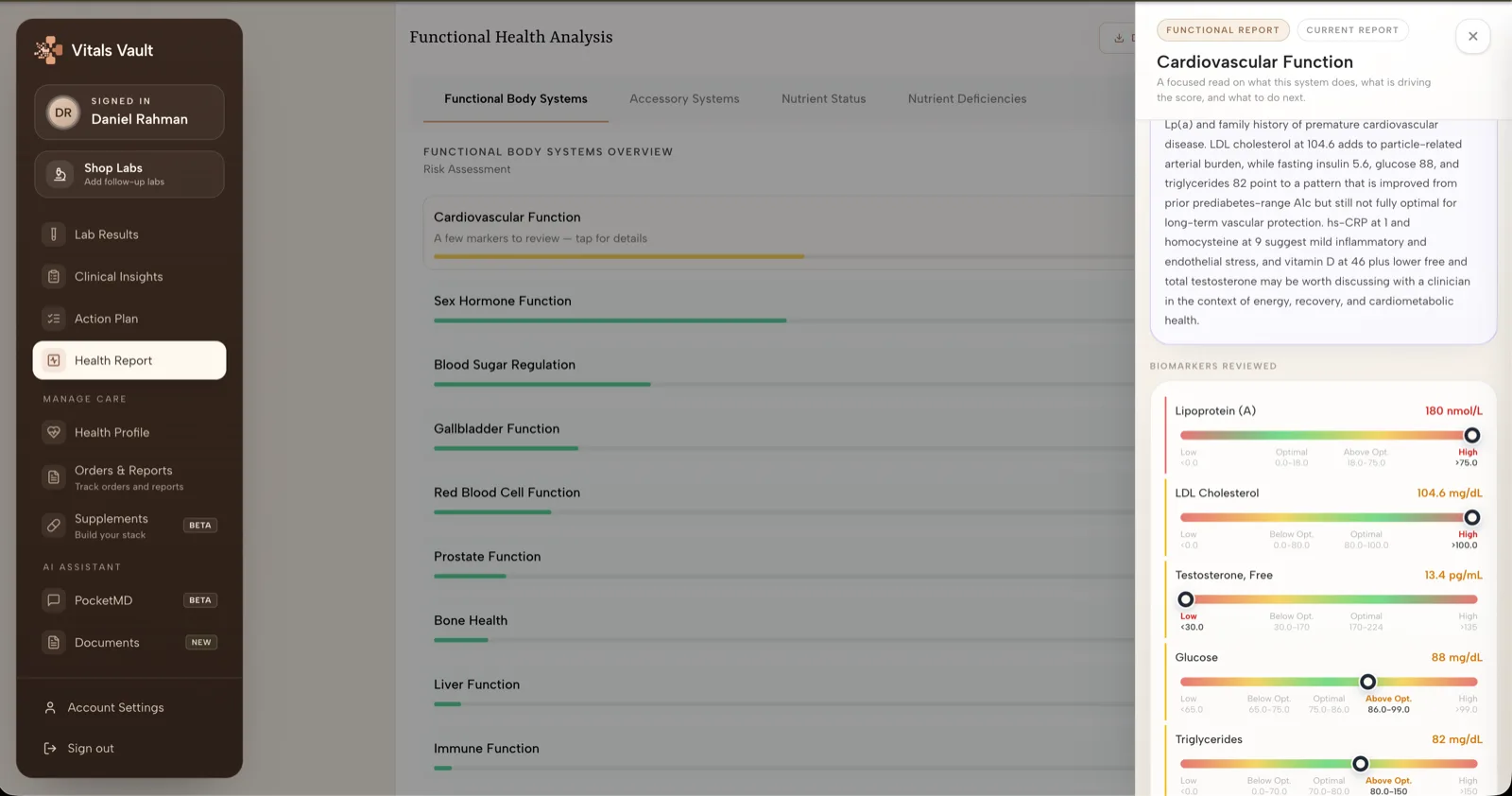
A personalized, plain-language walkthrough of your abnormal markers—reference ranges, pattern context, and what to watch next, grounded in your actual labs.
Personalized Insights
Clear Explanations
Actionable guidance
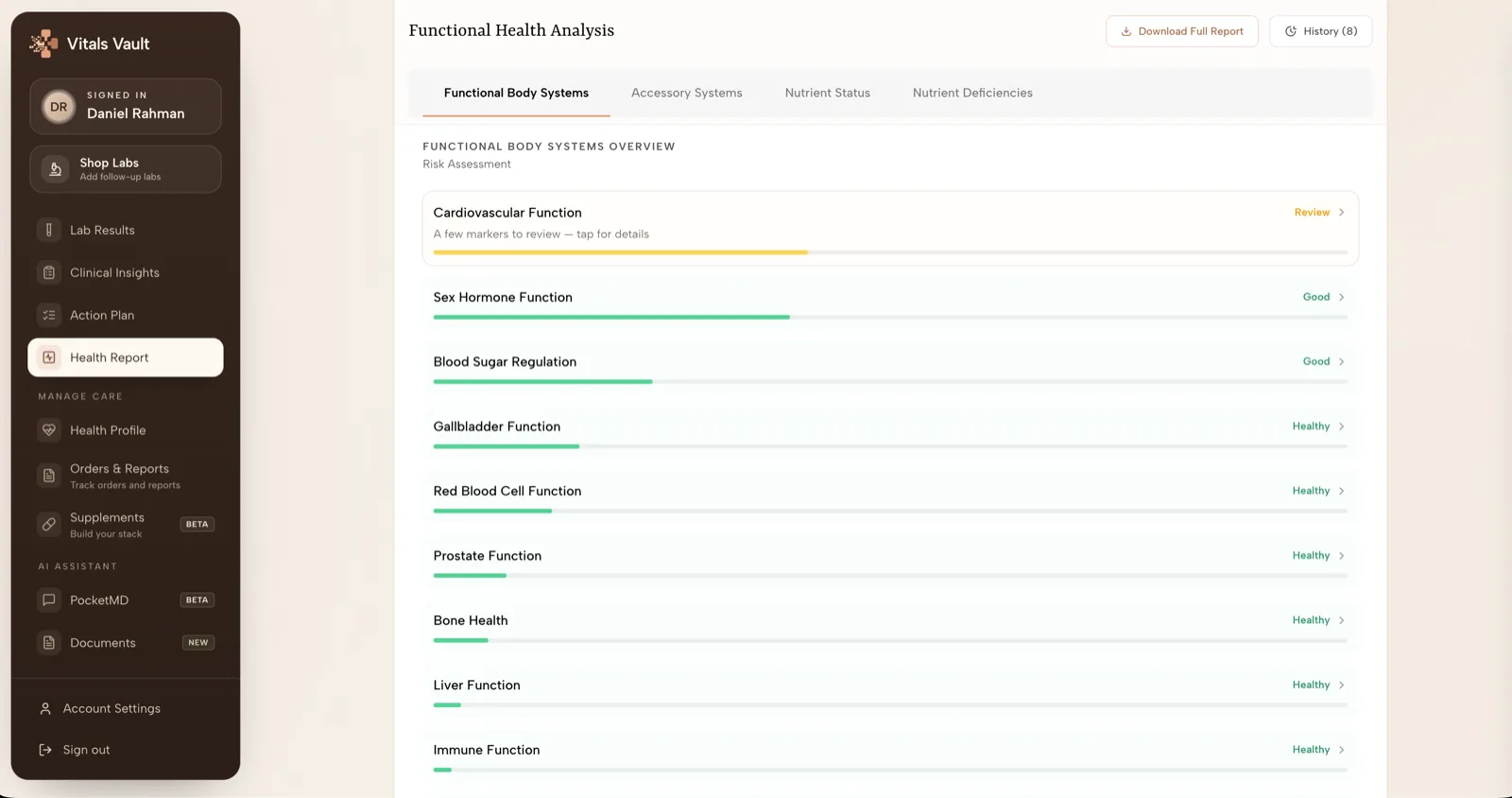
Explore your body systems with clear risk context — refresh your report, download the full PDF, and monitor hormones, heart, bone, and more in one place.

Explore hundreds of tests and panels, filter by concern, and manage your cart—member-exclusive pricing with quick checks and full-body options in one flow.
Wide test selection
300+ tests & panels available
Smart filtering
Find tests by symptoms or goals
Seamless ordering
Add to cart and manage easily
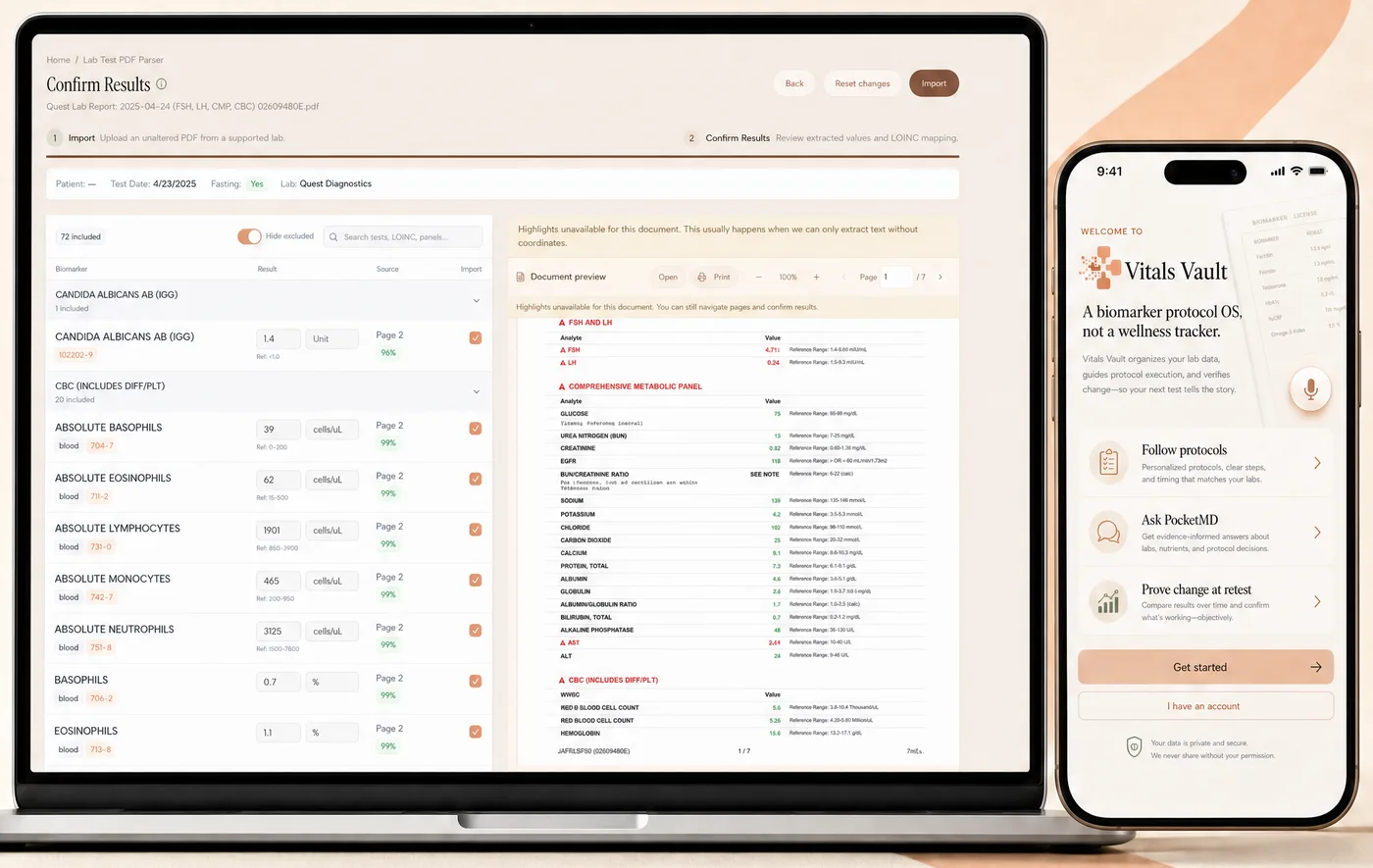
Upload past lab reports, search your documents, and keep appointments and results organized—our AI can extract biomarkers from PDFs so everything lives in one dashboard.
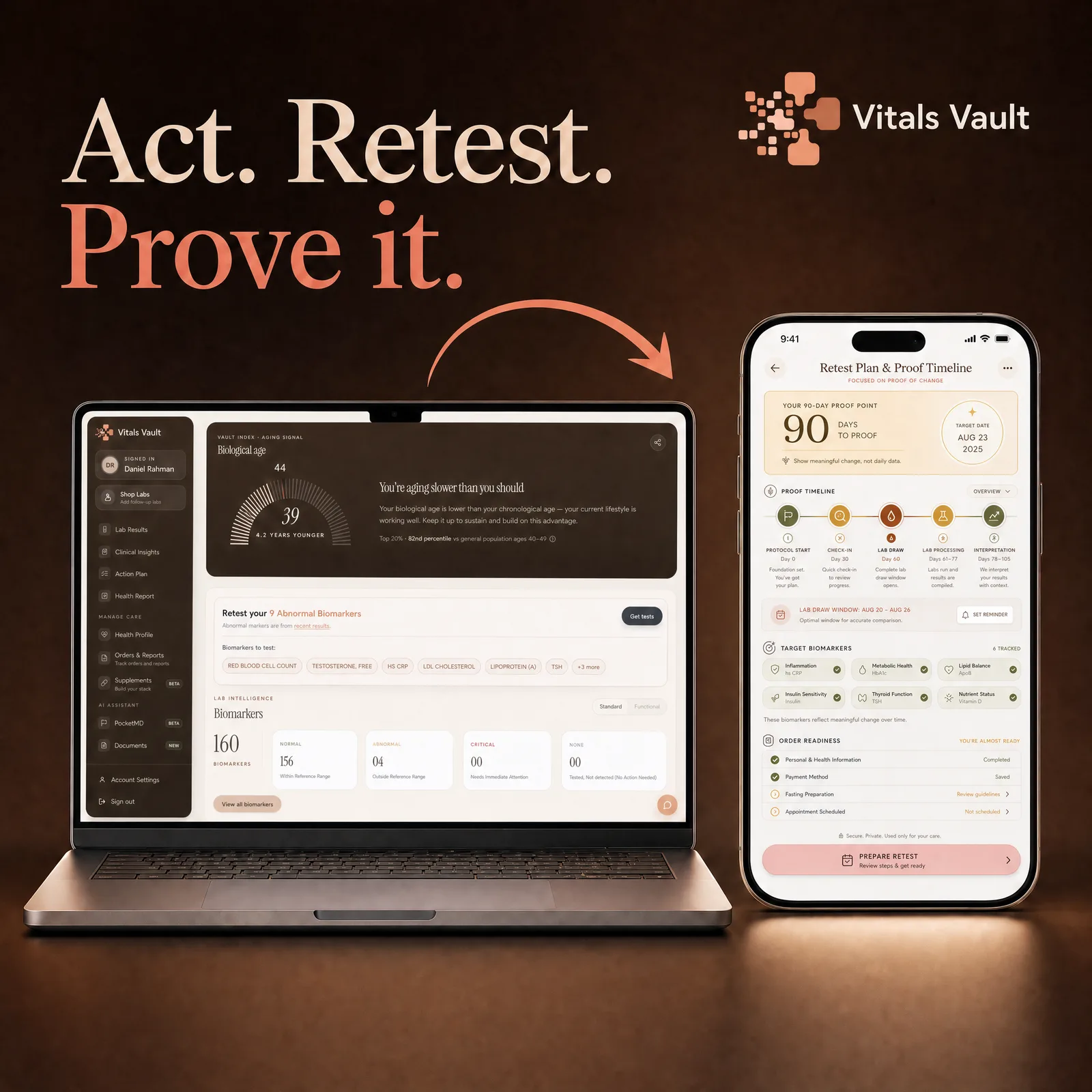
Browse longevity, nutrition, supplement, and movement protocols—structured plans you can follow with clear habits, labs, and targets tied to your profile.

Ask for protocols, nutrition plans, supplement stacks, and education—context-aware suggestions powered by your labs and goals (beta experience).
Order online
Add Amylase to your cart and check out. No doctor referral is required.
Visit a Quest lab
Provide your blood sample at a Quest Diagnostics location. Appointments can be scheduled after checkout.
Review in Vitals Vault
Results in about 4 days. They stay in your Vitals Vault account for trends and follow-up.
No special preparation is usually needed unless noted at checkout.
This order includes the lab markers used for Amylase and reported in your Vitals Vault account.
Results
Results in about 4 days
HSA/FSA
Accepted
Who takes it
Must be taken by the purchaser
Preparation
No special preparation needed unless noted at checkout.
An amylase test measures a digestive enzyme linked to pancreas and salivary gland issues, with convenient ordering and Quest lab access via Vitals Vault.





Amylase is a digestive enzyme that helps break down carbohydrates. In your blood, it can rise when the pancreas is irritated or injured, and it can also change with salivary gland problems and a few other conditions.
An amylase test is most useful when you have symptoms such as sudden upper abdominal pain, nausea, vomiting, or pain that radiates to your back, especially if a clinician is considering pancreatitis. It can also be part of a broader workup when the cause of abdominal pain is not clear.
Your number is not a diagnosis by itself. It becomes meaningful when it is interpreted alongside your symptoms, timing, and related labs such as lipase and liver tests.
You may need an amylase test if you have symptoms that could involve the pancreas, such as sudden or severe upper abdominal pain, pain that worsens after eating, nausea or vomiting, fever, or abdominal tenderness. Clinicians often order it when they are deciding whether pancreatitis is likely, or when they want to track whether pancreatic irritation is improving.
You might also see amylase ordered when there is concern for a salivary gland issue (such as swelling near the jaw), after abdominal trauma, or when certain medications or heavy alcohol use could be contributing to digestive symptoms.
If you feel very ill, cannot keep fluids down, have severe abdominal pain, or have signs of dehydration or confusion, you should treat that as urgent and seek in-person care rather than relying on a single lab value.
Testing can support clinician-directed care by adding objective data to your symptom story, but it does not replace an exam or imaging when those are needed.
This test is performed in a CLIA-certified laboratory, and results should be interpreted with your clinician because amylase alone cannot confirm a diagnosis.
from $27.99 at Quest Diagnostics
Results in days
Clear next steps
HSA / FSA
If you and your clinician decide an amylase test makes sense, Vitals Vault lets you order labs without a separate referral step and complete your draw through a national lab network.
After your result posts, you can use PocketMD to review what “low,” “in range,” or “high” commonly means, what follow-up tests are often paired with amylase (such as lipase), and what questions to bring to your next visit.
If your result is abnormal or your symptoms change, you can also use Vitals Vault to retest at an appropriate interval or broaden your lab map with companion panels so you are not making decisions from a single isolated number.
Amylase is an enzyme that helps your body digest starches (carbohydrates). Most amylase in the body comes from two main sources: the pancreas (pancreatic amylase) and the salivary glands (salivary amylase). A small amount normally circulates in your blood and is cleared by your kidneys.
A blood amylase test (often reported as “serum amylase”) measures the total amount of amylase activity in your bloodstream. When cells in the pancreas are inflamed or injured, amylase can leak into the blood and rise. Amylase can also increase for reasons that are not primarily pancreatic, which is why it is commonly interpreted alongside lipase and your clinical picture.
Because different laboratories use different methods and reference ranges, the most reliable way to interpret your result is to compare it to the reference interval printed on your report and consider how far above or below that range your value is, as well as the timing of your symptoms.
The pancreas releases digestive enzymes into the small intestine. When the pancreas is inflamed (as in acute pancreatitis) or its ducts are blocked, enzymes can back up and enter the bloodstream. Amylase often rises within hours of symptom onset and may return toward baseline over the next few days, which means timing matters.
Lipase is another pancreatic enzyme, and it is often more specific for pancreatitis than amylase. Many clinicians prefer lipase for diagnosing acute pancreatitis, while amylase can still be helpful as part of a broader evaluation or when looking at patterns across multiple tests.
Amylase can be measured in blood or urine. Blood testing is more common for acute evaluation. Urine amylase may stay elevated longer in some situations, but it is ordered less often and depends on the clinical question.
A low amylase result is usually not an emergency and often has no clear clinical consequence on its own. It can be seen when the pancreas is not producing enzymes well, which may occur with chronic pancreatic damage, cystic fibrosis, or longstanding pancreatitis, especially if you also have symptoms like greasy stools, weight loss, or fat-soluble vitamin deficiencies. Low values can also occur due to differences in lab methods or dilution from high fluid intake. If your result is low and you have digestive symptoms, your clinician may consider additional tests such as fecal elastase, lipase, or imaging depending on your history.
An in-range amylase result makes significant pancreatic enzyme leakage less likely at the time your blood was drawn, but it does not fully rule out pancreatic disease. Timing is important, because amylase can rise early and then fall back toward normal within a few days. Some people with pancreatitis can have normal amylase, particularly with delayed testing, chronic pancreatitis, or certain metabolic factors. If symptoms are concerning, clinicians often rely on lipase, other labs, and imaging rather than amylase alone.
Clinical graph note: the optimal range is narrower than the standard lab range. Standard range: 21.00 - 103.00 U/L. Optimal range: 40.00 - 86.00 U/L.
A high amylase result can occur with acute pancreatitis, pancreatic duct obstruction (such as from gallstones), or pancreatic trauma, especially when it is significantly above the lab’s upper limit and matches your symptoms. However, elevations can also come from non-pancreatic causes such as salivary gland inflammation (for example, mumps or other infections), intestinal obstruction, peptic ulcer complications, or reduced kidney clearance. Some people have a benign condition called macroamylasemia, where amylase binds to proteins and stays in the blood, causing persistently high serum amylase without true pancreatic injury. Your clinician may order lipase, liver enzymes, bilirubin, and sometimes imaging to clarify the cause.
The timing of your blood draw relative to symptom onset can change what your result shows, because amylase may peak early and normalize within days. Kidney function matters because amylase is cleared through the kidneys, so reduced clearance can raise levels. Alcohol use, gallbladder disease, and high triglycerides can contribute to pancreatic inflammation and affect interpretation. Certain medications can also be associated with pancreatic irritation in some people, so it helps to review your medication list with your clinician when results are abnormal.
Fasting is not always required for amylase, but instructions can vary by lab and by what other tests are ordered at the same time. If your order includes triglycerides or other metabolic labs, fasting may be recommended. Follow the collection instructions on your lab order, and ask your clinician if you are unsure.
“Normal” depends on the laboratory method, so you should use the reference range printed on your report. Instead of focusing on a single universal number, pay attention to whether your value is within range and how far above the upper limit it is if elevated. Your symptoms and the timing of the test are just as important as the number.
Lipase is often considered more specific for acute pancreatitis, and many clinicians rely on it more heavily. Amylase can still be useful, especially when interpreted with lipase, liver tests, and your clinical presentation. If pancreatitis is a concern, it is common to check both or to prioritize lipase depending on local practice.
A high amylase result is more commonly linked to inflammation, obstruction, salivary gland issues, or reduced kidney clearance than to cancer. Pancreatic tumors can sometimes affect enzyme levels indirectly, but amylase is not a screening test for cancer. If there are red-flag symptoms (unexplained weight loss, jaundice, persistent pain), your clinician may recommend targeted imaging and additional labs.
Amylase often rises within hours of symptom onset and may return toward baseline within a few days, although this can vary. Because it can normalize relatively quickly, a normal result later in the course does not always rule out a recent episode. Your clinician may use lipase, symptom trend, and imaging to assess recovery.
Some medications have been associated with pancreatic irritation in certain people, which can raise pancreatic enzymes. The exact risk depends on your medication, dose, and personal risk factors. If your amylase is abnormal, bring a complete list of prescriptions, over-the-counter medications, and alcohol use to your clinician so they can interpret the result safely.
Retesting depends on why it was ordered. If you had an acute illness, your clinician may repeat enzymes within days to follow the trend, or sooner if symptoms worsen. If you have a mild elevation without clear symptoms, your clinician may repeat the test and add lipase or other labs to confirm whether the finding persists and to look for common explanations such as kidney function changes or macroamylasemia.
Purchase online through Vitals Vault. A licensed clinician reviews and approves your order, then you receive a digital requisition for a Quest Diagnostics blood draw.
Samples are collected in person at Quest Diagnostics locations nationwide. After checkout you can schedule your visit at a convenient site.
Most results in 3–5 business days. You can view them securely in your Vitals Vault account.
No separate referral appointment is required. Clinician review is included in the online order flow.
Yes. Eligible HSA/FSA cards can be used at checkout for qualifying lab orders.
Results are available in your secure Vitals Vault account. You control who you share them with, subject to applicable law.
Blood glucose shows the amount of sugar in your blood at a single moment. A1c (hemoglobin A1c) estimates your average blood sugar over roughly the past 8–12 weeks. Comparing them helps explain whether your long-term average lines up with your fasting glucose on draw day.
It helps you understand how this marker fits into your broader metabolic picture, with results tracked in your Vitals Vault account.
Elevated values can signal higher metabolic risk. Many people start with nutrition, activity, sleep, and weight management, then retest and review results with a clinician. This test is educational and does not replace medical advice or diagnosis.
Your sample is processed at CLIA-certified Quest Diagnostics laboratories. Results should still be interpreted with a qualified clinician alongside your history, symptoms, and other labs.
Consumer-initiated testing through Vitals Vault is limited to adults 18+ so ordering and interpretation stay aligned with clinical best practices for this channel.