
Zepbound vs Wegovy: key differences explained
Zepbound vs Wegovy differ in active drug, dosing schedule, and trial evidence. Compare benefits, risks, and access, then talk with a clinician.
Key facts
- Tirzepatide + B12 is $169/month (billed $169 every 4 weeks), charged only after a clinician approves it.
- Answer a few health questions online. A licensed clinician reviews them. If approved, it ships to your door.
- Adults 18 or older. A licensed clinician reviews your health history and decides whether treatment is appropriate for you. Availability depends on the state you live in.


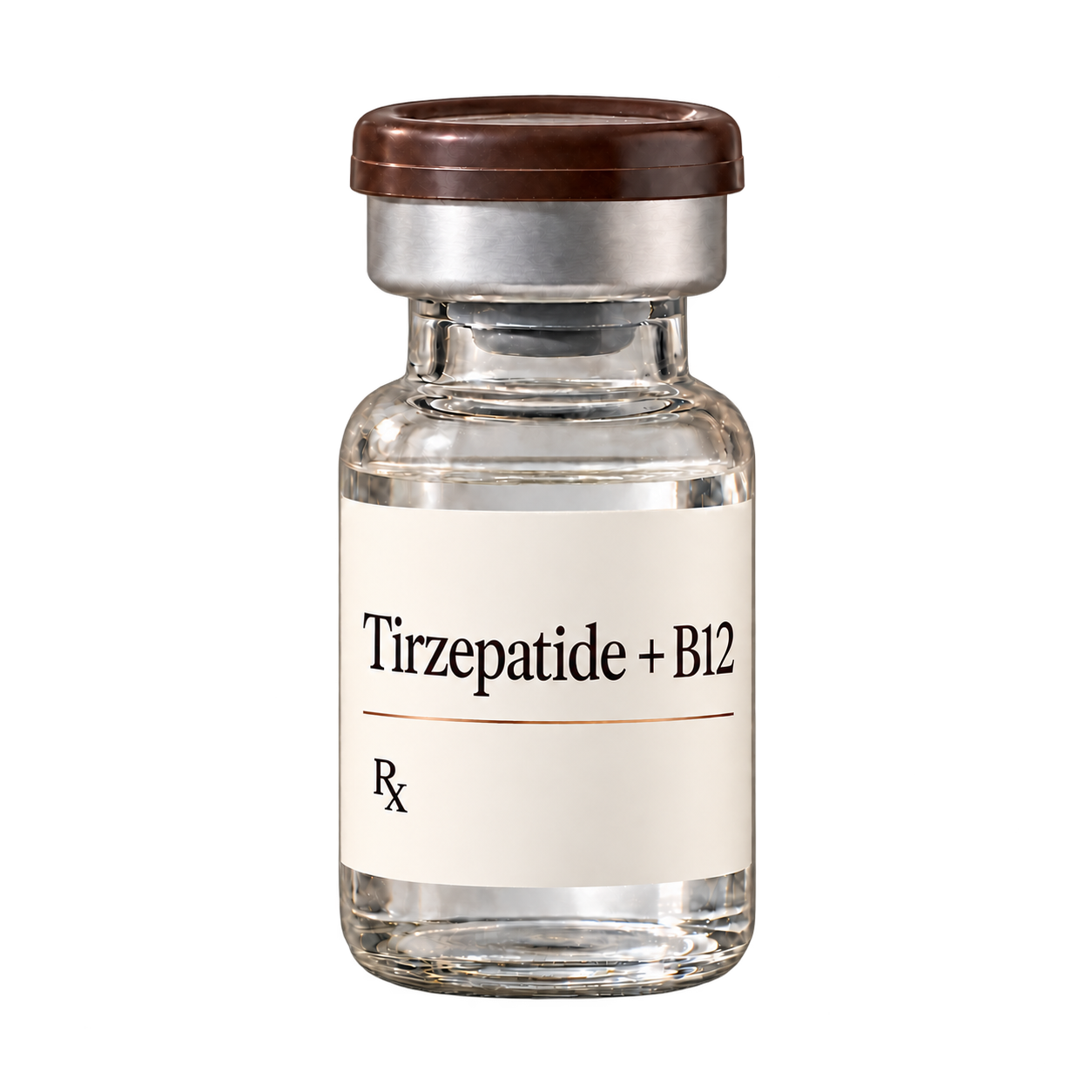
Zepbound (tirzepatide) and Wegovy (semaglutide) are once-weekly prescription injections FDA-approved for chronic weight management in adults with obesity or overweight plus at least one weight-related condition. They are in the same broader GLP-1 family, but they are not the same medication. This comparison focuses on what the FDA labels and major clinical trials show, including differences in how they work, expected benefits, and key safety warnings. If you are comparing options through Vitals Vault, note that we offer compounded tirzepatide and compounded semaglutide, not the brand products.
- Zepbound vs Wegovy: both are weekly injections for chronic weight management, but they use different active drugs.
- Neither Zepbound nor Wegovy comes as a pill for weight loss.
- Both can cause nausea, vomiting, and diarrhea, and both carry a boxed warning about thyroid C-cell tumors.
- Your best choice depends on your medical history, side effects, and insurance coverage, not a single “better” option.
Zepbound vs Wegovy: side by side
| Feature | Zepbound (tirzepatide) | Wegovy (semaglutide) |
|---|---|---|
| Drug class | Dual GIP and GLP-1 receptor agonist | GLP-1 receptor agonist |
| FDA-approved use (weight) | Chronic weight management in adults with obesity or overweight plus at least one weight-related condition, with diet and exercise | Chronic weight management in adults with obesity or overweight plus at least one weight-related condition, with diet and exercise |
| FDA-approved use (cardiovascular) | Not labeled to reduce major adverse cardiovascular events | Labeled to reduce risk of major adverse cardiovascular events in adults with established cardiovascular disease and obesity or overweight |
| How it is taken | Subcutaneous injection | Subcutaneous injection |
| How often | Once weekly | Once weekly |
| Does it come as a pill? | No pill form for weight management | No pill form for weight management |
| Typical trial results (context) | Adults without diabetes: mean weight change at 72 weeks reported in SURMOUNT-1 | Adults without diabetes: mean weight change at 68 weeks reported in STEP 1 |
What the clinical trials show
Tirzepatide (SURMOUNT-1)
In adults with obesity or overweight without diabetes, SURMOUNT-1 reported mean weight reduction over 72 weeks with tirzepatide compared with placebo. The trial also reported gastrointestinal side effects and discontinuation due to adverse events. Use these results as population averages, not a prediction for you.
Semaglutide (STEP 1)
In adults with obesity or overweight without diabetes, STEP 1 reported mean weight reduction over 68 weeks with semaglutide 2.4 mg compared with placebo, alongside lifestyle intervention. Gastrointestinal side effects were common and were a frequent reason for stopping treatment in the trial.
Cardiovascular outcomes (SELECT)
For Wegovy, the SELECT trial evaluated semaglutide in adults with established cardiovascular disease and obesity or overweight and reported fewer major adverse cardiovascular events versus placebo. This evidence is reflected in Wegovy’s label indication for cardiovascular risk reduction in that specific population.
| Trial | Population (high level) | Duration | Primary outcome (high level) |
|---|---|---|---|
| SURMOUNT-1 | Adults with obesity or overweight without diabetes | 72 weeks | Mean percent weight change and proportion achieving weight-loss thresholds |
| STEP 1 | Adults with obesity or overweight without diabetes | 68 weeks | Mean percent weight change and proportion achieving weight-loss thresholds |
| SELECT | Adults with established cardiovascular disease and obesity or overweight | Event-driven, median follow-up reported in publication | Major adverse cardiovascular events |
Key differences between Wegovy and Zepbound
Active medication
Zepbound contains tirzepatide, which activates two hormone pathways (GIP and GLP-1). Wegovy contains semaglutide, which activates the GLP-1 pathway. Both slow stomach emptying and reduce appetite signals, but the mechanisms are not identical.
Label indications beyond weight
Wegovy’s label includes reducing the risk of major adverse cardiovascular events in adults with established cardiovascular disease and obesity or overweight. Zepbound’s label focuses on chronic weight management and does not include that cardiovascular risk reduction indication.
Dose escalation is not interchangeable
Both medications use gradual dose escalation to improve tolerability, but the products are not dose-equivalent. If you are switching, your prescriber typically uses the product label and your side effect history rather than a simple conversion chart.
No pill form for either
If you are searching for “zepbound pills” or “zepbound pill form,” Zepbound is not available as an oral tablet for weight management. Wegovy is also not an oral tablet. Oral semaglutide exists for type 2 diabetes as Rybelsus, which is a different product and indication.
Cost and access: what usually drives the difference
Insurance coverage varies widely
Coverage often depends on your plan’s obesity treatment benefits, prior authorization rules, and whether you meet the label criteria (BMI and weight-related conditions). Even when covered, plans may require documentation of lifestyle efforts and follow-up.
Supply and pharmacy availability
Availability can change due to manufacturing and distribution constraints. If a product is hard to find locally, your clinician may discuss alternatives that fit your medical history and access realities.
Monitoring and follow-up needs
Ongoing care can include check-ins for side effects, dose adjustments, and labs when clinically indicated. These care steps can affect total out-of-pocket cost beyond the medication itself.
Compounded options are different products
Compounded tirzepatide and compounded semaglutide are not the same as Zepbound or Wegovy and are not FDA-approved. If you are considering a compounded option, ask what ingredient source is used and how the pharmacy ensures quality.
Side effects and warnings (what matters most)
| Topic | Zepbound (tirzepatide) | Wegovy (semaglutide) |
|---|---|---|
| Common side effects | Gastrointestinal effects such as nausea, vomiting, diarrhea, constipation, abdominal pain | Gastrointestinal effects such as nausea, vomiting, diarrhea, constipation, abdominal pain |
| Boxed warning | Risk of thyroid C-cell tumors in rodents; contraindicated with personal or family history of medullary thyroid carcinoma or MEN 2 | Risk of thyroid C-cell tumors in rodents; contraindicated with personal or family history of medullary thyroid carcinoma or MEN 2 |
| Pancreatitis warning | Acute pancreatitis has been reported with GLP-1 based therapies; stop and evaluate if suspected per label | Acute pancreatitis has been reported with GLP-1 based therapies; stop and evaluate if suspected per label |
| Gallbladder disease | Risk of acute gallbladder disease is described in labeling | Risk of acute gallbladder disease is described in labeling |
| Kidney risk | Acute kidney injury can occur, sometimes related to dehydration from GI side effects | Acute kidney injury can occur, sometimes related to dehydration from GI side effects |
| Low blood sugar (hypoglycemia) | Risk increases if used with insulin or insulin secretagogues; see label | Risk increases if used with insulin or insulin secretagogues; see label |
Common: nausea and vomiting
Nausea and vomiting are among the most common reasons people struggle with these medications, especially during dose increases. Eating smaller meals and avoiding high-fat meals may help some people, but persistent vomiting can lead to dehydration and needs clinician guidance.
Common: diarrhea or constipation
Changes in bowel habits are common with both medications. If you develop severe diarrhea, cannot keep fluids down, or have symptoms of dehydration, contact a clinician promptly because dehydration can worsen kidney function.
Serious: pancreatitis symptoms
Seek urgent medical care for severe abdominal pain that may radiate to the back, with or without vomiting, because this can be a sign of pancreatitis. Both products warn about acute pancreatitis and advise stopping the medication and evaluation if pancreatitis is suspected.
Serious: gallbladder problems
Upper abdominal pain, fever, jaundice, or clay-colored stools can signal gallbladder disease, which is listed as a risk with GLP-1 based weight-loss medications. A clinician may evaluate for gallstones or gallbladder inflammation if symptoms occur.
Serious: thyroid tumor warning
Both Zepbound and Wegovy have a boxed warning about thyroid C-cell tumors seen in rodents. They are contraindicated if you have a personal or family history of medullary thyroid carcinoma (MTC) or Multiple Endocrine Neoplasia syndrome type 2 (MEN 2).
Serious: allergic reactions
Stop and get emergency help for symptoms such as swelling of the face, lips, tongue, or throat, trouble breathing, or severe rash. Hypersensitivity reactions are described in labeling for both medications.
Who may choose Zepbound or Wegovy
Option 1
Zepbound (tirzepatide)
Potential fit
May be considered if you meet label criteria for chronic weight management and your clinician thinks a dual GIP and GLP-1 option fits your goals and tolerability.
Key considerations
- Not the same drug as semaglutide, so side effects and response can differ.
- Same boxed warning and key GLP-1 class warnings apply (thyroid C-cell tumors, pancreatitis, gallbladder, kidney).
- If you have type 2 diabetes medications on board, hypoglycemia risk needs review.
Option 2
Wegovy (semaglutide)
Potential fit
May be considered if you meet label criteria for chronic weight management, especially if cardiovascular risk reduction labeling is relevant to your history.
Key considerations
- Has a labeled indication to reduce major adverse cardiovascular events in adults with established cardiovascular disease and obesity or overweight.
- Same boxed warning and key GLP-1 class warnings apply (thyroid C-cell tumors, pancreatitis, gallbladder, kidney).
- Not interchangeable with tirzepatide; switching should be clinician-directed.
Frequently Asked Questions
Does Zepbound come in pill form?
No. Zepbound is a once-weekly subcutaneous injection, not a pill. If you want an oral option, ask a clinician which medications are appropriate for your situation and goals.
Which is better, Wegovy or Zepbound?
There is no single best choice for everyone. Trials show both can help with chronic weight management, but they use different active drugs and have different labeled indications. Your medical history, side effects, and access often decide what fits.
What is the difference between Wegovy and Zepbound?
Wegovy contains semaglutide (a GLP-1 receptor agonist) and Zepbound contains tirzepatide (a dual GIP and GLP-1 receptor agonist). Both are weekly injections with similar class warnings, but they are not dose-equivalent and are not interchangeable.
Is Wegovy the same as Zepbound?
No. They are different medications with different active ingredients and different FDA labeling details. They share some safety warnings and common gastrointestinal side effects, but they are not the same drug.
Is there a Wegovy to Zepbound dose conversion?
There is not a simple, universal conversion because the drugs are different and have different dose schedules. If you are switching, your prescriber typically uses the product labels and your tolerability and response to guide a safe transition.