
Natural substitute for levothyroxine: is it safe?
A natural substitute for levothyroxine can be risky due to inconsistent dosing and interactions. Here is what to know and when to get help.
Key facts
- Levothyroxine is $41.67/month (billed $125 every 90 days), charged only after a clinician approves it.
- Answer a few health questions online. A licensed clinician reviews them. If approved, it ships to your door.
- Adults 18 or older. A licensed clinician reviews your health history and decides whether treatment is appropriate for you. Availability depends on the state you live in.





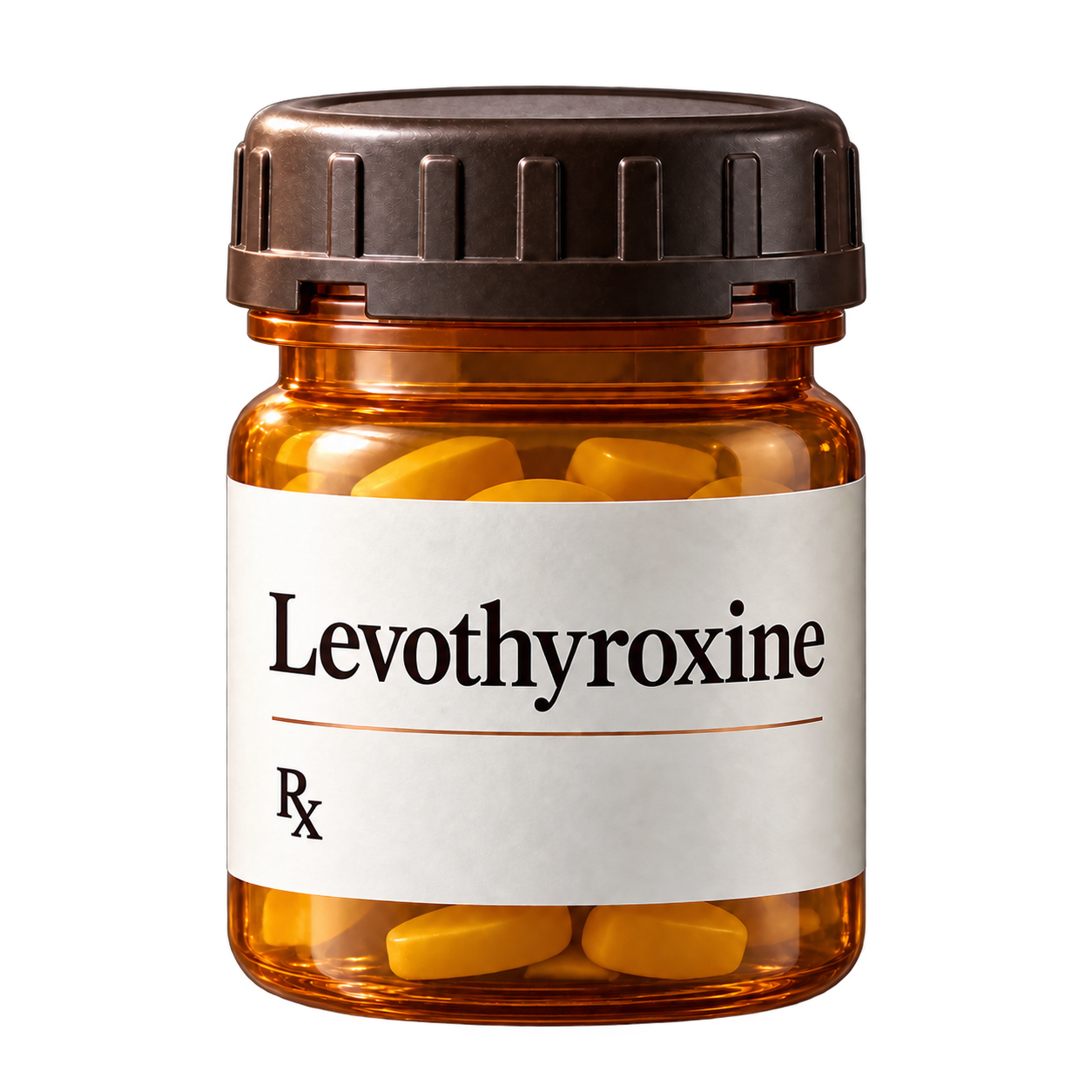
If you are searching for a natural substitute for levothyroxine, you are usually trying to avoid side effects or you feel your symptoms are not controlled. The main safety issue is not whether something is “natural”, but whether the dose and ingredients are consistent and monitored with thyroid labs. This guide explains what older thyroid products and supplements actually contain, what risks to watch for, and when to call a clinician. Vitals Vault can also help you start with labs and bring clear results to a clinical conversation.
- A natural substitute for levothyroxine is not automatically safer and can lead to over or under treatment.
- Desiccated thyroid products contain both T4 and T3, which can raise heart and bone risks if too much.
- “Thyroid support” supplements may contain variable thyroid hormone and can interact with your care plan.
- Do not change thyroid medication without labs and clinician follow-up, especially if pregnant or with heart disease.
Natural substitute for levothyroxine: is it safe?
Why “natural” can be misleading
Thyroid hormone is powerful at very small doses. If the amount you get changes from day to day, your thyroid stimulating hormone (TSH) and symptoms can swing, even if the product is marketed as natural.
What clinicians usually prefer
Levothyroxine is FDA-approved and designed to provide a consistent dose of T4 (thyroxine), which your body converts to T3 (triiodothyronine) as needed. The FDA label emphasizes careful dose selection and monitoring to avoid overreplacement or underreplacement.
When “older” products come up
Older thyroid products often refers to desiccated thyroid extract made from animal thyroid. These products contain both T4 and T3, and the fixed T3 content can be a problem for some people, especially those sensitive to T3 effects on the heart.
What “natural” thyroid options really are
Desiccated thyroid extract
Desiccated thyroid is made from animal thyroid and contains both T4 and T3. Because T3 is more potent and acts faster than T4, too much can cause palpitations, tremor, anxiety, heat intolerance, and insomnia, and over time may contribute to atrial fibrillation and bone loss.
Thyroid supplements and “glandulars”
Some over-the-counter thyroid support products have been found to contain thyroid hormones even when not clearly listed, and the amounts can vary. That makes it hard to predict your lab results and increases the risk of accidental overreplacement.
Iodine as a “natural” option
Iodine is needed to make thyroid hormone, but taking extra iodine does not reliably treat hypothyroidism and can worsen thyroid function in some people. If you have autoimmune thyroid disease, iodine swings can be especially problematic.
T3-containing prescriptions
Some people ask about liothyronine (T3) or combination T4 plus T3 therapy as an alternative to levothyroxine alone. These are prescription options that require careful clinician supervision because excess thyroid hormone can affect the heart and bones.
Common interaction problem: absorption
A frequent reason people feel levothyroxine is not working is reduced absorption. The FDA label notes that certain foods, supplements, and medications can interfere, including calcium and iron supplements and some acid-reducing medicines, so timing and review of your full medication list matter.
| Option | What it contains | Main safety concern | What monitoring usually involves |
|---|---|---|---|
| Levothyroxine (T4) | Synthetic T4, FDA-approved | Over or under replacement if dose is wrong or absorption changes | TSH and free T4 checks after changes; symptom review |
| Desiccated thyroid extract | Animal-derived T4 plus T3 | Fixed T3 exposure may cause palpitations, arrhythmias, bone loss | TSH plus free T4 and often T3; closer symptom monitoring |
| OTC “thyroid support” supplements | Variable ingredients; may include iodine or undisclosed thyroid hormone | Unpredictable hormone exposure and lab swings; interactions | Avoid self-treatment; clinician review and labs if exposure suspected |
When to talk to a clinician urgently
Chest pain or fainting
Seek urgent care for chest pain, fainting, or severe shortness of breath. Excess thyroid hormone can stress the heart and trigger dangerous rhythm problems, and these symptoms should not be managed by changing supplements or thyroid pills on your own.
Fast or irregular heartbeat
Call a clinician promptly if you notice new palpitations, a racing pulse, or an irregular heartbeat after starting or changing any thyroid product. These can be signs of too much thyroid hormone and may need evaluation and labs.
Severe anxiety, tremor, or insomnia
If you suddenly feel jittery, shaky, unusually anxious, or cannot sleep, contact your clinician. These symptoms can happen when T3 exposure is too high or when total thyroid hormone dose is excessive.
Pregnancy or trying to conceive
Discuss any thyroid medication change before conception and as soon as pregnancy is confirmed. Thyroid hormone needs can change during pregnancy, and both under-treatment and over-treatment can affect pregnancy outcomes, so close monitoring is standard.
Persistent symptoms despite “normal” labs
If your TSH is in range but you still feel unwell, ask for a structured review instead of switching to a “natural substitute.” A clinician can check adherence, interactions, absorption issues, and whether another condition is contributing to symptoms.
Practical tips if you are considering a switch
Treat supplements like medications
Tell your clinician about every thyroid-related supplement, even if it seems harmless.
Do not chase symptoms alone
Ask for labs and a plan for rechecking after any change in thyroid therapy.
Review interactions first
Calcium, iron, and some acid reducers can interfere with levothyroxine absorption.
Be cautious with T3 exposure
T3-containing products can feel stronger and may trigger palpitations in sensitive people.
Use one prescriber and one pharmacy
It reduces duplication, mix-ups, and untracked product changes.
Frequently Asked Questions
Is a natural substitute for levothyroxine safer?
Not necessarily. The main safety issue is consistent, monitored thyroid hormone exposure, not whether a product is labeled natural. Unpredictable dosing can lead to overreplacement or underreplacement and related risks.
Are desiccated thyroid products FDA-approved?
Many desiccated thyroid products have a long history of use, but FDA approval status can vary by product and formulation. The key practical issue is that they contain both T4 and T3, which can increase side effects in some people and requires careful monitoring.
Can thyroid support supplements affect my thyroid labs?
Yes. Studies have found some over-the-counter thyroid supplements contain thyroid hormones or high iodine amounts, which can change TSH and thyroid hormone levels. Tell your clinician about any supplement so labs can be interpreted correctly.
What symptoms suggest I am getting too much thyroid hormone?
Possible signs include palpitations, tremor, anxiety, heat intolerance, and insomnia. The levothyroxine label warns that overtreatment can strain the heart and reduce bone mineral density, so new or severe symptoms should be evaluated promptly.
How can I check whether my symptoms are thyroid-related?
A clinician typically uses thyroid labs such as TSH and free T4 along with your symptoms and medication history. If you use Vitals Vault labs, share the results with a clinician because labs alone do not diagnose and severe symptoms need urgent care.