
NAD benefits for men: what evidence shows
NAD benefits for men are not FDA-approved as a treatment. Here is what research suggests, what is uncertain, and key safety points.
Key facts
- NAD+ Injection is $250/month (billed $250 every 4 weeks), charged only after a clinician approves it.
- Answer a few health questions online. A licensed clinician reviews them. If approved, it ships to your door.
- Adults 18 or older. A licensed clinician reviews your health history and decides whether treatment is appropriate for you. Availability depends on the state you live in.


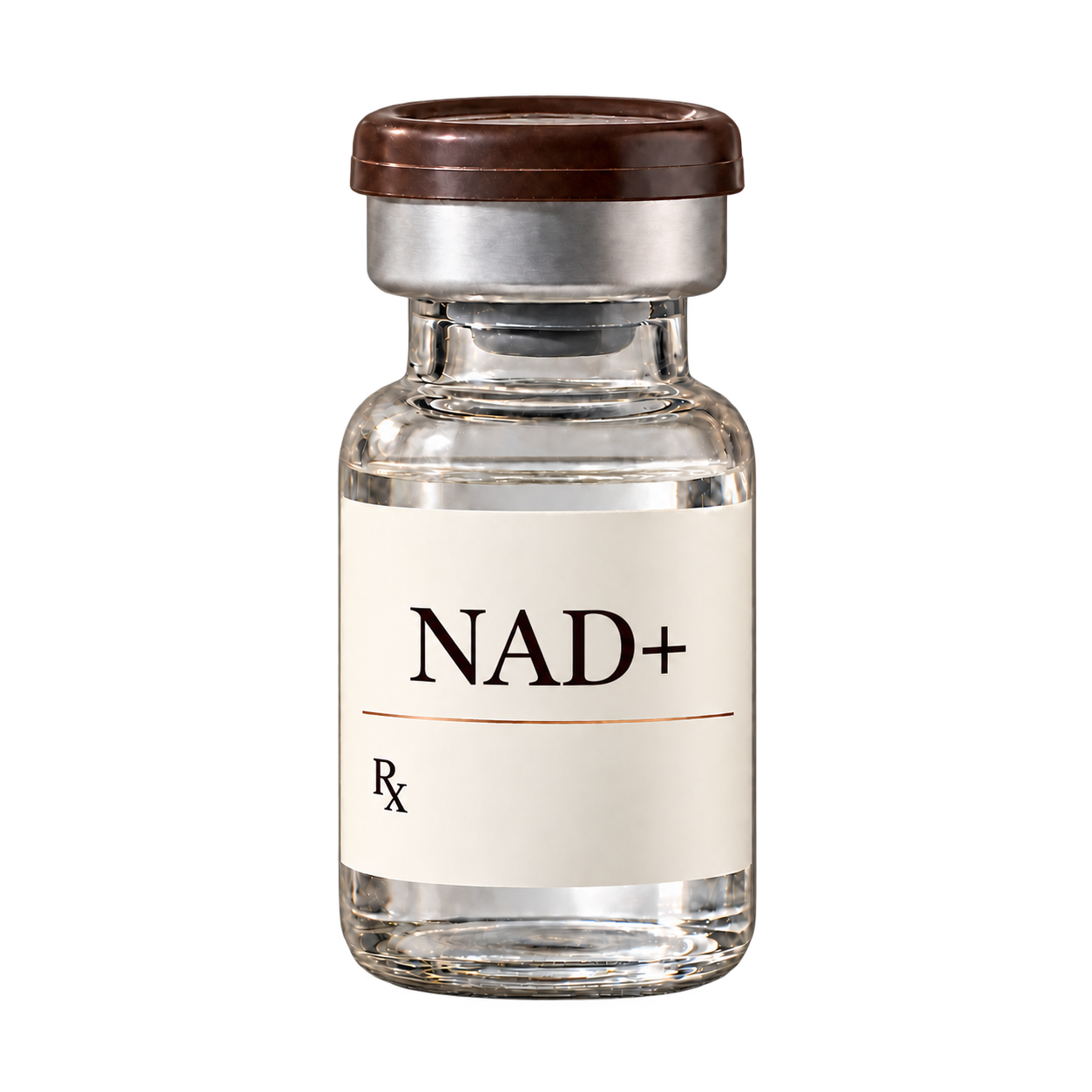
People search for NAD benefits for men hoping for more energy, better recovery, sharper thinking, or healthier aging. NAD+ is a natural molecule your cells use to make energy and support repair processes, and NAD+ levels appear to decline with age in some studies. This page explains what research does and does not show for NAD+ in men, what “NAD boosting” usually means, and what to discuss with a clinician before you spend money or take risks.
- NAD benefits for men are not an FDA-approved treatment, and human evidence is limited.
- NAD+ is a coenzyme involved in energy metabolism and DNA repair pathways, but that does not guarantee clinical benefits.
- Claims about testosterone, fertility, or athletic performance are not well proven in clinical trials.
- If you are considering NAD+ therapy, talk through medications, liver disease, gout, and cancer history first.
Evidence for NAD+ in men
Approval status
NAD+ is not an FDA-approved drug for “longevity,” fatigue, sexual function, testosterone support, or performance in men. Some clinics offer NAD+ or NAD-related products as compounded therapies or supplements, but that is different from an FDA-approved indication. If you see strong benefit claims, ask what human trials support them.
What human studies suggest
Most human evidence is for NAD+ precursors, especially nicotinamide riboside (NR) and nicotinamide mononucleotide (NMN), rather than NAD+ itself. Small trials show these can raise blood NAD+ or related metabolites, but clinical outcomes like strength, cognition, or sexual function are inconsistent or not well studied. Raising a biomarker is not the same as improving how you feel or function.
Aging and metabolism
NAD+ participates in pathways tied to mitochondrial function and enzymes called sirtuins, which is why it is studied in aging research. In people, the most reproducible finding is that certain precursors can increase NAD-related measures, while downstream benefits remain uncertain. If your goal is metabolic health, proven approaches like sleep, activity, and weight management still have the strongest evidence base.
Male-specific claims
For men, common marketing claims include improved testosterone, fertility, erectile function, and exercise performance. At this time, these outcomes do not have strong, consistent clinical trial evidence for NAD+ therapies. If you have symptoms like low libido, erectile dysfunction, or low energy, it is safer to evaluate common medical causes rather than assume NAD+ is the answer.
How NAD+ is used for men’s goals
| Goal men often want | What NAD+ biology suggests | What human evidence can actually support |
|---|---|---|
| More energy and less fatigue | NAD+ is central to cellular energy production (redox reactions). | Trials of NR show increases in NAD-related measures; symptom improvement is not consistently demonstrated. |
| Better exercise performance or recovery | NAD+ supports mitochondrial function in theory. | Human data are limited and mixed; performance outcomes are not well established. |
| Sharper focus or memory | NAD+ is involved in neuronal energy and repair pathways. | Direct evidence for cognitive benefit in healthy adults is limited; more research is needed. |
| Sexual function or testosterone support | NAD+ is involved in many cellular processes, but not a targeted androgen therapy. | There is not strong clinical evidence that NAD+ meaningfully raises testosterone or treats erectile dysfunction. |
| Healthy aging or longevity | NAD+ decline with age is reported in some research, and NAD pathways are studied in aging models. | In humans, evidence is early and mostly biomarker-based; longevity claims are not proven. |
Set a measurable goal
Before you try NAD+ for “benefits,” define what you want to change and how you will measure it, such as sleep quality, training tolerance, or daytime sleepiness. This helps you and your clinician decide whether to continue, stop, or look for a different explanation. It also reduces the chance you miss a treatable condition.
Check for common look-alikes
Low energy, brain fog, and low libido can overlap with sleep apnea, depression, anemia, thyroid disease, medication side effects, alcohol use, and low testosterone. If you treat the wrong problem, you can spend months chasing supplements or infusions without addressing the real driver. A basic medical review and targeted labs often clarify next steps.
Be cautious with stacked regimens
NAD+ is often marketed alongside other “longevity” compounds. Combining multiple new products at once makes it hard to know what helped or caused side effects. It also increases interaction risk, especially if you take blood pressure medicines, diabetes drugs, anticoagulants, or psychiatric medications.
Safety and side effects
Regulation and product quality
Compounded NAD+ products are prepared by a pharmacy for an individual prescription and are not FDA-approved. That means safety and effectiveness are not evaluated the same way as an FDA-approved drug, and quality can vary by source. Ask where the product is compounded and what testing standards are used.
Side effects depend on the form
Side effects can differ between oral precursors (like NR or NMN), injectable or infused NAD+, and combination products. Reported issues may include nausea, flushing, headache, stomach upset, or feeling jittery, but the best data depend on the specific ingredient and dose studied. If you develop chest pain, fainting, severe shortness of breath, or signs of an allergic reaction, seek urgent care.
Medication and condition interactions
Because NAD pathways intersect with metabolism, inflammation, and cellular stress responses, it is important to review your full medication list and medical history with a clinician. If you have active cancer, chronic liver disease, gout, or significant kidney disease, ask specifically about risks and monitoring. Do not assume “natural” means risk-free.
Unknowns with long-term use
Even when a supplement increases NAD-related biomarkers, long-term clinical outcomes and rare risks may not be known. This matters if you plan to use NAD+ products continuously for years. A clinician can help you weigh uncertain benefit against cost and potential risk.
Who may or may not be a fit
May consider discussing NAD+
- You want to explore wellness options after addressing basics like sleep and nutrition.
- You can define a specific goal and timeframe to reassess.
- You are willing to review medications, conditions, and labs with a clinician.
May be a poor fit right now
- You want NAD+ to treat a diagnosed condition without evidence-based care.
- You have unexplained weight loss, fevers, night sweats, or other concerning symptoms.
- You cannot verify product source, compounding standards, or clinician oversight.
Questions to bring to a clinician
Ask what form of NAD-related therapy is being proposed, what evidence supports your specific goal, and what side effects to watch for. Also ask what baseline labs or follow-up checks make sense for you. If you are trying to address low libido or erectile dysfunction, ask whether a cardiovascular risk review is appropriate.
If you are focused on hormones
Symptoms like low energy and low libido can overlap with low testosterone, but testosterone therapy and fertility goals require careful evaluation. NAD+ is not a substitute for a medical workup for hypogonadism or infertility. If fertility is a priority, tell your clinician before starting any hormone or wellness regimen.
If you are focused on performance
For training and recovery, the highest-yield interventions are still sleep, progressive training, adequate protein and calories, and addressing iron deficiency or overtraining. If you still want to try NAD+ products, consider doing so only with a clear plan to track outcomes and side effects. Avoid adding multiple new supplements at the same time.
Other options to consider
Lifestyle with strong evidence
If your goal is energy and healthy aging, prioritize sleep quality, resistance and aerobic exercise, and nutrition basics. These approaches have broad evidence for cardiometabolic health and function in men. They also make it easier to interpret whether any add-on therapy is doing anything meaningful.
Evaluate common medical causes
If you have persistent fatigue, low libido, or brain fog, consider a clinician visit to evaluate sleep apnea, depression, thyroid disease, anemia, medication side effects, and testosterone when appropriate. Treating an underlying condition is often more effective than adding a wellness therapy. This also helps avoid missing a serious diagnosis.
Other wellness therapies
Some men compare NAD+ with antioxidants like glutathione or with vitamin injections. Evidence varies widely by product and goal, and some benefits are mainly anecdotal. A clinician can help you choose options with the best safety profile for your history.
Frequently Asked Questions
What are nad benefits for men, realistically?
NAD+ is essential for cellular energy and repair pathways, but that does not prove a noticeable benefit in men. Human studies more often show changes in NAD-related biomarkers than consistent improvements in symptoms or performance. Treat strong claims as unproven unless backed by good clinical trials.
Does NAD+ increase testosterone in men?
There is not strong clinical evidence that NAD+ meaningfully increases testosterone in men. Low testosterone symptoms can overlap with sleep problems, depression, and medication effects, so evaluation matters. Discuss appropriate testing and evidence-based options with a clinician.
Is NAD+ therapy FDA-approved for longevity or anti-aging?
No. NAD+ is not FDA-approved to treat aging, fatigue, sexual function, or performance. Some NAD+ products are compounded, which means they are not FDA-approved and should be used only under clinician oversight.
What side effects can NAD+ cause?
Side effects depend on the specific product and route, but may include nausea, headache, flushing, or stomach upset. Because long-term safety is not well established for many NAD+ regimens, review your medications and conditions with a clinician. Seek urgent care for severe symptoms or allergic reactions.
How can Vitals Vault help me decide if NAD+ is worth trying?
Vitals Vault can help you start with baseline labs and use PocketMD to ask questions using your own results and health history. A clinician can then help interpret what is more likely to help your specific goal. This approach can reduce guesswork and avoid missing treatable causes.