
Levothyroxine: what it is and what it treats
Levothyroxine replaces thyroid hormone for hypothyroidism and certain thyroid conditions. See uses, risks, interactions, and cost.
Key facts
- Levothyroxine is $41.67/month (billed $125 every 90 days), charged only after a clinician approves it.
- Answer a few health questions online. A licensed clinician reviews them. If approved, it ships to your door.
- Adults 18 or older. A licensed clinician reviews your health history and decides whether treatment is appropriate for you. Availability depends on the state you live in.
- A $20 clinician review, refunded if you don’t qualify.





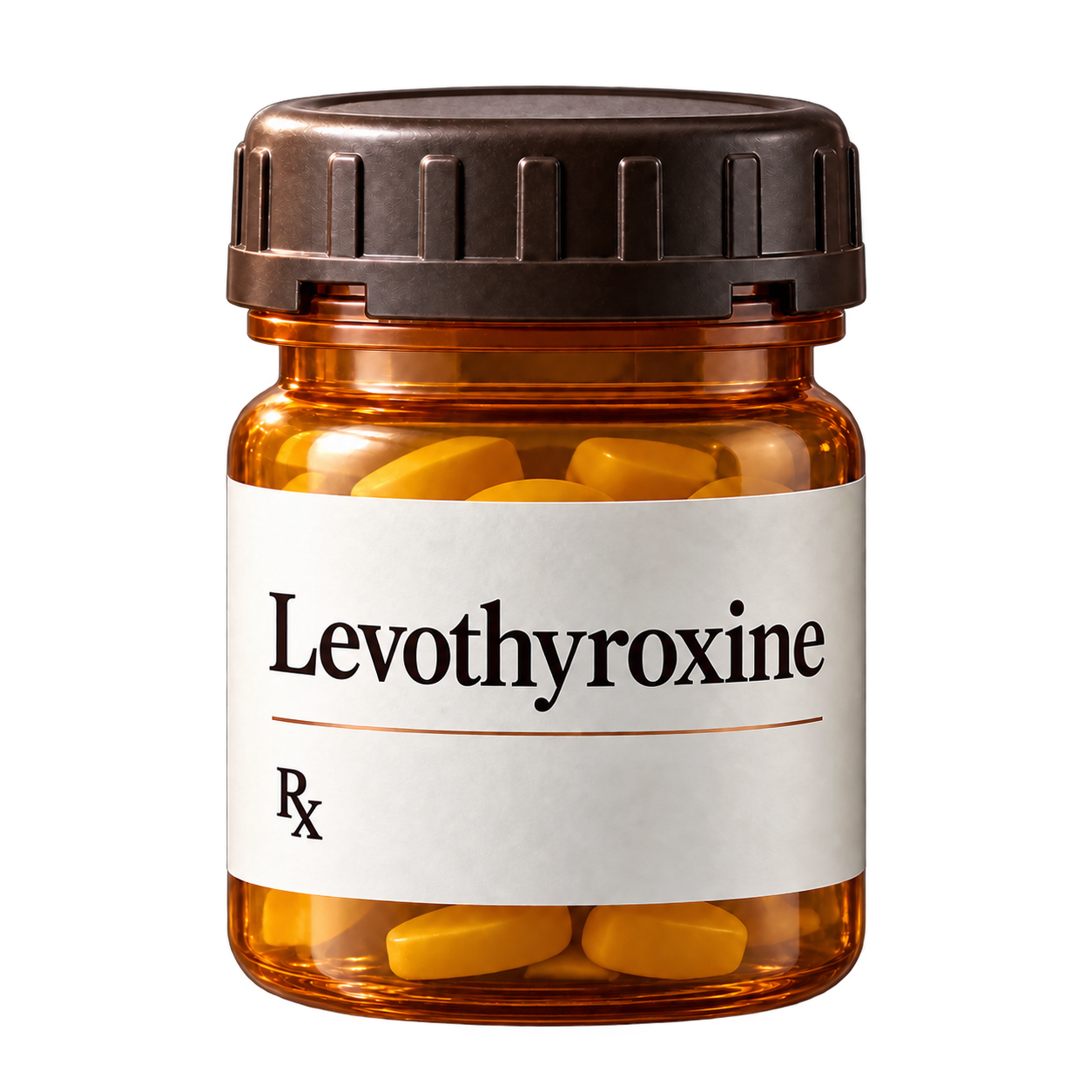
Levothyroxine is a prescription thyroid hormone used when your thyroid does not make enough hormone (hypothyroidism). It can also be used in certain thyroid-related conditions where replacing or suppressing thyroid hormone is part of care. This guide explains what levothyroxine does, who it is for, key safety issues, and what affects cost and access. If you are exploring treatment through Vitals Vault, a licensed clinician reviews your history and labs to decide what fits.
- Levothyroxine is a thyroid hormone replacement used to treat hypothyroidism.
- It works by replacing thyroxine (T4), helping normalize TSH and body metabolism.
- How you take it matters because many foods and medicines can reduce absorption.
- Most side effects reflect too much thyroid hormone and need clinician review.
- Ongoing lab monitoring helps keep treatment in a safe, effective range.
What levothyroxine is
A synthetic T4 hormone
Levothyroxine is a lab-made form of thyroxine (T4), a hormone your thyroid normally produces. Your body converts some T4 into the more active hormone triiodothyronine (T3). The goal is to restore normal thyroid hormone levels and relieve symptoms of low thyroid.
Used for hypothyroidism
The main FDA-approved use is replacement therapy for primary, secondary, and tertiary hypothyroidism. In plain terms, it treats low thyroid hormone levels due to thyroid disease, pituitary causes, or hypothalamic causes, depending on the underlying problem.
Also used in thyroid suppression
Levothyroxine is also used as part of thyroid-stimulating hormone (TSH) suppression therapy in some settings, such as certain thyroid cancers or nodules, when a clinician determines suppression is appropriate. The risks and monitoring needs can differ from simple replacement therapy.
Generic and brand products exist
Levothyroxine is available as FDA-approved generics and as brand-name products. Different products can have different inactive ingredients, and clinicians often monitor labs after a switch to confirm your thyroid levels remain in range.
How levothyroxine works in your body
Replaces missing hormone
When thyroid hormone is low, many body systems slow down, including heart rate, digestion, and temperature regulation. Levothyroxine provides T4 so your tissues can make the amount of active thyroid hormone they need. This helps bring thyroid-related lab values back toward target ranges.
TSH is the feedback signal
TSH is a hormone from your pituitary gland that signals your thyroid to make more hormone. When thyroid hormone is low, TSH often rises; when thyroid hormone is high, TSH often falls. Clinicians commonly use TSH (and sometimes free T4) to guide dose adjustments.
Absorption is sensitive
Levothyroxine absorption can drop when it is taken too close to certain foods, supplements, or medications. Calcium and iron supplements, some antacids, bile acid sequestrants, and sucralfate are well-known examples. Your prescribing clinician can help you time these safely.
Consistency matters
Small changes in how you take levothyroxine can change your thyroid levels over time. That includes switching products, changing timing relative to meals, or starting new interacting medications. If anything changes, it is reasonable to ask whether follow-up labs are needed.
Who levothyroxine is for
Hypothyroidism
Levothyroxine is for people diagnosed with hypothyroidism based on symptoms, medical history, and thyroid labs. Common reasons include autoimmune thyroid disease (Hashimoto thyroiditis), thyroid surgery, radioactive iodine treatment, or congenital thyroid problems.
After thyroid removal or ablation
If your thyroid has been removed or intentionally destroyed, your body cannot make enough thyroid hormone. Long-term replacement with levothyroxine is typically required, with periodic lab monitoring to keep levels in a safe range.
Certain pituitary or hypothalamic causes
Some people have low thyroid hormone because the pituitary or hypothalamus does not signal the thyroid properly. In these cases, clinicians may rely more on free T4 and symptoms, not just TSH, to monitor therapy.
Selected thyroid suppression plans
In some thyroid cancers or high-risk nodules, a clinician may use levothyroxine to suppress TSH. This approach can increase the risk of side effects from excess thyroid hormone, so monitoring and individualized targets are important.
Who should not take levothyroxine or needs extra caution
Untreated adrenal insufficiency
Levothyroxine is contraindicated in uncorrected adrenal insufficiency. Treating hypothyroidism without addressing adrenal hormone deficiency can worsen adrenal symptoms and may be dangerous. A clinician may evaluate adrenal function when the history suggests risk.
Recent heart problems
Thyroid hormone can increase heart rate and the heart’s workload. People with coronary artery disease, arrhythmias, or recent heart attack often need careful dose selection and monitoring. Seek urgent care for chest pain, fainting, or severe shortness of breath.
Overactive thyroid
If you have untreated hyperthyroidism (too much thyroid hormone), taking levothyroxine can worsen symptoms such as palpitations, tremor, and heat intolerance. Your clinician will use labs to confirm the diagnosis before starting therapy.
Older adults and osteoporosis risk
Excess thyroid hormone over time can contribute to bone loss and fracture risk. If you are older or have osteoporosis risk factors, clinicians typically aim to avoid overtreatment and may monitor more closely after dose changes.
Pregnancy and postpartum changes
Thyroid hormone needs can change during pregnancy and after delivery. Do not change your medication on your own, but let your clinician know promptly if you are pregnant or planning pregnancy so monitoring can be adjusted.
What to expect when starting or continuing levothyroxine
Follow-up labs are typical
Clinicians usually recheck thyroid labs after starting levothyroxine or changing the dose, because it takes time for TSH and free T4 to stabilize. Your follow-up schedule depends on your diagnosis, symptoms, age, heart history, and pregnancy status.
Symptoms may improve gradually
Some symptoms of hypothyroidism can improve over weeks, while others may take longer. If you still feel unwell despite normal labs, your clinician may look for other causes such as anemia, sleep issues, depression, or medication interactions.
Switching products may prompt recheck
If your pharmacy changes manufacturers or you switch between generic and brand formulations, your clinician may recommend repeat labs. This is because small differences in formulation or absorption can affect thyroid levels in some people.
You may need long-term therapy
Many causes of hypothyroidism are permanent, so levothyroxine is often a long-term medication. The goal is stable thyroid levels with the lowest effective dose, supported by periodic monitoring.
Levothyroxine side effects and warnings
Palpitations or fast heartbeat
A racing heart, pounding heartbeat, or new palpitations can be a sign your thyroid hormone level is too high for you. This can be more concerning if you have heart disease or are older. Contact a clinician promptly, and seek urgent care for chest pain, fainting, or severe shortness of breath.
Chest pain or angina
Thyroid hormone can increase the heart’s oxygen demand. In people with coronary artery disease, levothyroxine may worsen angina or trigger cardiac symptoms, especially if started too aggressively. Chest pain is an emergency symptom that needs urgent evaluation.
Anxiety, tremor, insomnia
Feeling jittery, shaky, anxious, or unable to sleep can happen if thyroid hormone levels become too high. These symptoms can also have other causes, so labs are often needed to sort out whether levothyroxine is contributing.
Heat intolerance and sweating
Excess thyroid hormone can make you feel unusually warm, sweaty, or intolerant of heat. If this is new after a dose change or product switch, a clinician may check thyroid labs and review timing, interactions, and adherence.
Weight and appetite changes
Thyroid hormone affects metabolism, so changes in appetite or weight can occur as levels normalize. Levothyroxine is not approved for weight loss, and taking more than prescribed can cause serious harm. If weight changes are unexpected, discuss other possible causes with your clinician.
Bone loss with overtreatment
Long-term overtreatment (thyroid hormone levels consistently too high) has been associated with reduced bone mineral density and fracture risk, particularly in postmenopausal women. Regular monitoring helps reduce this risk by avoiding chronically low TSH from excess dosing.
Cost and access for levothyroxine
What drives cost
Your out-of-pocket cost depends on whether you use a generic or brand product, your dose strength and supply, and your pharmacy. Insurance coverage and formulary rules can also affect what you pay, especially if a plan prefers a specific manufacturer or brand.
Insurance and prior authorization
Many insurance plans cover levothyroxine, but coverage details vary. Some plans may require a specific product or documentation if a brand is requested. If you have had stability issues after switching products, your clinician can document the reason for a preferred formulation.
Monitoring costs
Thyroid lab monitoring is part of safe treatment and can add to overall cost. If you are paying cash for labs, look for transparent pricing and confirm whether your sample is drawn at a convenient location.
Prices shown on this page
If a price block appears below, it shows current pricing for the levothyroxine care option linked on this page. Prices can change, and eligibility depends on a clinician review and your state.
How to get levothyroxine
- 1
Share your health history
Complete an intake with your symptoms, diagnoses, medications, and any recent thyroid labs you have.
- 2
Get labs if needed
A clinician may ask for recent thyroid lab results before prescribing, especially if your status is unclear or has changed.
- 3
Clinician review and plan
A licensed clinician reviews your information and decides whether levothyroxine is appropriate, then sets a monitoring plan.
- 4
Ongoing follow-up
Expect periodic check-ins and repeat labs to keep thyroid levels in a safe range, especially after dose or product changes.
Frequently Asked Questions
What is levothyroxine used for?
Levothyroxine is used as thyroid hormone replacement for hypothyroidism, including primary, secondary, and tertiary hypothyroidism. It may also be used for TSH suppression in selected thyroid conditions when a clinician determines it is appropriate.
What is levothyroxine?
Levothyroxine is a prescription medicine that contains synthetic thyroxine (T4), a thyroid hormone. It is used to replace or supplement thyroid hormone when your body does not make enough.
Is 75 mcg of levothyroxine a high dose?
Whether 75 mcg is high depends on your age, weight, heart history, pregnancy status, and your thyroid labs. Clinicians individualize dosing and use follow-up TSH and sometimes free T4 to confirm the dose is appropriate.
What does levothyroxine do to your body?
Levothyroxine replaces T4, which your tissues use to support metabolism, heart function, temperature regulation, and other processes. If the dose is too high, it can cause symptoms of excess thyroid hormone such as palpitations, anxiety, and heat intolerance.
What affects levothyroxine cost?
Levothyroxine cost depends on whether you use a generic or brand product, your pharmacy, and your insurance coverage. If a price block appears on this page, it shows current pricing for the linked care option without listing numbers in the article.