Chronic Pain in Your 30s: What It Means and What Helps
Chronic pain in your 30s often comes from inflammation, nerve sensitization, or thyroid and vitamin issues. Targeted labs at Quest—no referral needed.






Chronic pain in your 30s is most often driven by ongoing inflammation, an over-alert pain system (central sensitization), or “fixable” body issues like thyroid problems or low vitamin D. The good news is that you can usually narrow down which bucket you’re in by combining your symptom pattern with a few targeted blood tests. That clarity matters because the best treatment for inflammatory pain is different from the best treatment for nerve-driven pain. If you’re in your 30s, you’re often juggling work, kids, training goals, and stress, which can quietly turn a minor injury or autoimmune tendency into something that feels constant. Chronic pain is also frustrating because it can be real even when imaging looks “fine,” and that can make you doubt yourself. In this guide, you’ll learn the most common root causes, what tends to help in each scenario, and which labs can make the next step more concrete. If you want help sorting your specific pattern, PocketMD can talk it through with you, and Vitals Vault labs can help you check the most relevant markers without a referral.
Why chronic pain shows up in your 30s
Inflammation from autoimmune activity
Sometimes your immune system stays switched on and irritates joints, tendons, or other tissues, which can create deep aching pain and morning stiffness that eases as you move. This is the kind of pain that often comes with swelling, warmth, or a “gelled” feeling after sitting still. If your pain is worse in the morning and improves through the day, it’s worth asking about inflammatory causes and getting an inflammation marker checked rather than assuming it’s just overuse.
Central sensitization (pain amplification)
After months of pain, your nervous system can start turning the volume up, so normal signals feel threatening and painful. You might notice pain that spreads, feels out of proportion to what you did, or comes with poor sleep, brain fog, or sensitivity to light and sound. This pattern is common in fibromyalgia and similar syndromes, and it responds best to nervous-system retraining strategies and sleep repair, not just stronger painkillers.
Nerve irritation or compression
When a nerve is irritated, pain often feels sharp, burning, electric, or like pins-and-needles, and it may travel down an arm or leg. Sitting, certain neck or back positions, or repetitive work can keep the nerve angry even if the original injury was small. A useful clue is that nerve pain tends to follow a path, so tracking exactly where it starts and where it shoots can help a clinician target physical therapy or imaging more intelligently.
Thyroid slowdown affecting muscles
An underactive thyroid can make your muscles and joints feel heavy, sore, and slow to recover, and it can also worsen fatigue and low mood in a way that makes pain harder to tolerate. You might also notice constipation, dry skin, hair thinning, or feeling cold when others are comfortable. Because thyroid issues are common and treatable, checking a thyroid-stimulating hormone test is a practical step when pain comes with low energy or unexplained weight changes.
Low vitamin D and bone pain
Vitamin D helps regulate bone turnover and muscle function, so when it’s low, you can feel deep, persistent aches and weakness, especially in your back, hips, or legs. This can sneak up in your 30s if you work indoors, use strong sun protection, or live in a low-sun area. If your pain is diffuse and you also cramp easily or feel unusually weak, vitamin D is one of the simplest things to measure and correct safely with a plan.
What actually helps chronic pain (without feeling like your life revolves around it)
Match treatment to the pain type
Inflammatory pain often responds to anti-inflammatory strategies and sometimes prescription meds, while nerve pain responds better to nerve-calming approaches and targeted movement. Central sensitization improves when you treat sleep, stress physiology, and pacing as “first-line,” because your nervous system needs a safer baseline. Your takeaway is to stop chasing one magic fix and instead label your pain pattern, because the right label makes the next step much more effective.
Build a pacing plan, not rest
When pain is chronic, the boom-and-bust cycle is brutal: you push on a good day, then you crash for two days, and your body learns to fear activity. Pacing means choosing a repeatable baseline you can do even on a bad day, then increasing by small, scheduled steps rather than by motivation. A simple starting point is to pick one daily activity (like a 10-minute walk) and increase by 10–20% per week if your flare-ups stay manageable.
Use physical therapy as diagnostics
Good physical therapy is not just exercises; it’s a structured way to test what movements calm your system and what movements provoke it. If your pain changes quickly with posture, breathing, or specific strengthening, that’s a clue you’re dealing with a modifiable mechanical or nervous-system component. Ask for a plan that includes measurable goals, like walking time or grip strength, so you can see progress even when pain is noisy.
Prioritize sleep like medication
Poor sleep lowers your pain threshold the next day, which means the same workload feels more painful and more exhausting. If you wake unrefreshed, snore, or have morning headaches, sleep apnea is worth considering because treating it can reduce pain sensitivity and fatigue. Even without apnea, setting a consistent wake time and protecting the last hour before bed from work and scrolling often improves pain within a few weeks.
Have a safer medication strategy
If you rely on daily NSAIDs or frequent acetaminophen, it’s smart to talk with a clinician about dose ceilings and stomach, kidney, and liver risks, because “over-the-counter” does not mean harmless. For nerve-type pain or fibromyalgia patterns, certain prescription options can reduce pain amplification and improve sleep, which may lower your need for rescue meds. The practical move is to bring a one-week log of what you took, how much, and what it changed, so you can build a plan instead of guessing.
Useful biomarkers to discuss with your clinician
Hs Crp
High-sensitivity C-reactive protein (hs-CRP) is a key marker of systemic inflammation and cardiovascular risk. In functional medicine, we recognize hs-CRP as one of the most important predictors of heart disease, stroke, and metabolic dysfunction. Levels above 1.0 mg/L indicate increased inflammation that may be driven by poor diet, chronic infections, autoimmune conditions, or metabolic syndrome. Optimal levels below 0.5 mg/L are associated with the lowest cardiovascular risk and overall inflammatory burden. hs…
Learn moreTSH
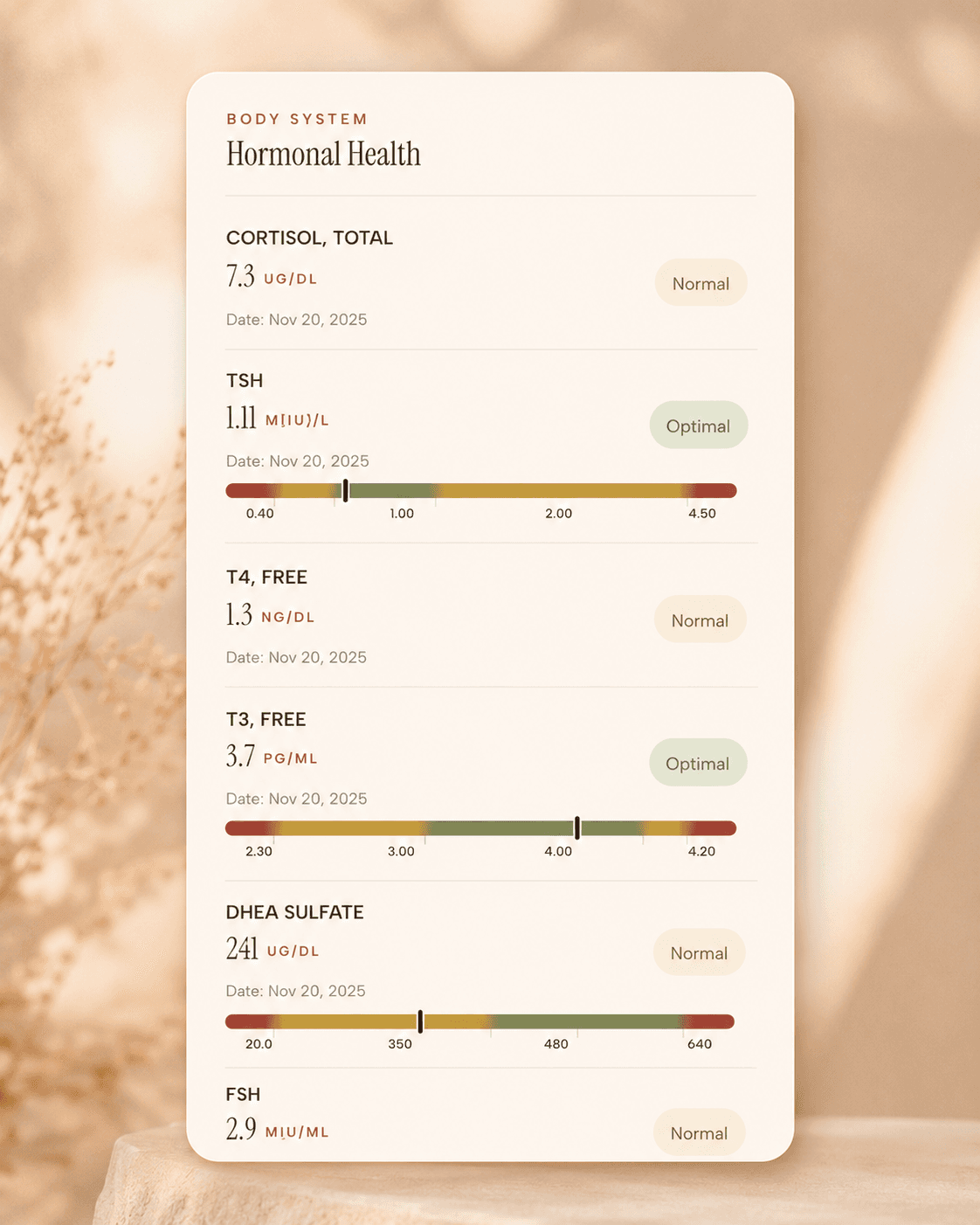
TSH is the master regulator of thyroid function, controlling the production of thyroid hormones T4 and T3. In functional medicine, we use narrower TSH ranges than conventional medicine to identify subclinical thyroid dysfunction early. Even mildly elevated TSH can indicate thyroid insufficiency, leading to fatigue, weight gain, depression, and metabolic dysfunction. TSH levels are influenced by stress, nutrient deficiencies, autoimmune conditions, and environmental toxins. Optimal TSH supports energy, metabolism…
Learn moreVitamin D, 25-Oh, Total
Total 25-hydroxyvitamin D represents the best measure of vitamin D status, combining both D2 and D3 forms. This is the storage form of vitamin D and reflects recent intake and synthesis. In functional medicine, total 25(OH)D is used to assess vitamin D sufficiency and guide supplementation. Optimal levels (40-80 ng/mL) are associated with reduced risk of cancer, cardiovascular disease, autoimmune conditions, and all-cause mortality. Vitamin D acts as a hormone affecting immune function, bone health, mood, and ce…
Learn moreLab testing
Check inflammation, thyroid function, and vitamin D at Quest
starting from $99 panel with 100+ tests, one visit
No referral needed
About 1 week
Schedule online — results typically within a week
Clear next steps
Guidance included, with follow-up care available
HSA / FSA
Eligible for pre-tax health spending accounts
Pro Tips
Do a two-week pain map: once a day, mark where it hurts on a body outline and rate it 0–10, because patterns like “moves down the leg” or “symmetrical hands” are diagnostic clues, not trivia.
Try a “morning stiffness timer” for one week. If it reliably takes more than 30–60 minutes to loosen up, that leans inflammatory and is worth mentioning explicitly when you seek care.
If you suspect nerve pain, test positions on purpose: spend two minutes in a posture that usually triggers symptoms, then two minutes in a posture that relieves them, and write down what changes. That simple experiment often guides the right physical therapy plan.
Create a flare plan before you need it. Decide what you will stop, what you will keep (your baseline movement), and what you will use for relief, so a bad day does not turn into a lost week.
Bring a medication and supplement snapshot to appointments: the exact dose, how many days per week you take it, and what it changes. It makes safer pain control much easier and reduces trial-and-error.
Frequently Asked Questions
Is it normal to have chronic pain in your 30s?
It’s common, but it is not something you should automatically accept as “just aging.” In your 30s, chronic pain is often tied to inflammation, nerve irritation, or a sensitized nervous system, and each has different next steps. If pain lasts longer than 3 months or keeps you from normal activities, treat that as a signal to evaluate patterns and consider targeted labs like hs-CRP, TSH, and vitamin D.
How do I know if my pain is inflammatory or mechanical?
Inflammatory pain often feels worse in the morning, improves with gentle movement, and may come with swelling or warmth. Mechanical pain is more likely to worsen with specific movements or loads and feel better with rest or position changes. Track your morning stiffness duration and whether movement helps within 30–60 minutes, then bring that detail to a clinician.
Can fibromyalgia start in your 30s?
Yes, fibromyalgia can begin in your 30s, especially after a period of stress, poor sleep, illness, or an injury that never fully “settled.” It often includes widespread pain plus fatigue, unrefreshing sleep, and brain fog, which fits a central sensitization pattern. A practical step is to focus on sleep repair and pacing while also ruling out contributors like thyroid dysfunction (TSH) and low vitamin D.
What blood tests are worth doing for chronic pain?
The most useful first tests depend on your pattern, but hs-CRP can flag higher baseline inflammation, TSH can catch thyroid-related muscle aches and fatigue, and 25-hydroxy vitamin D can identify a common, treatable contributor to diffuse aches. “Optimal” targets are often hs-CRP under about 1.0 mg/L, TSH roughly 0.5–2.5 mIU/L for many people, and vitamin D around 30–50 ng/mL. If any are abnormal, use that result to guide a focused plan instead of ordering everything at once.
When should I worry about chronic pain and get urgent help?
Get urgent care if you have new weakness, numbness in the groin area, loss of bladder or bowel control, fever with severe back pain, or sudden unexplained swelling and redness in a joint. Those patterns can signal nerve compression, infection, or a clot, and they need same-day evaluation. If you are not in danger but your pain is steadily worsening or waking you at night, schedule a timely visit and bring a short symptom timeline.