Chronic Pain in Your 40s: What It Usually Means
Chronic pain in your 40s often comes from inflammation, nerve sensitization, or thyroid and vitamin issues. Targeted labs available—no referral needed.






Chronic pain in your 40s is usually not “just getting older.” It often comes from ongoing inflammation, an over-alert pain system that stays turned up (central sensitization), or fixable contributors like thyroid or vitamin D problems. The right labs and a focused history can help sort out which bucket you’re in so you’re not guessing. Your 40s are a common time for pain to become louder because life stress, sleep disruption, old injuries, weight shifts, and hormone changes can all stack together. That mix can make pain feel unpredictable and exhausting, especially when scans look “fine.” This page walks you through the most common patterns, what tends to help in real life, and which blood tests can add clarity. If you want help connecting your exact symptoms to next steps, PocketMD can talk it through with you, and Vitals Vault labs can help you check a few high-yield markers without a referral.
Why chronic pain shows up in your 40s
Low-grade inflammation builds over time
When your immune system stays mildly activated, your tissues get more “irritable,” and pain signals fire more easily. This can feel like deep aching in muscles or joints, morning stiffness, or flares after poor sleep or a stressful week. A useful takeaway is to look for a pattern: if your pain is worse with stiffness and improves as you warm up, inflammation becomes a stronger suspect and is worth checking with a marker like hs-CRP.
Your pain system stays turned up
Sometimes the problem is less about damage and more about how your nervous system processes danger signals, which is often called pain amplification (central sensitization). Pain can spread, feel out of proportion to activity, and come with brain fog, sound sensitivity, or unrefreshing sleep. The key takeaway is that this type of pain often responds better to pacing, sleep repair, and nervous-system calming strategies than to repeatedly “chasing” one body part.
Old injuries and wear-and-tear add up
By your 40s, past sprains, disc issues, or repetitive work can start to show up as osteoarthritis or tendon overload, even if you were fine for years. This often feels mechanical: it’s worse with certain movements, better with rest, and it may be very localized. A practical next step is to notice whether your pain is position-dependent, because that points you toward targeted physical therapy rather than more medications.
Autoimmune arthritis can start quietly
Conditions like rheumatoid arthritis or inflammatory spondyloarthritis can begin with subtle swelling, prolonged morning stiffness, or pain that wakes you in the second half of the night. You might also notice fatigue that feels “sick,” not just tired, or joints that look puffy even when you did not injure them. If you have persistent stiffness lasting longer than about 30–60 minutes most mornings, it’s worth asking for an evaluation sooner rather than later because early treatment can protect joints.
Thyroid and vitamin issues amplify pain
Low thyroid function (hypothyroidism) can slow muscle recovery and make you feel heavy, sore, and stiff, while vitamin D deficiency can make aches feel more widespread and stubborn. These problems can also worsen sleep and mood, which lowers your pain threshold even further. The takeaway is simple: if your pain comes with cold intolerance, constipation, hair changes, low mood, or frequent infections, basic blood tests can uncover a fixable contributor.
What actually helps chronic pain (without feeling like a full-time job)
Treat sleep like pain medicine
Poor sleep makes your brain interpret signals as more threatening, which means the same activity hurts more the next day. Start with one change you can stick to, such as a consistent wake time and a 30–60 minute wind-down where screens are replaced with something boring and dim. If you snore, wake gasping, or feel unrefreshed even after 8 hours, ask about sleep apnea testing because treating it can noticeably reduce pain sensitivity.
Use pacing instead of pushing through
The boom-and-bust cycle is common in your 40s: you feel a little better, you do everything, and then you crash for days. Pacing means you stop an activity while you still feel “okay,” then you build up in small, planned steps so your nervous system learns it is safe. A concrete way to start is to pick one trigger activity and cap it at a level you can repeat tomorrow, even if that feels annoyingly easy at first.
Strengthen the right muscles, gently
For mechanical pain, the goal is not to “stretch more,” but to load tissues in a controlled way so joints and tendons stop feeling fragile. Two to three short sessions per week of targeted strength work often beats sporadic intense workouts, especially when you focus on form and slow reps. A physical therapist can help you choose the smallest effective program so you do not flare and quit.
Use anti-inflammatory meds strategically
Anti-inflammatory medicines like ibuprofen or naproxen can be very helpful for inflammatory flares, but they are not a great long-term blanket solution because of stomach, kidney, and blood pressure risks. The practical approach is to use the lowest effective dose for the shortest window, and to avoid stacking them with dehydration or heavy alcohol. If you need them most days of the week, that is a signal to reassess the diagnosis and the plan.
Consider pain reprocessing therapies
When pain is widespread or persistent despite “normal” imaging, approaches like cognitive behavioral therapy for pain, mindfulness-based stress reduction, and graded exposure can reduce the alarm response that keeps pain loud. This is not “it’s all in your head”; it is training your brain and body to stop treating safe sensations as threats. A good first step is to choose one structured program and commit for 6–8 weeks before judging whether it helps.
Lab tests that help explain chronic pain in your 40s
Hs Crp
High-sensitivity C-reactive protein (hs-CRP) is a key marker of systemic inflammation and cardiovascular risk. In functional medicine, we recognize hs-CRP as one of the most important predictors of heart disease, stroke, and metabolic dysfunction. Levels above 1.0 mg/L indicate increased inflammation that may be driven by poor diet, chronic infections, autoimmune conditions, or metabolic syndrome. Optimal levels below 0.5 mg/L are associated with the lowest cardiovascular risk and overall inflammatory burden. hs…
Learn moreFerritin
Ferritin is your body's iron storage protein, reflecting total iron stores in the body. In functional medicine, ferritin assessment is crucial for identifying both iron deficiency and iron overload, conditions that can significantly impact energy levels and overall health. Low ferritin is the earliest sign of iron deficiency, often occurring before anemia develops. This can cause fatigue, weakness, restless leg syndrome, and cognitive impairment. Conversely, elevated ferritin may indicate iron overload, inflamma…
Learn moreVitamin D, 25-Oh, Total
Total 25-hydroxyvitamin D represents the best measure of vitamin D status, combining both D2 and D3 forms. This is the storage form of vitamin D and reflects recent intake and synthesis. In functional medicine, total 25(OH)D is used to assess vitamin D sufficiency and guide supplementation. Optimal levels (40-80 ng/mL) are associated with reduced risk of cancer, cardiovascular disease, autoimmune conditions, and all-cause mortality. Vitamin D acts as a hormone affecting immune function, bone health, mood, and ce…
Learn moreLab testing
Check hs-CRP, TSH, and vitamin D at Quest
starting from $99 panel with 100+ tests, one visit
No referral needed
About 1 week
Schedule online — results typically within a week
Clear next steps
Guidance included, with follow-up care available
HSA / FSA
Eligible for pre-tax health spending accounts
Pro Tips
Try a 14-day pain map: once a day, mark where it hurts and rate it 0–10, then write one sentence about sleep quality and stress. Patterns show up fast, and they are more useful than trying to remember “how it’s been.”
If mornings are the worst, do a 5-minute “warm-up rule” before you judge your day. A hot shower or heating pad followed by gentle movement can separate inflammatory stiffness from pure mechanical pain.
Pick one “baseline” walk that you can do even on a bad day, such as 8 minutes at an easy pace, and do it daily for a week. Then add 1–2 minutes per week so your body learns consistency without triggering a flare.
When a flare hits, switch goals from “fix it today” to “keep the floor from dropping out.” Use heat or ice, keep meals simple, and protect sleep that night, because tomorrow’s pain is often decided by tonight’s rest.
If you are using pain relievers often, write down exactly how many days per week you take them and what they allow you to do. That single number helps your clinician decide whether you need a different diagnosis workup or a safer long-term plan.
Frequently Asked Questions
Is chronic pain in your 40s normal, or a red flag?
Some aches are common in your 40s, but pain that lasts longer than 3 months, keeps spreading, or regularly disrupts sleep deserves a real workup. Morning stiffness lasting more than 30–60 minutes, swollen joints, fevers, unexplained weight loss, or new weakness are bigger red flags. If any of those fit, book an evaluation and consider checking hs-CRP, TSH, and vitamin D as a starting point.
Why does my pain get worse when I’m stressed?
Stress hormones and poor sleep make your nervous system more reactive, so normal sensations register as pain more easily. This is part of pain amplification (central sensitization), and it can make flares feel “random” even when your tissues are not being damaged. A practical move is to track stress and sleep next to pain for two weeks, then build one daily downshift habit you can repeat.
Can thyroid problems really cause body aches?
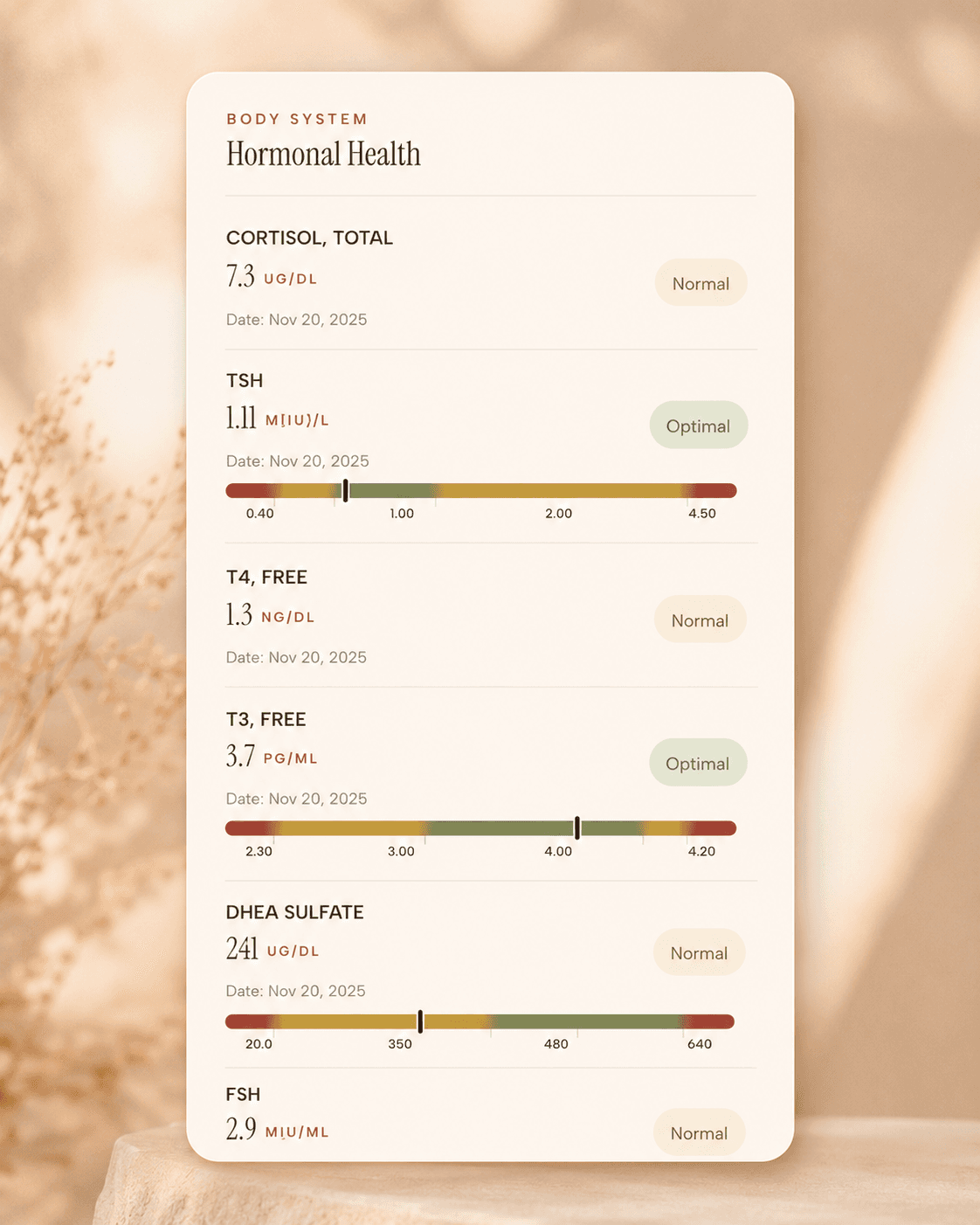
Yes. Low thyroid function can cause muscle aches, joint stiffness, cramps, and a heavy, slowed-down feeling, and it often travels with fatigue, constipation, dry skin, or feeling cold. A TSH blood test is the usual first screen, and many people feel best when TSH is roughly 0.5–2.5 mIU/L rather than near the edges. If your symptoms match, ask for thyroid testing and a plan to recheck after treatment changes.
What vitamin deficiency causes muscle and joint pain?
Vitamin D deficiency is a common one, and it can show up as diffuse muscle aches, low energy, and slower recovery after activity. The test to ask for is 25(OH)D, and many clinicians aim for about 30–50 ng/mL for symptom support. If you are low, recheck your level after about 8–12 weeks of consistent supplementation.
How do I know if it’s fibromyalgia or inflammation?
Fibromyalgia usually involves widespread pain plus unrefreshing sleep, brain fog, and tenderness, and it often comes with normal basic inflammation markers. Inflammatory conditions tend to cause prolonged morning stiffness, visible swelling, or pain that improves as you move and worsens with rest, and hs-CRP may be persistently elevated. If you are unsure, bring a symptom timeline and ask whether your pattern fits pain amplification, inflammatory disease, or a mix—because the best treatments differ.