01
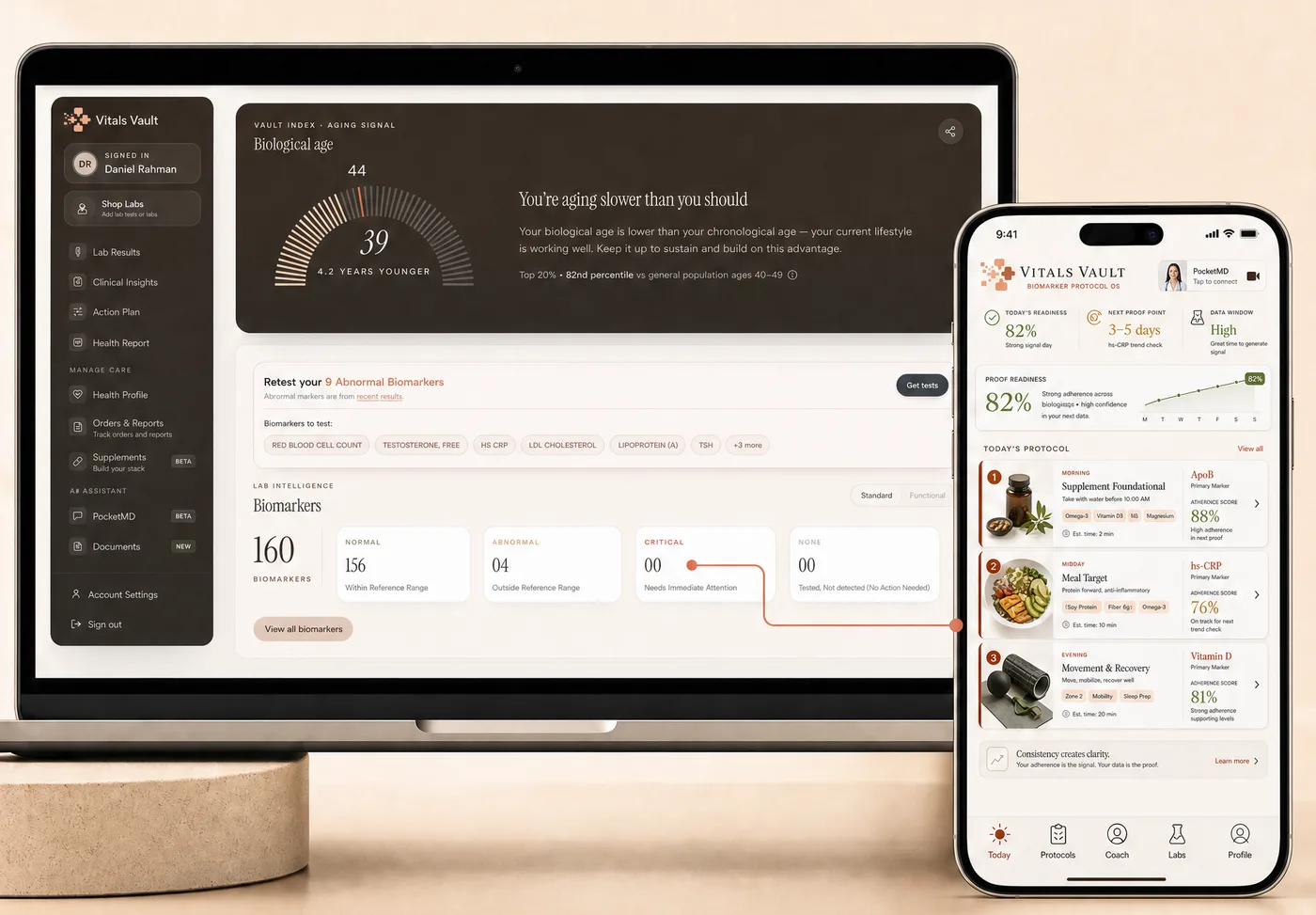
Biological age
Find out if your body is aging faster or slower than your actual age — and see how you rank against the general population.
39
Biological age
44
Actual age
4.2
Years younger
Protein, Total (Spot Urine)
Most results in 3–5 business days
Urine Protein Total Random (Without Creatinine): what it measures and how to read your result. It measures total protein in a single urine sample to screen for protein loss; order through Vitals Vault and test at a nearby Quest location.
This test measures the total amount of protein in a single (“random”) urine sample. It is often used as a quick screen when there is concern for kidney stress or kidney disease, especially if you have diabetes, high blood pressure, swelling, or foamy urine. Because the sample is not adjusted for how concentrated your urine is, the number can be hard to interpret on its own. A higher value can reflect true protein loss, but it can also reflect dehydration, recent exercise, or a temporary illness. The most useful next step is usually confirmation with a repeat urine test and, when appropriate, a ratio-based test (such as urine albumin-to-creatinine ratio or protein-to-creatinine ratio) that corrects for urine concentration.
What to expect before and at your draw.
Sample Type
Blood
Collection Method
In person at a Quest Diagnostics location
Age
18+
This order includes the lab markers used for Protein, Total (Spot Urine).
Protein, Total, Random Ur
Included in this Quest Diagnostics order and reported in your Vitals Vault account.
Order Protein, Total (Spot Urine) online.
Visit a Quest Diagnostics location near you for your blood draw. Appointments can be scheduled after checkout.
View easy-to-read results in your Vitals Vault account, with trends and a personalized action plan.
Included with every package
Function Health shows you numbers. Vitals Vault connects them — ratios, patterns, and a personalized action plan grounded in functional medicine.
Find out if your body is aging faster or slower than your actual age — and see how you rank against the general population.
39
Biological age
44
Actual age
4.2
Years younger
Turn lab data into what to do next—clear guidance on follow-ups, lifestyle context, and add-on testing when you need to go deeper. Make the healthy choice the obvious one.
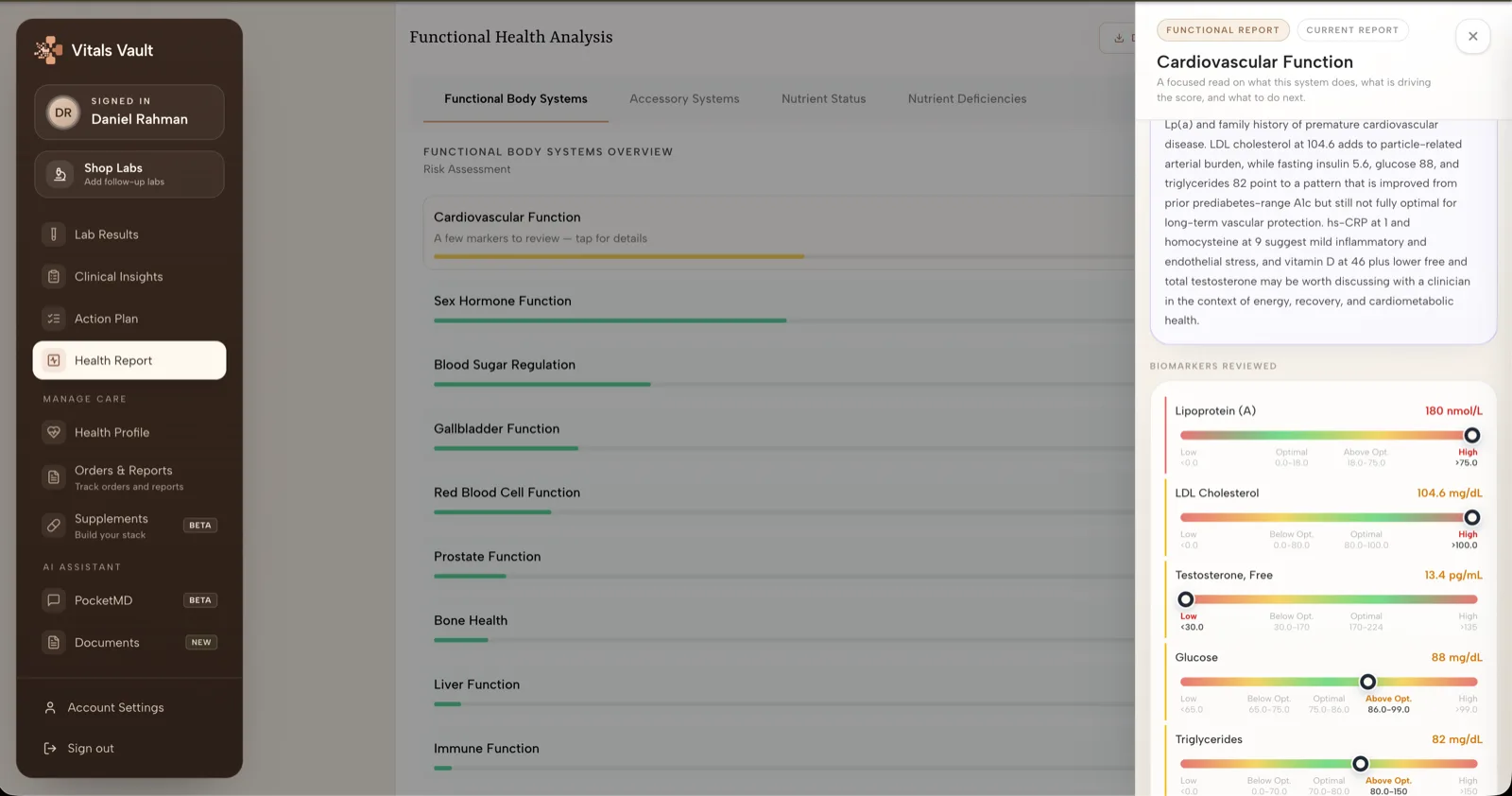
A personalized, plain-language walkthrough of your abnormal markers—reference ranges, pattern context, and what to watch next, grounded in your actual labs.
Personalized Insights
Clear Explanations
Actionable guidance
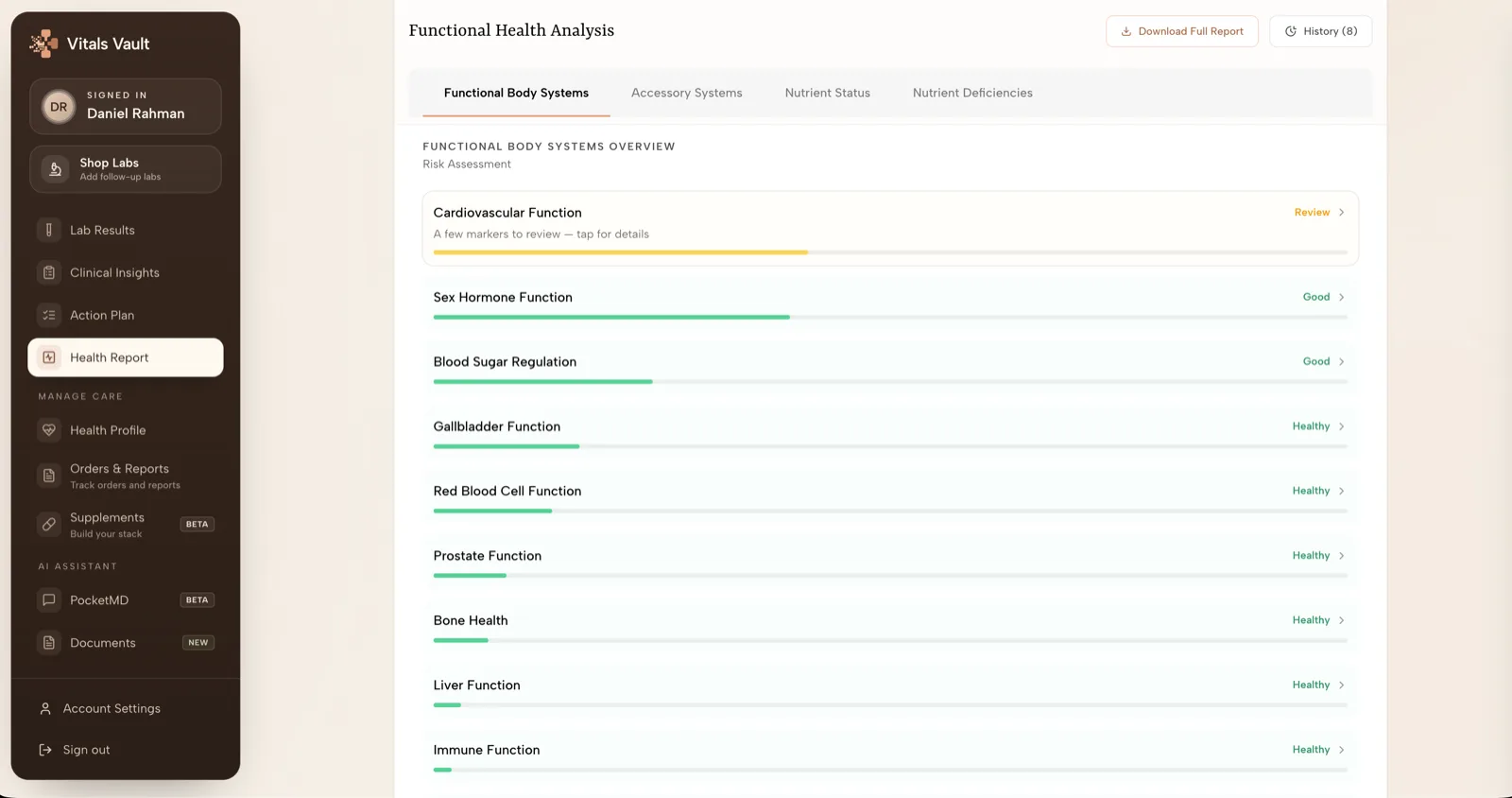
Explore your body systems with clear risk context — refresh your report, download the full PDF, and monitor hormones, heart, bone, and more in one place.

Explore hundreds of tests and panels, filter by concern, and manage your cart—member-exclusive pricing with quick checks and full-body options in one flow.
Wide test selection
300+ tests & panels available
Smart filtering
Find tests by symptoms or goals
Seamless ordering
Add to cart and manage easily
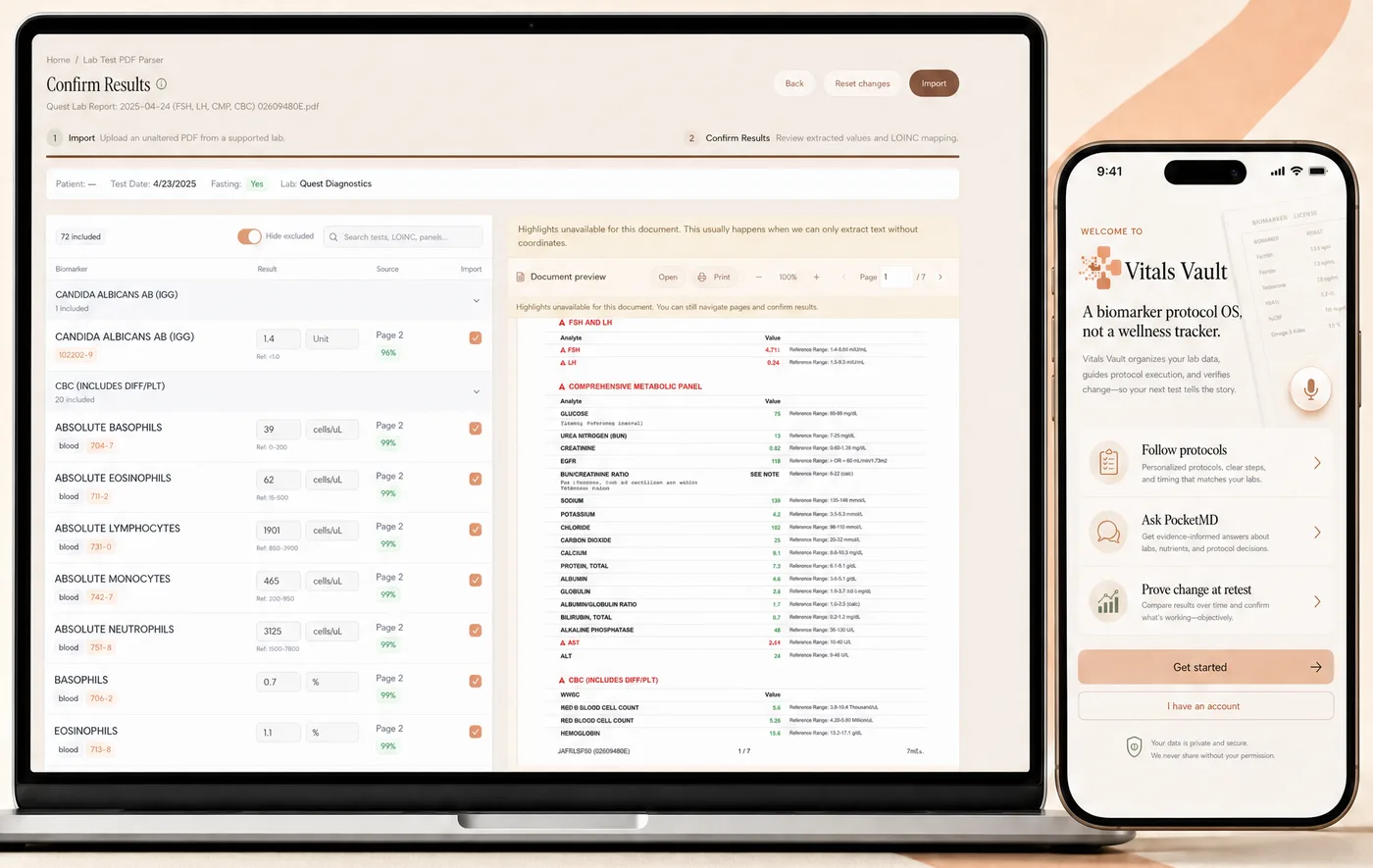
Upload past lab reports, search your documents, and keep appointments and results organized—our AI can extract biomarkers from PDFs so everything lives in one dashboard.
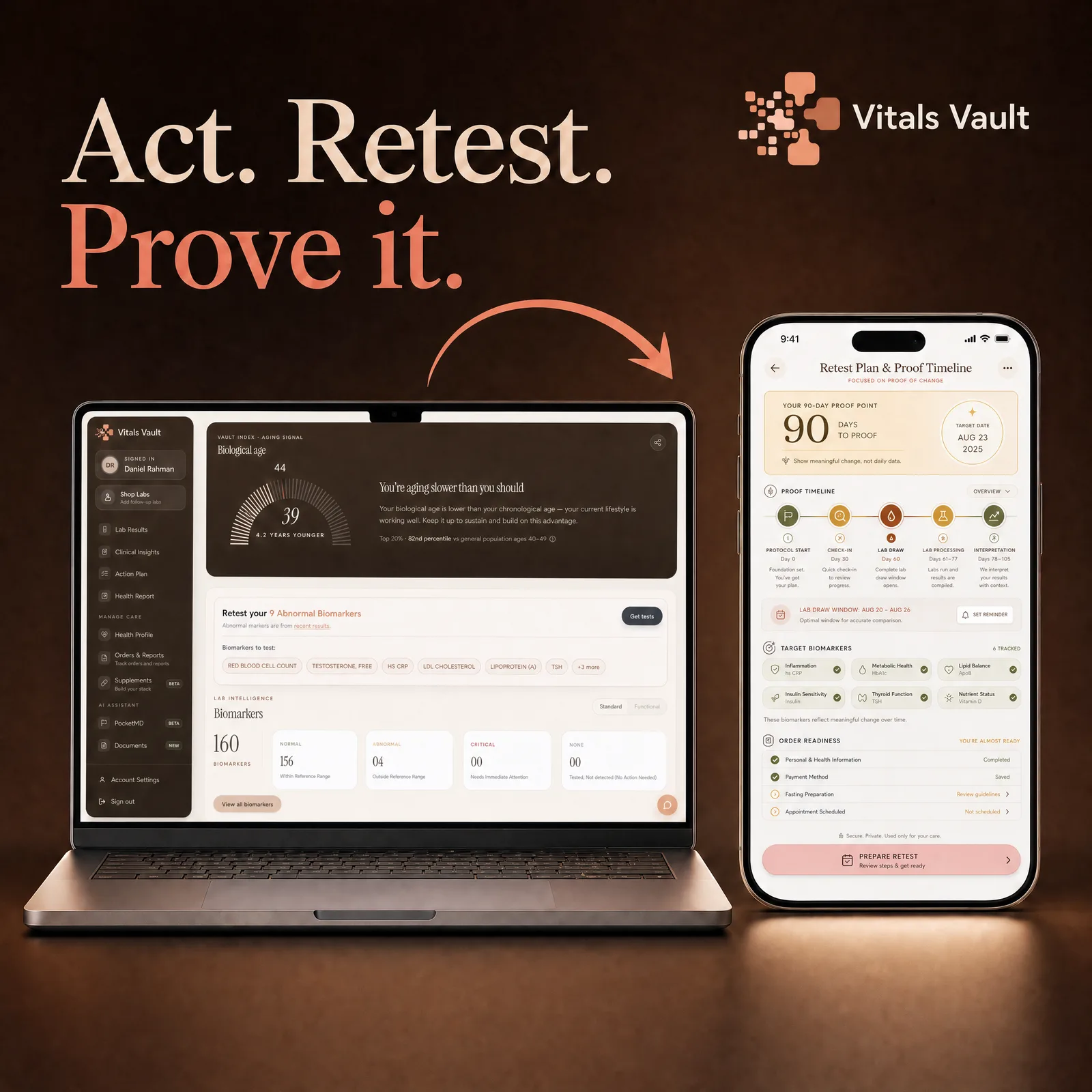
Browse longevity, nutrition, supplement, and movement protocols—structured plans you can follow with clear habits, labs, and targets tied to your profile.

Ask for protocols, nutrition plans, supplement stacks, and education—context-aware suggestions powered by your labs and goals (beta experience).
Order online
Add Protein, Total (Spot Urine) to your cart and check out. No doctor referral is required.
Visit a Quest lab
Provide your blood sample at a Quest Diagnostics location. Appointments can be scheduled after checkout.
Review in Vitals Vault
Most results in 3–5 business days. They stay in your Vitals Vault account for trends and follow-up.
No special preparation is usually needed unless noted at checkout.
This order includes the lab markers used for Protein, Total (Spot Urine) and reported in your Vitals Vault account.
Results
Most results in 3–5 business days
HSA/FSA
Accepted
Who takes it
Must be taken by the purchaser
Preparation
No special preparation needed unless noted at checkout.
It measures total protein in a single urine sample to screen for protein loss; order through Vitals Vault and test at a nearby Quest location.





This test measures the total amount of protein in a single (“random”) urine sample. It is often used as a quick screen when there is concern for kidney stress or kidney disease, especially if you have diabetes, high blood pressure, swelling, or foamy urine.
Because the sample is not adjusted for how concentrated your urine is, the number can be hard to interpret on its own. A higher value can reflect true protein loss, but it can also reflect dehydration, recent exercise, or a temporary illness.
The most useful next step is usually confirmation with a repeat urine test and, when appropriate, a ratio-based test (such as urine albumin-to-creatinine ratio or protein-to-creatinine ratio) that corrects for urine concentration.
You might consider this test if you have risk factors for kidney damage, such as diabetes, high blood pressure, a family history of kidney disease, or autoimmune conditions. It can also be reasonable if you notice foamy urine, new ankle or eyelid swelling, or you have had an abnormal urine dipstick that mentioned “protein.”
This test can be helpful as a first look, but it is not the best standalone way to estimate how much protein you are losing over a day. If your result is abnormal—or if you are monitoring kidney risk over time—you will usually get clearer answers from a urine protein-to-creatinine ratio (UPCR) or urine albumin-to-creatinine ratio (uACR), plus blood tests that assess kidney filtration.
If you are pregnant, have a recent infection, or you exercised hard in the last day, it is especially important to interpret a random urine protein result carefully and consider repeating it under more stable conditions.
Testing can support clinician-directed care and shared decision-making, but it cannot diagnose the cause of protein in urine by itself.
This is a CLIA-laboratory urine chemistry measurement intended for screening and monitoring; results should be interpreted with your symptoms and companion kidney tests, not used as a standalone diagnosis.
from $81.82 at Quest Diagnostics
Results in days
Clear next steps
HSA / FSA
If you want to check for protein loss in urine without waiting for an office visit, you can order this test through Vitals Vault and complete your sample collection at a nearby Quest location.
After your result posts, PocketMD can help you understand what “low,” “in range,” or “high” means for a random urine sample, why concentration matters, and which follow-up tests typically clarify kidney risk (for example, urine albumin-to-creatinine ratio or a kidney blood-and-urine baseline panel).
If your result is elevated, you can use PocketMD to plan a practical next step: repeat testing when you are well-hydrated and not acutely ill, and pair urine findings with blood kidney markers so you are not guessing from a single number.
Urine protein total measures the combined amount of protein present in a single urine sample. In healthy kidneys, the filtering units (glomeruli) and tubules keep most protein in your bloodstream, so only small amounts appear in urine.
When the kidney filter is stressed or damaged, more protein can leak into urine. The most common protein is albumin, but “total protein” can also include other proteins that may rise with inflammation, infection, or certain blood and kidney conditions.
The key limitation is in the name: “random” and “without creatinine.” Urine concentration changes throughout the day based on hydration, sweating, and timing. Without a creatinine correction (a ratio), a higher number can reflect a more concentrated sample rather than a true increase in protein loss.
A urine dipstick is a quick screening tool that estimates protein semi-quantitatively (for example, negative, trace, 1+, 2+). A lab-based total protein measurement gives you a numeric value, but it still needs context because concentration can vary.
Creatinine is released by your muscles at a fairly steady rate and is commonly used to adjust urine results for dilution. A protein-to-creatinine ratio (UPCR) or albumin-to-creatinine ratio (uACR) is often preferred because it better estimates daily protein loss from a spot sample.
Persistent protein in urine can be associated with chronic kidney disease, diabetic kidney disease, hypertension-related kidney damage, glomerulonephritis, or other conditions. Temporary protein can occur with fever, strenuous exercise, dehydration, or acute illness.
A low or undetectable total urine protein result is usually reassuring and suggests you are not spilling significant protein at the time of collection. If you have strong risk factors (like long-standing diabetes or high blood pressure), a low total protein does not fully replace albumin-focused screening, because small albumin leaks can matter even when total protein looks normal. If symptoms persist or prior tests were abnormal, repeating the test or adding a ratio-based test can help confirm the pattern.
An in-range result generally means your kidneys are keeping most protein in the bloodstream. It is most meaningful when your sample was collected under typical conditions—well-hydrated, not right after intense exercise, and not during an acute illness. If you are monitoring kidney health over time, consistency matters, so try to collect follow-up samples in similar conditions.
A high result means more protein was present in your urine sample than expected. This can reflect true protein loss from the kidneys, but it can also be inflated by a concentrated urine sample (for example, dehydration) because this test does not correct for creatinine. The usual next step is to repeat the test and/or add a urine protein-to-creatinine ratio (UPCR) or urine albumin-to-creatinine ratio (uACR), and to check blood kidney markers to understand whether this is a persistent kidney issue.
Hydration status is a major factor: concentrated urine can raise the measured protein concentration even if daily protein loss is unchanged. Recent strenuous exercise, fever, urinary tract inflammation, and acute illness can cause temporary protein elevations. Collection timing and technique matter as well; contamination (for example, menstrual blood) can affect results. Certain medications and underlying conditions can also change kidney permeability, so your full medication list and medical history are important for interpretation.
It means the lab measured the total amount of protein in a single urine sample collected at one point in time. Because it is a spot sample, the result is affected by how diluted or concentrated your urine was when you provided it.
No. UPCR divides urine protein by urine creatinine to correct for urine concentration, which usually makes it more reliable for estimating how much protein you are losing. A random total protein value without creatinine can be a useful screen, but it often needs confirmation with a ratio-based test.
Fasting is not usually required. What matters more is avoiding heavy exercise right before the test, staying reasonably hydrated, and following the collection instructions so the sample is not contaminated.
Temporary proteinuria can happen with dehydration, fever, intense exercise, stress on the body from acute illness, or urinary tract inflammation. Pregnancy can also change urine findings, and persistent protein in pregnancy requires prompt clinical evaluation.
Dipsticks are semi-quantitative and can be affected by urine concentration and pH, while lab testing provides a numeric measurement. Differences can also occur if the samples were collected at different times or under different conditions. When results conflict, repeating the test and adding uACR or UPCR often clarifies what is going on.
Common next steps include repeating urine testing, adding a urine albumin-to-creatinine ratio (uACR) and/or urine protein-to-creatinine ratio (UPCR), and checking blood kidney markers like creatinine and eGFR. A urinalysis with microscopy can also help identify blood, casts, or signs of infection that change the interpretation.
Purchase online through Vitals Vault. A licensed clinician reviews and approves your order, then you receive a digital requisition for a Quest Diagnostics blood draw.
Samples are collected in person at Quest Diagnostics locations nationwide. After checkout you can schedule your visit at a convenient site.
Most results in 3–5 business days. You can view them securely in your Vitals Vault account.
No separate referral appointment is required. Clinician review is included in the online order flow.
Yes. Eligible HSA/FSA cards can be used at checkout for qualifying lab orders.
Results are available in your secure Vitals Vault account. You control who you share them with, subject to applicable law.
Blood glucose shows the amount of sugar in your blood at a single moment. A1c (hemoglobin A1c) estimates your average blood sugar over roughly the past 8–12 weeks. Comparing them helps explain whether your long-term average lines up with your fasting glucose on draw day.
It helps you understand how this marker fits into your broader metabolic picture, with results tracked in your Vitals Vault account.
Elevated values can signal higher metabolic risk. Many people start with nutrition, activity, sleep, and weight management, then retest and review results with a clinician. This test is educational and does not replace medical advice or diagnosis.
Your sample is processed at CLIA-certified Quest Diagnostics laboratories. Results should still be interpreted with a qualified clinician alongside your history, symptoms, and other labs.
Consumer-initiated testing through Vitals Vault is limited to adults 18+ so ordering and interpretation stay aligned with clinical best practices for this channel.