01
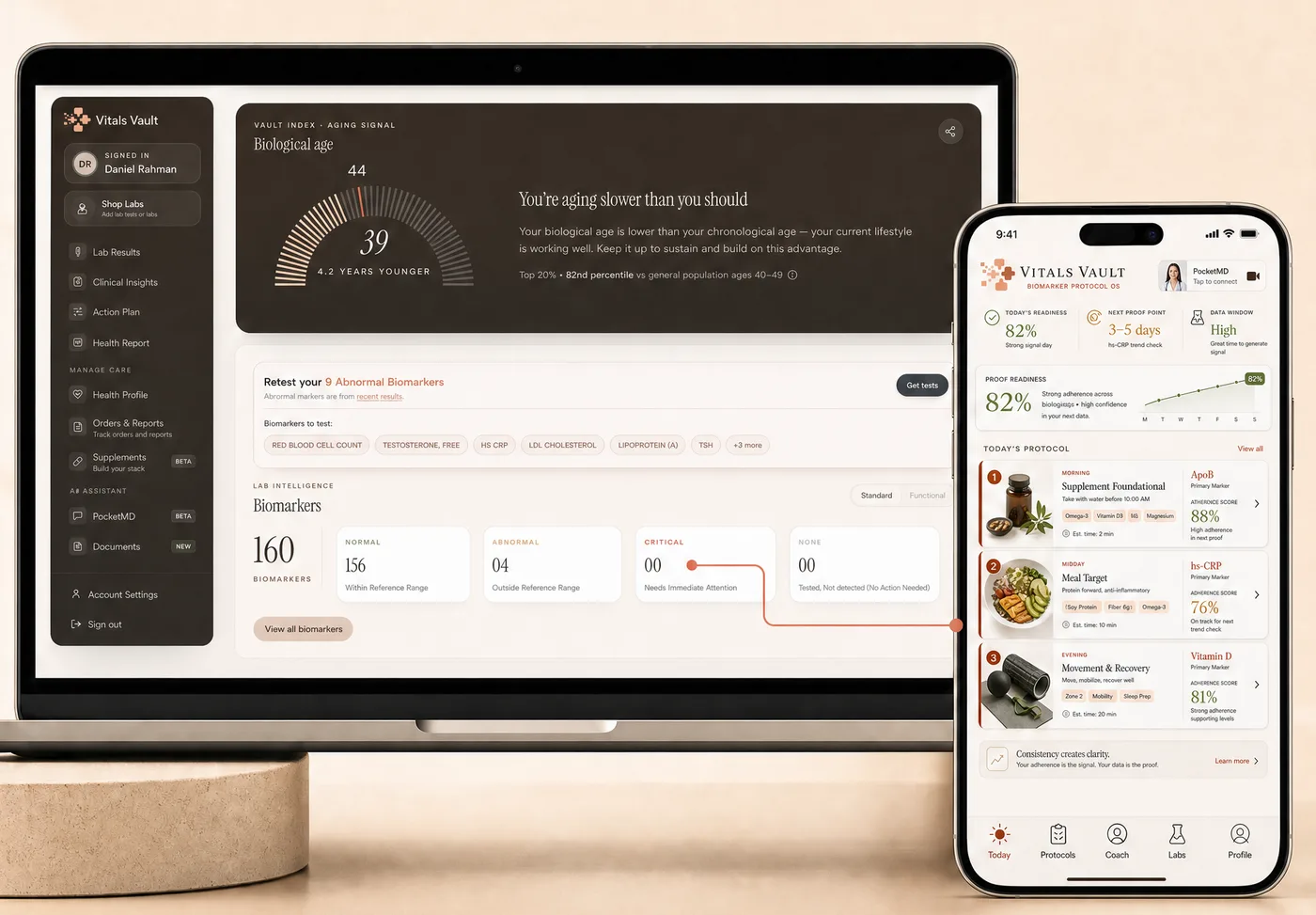
Biological age
Find out if your body is aging faster or slower than your actual age — and see how you rank against the general population.
39
Biological age
44
Actual age
4.2
Years younger
PTH, Intact (Without Calcium)
Results in about 4 days
PTH Intact (Without Calcium): what this lab test measures and how to interpret your result. It measures intact parathyroid hormone to assess parathyroid-driven calcium balance; order through Vitals Vault with Quest labs and PocketMD support.
An intact parathyroid hormone (PTH) test tells you how strongly your parathyroid glands are signaling your body to keep blood calcium stable. PTH is one of the main “control knobs” for calcium and phosphorus balance, and it also affects bone turnover and kidney handling of minerals. This version is ordered without a same-draw calcium result. That can still be useful, but it also means your number is easier to misread if you do not look at it alongside calcium, vitamin D, kidney function, and sometimes magnesium. If your result is flagged high or low, the next step is usually not to jump to a diagnosis. It is to confirm the pattern with companion labs and your symptoms, then decide whether you need a repeat test, imaging, or treatment changes with your clinician.
What to expect before and at your draw.
Sample Type
Blood
Collection Method
In person at a Quest Diagnostics location
Age
18+
This order includes the lab markers used for PTH, Intact (Without Calcium).
Parathyroid Hormone, Intact
Included in this Quest Diagnostics order and reported in your Vitals Vault account.
Order PTH, Intact (Without Calcium) online.
Visit a Quest Diagnostics location near you for your blood draw. Appointments can be scheduled after checkout.
View easy-to-read results in your Vitals Vault account, with trends and a personalized action plan.
Included with every package
Function Health shows you numbers. Vitals Vault connects them — ratios, patterns, and a personalized action plan grounded in functional medicine.
Find out if your body is aging faster or slower than your actual age — and see how you rank against the general population.
39
Biological age
44
Actual age
4.2
Years younger
Turn lab data into what to do next—clear guidance on follow-ups, lifestyle context, and add-on testing when you need to go deeper. Make the healthy choice the obvious one.
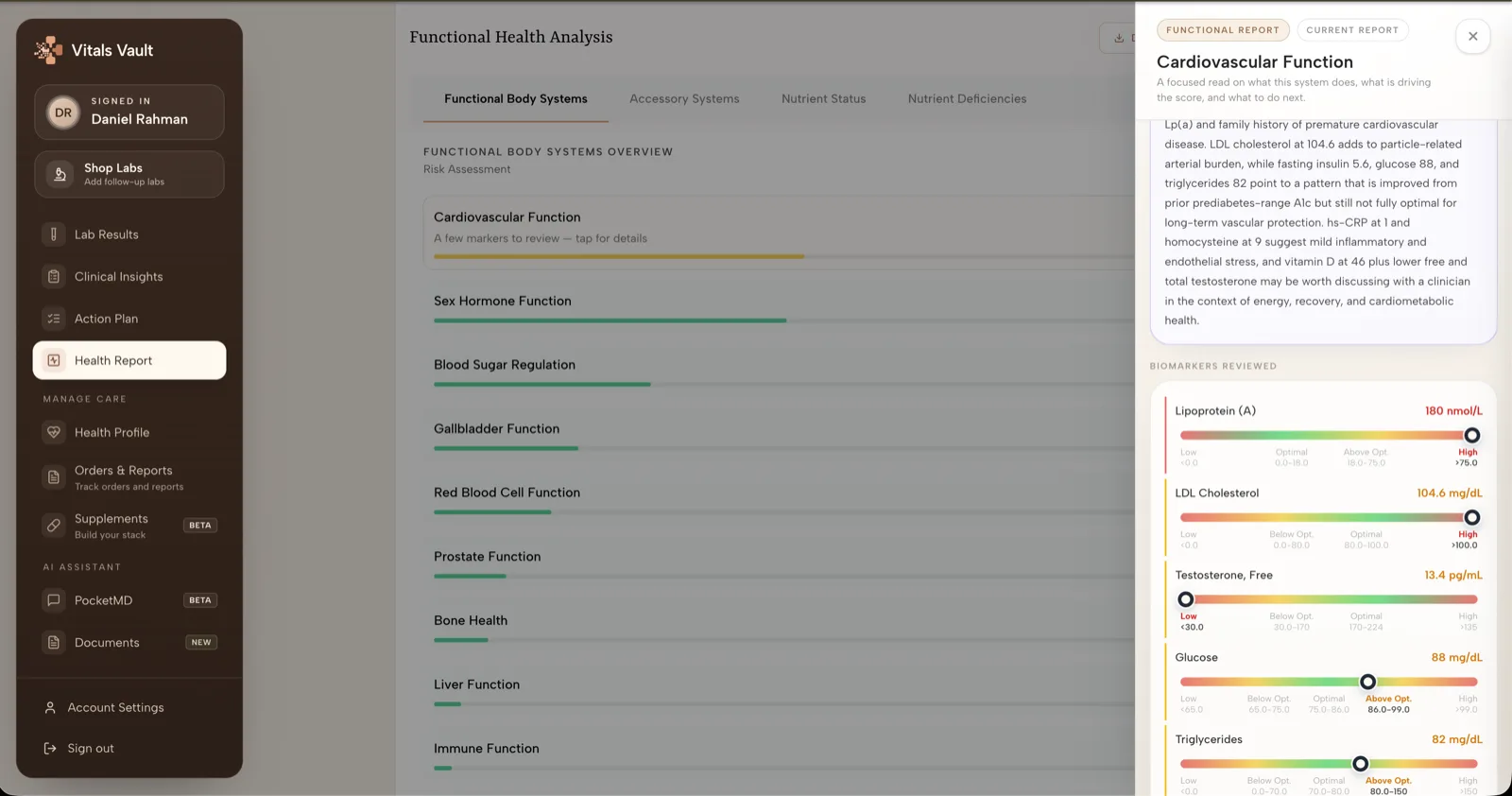
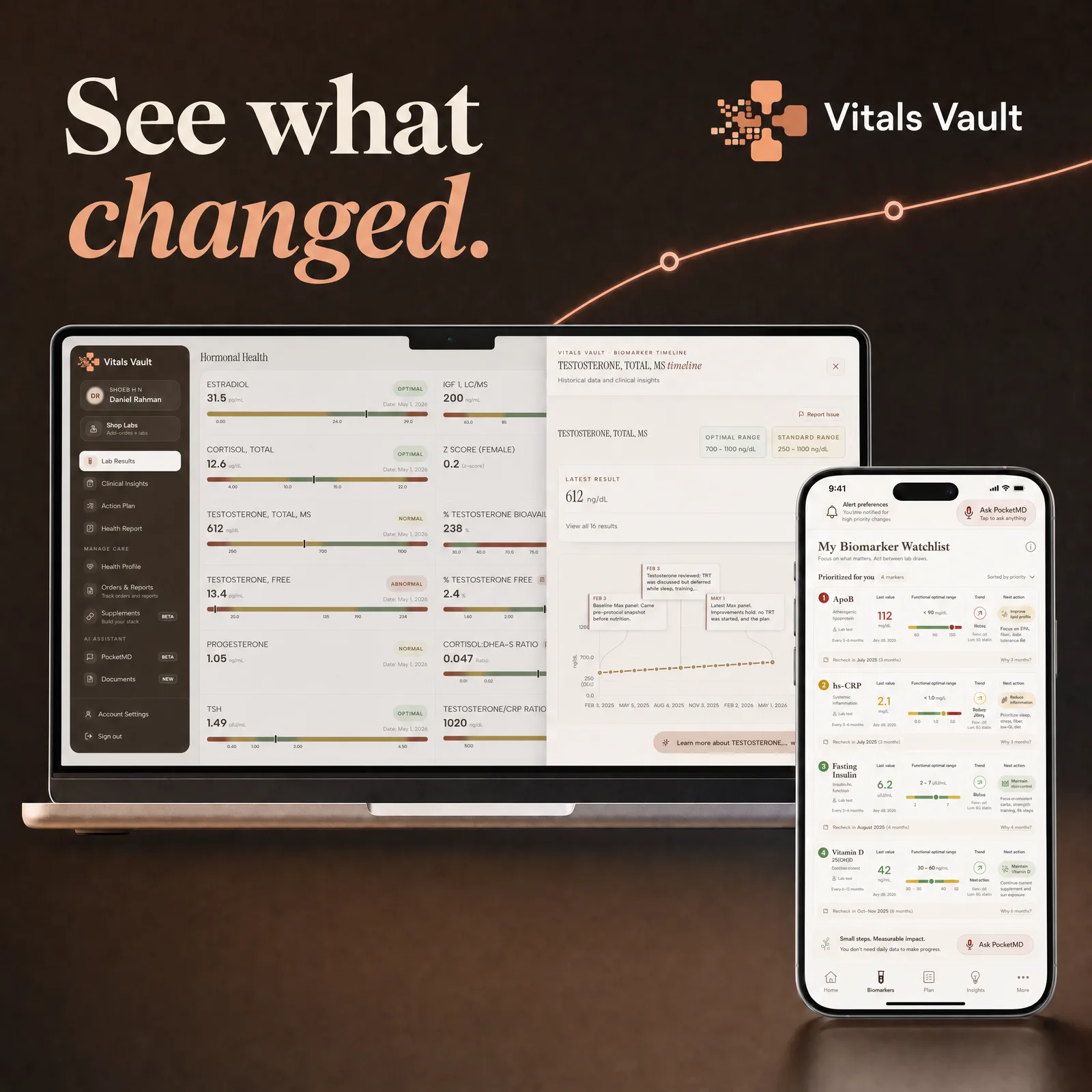
A personalized, plain-language walkthrough of your abnormal markers—reference ranges, pattern context, and what to watch next, grounded in your actual labs.
Personalized Insights
Clear Explanations
Actionable guidance
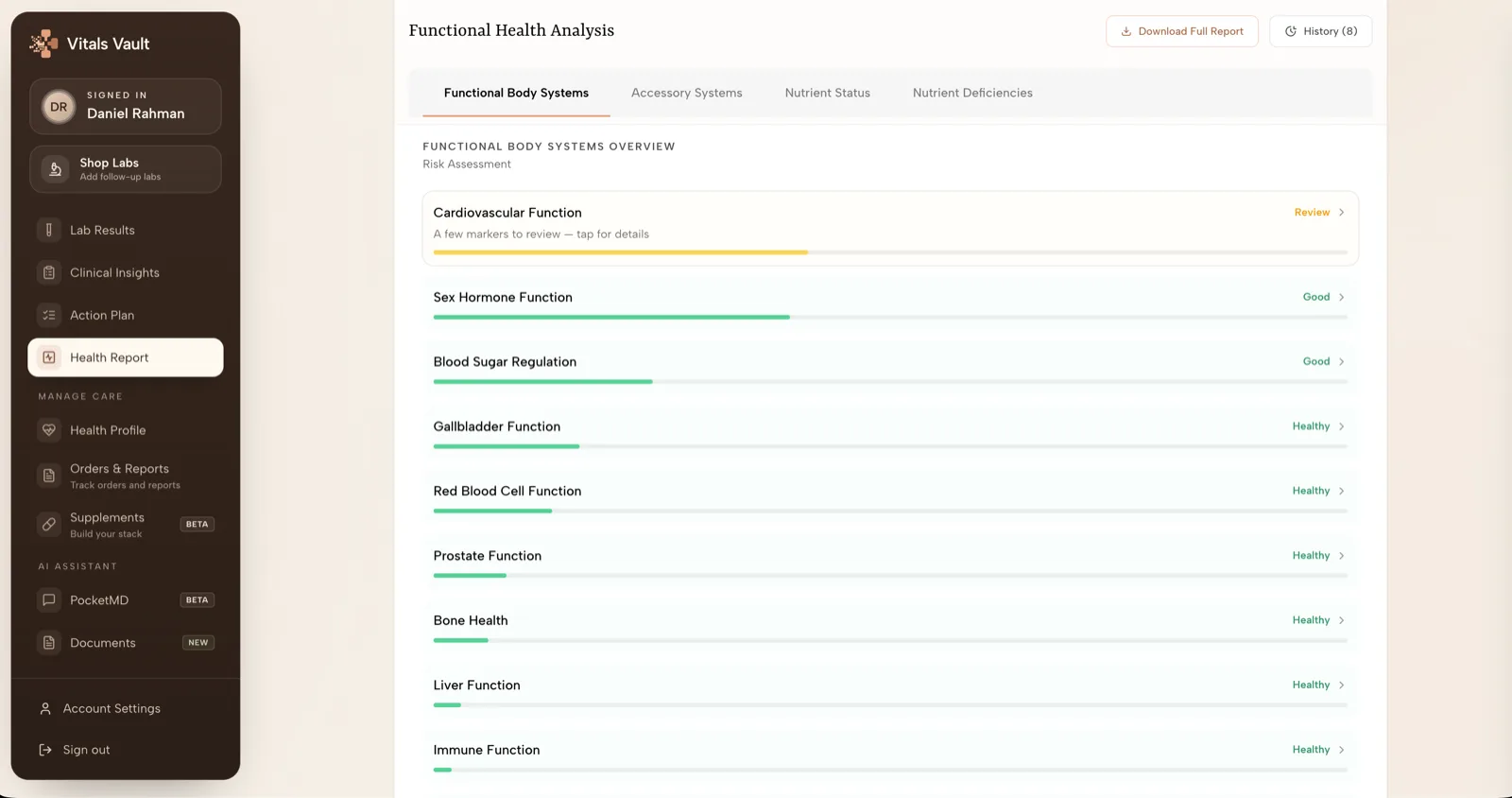
Explore your body systems with clear risk context — refresh your report, download the full PDF, and monitor hormones, heart, bone, and more in one place.
Explore hundreds of tests and panels, filter by concern, and manage your cart—member-exclusive pricing with quick checks and full-body options in one flow.
Wide test selection
300+ tests & panels available
Smart filtering
Find tests by symptoms or goals
Seamless ordering
Add to cart and manage easily
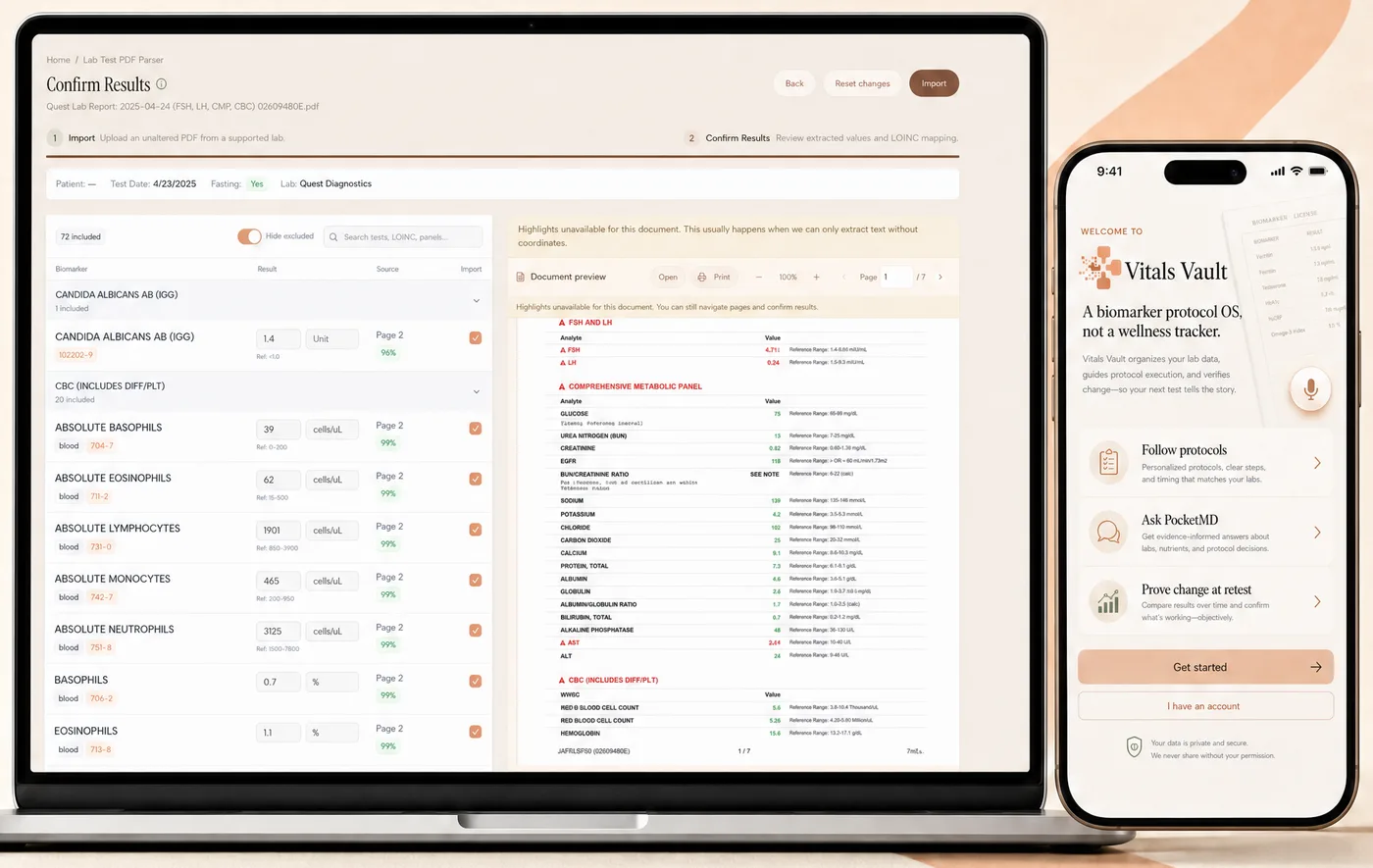
Upload past lab reports, search your documents, and keep appointments and results organized—our AI can extract biomarkers from PDFs so everything lives in one dashboard.
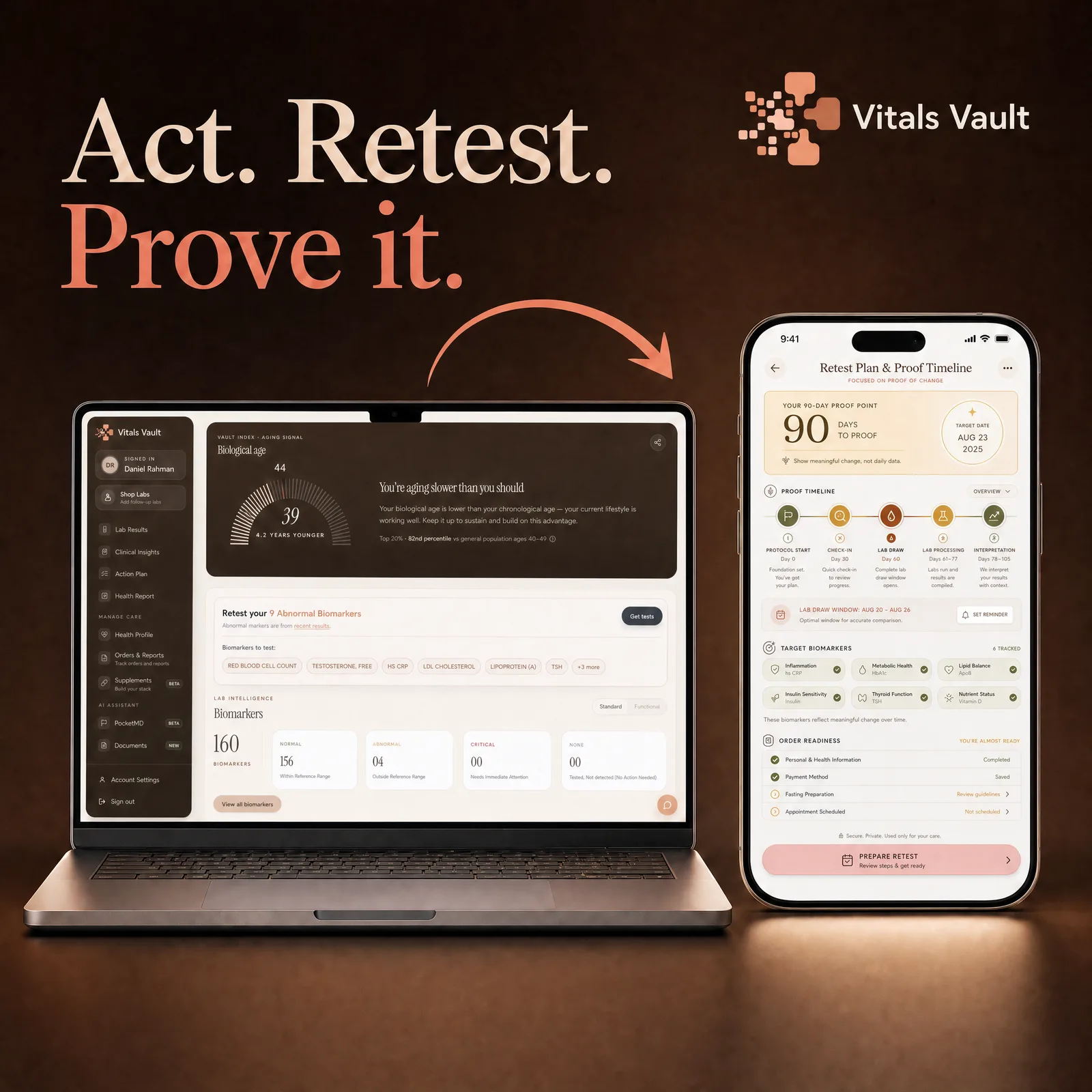
Browse longevity, nutrition, supplement, and movement protocols—structured plans you can follow with clear habits, labs, and targets tied to your profile.
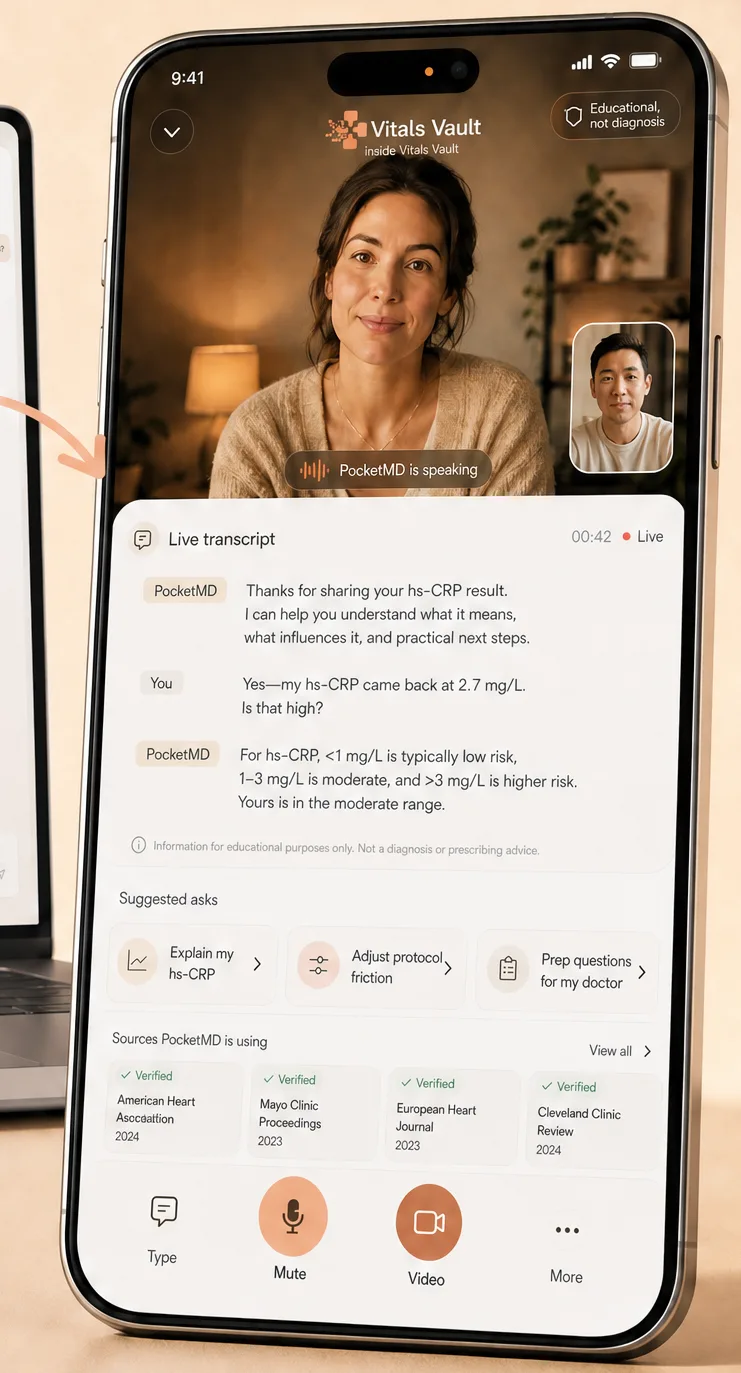
Ask for protocols, nutrition plans, supplement stacks, and education—context-aware suggestions powered by your labs and goals (beta experience).
Order online
Add PTH, Intact (Without Calcium) to your cart and check out. No doctor referral is required.
Visit a Quest lab
Provide your blood sample at a Quest Diagnostics location. Appointments can be scheduled after checkout.
Review in Vitals Vault
Results in about 4 days. They stay in your Vitals Vault account for trends and follow-up.
No special preparation is usually needed unless noted at checkout.
This order includes the lab markers used for PTH, Intact (Without Calcium) and reported in your Vitals Vault account.
Results
Results in about 4 days
HSA/FSA
Accepted
Who takes it
Must be taken by the purchaser
Preparation
No special preparation needed unless noted at checkout.
It measures intact parathyroid hormone to assess parathyroid-driven calcium balance; order through Vitals Vault with Quest labs and PocketMD support.





An intact parathyroid hormone (PTH) test tells you how strongly your parathyroid glands are signaling your body to keep blood calcium stable. PTH is one of the main “control knobs” for calcium and phosphorus balance, and it also affects bone turnover and kidney handling of minerals.
This version is ordered without a same-draw calcium result. That can still be useful, but it also means your number is easier to misread if you do not look at it alongside calcium, vitamin D, kidney function, and sometimes magnesium.
If your result is flagged high or low, the next step is usually not to jump to a diagnosis. It is to confirm the pattern with companion labs and your symptoms, then decide whether you need a repeat test, imaging, or treatment changes with your clinician.
You might consider an intact PTH test if you are working through a calcium or vitamin D question, a bone health concern, or a kidney-related mineral imbalance. PTH often rises when your body senses that calcium is “effectively low,” even if you feel fine, and it can also be suppressed when calcium is high or when the parathyroid glands are underactive.
This test is commonly used when you have (or previously had) abnormal calcium on routine labs, recurrent kidney stones, osteoporosis or low bone density, unexplained bone or muscle aches, or chronic kidney disease where PTH trends help guide care. It can also be used to monitor after parathyroid surgery or while adjusting vitamin D or calcium therapy.
Because this order does not include calcium, it is best when you already have a recent calcium result or you are intentionally checking PTH as part of a broader plan. Testing supports clinician-directed care and helps you and your clinician decide what to check next; it cannot diagnose the cause by itself.
This is a CLIA laboratory blood test for intact PTH; results should be interpreted with your clinical history and related labs rather than used as a standalone diagnosis.
from $50.99 at Quest Diagnostics
Results in days
Clear next steps
HSA / FSA
Vitals Vault lets you order an intact PTH blood test directly, then complete your draw at a Quest location. You get a clear lab report and a straightforward next-steps framework so you are not left guessing what a flagged value might mean.
If your PTH result is unexpected, PocketMD can help you prepare for a clinician visit by summarizing common patterns (for example, “high PTH with normal calcium” versus “high PTH with high calcium”) and suggesting reasonable companion labs to discuss. That is especially helpful with PTH because the same number can point to very different causes depending on calcium, vitamin D status, and kidney function.
You can also use Vitals Vault to retest after a change in vitamin D, calcium intake, kidney function, or medications, so you can track whether the underlying pattern is improving over time.
Parathyroid hormone (PTH) is a hormone made by four small parathyroid glands in your neck. Its job is to keep blood calcium in a safe range by coordinating three main systems: your bones (release or store calcium), your kidneys (reabsorb calcium and excrete phosphorus), and your gut (absorb more calcium indirectly by activating vitamin D).
“Intact” PTH refers to the full-length, biologically active hormone measured in blood. Many labs use an “intact PTH” immunoassay that primarily detects the active 1–84 PTH molecule, although some assays can also detect inactive fragments. That matters most in advanced kidney disease, where fragments can accumulate and make interpretation more nuanced.
Because this test is ordered without calcium, you are measuring the signal (PTH) without simultaneously measuring the main thing it is trying to control (blood calcium). Your result is still meaningful, but it is most useful when you interpret it alongside recent calcium and related markers.
When calcium is low (or your body senses it is low), PTH usually rises. PTH increases calcium reabsorption in the kidneys, stimulates activation of vitamin D (which increases calcium absorption from food), and increases bone turnover to release calcium. PTH also lowers blood phosphorus by increasing phosphorus excretion through the kidneys.
A high PTH can be appropriate (a normal response to low vitamin D, low calcium intake, malabsorption, or kidney disease) or inappropriate (parathyroid overactivity). Without a same-draw calcium value, you rely on recent calcium results and other labs to decide which pattern fits. If you do not have a recent calcium, your clinician may recommend repeating PTH together with calcium and related tests.
Low PTH usually means your parathyroid glands are not producing much hormone, or they are being “turned down” because calcium is high. Common contexts include hypoparathyroidism (sometimes after neck surgery), severe magnesium deficiency, or suppression from high calcium due to another cause. If your PTH is low, it is important to check calcium (and often magnesium, phosphorus, and vitamin D) because symptoms and urgency depend more on the calcium level than on PTH alone.
A PTH result in range often suggests your parathyroid signaling is appropriate for your current physiology. However, “normal” is not always the same as “optimal for you,” because PTH can be in range even when vitamin D is low, calcium intake is low, or kidney function is reduced. If you are evaluating bone density, kidney stones, or prior calcium abnormalities, your clinician may still interpret an in-range PTH in the context of calcium, 25-hydroxy vitamin D, phosphorus, and kidney function.
High PTH means your body is sending a stronger signal to raise or stabilize calcium. The most common reasons are secondary hyperparathyroidism, where PTH rises appropriately due to vitamin D deficiency, low calcium intake or absorption, or chronic kidney disease. High PTH can also reflect primary hyperparathyroidism (parathyroid overactivity), which is more likely when calcium is high or high-normal on repeated testing. Because this order does not include calcium, a high PTH result is usually a prompt to confirm the pattern with calcium (total and sometimes ionized), vitamin D status, kidney function, and urinary calcium when appropriate.
PTH varies with calcium intake, vitamin D status, kidney function, and magnesium levels, and it can shift with dehydration or acute illness. Certain medications can affect calcium and PTH patterns, including lithium, thiazide diuretics, loop diuretics, and some osteoporosis therapies. Time of day and lab-to-lab assay differences can also cause small shifts, so trending results using the same lab is helpful. If you have chronic kidney disease, interpretation may require additional markers (phosphorus, alkaline phosphatase, and vitamin D metabolites) because PTH fragments can accumulate.
An intact PTH test measures the main biologically active form of parathyroid hormone in your blood. It helps assess how strongly your parathyroid glands are signaling to regulate calcium and phosphorus balance.
Fasting is not always required for PTH, but your ordering instructions may vary depending on what other labs you are doing at the same time. If you are pairing PTH with calcium, phosphorus, or other metabolic tests, ask your clinician or follow the collection instructions provided with your order.
High PTH with normal calcium is often due to secondary hyperparathyroidism, commonly from low vitamin D, low calcium intake or absorption, or reduced kidney function. Less commonly, it can represent an early or “normocalcemic” form of primary hyperparathyroidism, which usually requires repeat testing and a full companion lab workup to confirm.
Most clinicians interpret PTH alongside calcium (total and sometimes ionized), albumin (to correct total calcium), 25-hydroxy vitamin D, creatinine/eGFR for kidney function, and phosphorus. Depending on your situation, magnesium, alkaline phosphatase, and a 24-hour urine calcium test may also be helpful.
PTH can take weeks to months to fully reflect changes in vitamin D status or calcium balance. Many clinicians recheck in about 8–12 weeks, but timing depends on how abnormal your results are and whether calcium is also abnormal.
Yes. As kidney function declines, phosphorus handling and vitamin D activation change, which can drive PTH higher. In more advanced kidney disease, PTH fragments can accumulate and some assays may read higher, so interpretation often includes phosphorus and other bone-mineral markers.
Symptoms are usually driven by the downstream calcium and mineral changes rather than PTH itself. Depending on the pattern, people may experience kidney stones, bone pain, fractures or low bone density, muscle weakness, tingling, cramps, fatigue, or mood and concentration changes, but many people have no obvious symptoms.
Purchase online through Vitals Vault. A licensed clinician reviews and approves your order, then you receive a digital requisition for a Quest Diagnostics blood draw.
Samples are collected in person at Quest Diagnostics locations nationwide. After checkout you can schedule your visit at a convenient site.
Most results in 3–5 business days. You can view them securely in your Vitals Vault account.
No separate referral appointment is required. Clinician review is included in the online order flow.
Yes. Eligible HSA/FSA cards can be used at checkout for qualifying lab orders.
Results are available in your secure Vitals Vault account. You control who you share them with, subject to applicable law.
Blood glucose shows the amount of sugar in your blood at a single moment. A1c (hemoglobin A1c) estimates your average blood sugar over roughly the past 8–12 weeks. Comparing them helps explain whether your long-term average lines up with your fasting glucose on draw day.
It helps you understand how this marker fits into your broader metabolic picture, with results tracked in your Vitals Vault account.
Elevated values can signal higher metabolic risk. Many people start with nutrition, activity, sleep, and weight management, then retest and review results with a clinician. This test is educational and does not replace medical advice or diagnosis.
Your sample is processed at CLIA-certified Quest Diagnostics laboratories. Results should still be interpreted with a qualified clinician alongside your history, symptoms, and other labs.
Consumer-initiated testing through Vitals Vault is limited to adults 18+ so ordering and interpretation stay aligned with clinical best practices for this channel.