01
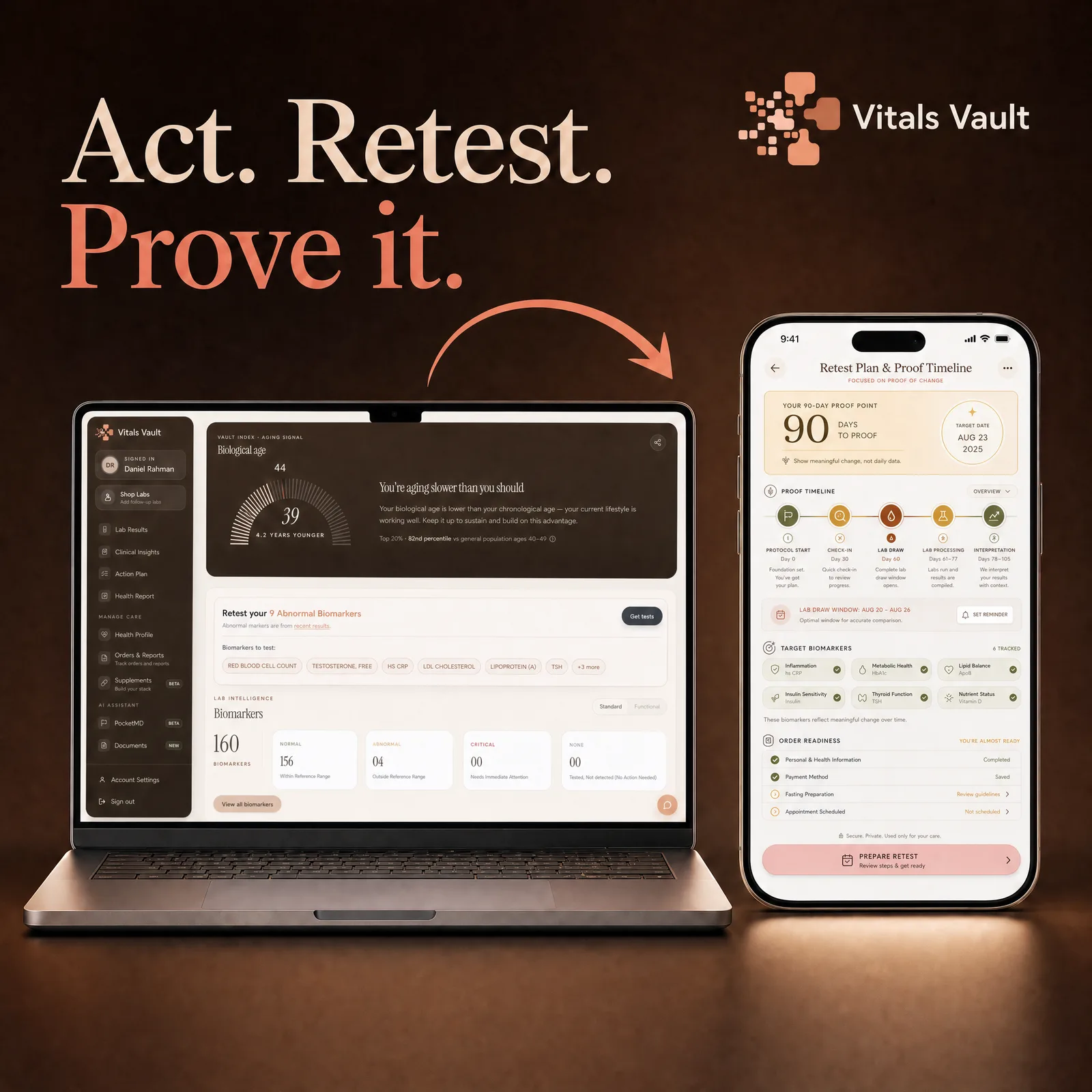
Biological age
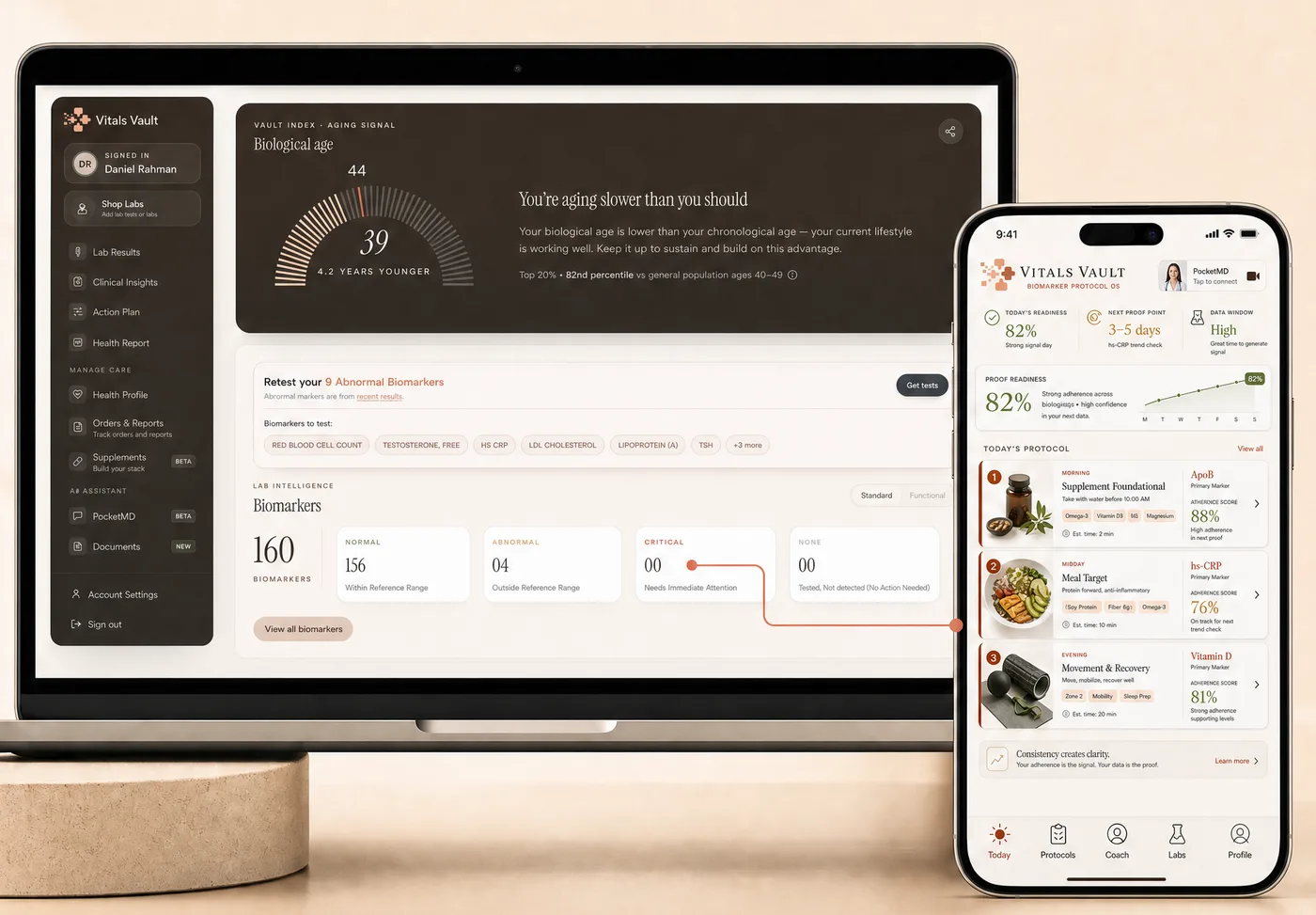
Find out if your body is aging faster or slower than your actual age — and see how you rank against the general population.
39
Biological age
44
Actual age
4.2
Years younger
Post-COVID Mini Panel
Results in about 3 days
Post Covid 19 Mini Panel Long Covid Blood Test Panel. This blood test panel checks inflammation, clotting risk signals, anemia/iron, thyroid, and metabolic markers to help explain post-COVID symptoms.
This is a lab panel, not a single test. It bundles a focused set of blood markers that often help you and your clinician sort through common post-COVID patterns—like inflammation signals, anemia or iron issues, thyroid shifts, metabolic strain, and clotting-related red flags—especially when you feel unwell but “routine labs” look normal. A mini panel cannot prove or disprove Long COVID on its own. What it can do is give you objective data to prioritize next steps, decide whether you need deeper testing, and track whether your body is trending toward recovery over time.
What to expect before and at your draw.
Sample Type
Blood
Collection Method
In person at a Quest Diagnostics location
Age
18+
This order includes the lab markers used for Post-COVID Mini Panel.
Amorphous Sediment
Included in this Quest Diagnostics order and reported in your Vitals Vault account.
Appearance
Included in this Quest Diagnostics order and reported in your Vitals Vault account.
Bacteria
Included in this Quest Diagnostics order and reported in your Vitals Vault account.
Bilirubin
Included in this Quest Diagnostics order and reported in your Vitals Vault account.
Order Post-COVID Mini Panel online.
Visit a Quest Diagnostics location near you for your blood draw. Appointments can be scheduled after checkout.
View easy-to-read results in your Vitals Vault account, with trends and a personalized action plan.
Included with every package
Function Health shows you numbers. Vitals Vault connects them — ratios, patterns, and a personalized action plan grounded in functional medicine.
Find out if your body is aging faster or slower than your actual age — and see how you rank against the general population.
39
Biological age
44
Actual age
4.2
Years younger
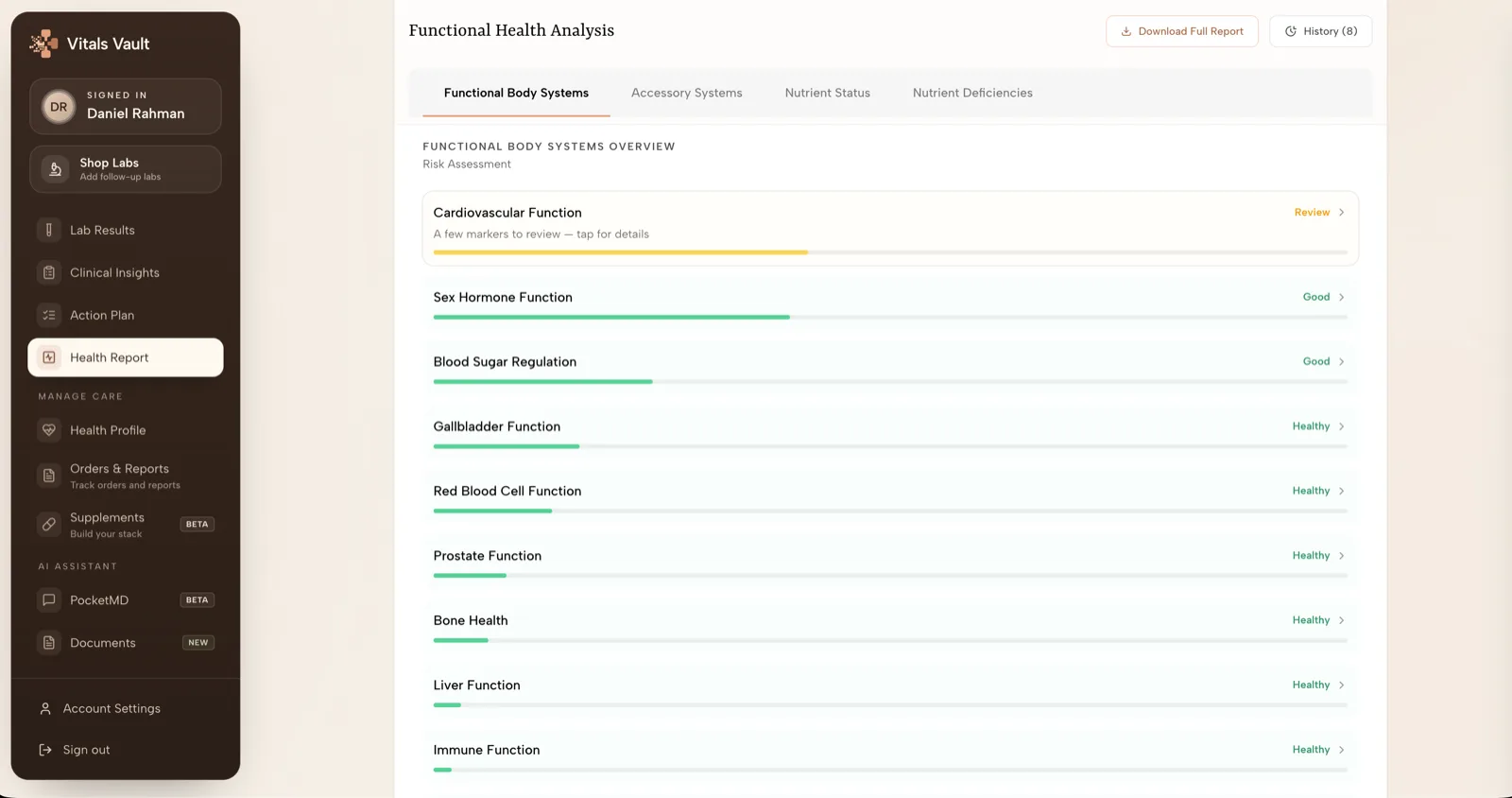
Turn lab data into what to do next—clear guidance on follow-ups, lifestyle context, and add-on testing when you need to go deeper. Make the healthy choice the obvious one.
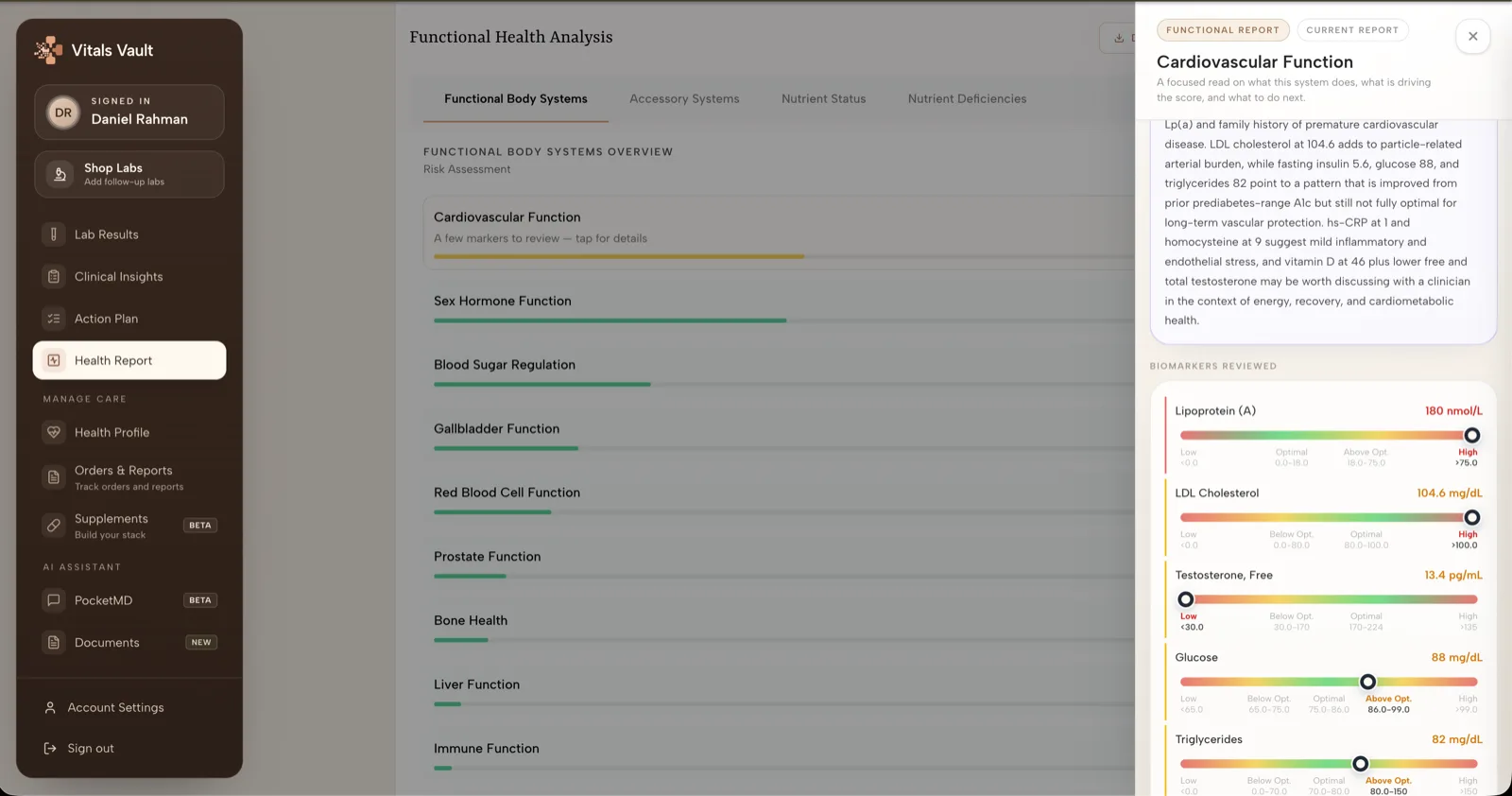
A personalized, plain-language walkthrough of your abnormal markers—reference ranges, pattern context, and what to watch next, grounded in your actual labs.
Personalized Insights
Clear Explanations
Actionable guidance
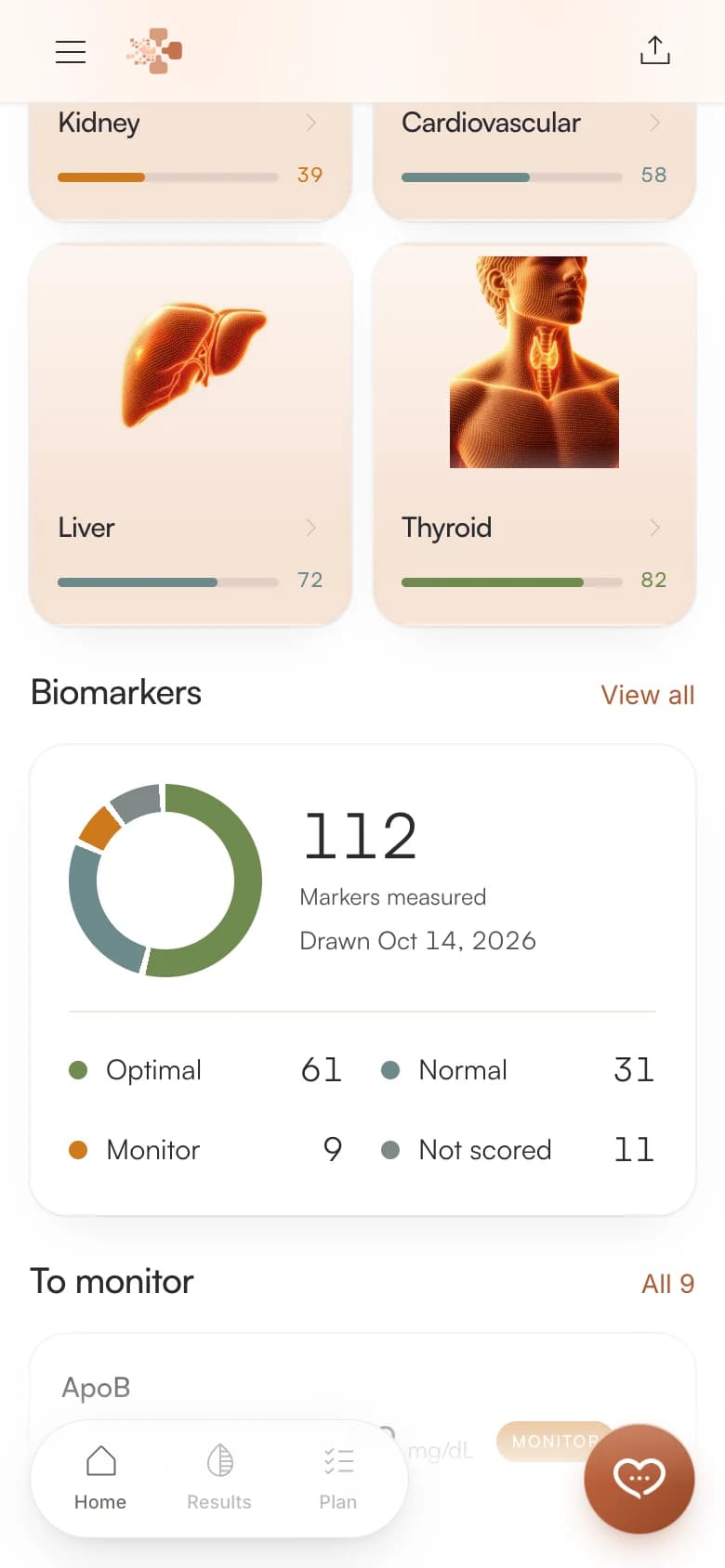
Explore your body systems with clear risk context — refresh your report, download the full PDF, and monitor hormones, heart, bone, and more in one place.
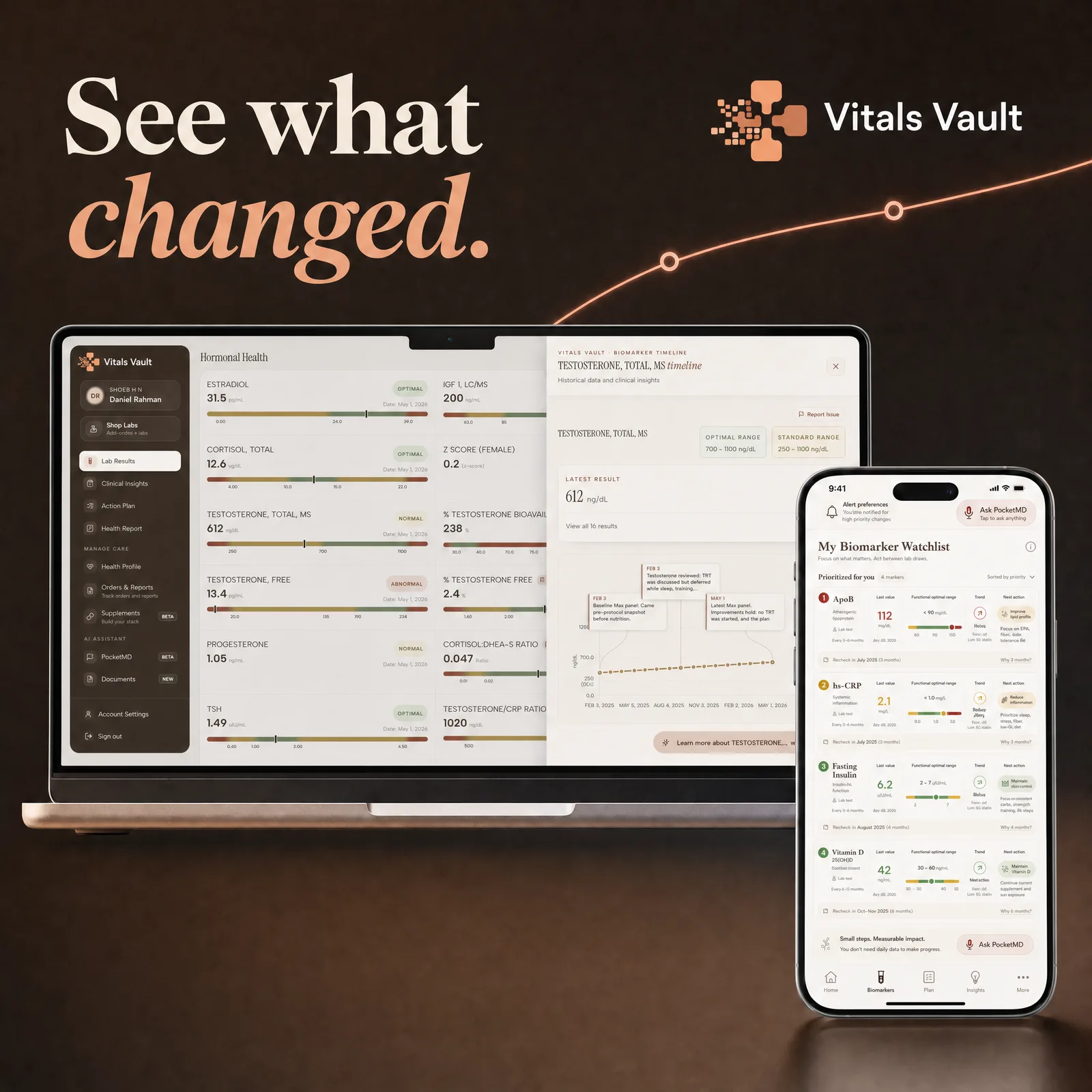
Explore hundreds of tests and panels, filter by concern, and manage your cart—member-exclusive pricing with quick checks and full-body options in one flow.
Wide test selection
300+ tests & panels available
Smart filtering
Find tests by symptoms or goals
Seamless ordering
Add to cart and manage easily
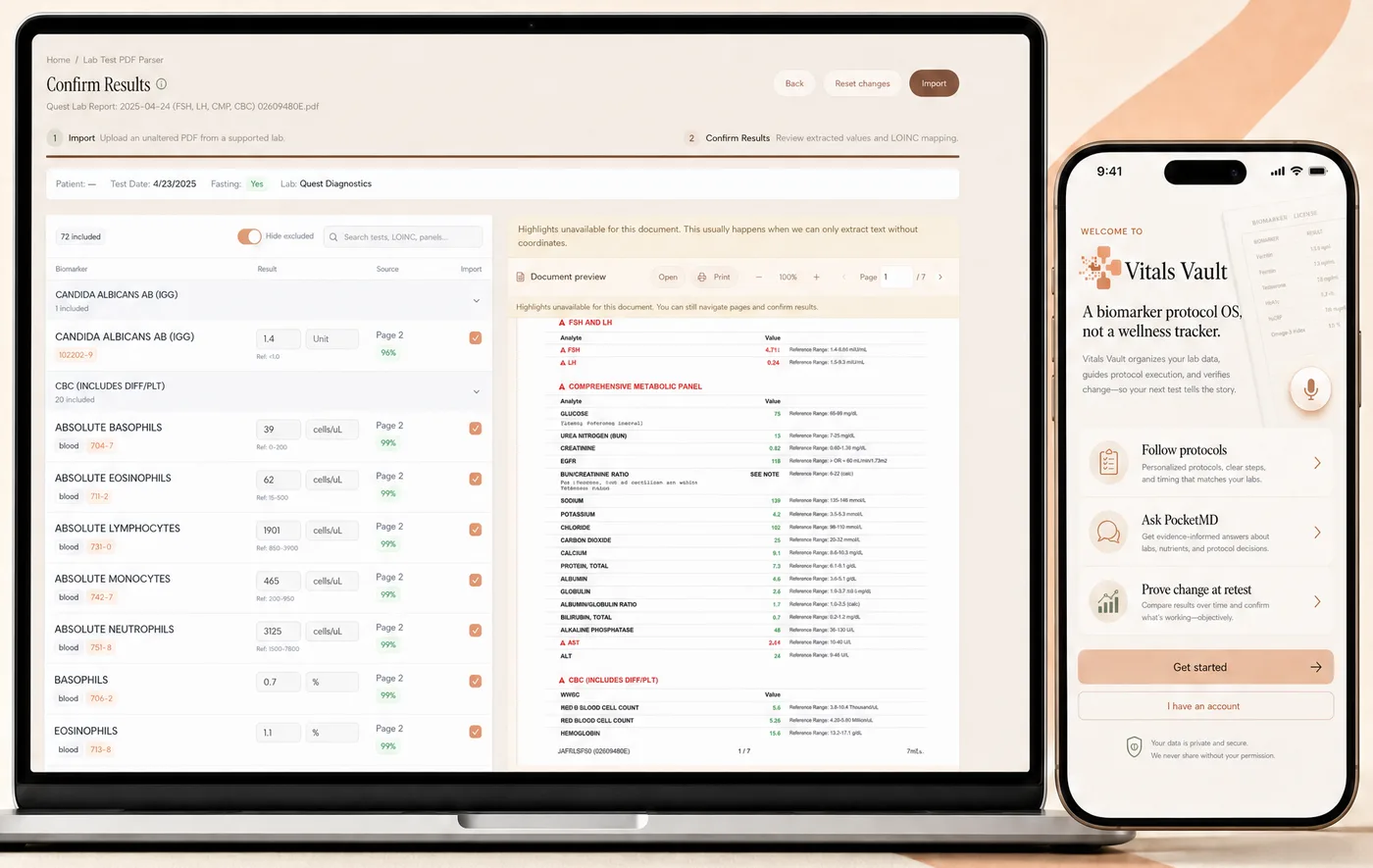
Upload past lab reports, search your documents, and keep appointments and results organized—our AI can extract biomarkers from PDFs so everything lives in one dashboard.
Browse longevity, nutrition, supplement, and movement protocols—structured plans you can follow with clear habits, labs, and targets tied to your profile.
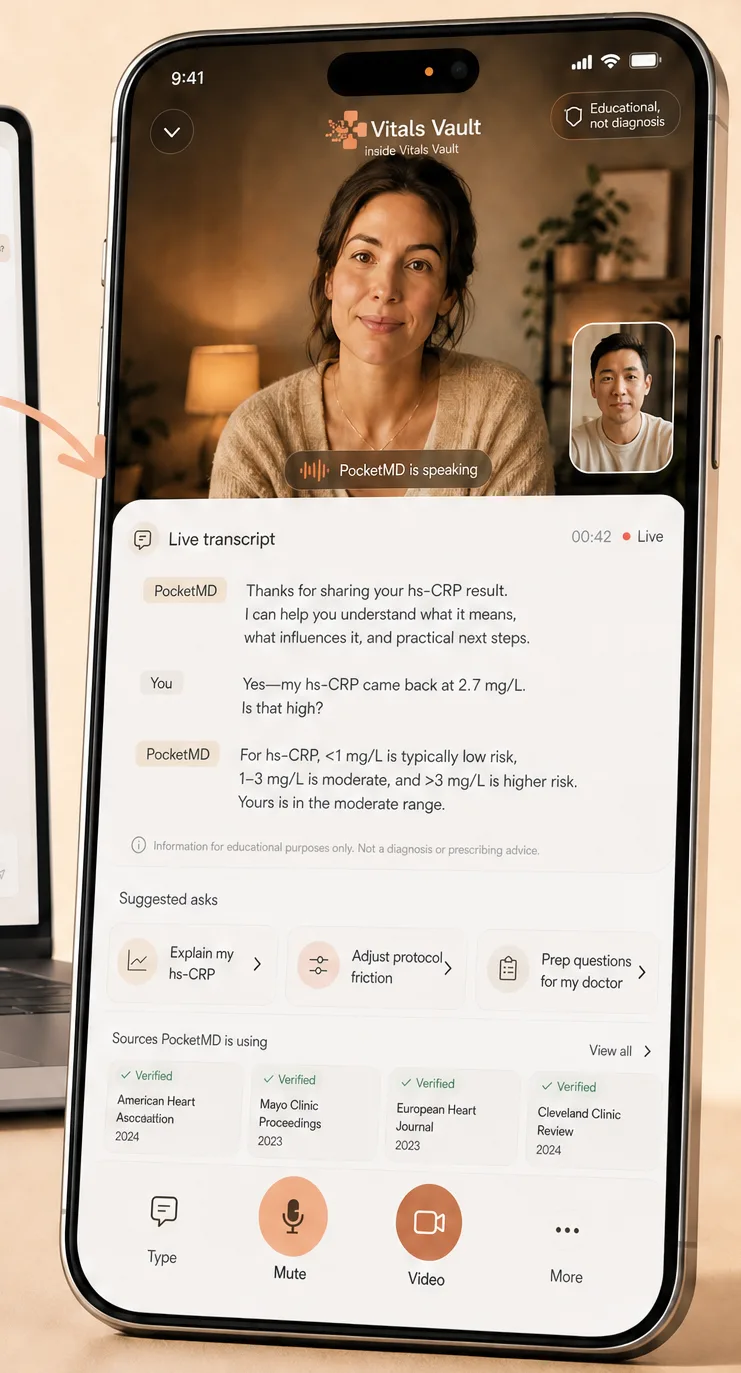
Ask for protocols, nutrition plans, supplement stacks, and education—context-aware suggestions powered by your labs and goals (beta experience).
Order online
Add Post-COVID Mini Panel to your cart and check out. No doctor referral is required.
Visit a Quest lab
Provide your blood sample at a Quest Diagnostics location. Appointments can be scheduled after checkout.
Review in Vitals Vault
Results in about 3 days. They stay in your Vitals Vault account for trends and follow-up.
No special preparation is usually needed unless noted at checkout.
This order includes the lab markers used for Post-COVID Mini Panel and reported in your Vitals Vault account.
Results
Results in about 3 days
HSA/FSA
Accepted
Who takes it
Must be taken by the purchaser
Preparation
No special preparation needed unless noted at checkout.
C-Reactive Protein
Included in this Quest Diagnostics order and reported in your Vitals Vault account.
Calcium Oxalate Crystals
Included in this Quest Diagnostics order and reported in your Vitals Vault account.
Casts
Included in this Quest Diagnostics order and reported in your Vitals Vault account.
Color
Included in this Quest Diagnostics order and reported in your Vitals Vault account.
Crystals
Included in this Quest Diagnostics order and reported in your Vitals Vault account.
Glucose
Included in this Quest Diagnostics order and reported in your Vitals Vault account.
Granular Cast
Included in this Quest Diagnostics order and reported in your Vitals Vault account.
Hyaline Cast
Included in this Quest Diagnostics order and reported in your Vitals Vault account.
This blood test panel checks inflammation, clotting risk signals, anemia/iron, thyroid, and metabolic markers to help explain post-COVID symptoms.





This is a lab panel, not a single test. It bundles a focused set of blood markers that often help you and your clinician sort through common post-COVID patterns—like inflammation signals, anemia or iron issues, thyroid shifts, metabolic strain, and clotting-related red flags—especially when you feel unwell but “routine labs” look normal.
A mini panel cannot prove or disprove Long COVID on its own. What it can do is give you objective data to prioritize next steps, decide whether you need deeper testing, and track whether your body is trending toward recovery over time.
You might consider the Post Covid 19 Mini Panel Long Covid if you are weeks to months after an infection and you still have fatigue, brain fog, shortness of breath with exertion, chest tightness, palpitations, headaches, dizziness when standing, or exercise intolerance that does not match your pre-illness baseline.
This panel is also useful if you were told your basic labs were “fine,” but you still feel off. Post-viral symptoms can overlap with common, treatable issues—like iron deficiency, thyroid dysfunction, anemia, dehydration or electrolyte imbalance, blood sugar instability, or ongoing inflammation—that may not be obvious without a more intentional set of markers.
You may want this panel sooner rather than later if you have new or worsening shortness of breath, chest pain, one-sided leg swelling, fainting, or severe persistent symptoms. Those can require urgent evaluation beyond lab testing.
Your results should support clinician-directed care and shared decision-making. Use this panel to organize possibilities and next steps, not to self-diagnose Long COVID.
This panel combines multiple standard blood tests; reference ranges and flags can vary by lab, and interpretation depends on your symptoms, timing after infection, medications, and medical history.
from $82.49 at Quest Diagnostics
Results in days
Clear next steps
HSA / FSA
Vitals Vault makes it simple to order a focused post-COVID lab panel and get a clearer picture of what your body is doing right now. You can use your results to prepare for a clinician visit, decide whether you need a more expanded panel, or track trends as you recover.
After your blood draw, you can review each marker and also look at the pattern across the panel—because with post-viral symptoms, the story is often in the combination (for example: inflammation plus low iron stores, or a normal CBC with an elevated D-dimer that needs context).
If you want help turning a multi-marker report into an action plan, PocketMD can help you summarize your results, list questions to ask, and identify which follow-up tests are most relevant for your symptom cluster (fatigue-dominant, coagulation-dominant, inflammatory, or cardiopulmonary).
The Post Covid 19 Mini Panel Long Covid panel is a bundled set of blood tests chosen to capture several biologic “lanes” that commonly relate to persistent post-viral symptoms. Instead of focusing on one biomarker, it looks at a small network of markers that can point toward inflammation, clotting activation signals, oxygen-carrying capacity, thyroid regulation, and basic metabolic status.
Long COVID symptoms can come from multiple overlapping mechanisms—autonomic dysfunction (like POTS), deconditioning, sleep disruption, inflammation, microvascular changes, medication effects, and unmasked conditions such as thyroid disease or iron deficiency. A mini panel is not a definitive diagnostic tool for those mechanisms, but it can reveal treatable contributors and help you decide whether you need deeper evaluation (for example: cardiopulmonary testing, autonomic testing, imaging, or specialty labs).
Because symptoms often fluctuate, this panel is especially useful as a baseline. If you retest later, you can compare trends (improving inflammation markers, stabilizing thyroid signals, recovering iron stores) alongside how you feel and how much activity you can tolerate.
If your main concern is clotting-related symptoms or a previously elevated D-dimer, a dedicated coagulation-focused panel may be a better next step. If your symptoms are primarily fatigue and brain fog with normal basics, a more expanded fatigue panel can add nutrient, endocrine, and inflammatory depth.
A “low” pattern in this panel often shows up as low hemoglobin/hematocrit or low red blood cell indices (suggesting anemia), and/or low ferritin (low iron stores), sometimes with a normal hemoglobin early on. This pattern can fit fatigue, shortness of breath on exertion, headaches, restless legs, and reduced exercise tolerance—especially if your ferritin is low even when the CBC looks borderline normal. Low thyroid signals (for example, low TSH with low free thyroid hormone, depending on what’s included) can also contribute to fatigue and temperature sensitivity, but thyroid interpretation depends heavily on medications, timing, and illness effects. If multiple “low” findings cluster, it usually points toward reduced physiologic reserve—meaning you may feel worse with activity, poor sleep, or dehydration.
If most markers in the panel are in-range and consistent with your prior baseline, that is still useful information: it makes certain common contributors less likely (significant anemia, major thyroid dysfunction, obvious metabolic derangements, or strong systemic inflammation signals). Many people with post-viral symptoms have normal standard labs, especially if the main driver is autonomic dysfunction, post-exertional symptom exacerbation, sleep disruption, vestibular issues, or cardiopulmonary limitations that require functional testing rather than blood markers. In this situation, your next step is often symptom-guided: pacing strategies, hydration and electrolyte planning, sleep support, and targeted follow-up testing (for example, inflammation depth, coagulation depth, or heart health testing) based on what you feel—not just what is “flagged.”
A “high” pattern can mean different things depending on which lane is elevated. Higher inflammatory markers (such as CRP or ESR, if included) can support an inflammatory or infectious process, but they are nonspecific and can rise with many conditions. An elevated D-dimer deserves careful context: it can rise after infection, with inflammation, with recent surgery or trauma, and with pregnancy, but it can also be a red flag when paired with symptoms like new chest pain, shortness of breath, or leg swelling—situations where urgent evaluation may be appropriate. High glucose-related or liver/kidney markers (if included) can suggest metabolic stress, medication effects (like steroids), dehydration, or an unmasked chronic condition. The most helpful interpretation is the pattern: for example, inflammation plus high D-dimer is different from isolated mild D-dimer elevation with otherwise stable markers.
Timing matters: markers can look different at 2–6 weeks post-infection versus 6–12 months later, and a recent flare after overexertion can temporarily shift inflammation signals. Hydration status can concentrate or dilute some values (especially parts of a metabolic panel), and recent intense activity can affect muscle-related markers. Medications and supplements also matter: iron supplements can change iron studies, thyroid medication changes TSH and thyroid hormone levels, anti-inflammatories can blunt CRP, and anticoagulants do not necessarily normalize D-dimer. Menstrual bleeding, pregnancy/postpartum status, and underlying conditions (autoimmune disease, kidney disease, liver disease) can all shift baselines. If you have a single abnormal marker, it is often less informative than repeated patterns over time combined with your symptoms and vitals (heart rate, blood pressure, oxygen saturation).
No. Long COVID is a clinical diagnosis based on your symptoms, timing, and evaluation for other causes. This lab panel can support the workup by identifying treatable contributors (like iron deficiency or thyroid issues) and by flagging patterns that may justify deeper testing.
Fasting is not always required for the markers commonly used in a post-COVID mini panel. If your version includes glucose or other metabolic markers, your clinician may prefer an 8–12 hour fast for the cleanest comparison. If you are unsure, follow the collection instructions provided with your order.
D-dimer is a breakdown product of blood clots, but it is also a nonspecific marker that can rise with inflammation and recent infection. A mildly elevated D-dimer without concerning symptoms may simply prompt follow-up and context. If you have new chest pain, shortness of breath, fainting, or leg swelling—especially with an elevated D-dimer—seek urgent medical evaluation.
Many “routine labs” do not include inflammation markers, D-dimer, or iron storage markers like ferritin. This panel is designed to look for patterns that are easy to miss when only a basic CBC or metabolic panel is checked, and it gives you a baseline you can trend if symptoms fluctuate.
Start by grouping results into lanes: inflammation (CRP/ESR), clotting signal (D-dimer), oxygen-carrying capacity and immune cells (CBC), iron stores (ferritin/iron/TIBC), thyroid (TSH/Free T4), and metabolic status (CMP). A single outlier can be noise; a cluster within a lane (for example, low ferritin plus anemia) is usually more actionable. PocketMD can help you summarize the pattern and draft follow-up questions.
Retesting depends on what is abnormal and what you change. If you start iron therapy, thyroid treatment adjustments, or a structured recovery plan, many clinicians recheck relevant markers in about 6–12 weeks. If D-dimer or inflammatory markers are significantly elevated, your clinician may recommend a shorter interval or immediate follow-up testing.
A panel is often simpler and more consistent because it captures multiple related markers from the same draw, which helps pattern interpretation. Individual tests can make sense if you already know what you need to monitor (for example, ferritin only after treatment) or if you are following a clinician’s targeted plan.
Purchase online through Vitals Vault. A licensed clinician reviews and approves your order, then you receive a digital requisition for a Quest Diagnostics blood draw.
Samples are collected in person at Quest Diagnostics locations nationwide. After checkout you can schedule your visit at a convenient site.
Most results in 3–5 business days. You can view them securely in your Vitals Vault account.
No separate referral appointment is required. Clinician review is included in the online order flow.
Yes. Eligible HSA/FSA cards can be used at checkout for qualifying lab orders.
Results are available in your secure Vitals Vault account. You control who you share them with, subject to applicable law.
Blood glucose shows the amount of sugar in your blood at a single moment. A1c (hemoglobin A1c) estimates your average blood sugar over roughly the past 8–12 weeks. Comparing them helps explain whether your long-term average lines up with your fasting glucose on draw day.
It helps you understand how this marker fits into your broader metabolic picture, with results tracked in your Vitals Vault account.
Elevated values can signal higher metabolic risk. Many people start with nutrition, activity, sleep, and weight management, then retest and review results with a clinician. This test is educational and does not replace medical advice or diagnosis.
Your sample is processed at CLIA-certified Quest Diagnostics laboratories. Results should still be interpreted with a qualified clinician alongside your history, symptoms, and other labs.
Consumer-initiated testing through Vitals Vault is limited to adults 18+ so ordering and interpretation stay aligned with clinical best practices for this channel.