01
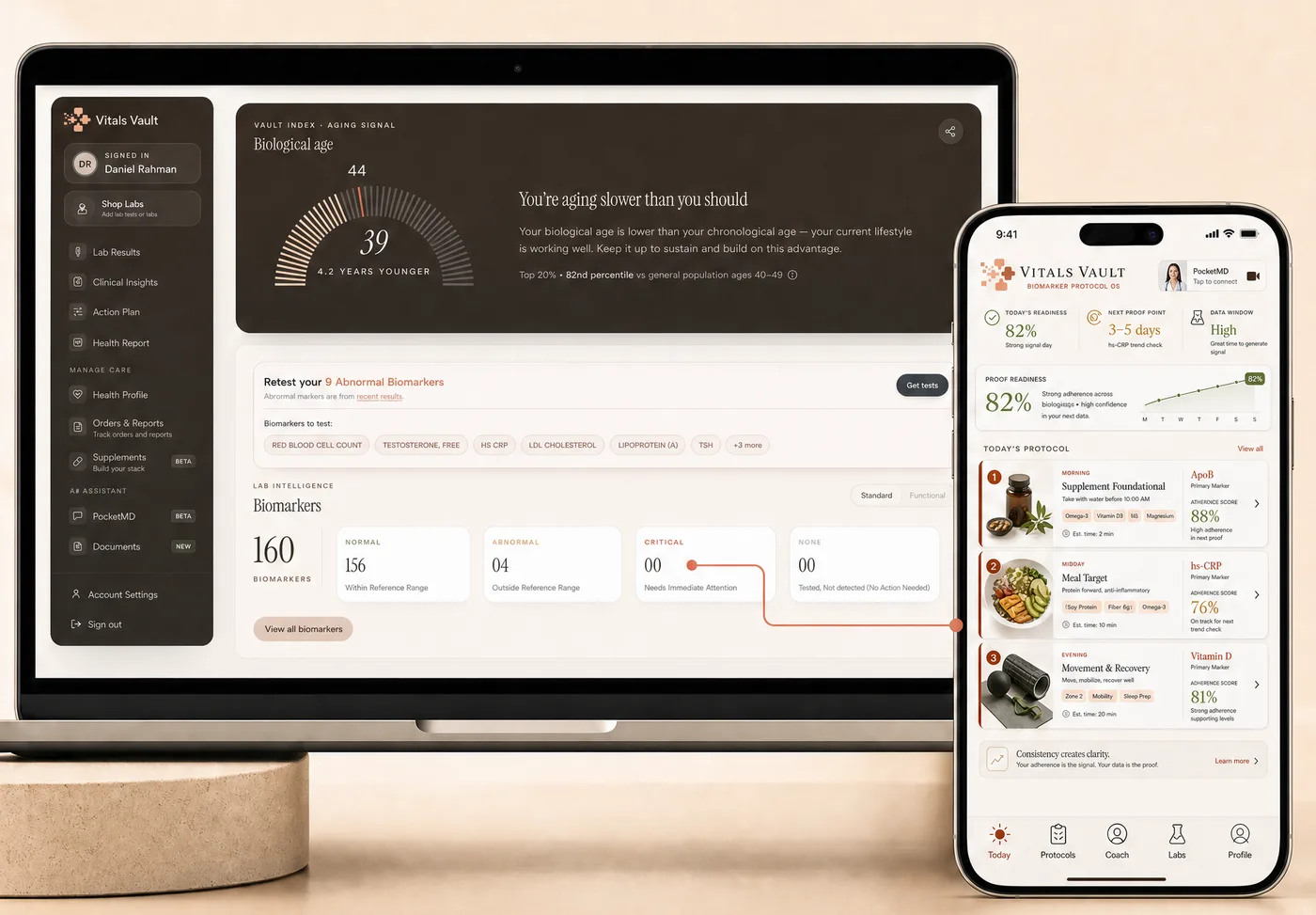
Biological age
Find out if your body is aging faster or slower than your actual age — and see how you rank against the general population.
39
Biological age
44
Actual age
4.2
Years younger
Nutrients Lab Panel
Results in about 10 days
Nutrients Lab Panel: a multi-marker look at vitamin, mineral, and functional nutrient status. This Nutrients Lab Panel measures key vitamins, minerals, and functional markers to spot deficiency patterns and guide targeted repletion and retesting.
This is a lab panel, meaning you get multiple nutrient-related blood tests in one order. It is designed to help you see patterns—like “B12 looks normal but functional markers suggest it is not working well,” or “iron stores are low even though hemoglobin is still in range”—so you can prioritize what to address first instead of chasing single numbers.
What to expect before and at your draw.
Sample Type
Blood
Collection Method
In person at a Quest Diagnostics location
Age
18+
This order includes the lab markers used for Nutrients Lab Panel.
Arachidonic Acid
Included in this Quest Diagnostics order and reported in your Vitals Vault account.
Arachidonic Acid/Epa Ratio
Included in this Quest Diagnostics order and reported in your Vitals Vault account.
Dha
Included in this Quest Diagnostics order and reported in your Vitals Vault account.
Dpa
Included in this Quest Diagnostics order and reported in your Vitals Vault account.
Order Nutrients Lab Panel online.
Visit a Quest Diagnostics location near you for your blood draw. Appointments can be scheduled after checkout.
View easy-to-read results in your Vitals Vault account, with trends and a personalized action plan.
Included with every package
Function Health shows you numbers. Vitals Vault connects them — ratios, patterns, and a personalized action plan grounded in functional medicine.
Find out if your body is aging faster or slower than your actual age — and see how you rank against the general population.
39
Biological age
44
Actual age
4.2
Years younger
Turn lab data into what to do next—clear guidance on follow-ups, lifestyle context, and add-on testing when you need to go deeper. Make the healthy choice the obvious one.
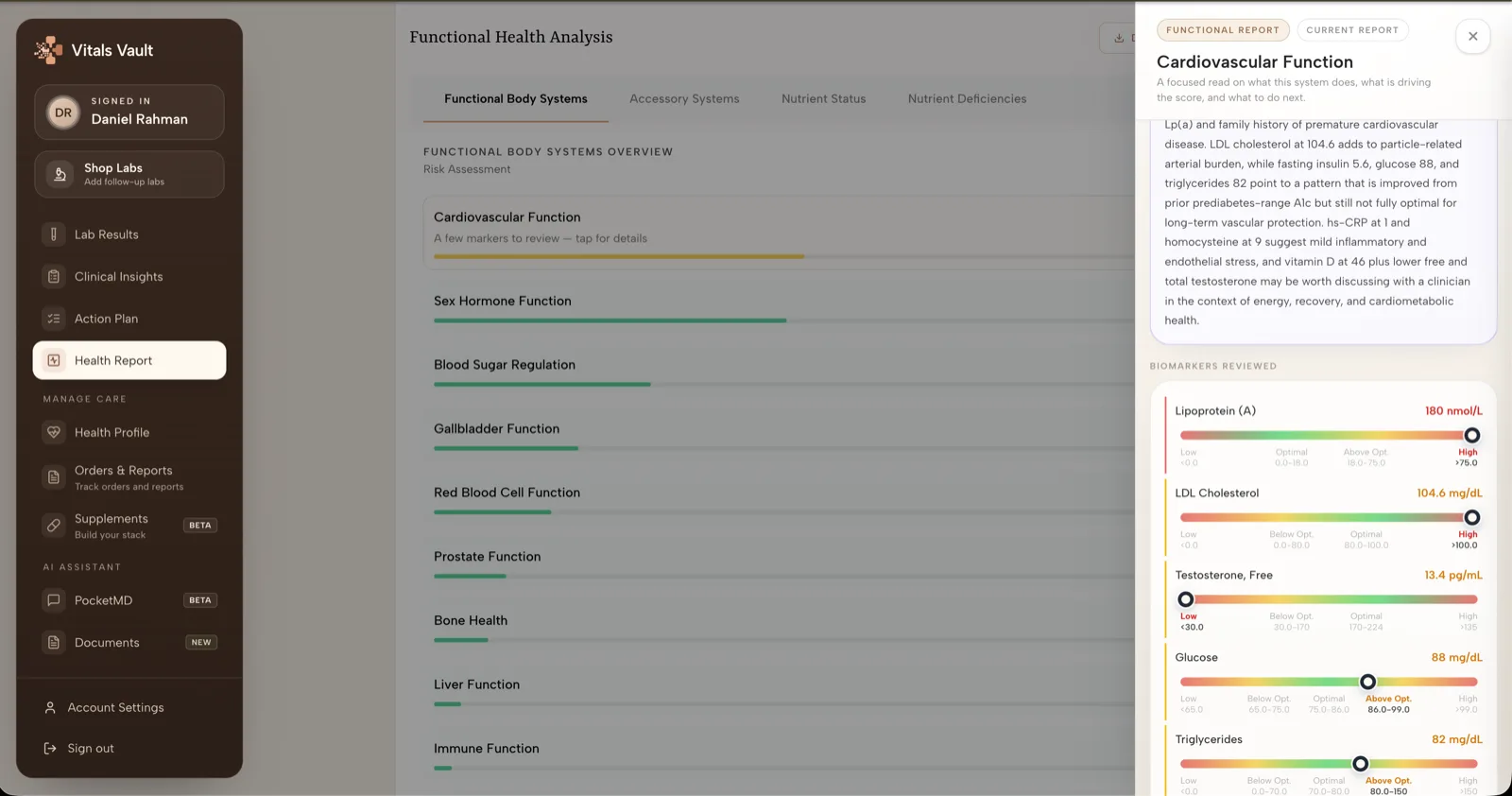
A personalized, plain-language walkthrough of your abnormal markers—reference ranges, pattern context, and what to watch next, grounded in your actual labs.
Personalized Insights
Clear Explanations
Actionable guidance
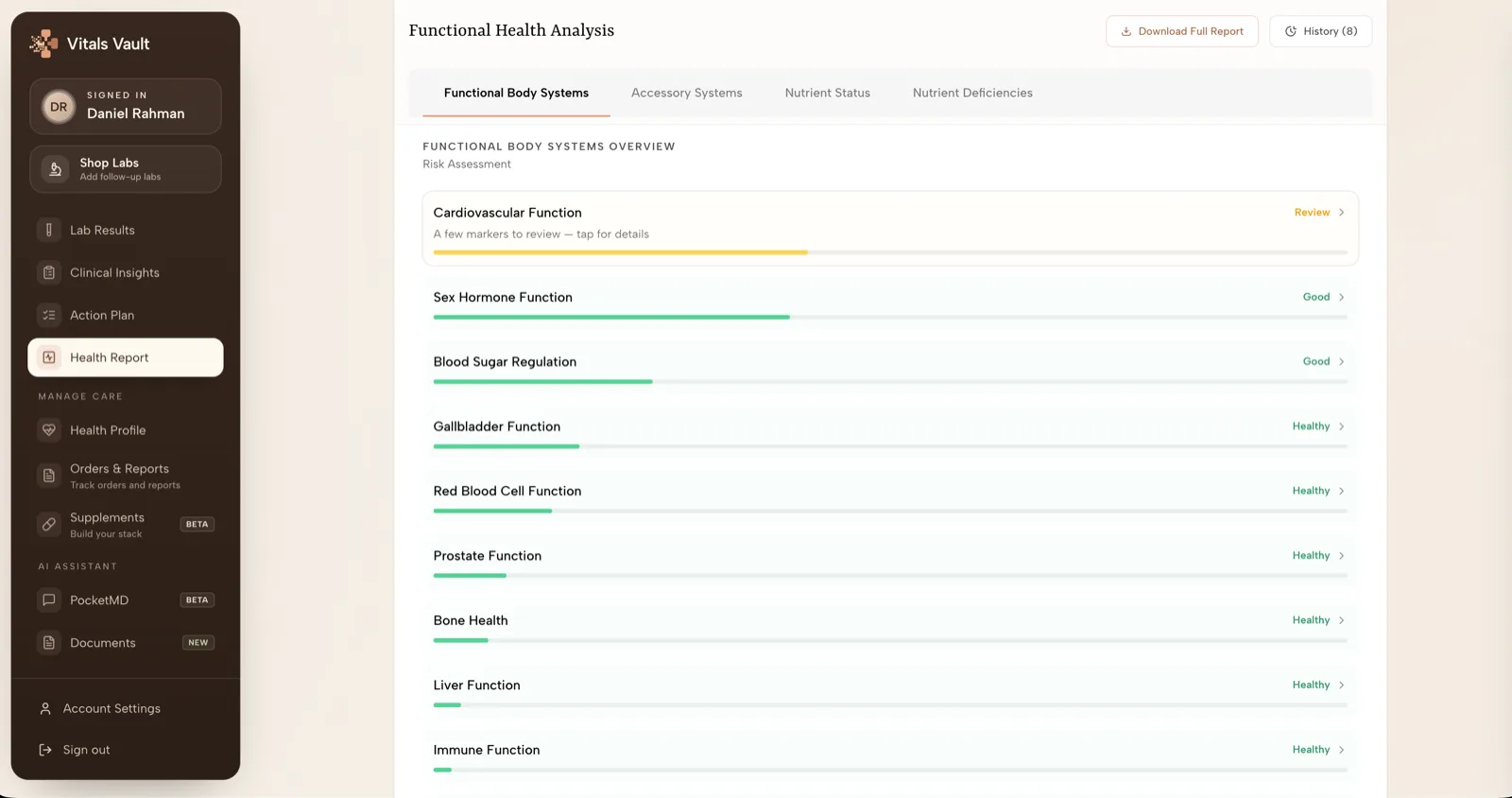
Explore your body systems with clear risk context — refresh your report, download the full PDF, and monitor hormones, heart, bone, and more in one place.
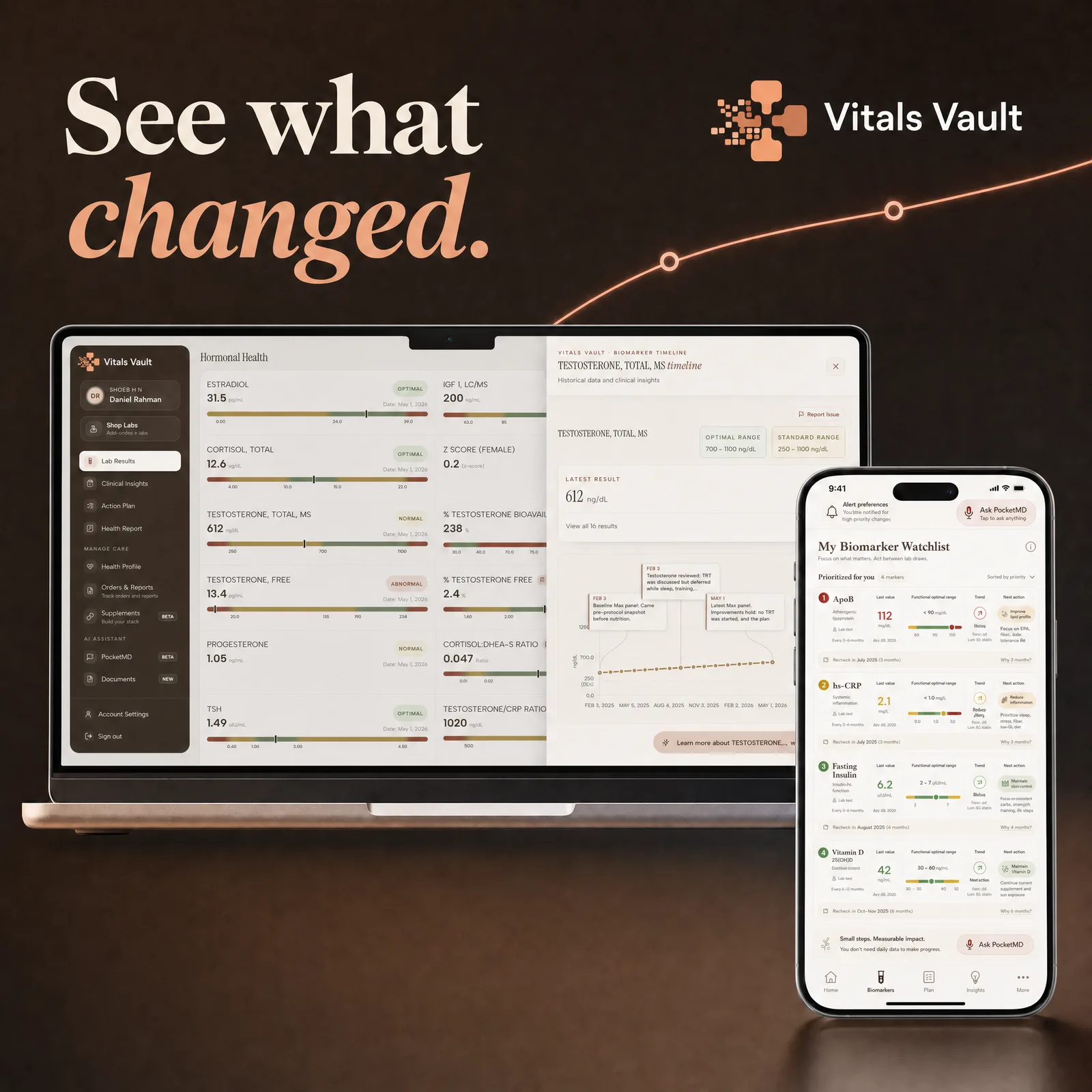
Explore hundreds of tests and panels, filter by concern, and manage your cart—member-exclusive pricing with quick checks and full-body options in one flow.
Wide test selection
300+ tests & panels available
Smart filtering
Find tests by symptoms or goals
Seamless ordering
Add to cart and manage easily
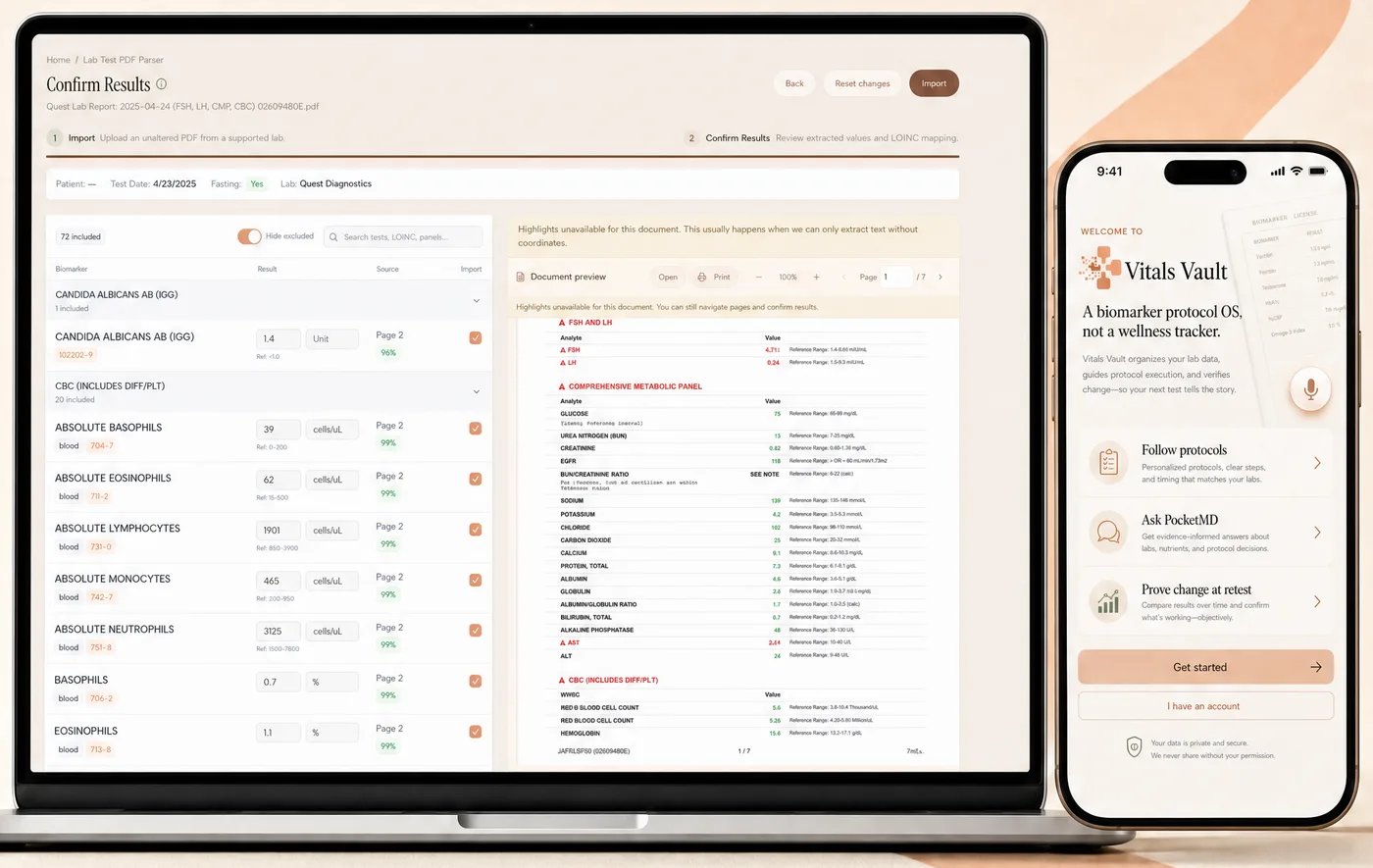
Upload past lab reports, search your documents, and keep appointments and results organized—our AI can extract biomarkers from PDFs so everything lives in one dashboard.
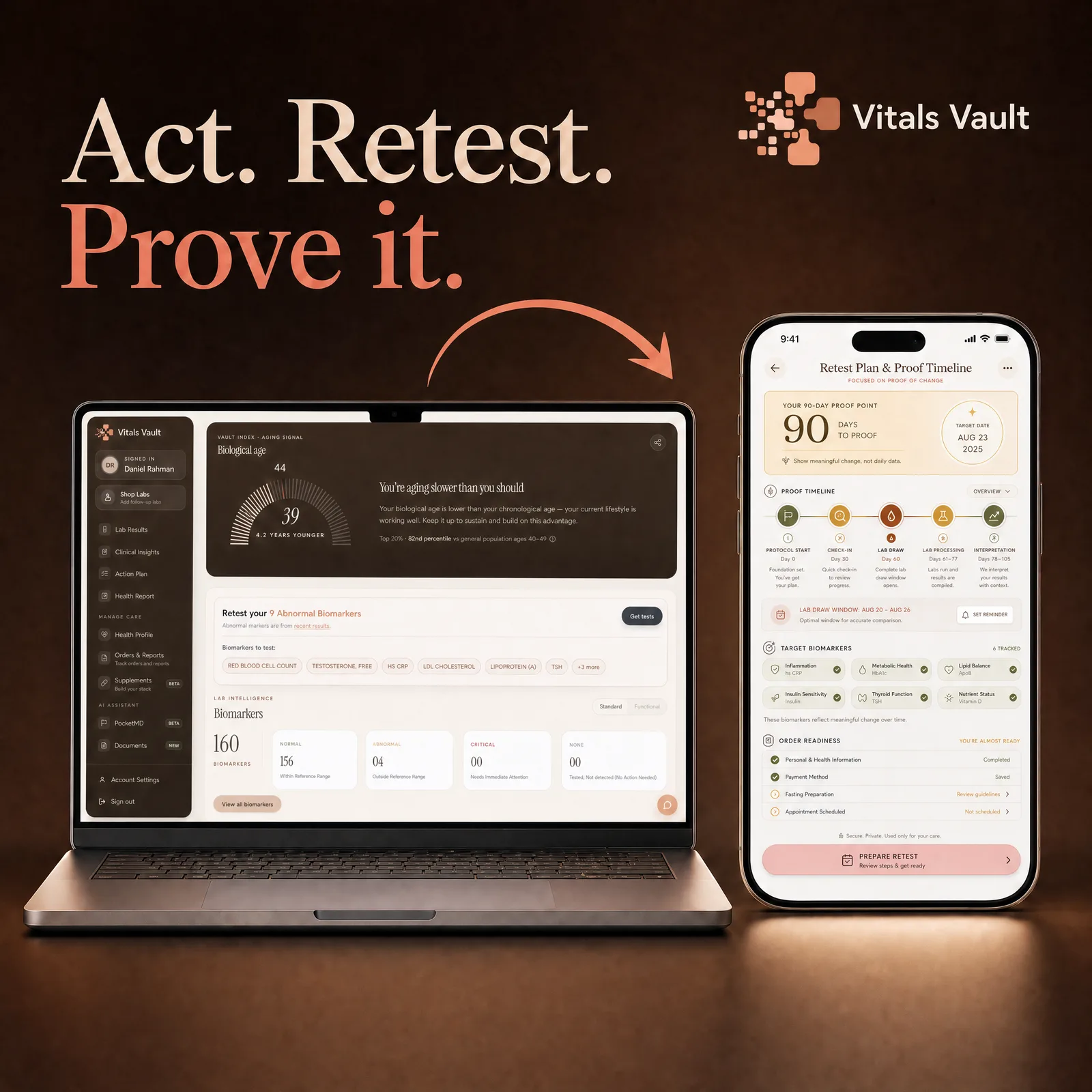
Browse longevity, nutrition, supplement, and movement protocols—structured plans you can follow with clear habits, labs, and targets tied to your profile.
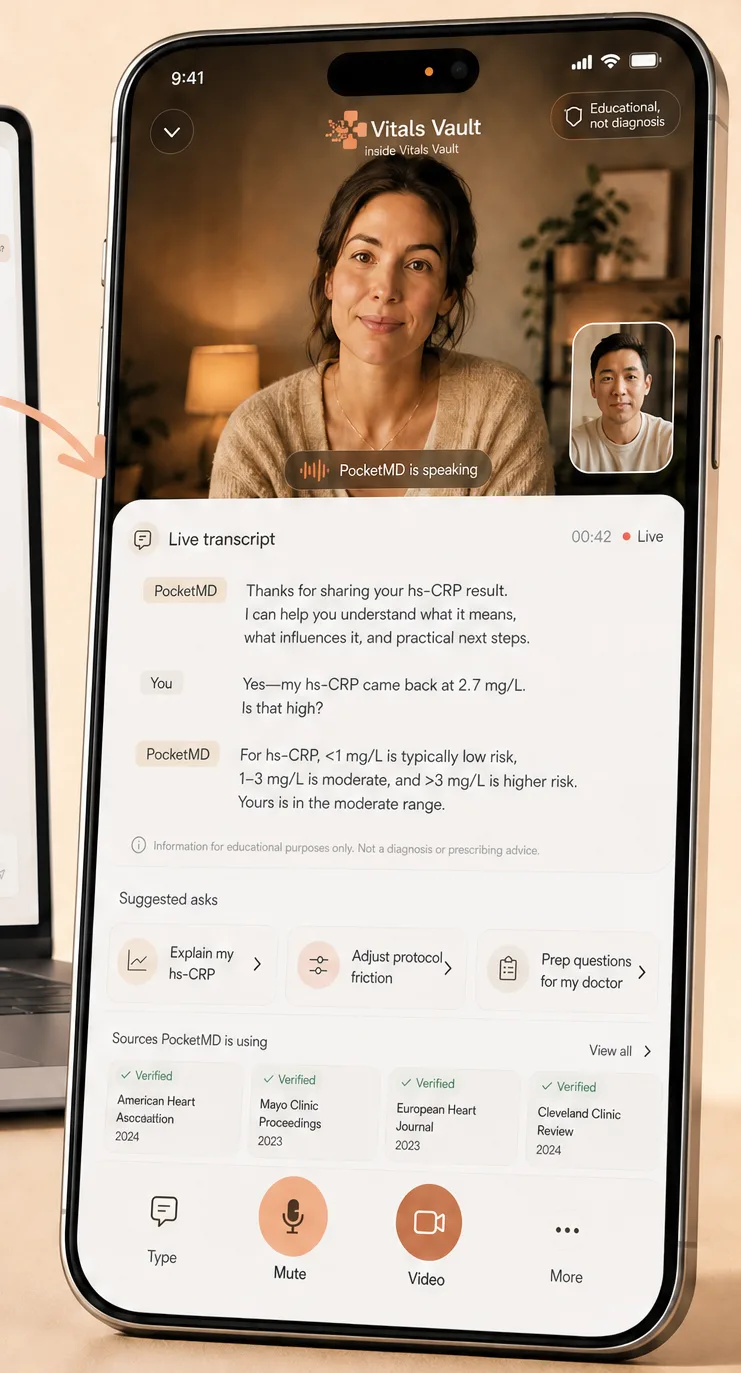
Ask for protocols, nutrition plans, supplement stacks, and education—context-aware suggestions powered by your labs and goals (beta experience).
Order online
Add Nutrients Lab Panel to your cart and check out. No doctor referral is required.
Visit a Quest lab
Provide your blood sample at a Quest Diagnostics location. Appointments can be scheduled after checkout.
Review in Vitals Vault
Results in about 10 days. They stay in your Vitals Vault account for trends and follow-up.
No special preparation is usually needed unless noted at checkout.
This order includes the lab markers used for Nutrients Lab Panel and reported in your Vitals Vault account.
Results
Results in about 10 days
HSA/FSA
Accepted
Who takes it
Must be taken by the purchaser
Preparation
No special preparation needed unless noted at checkout.
Epa
Included in this Quest Diagnostics order and reported in your Vitals Vault account.
Epa+Dpa+Dha
Included in this Quest Diagnostics order and reported in your Vitals Vault account.
Ferritin
Included in this Quest Diagnostics order and reported in your Vitals Vault account.
Folate, Serum
Included in this Quest Diagnostics order and reported in your Vitals Vault account.
Iron Binding Capacity
Included in this Quest Diagnostics order and reported in your Vitals Vault account.
Iron, Total
Included in this Quest Diagnostics order and reported in your Vitals Vault account.
Linoleic Acid
Included in this Quest Diagnostics order and reported in your Vitals Vault account.
Omega-3 Total
Included in this Quest Diagnostics order and reported in your Vitals Vault account.
This Nutrients Lab Panel measures key vitamins, minerals, and functional markers to spot deficiency patterns and guide targeted repletion and retesting.





This is a lab panel, meaning you get multiple nutrient-related blood tests in one order. It is designed to help you see patterns—like “B12 looks normal but functional markers suggest it is not working well,” or “iron stores are low even though hemoglobin is still in range”—so you can prioritize what to address first instead of chasing single numbers.
You may benefit from a Nutrients Lab Panel if you have symptoms that can overlap with nutrient shortfalls—fatigue, brain fog, low mood, tingling or numbness, hair shedding, brittle nails, frequent mouth sores, restless legs, or poor exercise tolerance. These symptoms are not specific to any one vitamin or mineral, which is why a panel approach can be more efficient than guessing.
This panel is also useful when your diet or life stage raises the odds of specific gaps. Common examples include vegan or vegetarian diets (B12, iron, zinc), restricted or low-calorie diets, endurance training, pregnancy planning, heavy menstrual bleeding, gastrointestinal conditions that affect absorption, and long-term use of medications that can change nutrient status (for example, acid-suppressing therapy or metformin for B12).
If you are “methylation-curious,” this panel can help separate internet narratives from physiology. Instead of focusing on a single gene or supplement stack, you can look at the labs that reflect how B vitamins are functioning in your body (such as methylmalonic acid and homocysteine) alongside blood counts and iron status.
Your results are best used to support clinician-directed care rather than self-diagnosis. A nutrient panel can point to likely deficiency patterns, but the right next step depends on your symptoms, medical history, medications, and whether follow-up testing is needed to confirm a cause (such as malabsorption or blood loss).
This panel uses standard clinical laboratory methods; reference ranges and optimal targets can vary by lab, and interpretation should consider your symptoms, diet, medications, and trend over time.
from $134.47 at Quest Diagnostics
Results in days
Clear next steps
HSA / FSA
Vitals Vault makes it straightforward to order a multi-marker nutrient lab panel when you want a clearer picture than a single vitamin test can provide. You can use one order to check several nutrient categories that commonly move together—B vitamins and functional markers, iron status, vitamin D, and key minerals.
Once your results are back, the most important work is making sense of them as a set. PocketMD can help you organize your findings into a practical plan: what looks like a true deficiency versus a borderline value, what may be explained by inflammation or hydration, and what to recheck after a trial of food-first changes or targeted supplementation.
If your results suggest a narrow issue (for example, vitamin-only follow-up after you correct iron deficiency), you can retest strategically rather than repeating everything. Many people use this panel for the first pass, then choose a streamlined follow-up panel based on what actually moved.
The Nutrients Lab Panel is a bundled set of blood tests that evaluates your nutrient status from multiple angles. Some tests measure circulating nutrient levels directly (for example, vitamin D or B12). Others are “functional” markers that rise or fall when a nutrient is not being used effectively in tissues (for example, methylmalonic acid for B12 function, or homocysteine as a B-vitamin–related pathway marker).
A panel approach matters because nutrient biology is interconnected. Low iron stores can contribute to fatigue even before anemia appears. Folate and B12 can interact, and supplementing one can sometimes mask a problem with the other. Inflammation can push ferritin higher even when iron availability is poor. Looking at related markers together helps you avoid common interpretation traps.
This panel is not a diagnosis of a disease by itself. Instead, it helps you and your clinician decide whether symptoms are consistent with nutrient insufficiency, whether additional evaluation is needed (such as checking for blood loss, malabsorption, or autoimmune gastritis), and what to retest after you intervene.
Direct measurements (like serum B12 or 25-hydroxy vitamin D) can be helpful, but they do not always reflect what is happening inside cells. Functional markers (like MMA and homocysteine) can add context when a direct level is borderline, when supplementation is involved, or when symptoms are out of proportion to a single lab value.
A single abnormal result often creates more questions than answers. A panel can reduce back-and-forth testing by checking the most common companion markers up front—especially for fatigue, neuropathy-like symptoms, dietary restriction, and oral contraceptive users who want a practical baseline.
If you are worried about methylation or an MTHFR variant, labs that reflect actual pathway output and nutrient sufficiency are usually more actionable than gene results alone. This panel focuses on the nutrient side of the story—what your body appears to have available and how key pathways may be responding.
A “low” pattern on this panel often means more than one related marker is pointing in the same direction. Examples include low ferritin with low iron saturation (suggesting depleted iron stores), low or borderline B12 with elevated MMA (suggesting functional B12 deficiency), or low vitamin D alongside symptoms and limited sun exposure. When multiple markers agree, it strengthens the case for targeted repletion and for looking for a reason the deficiency happened (dietary intake, absorption issues, blood loss, or increased needs).
An “optimal” pattern usually looks like consistent adequacy across categories: iron stores and transport markers are aligned, blood counts are stable, functional markers like MMA and homocysteine are not signaling a bottleneck, and vitamin D and key minerals are in range. If you still feel unwell, this panel can be useful because it helps you rule out common nutrient explanations and shift attention to other drivers (sleep, thyroid function, inflammation, mood, cardiometabolic factors, or medication effects). Trending over time can still matter—your personal baseline and direction of change may be more informative than a single snapshot.
High results on a nutrient panel often reflect context rather than “too much nutrition.” Elevated B12 can occur with supplementation and does not automatically mean good cellular B12 status—MMA is the better tie-breaker. High folate can also reflect supplements or fortified foods and may complicate interpretation if B12 is low. Ferritin can be high from inflammation or liver-related issues even when iron availability is not high, so pairing ferritin with iron and saturation helps. Some minerals can look high from hemolysis (red blood cell breakdown in the sample) or recent intake. The key is to interpret highs alongside companion markers and your supplement list.
Recent supplements and fortified foods can shift serum levels quickly, sometimes without reflecting tissue status. Inflammation, infection, and chronic conditions can change iron markers (especially ferritin) and can also affect how nutrients are transported and stored. Hydration status can concentrate or dilute some measurements. Medications matter: metformin and acid-suppressing therapy can lower B12 over time; oral contraceptives can influence certain vitamin and mineral markers; and high-dose biotin can interfere with some immunoassays in general. Your diet pattern, sun exposure, menstrual blood loss, pregnancy status, and gastrointestinal health (including bariatric surgery history) are also major drivers of how to read the panel as a whole.
Fasting requirements can vary by lab and by the exact markers included. If your order includes tests that are sensitive to recent intake, your instructions may recommend fasting. Follow the collection instructions provided with your order, and tell PocketMD what you ate and what supplements you took in the 24–48 hours before the draw.
That pattern can suggest functional B12 deficiency—your blood level may look acceptable while tissue-level B12 activity is insufficient, which can show up as elevated MMA. It can also be influenced by kidney function and other factors. Interpreting it correctly usually requires looking at MMA, B12, symptoms, and your supplement history together rather than treating B12 alone as definitive.
Homocysteine is not a direct “methylation score,” but it is a useful pathway marker that can rise when folate, B12, or B6 status is insufficient, or when other health factors are present. It is best interpreted alongside B12, folate, B6, kidney function context, and your overall risk profile.
If you take supplements right before testing, some serum levels can rise transiently and make interpretation harder. For many people, it is reasonable to avoid non-essential supplements the morning of the draw, but you should not stop prescribed medications unless your clinician tells you to. If you did supplement recently, list the exact doses and timing so your results can be interpreted in context.
Ferritin is an iron storage marker, but it can rise with inflammation, infection, and some chronic conditions. That is why iron, TIBC, and transferrin saturation are helpful companions. A “normal” ferritin does not always rule out iron-restricted physiology, especially if other iron markers and symptoms point in the same direction.
A panel is often more efficient when you want a baseline or when symptoms could be explained by several nutrient categories. Ordering individual tests can make sense when you already know what you are tracking (for example, vitamin D recheck after repletion). Many people start with the panel, then retest only the markers that were abnormal or clinically relevant.
Retest timing depends on what was low and what intervention you choose. Some markers change within weeks, while iron stores and certain vitamin levels may take longer to normalize. A common approach is to retest after a consistent trial period and to focus on the specific markers that were abnormal, using this panel again when you need a broad reassessment.
Purchase online through Vitals Vault. A licensed clinician reviews and approves your order, then you receive a digital requisition for a Quest Diagnostics blood draw.
Samples are collected in person at Quest Diagnostics locations nationwide. After checkout you can schedule your visit at a convenient site.
Most results in 3–5 business days. You can view them securely in your Vitals Vault account.
No separate referral appointment is required. Clinician review is included in the online order flow.
Yes. Eligible HSA/FSA cards can be used at checkout for qualifying lab orders.
Results are available in your secure Vitals Vault account. You control who you share them with, subject to applicable law.
Blood glucose shows the amount of sugar in your blood at a single moment. A1c (hemoglobin A1c) estimates your average blood sugar over roughly the past 8–12 weeks. Comparing them helps explain whether your long-term average lines up with your fasting glucose on draw day.
It helps you understand how this marker fits into your broader metabolic picture, with results tracked in your Vitals Vault account.
Elevated values can signal higher metabolic risk. Many people start with nutrition, activity, sleep, and weight management, then retest and review results with a clinician. This test is educational and does not replace medical advice or diagnosis.
Your sample is processed at CLIA-certified Quest Diagnostics laboratories. Results should still be interpreted with a qualified clinician alongside your history, symptoms, and other labs.
Consumer-initiated testing through Vitals Vault is limited to adults 18+ so ordering and interpretation stay aligned with clinical best practices for this channel.