01
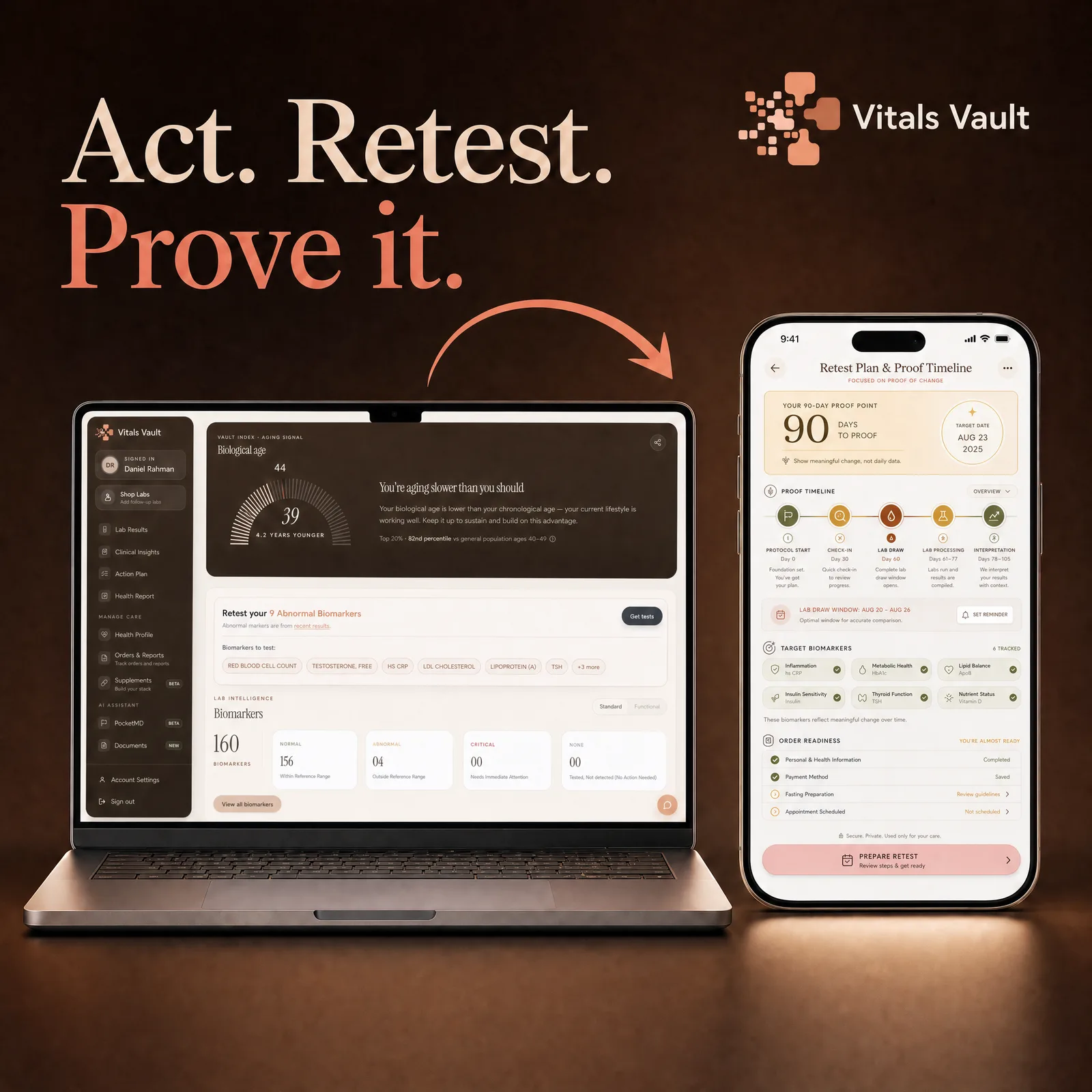
Biological age
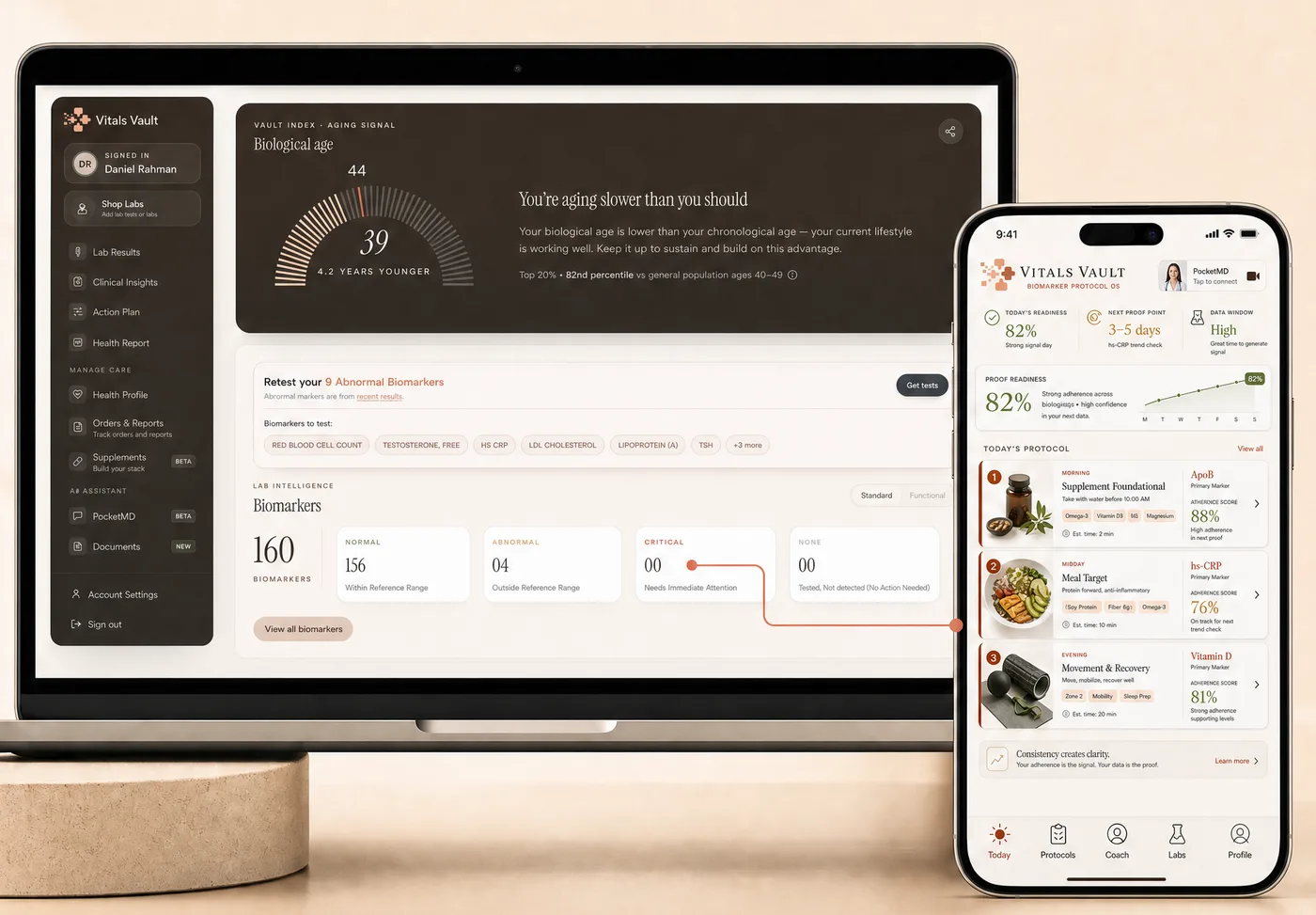
Find out if your body is aging faster or slower than your actual age — and see how you rank against the general population.
39
Biological age
44
Actual age
4.2
Years younger
Glucose (Fasting and 2-Hour After Meal)
Most results in 3–5 business days
Glucose fasting and 2-hour postprandial (after-meal) blood sugar test. It measures your fasting and 2-hour after-meal blood sugar to assess glucose control and diabetes risk, with easy ordering and results via Vitals Vault/Quest.
This test looks at your blood sugar (glucose) in two common real-life states: after an overnight fast and about two hours after you eat. Seeing both numbers can reveal patterns that a single fasting value can miss. If your fasting glucose is normal but you feel “off” after meals, or if your A1c is borderline, a 2-hour postprandial result can add useful context. It can also help you understand whether your body is handling carbohydrates smoothly or struggling to bring glucose back down. Your results are most helpful when you interpret them alongside your symptoms, medications, and other labs with a clinician. This test supports clinician-directed care; it is not, by itself, a diagnosis.
What to expect before and at your draw.
Sample Type
Blood
Collection Method
In person at a Quest Diagnostics location
Age
18+
This order includes the lab markers used for Glucose (Fasting and 2-Hour After Meal).
Glucose, Plasma
Included in this Quest Diagnostics order and reported in your Vitals Vault account.
Glucose, Postprandial/ 2 Hour
Included in this Quest Diagnostics order and reported in your Vitals Vault account.
Order Glucose (Fasting and 2-Hour After Meal) online.
Visit a Quest Diagnostics location near you for your blood draw. Appointments can be scheduled after checkout.
View easy-to-read results in your Vitals Vault account, with trends and a personalized action plan.
Included with every package
Function Health shows you numbers. Vitals Vault connects them — ratios, patterns, and a personalized action plan grounded in functional medicine.
Find out if your body is aging faster or slower than your actual age — and see how you rank against the general population.
39
Biological age
44
Actual age
4.2
Years younger
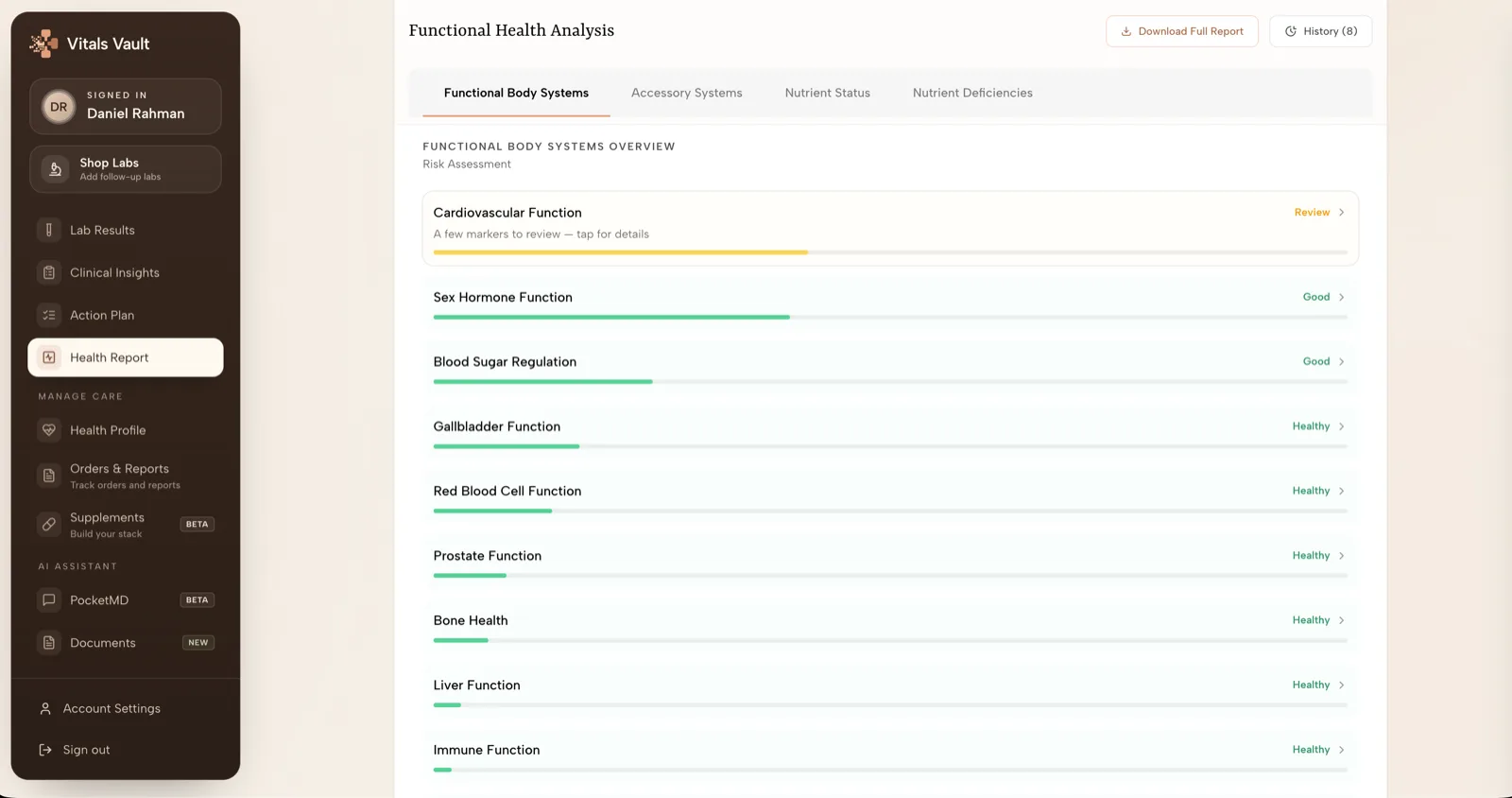
Turn lab data into what to do next—clear guidance on follow-ups, lifestyle context, and add-on testing when you need to go deeper. Make the healthy choice the obvious one.
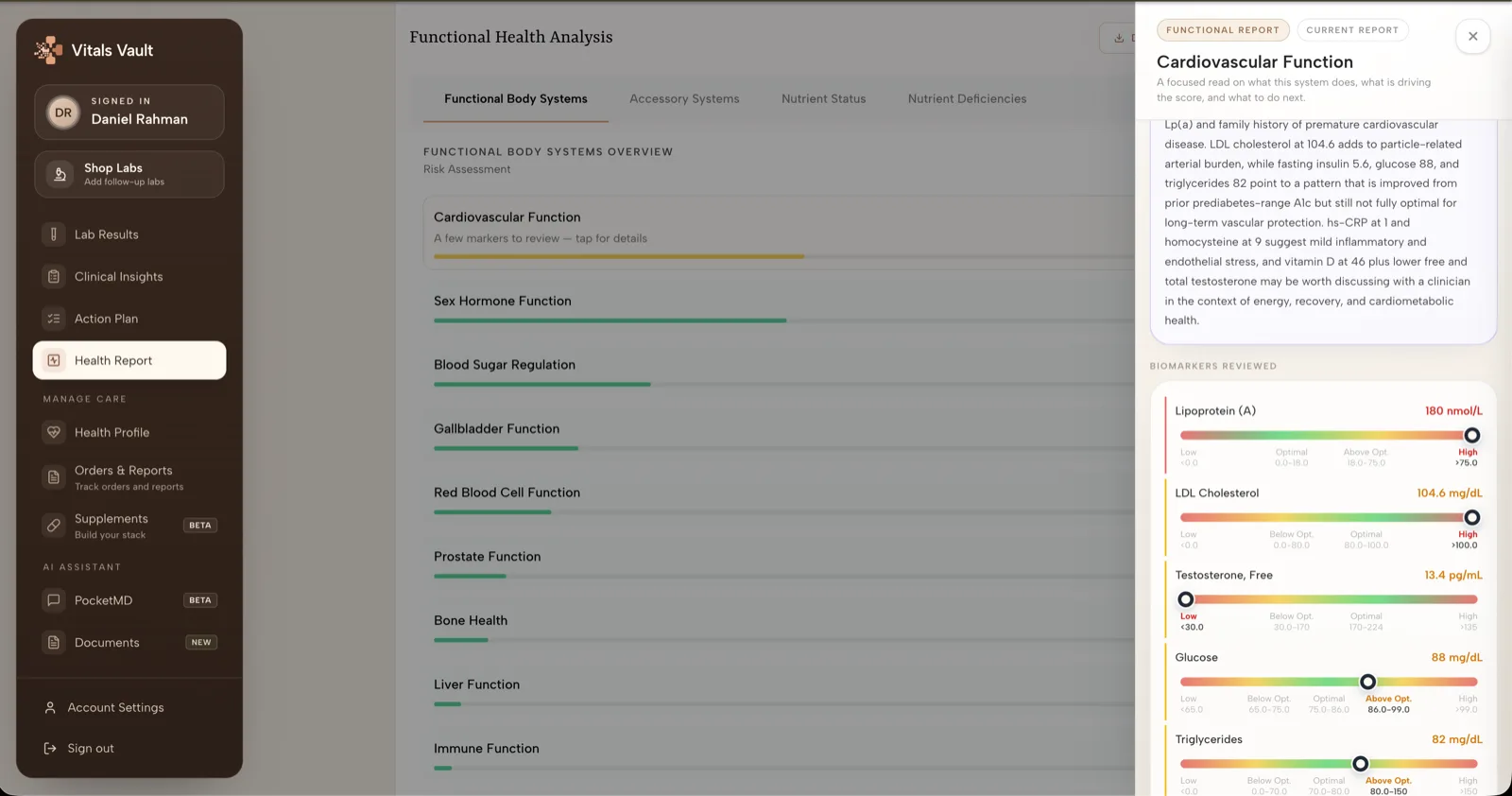
A personalized, plain-language walkthrough of your abnormal markers—reference ranges, pattern context, and what to watch next, grounded in your actual labs.
Personalized Insights
Clear Explanations
Actionable guidance
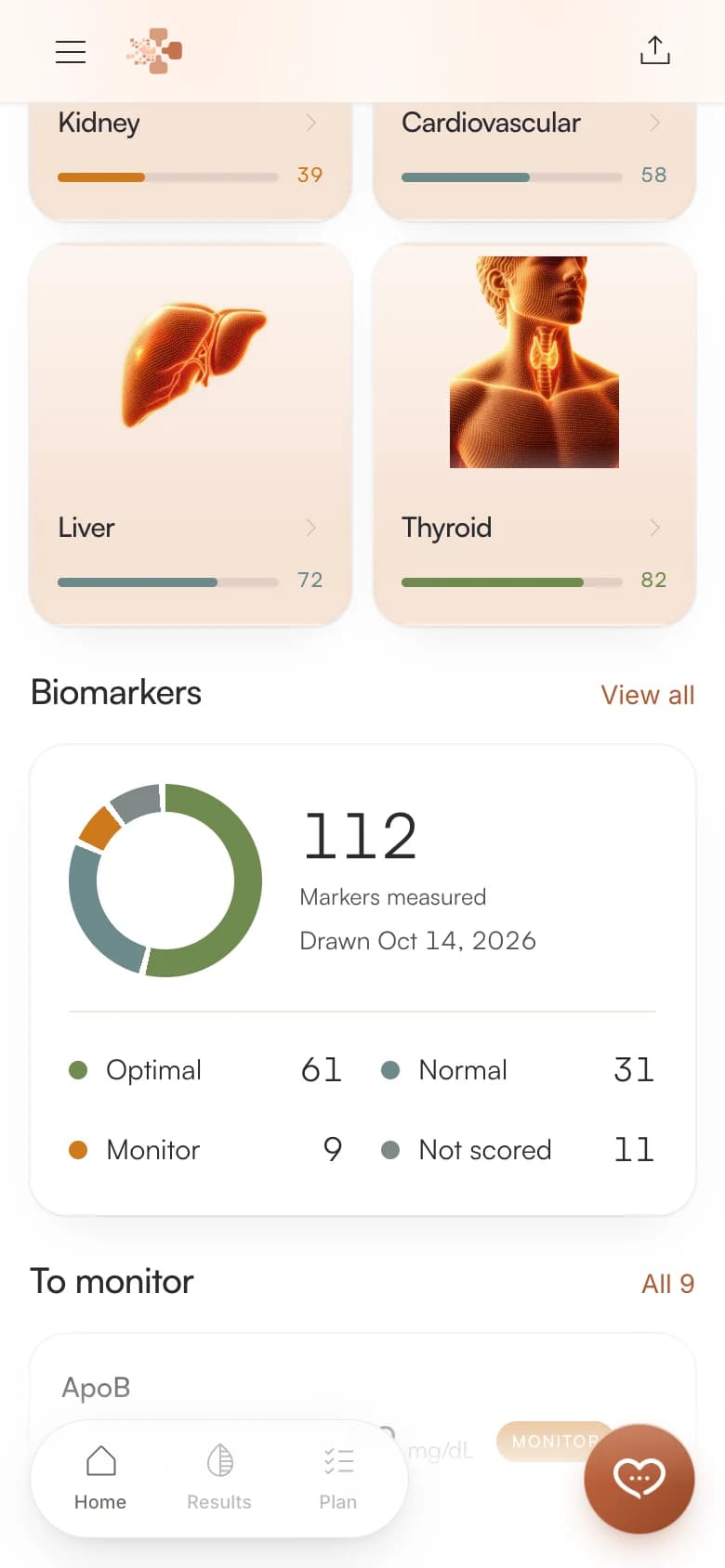
Explore your body systems with clear risk context — refresh your report, download the full PDF, and monitor hormones, heart, bone, and more in one place.
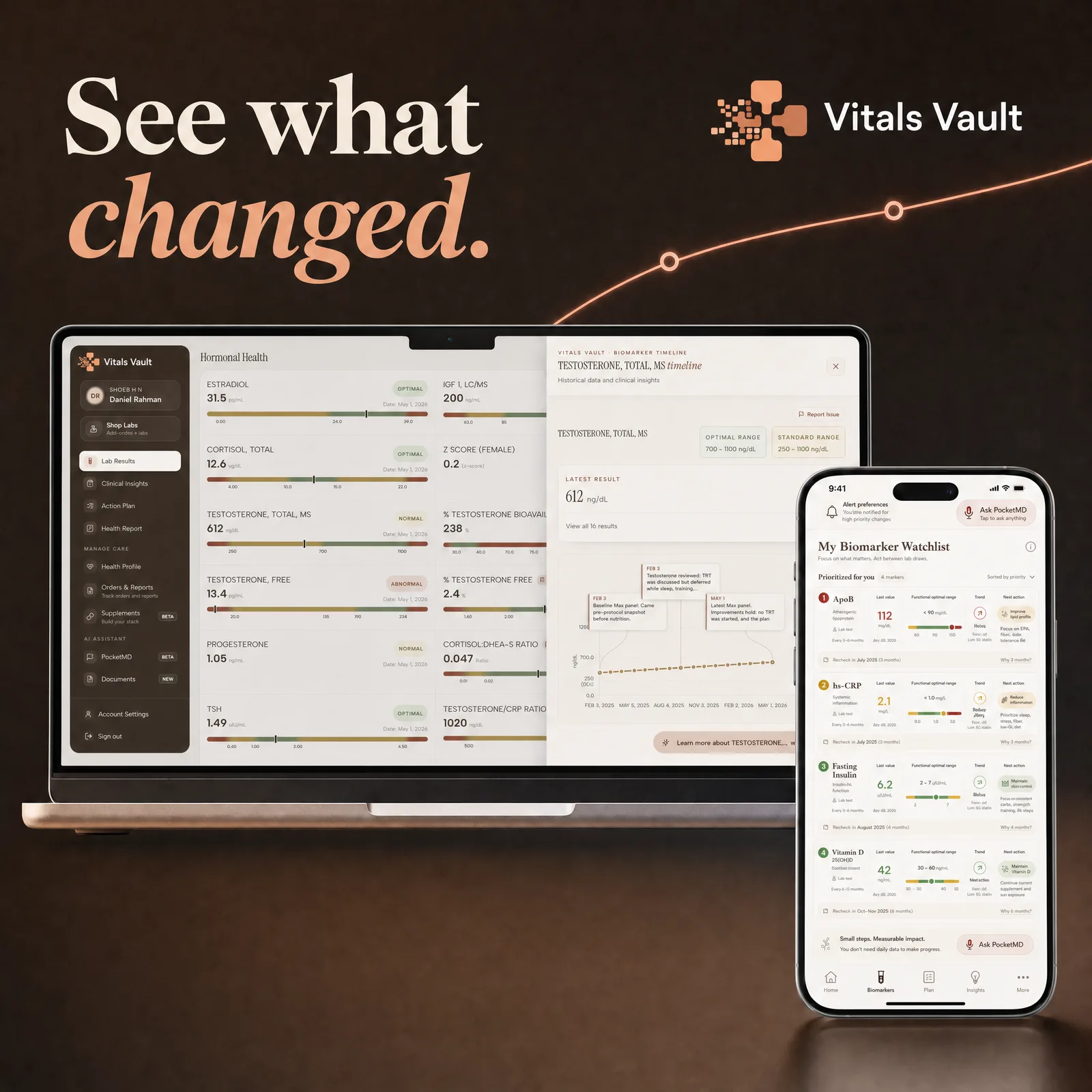
Explore hundreds of tests and panels, filter by concern, and manage your cart—member-exclusive pricing with quick checks and full-body options in one flow.
Wide test selection
300+ tests & panels available
Smart filtering
Find tests by symptoms or goals
Seamless ordering
Add to cart and manage easily
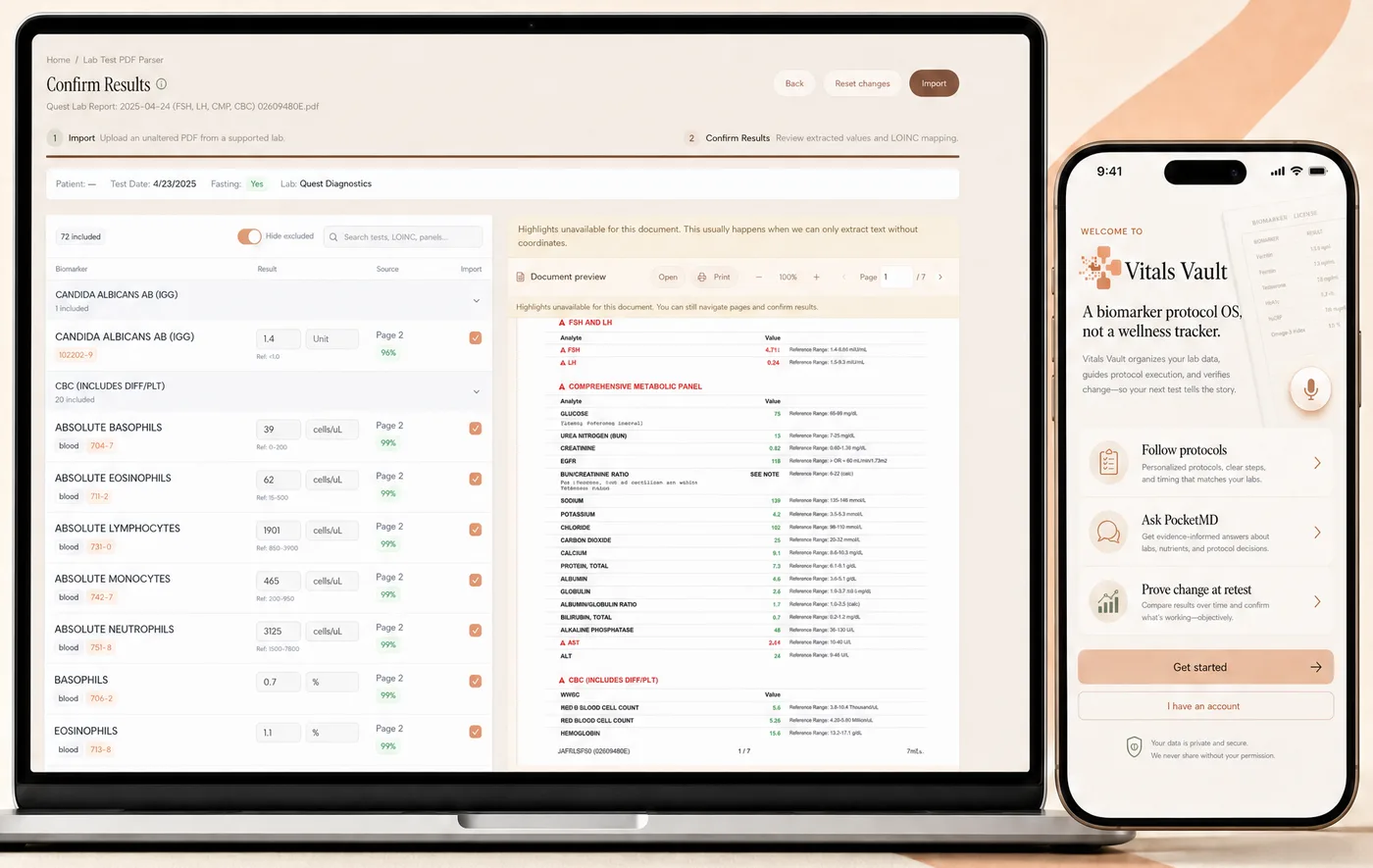
Upload past lab reports, search your documents, and keep appointments and results organized—our AI can extract biomarkers from PDFs so everything lives in one dashboard.
Browse longevity, nutrition, supplement, and movement protocols—structured plans you can follow with clear habits, labs, and targets tied to your profile.
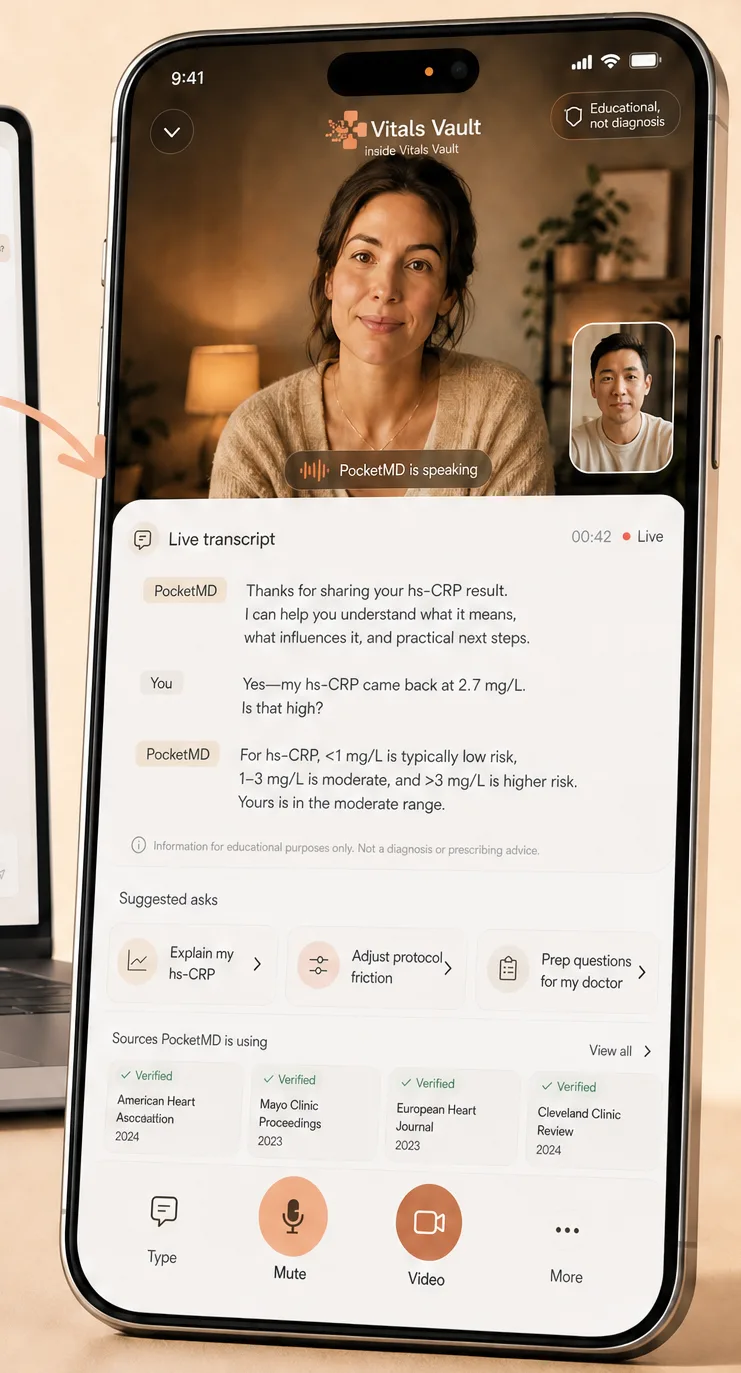
Ask for protocols, nutrition plans, supplement stacks, and education—context-aware suggestions powered by your labs and goals (beta experience).
Order online
Add Glucose (Fasting and 2-Hour After Meal) to your cart and check out. No doctor referral is required.
Visit a Quest lab
Provide your blood sample at a Quest Diagnostics location. Appointments can be scheduled after checkout.
Review in Vitals Vault
Most results in 3–5 business days. They stay in your Vitals Vault account for trends and follow-up.
No special preparation is usually needed unless noted at checkout.
This order includes the lab markers used for Glucose (Fasting and 2-Hour After Meal) and reported in your Vitals Vault account.
Results
Most results in 3–5 business days
HSA/FSA
Accepted
Who takes it
Must be taken by the purchaser
Preparation
No special preparation needed unless noted at checkout.
It measures your fasting and 2-hour after-meal blood sugar to assess glucose control and diabetes risk, with easy ordering and results via Vitals Vault/Quest.





This test looks at your blood sugar (glucose) in two common real-life states: after an overnight fast and about two hours after you eat. Seeing both numbers can reveal patterns that a single fasting value can miss.
If your fasting glucose is normal but you feel “off” after meals, or if your A1c is borderline, a 2-hour postprandial result can add useful context. It can also help you understand whether your body is handling carbohydrates smoothly or struggling to bring glucose back down.
Your results are most helpful when you interpret them alongside your symptoms, medications, and other labs with a clinician. This test supports clinician-directed care; it is not, by itself, a diagnosis.
You may want this test if you are checking for prediabetes or diabetes risk and you want more than a single fasting number. It is especially useful when your fasting glucose is “fine,” but you still have signs that your after-meal glucose may be spiking, such as sleepiness after eating, strong carbohydrate cravings, frequent urination, increased thirst, blurry vision, or unexplained fatigue.
It can also be a good follow-up if your hemoglobin A1c (HbA1c) is borderline, if you have a history of gestational diabetes, polycystic ovary syndrome (PCOS), fatty liver disease, or a strong family history of type 2 diabetes. If you are making lifestyle changes (nutrition, weight loss, exercise) or starting a medication that affects glucose, repeating fasting and 2-hour post-meal glucose can help you see whether those changes are working.
You generally should not use a single result to self-diagnose. If your value is clearly high, if you have symptoms of very high or very low blood sugar, or if you are pregnant, you should review next steps with your clinician promptly.
This is a standard blood test performed in a CLIA-certified laboratory; results should be interpreted in clinical context and are not a standalone diagnosis.
from $19.99 at Quest Diagnostics
Results in days
Clear next steps
HSA / FSA
Vitals Vault lets you order fasting and 2-hour postprandial glucose testing without needing to schedule a separate doctor visit first. You choose the lab, complete your blood draw, and then view your results in one place.
If you are unsure how to prepare, what your numbers mean, or what to test next, PocketMD can help you turn your report into a practical plan. You can ask about retest timing, which companion labs add clarity (like HbA1c or fasting insulin), and what patterns might explain your symptoms.
If your results suggest you should broaden the picture, you can reorder this test to track trends or add additional labs through Vitals Vault so you are not guessing from a single data point.
Glucose is the main sugar in your blood and a primary fuel source for your brain and muscles. Your body keeps blood glucose within a relatively narrow range using hormones—especially insulin—so that cells can take in glucose after you eat and your liver can release glucose between meals.
A fasting glucose measures your blood sugar after you have not eaten for at least 8 hours. A 2-hour postprandial glucose measures your blood sugar about two hours after a meal (or after a standardized glucose drink in an oral glucose tolerance test, depending on how the test is ordered). The “two-hour” point matters because most people should be returning toward baseline by then.
Looking at both values together can hint at different physiology. A normal fasting glucose with a high 2-hour value can suggest impaired glucose tolerance, which is often related to insulin resistance in muscle and delayed insulin response. A high fasting glucose can reflect increased liver glucose output overnight, reduced insulin secretion, or both.
HbA1c estimates your average blood sugar over roughly the past 2–3 months. It is helpful for long-term risk, but it can miss short spikes after meals. Fasting and 2-hour postprandial glucose show what is happening right now and can be easier to connect to specific meals, sleep, stress, or medication timing.
An OGTT uses a standardized glucose drink and timed blood draws (often fasting and 2 hours) to test how your body handles a known glucose load. A “postprandial 2-hour” test may be done after your usual meal instead. The interpretation can be similar, but preparation and comparability between tests can differ, so it helps to confirm how your lab instructed you to eat before the 2-hour draw.
A low fasting or 2-hour glucose can happen if you did not eat enough the day before, exercised intensely, drank alcohol without food, or took glucose-lowering medication (including insulin). Some people also experience “reactive hypoglycemia,” where glucose drops too far a few hours after eating, especially after high-sugar meals. If you have shakiness, sweating, confusion, or fainting along with low values, you should treat that as urgent and discuss medication and safety planning with your clinician.
In-range fasting and 2-hour values generally suggest your body is keeping glucose controlled both at baseline and after a meal. That does not guarantee perfect metabolic health, but it lowers the likelihood of impaired glucose tolerance at the time of testing. If you still have symptoms after meals, your clinician may look at other contributors such as sleep, anemia, thyroid function, medications, or additional metabolic markers like fasting insulin or triglycerides.
A high fasting glucose can be an early sign of impaired fasting glucose or diabetes, and it may reflect increased overnight liver glucose release or reduced insulin production. A high 2-hour postprandial value suggests your body is not clearing glucose efficiently after eating, which is a common prediabetes pattern and can also be seen in diabetes. One abnormal result is usually confirmed with repeat testing and/or HbA1c, but clearly elevated values—especially with symptoms like excessive thirst, frequent urination, or unintended weight loss—should be reviewed promptly.
Your numbers can shift based on what and when you ate, how large the meal was, and whether the 2-hour draw timing was exact. Poor sleep, acute stress, illness, infection, and recent corticosteroid use can raise glucose temporarily. Exercise can lower glucose, while dehydration can make readings appear higher. Pregnancy and certain endocrine conditions can also change glucose handling, so your clinician may recommend a pregnancy-specific approach or additional testing if those apply to you.
For the fasting draw, you typically avoid calories for at least 8 hours (water is usually fine). For the 2-hour value, follow the lab’s instructions carefully: it may be measured 2 hours after you start eating a meal or 2 hours after a glucose drink, depending on how it is ordered. Try to avoid unusual exercise, heavy alcohol intake, or a very atypical meal pattern the day before unless your clinician specifically wants “real life” conditions.
Reference ranges vary by lab and by whether the test is done as an OGTT or after a typical meal, but many clinicians use OGTT-style cutoffs as a guide: under about 140 mg/dL at 2 hours is often considered in-range, 140–199 mg/dL suggests impaired glucose tolerance, and 200 mg/dL or higher can be consistent with diabetes if confirmed. Always interpret your result using the reference interval shown on your report and your clinical context.
Not always. An OGTT is a standardized test using a specific glucose drink and timed blood draws. A “2-hour postprandial” test may be done after your usual meal instead, which can be less standardized. If you are testing for pregnancy-related glucose issues or need a diagnostic OGTT, confirm with your clinician which version is appropriate.
Yes. Some people have normal fasting glucose but elevated post-meal glucose because the first-phase insulin response is delayed or because muscle insulin resistance makes glucose clearance slower. That pattern can be an early sign of impaired glucose tolerance and is one reason the 2-hour value can be helpful.
Retest timing depends on your goal. If you are confirming an unexpected result, your clinician may suggest repeating soon (often within weeks) under standardized conditions. If you are tracking lifestyle changes, many people recheck in about 8–12 weeks, which is long enough to see meaningful shifts while still being actionable.
Common companion tests include HbA1c (longer-term average), fasting insulin (to estimate insulin resistance when paired with fasting glucose), a lipid panel (triglycerides and HDL often track with metabolic health), and sometimes a comprehensive metabolic panel. Your clinician may also consider thyroid testing, iron studies, or cortisol-related evaluation if symptoms do not match the glucose pattern.
Purchase online through Vitals Vault. A licensed clinician reviews and approves your order, then you receive a digital requisition for a Quest Diagnostics blood draw.
Samples are collected in person at Quest Diagnostics locations nationwide. After checkout you can schedule your visit at a convenient site.
Most results in 3–5 business days. You can view them securely in your Vitals Vault account.
No separate referral appointment is required. Clinician review is included in the online order flow.
Yes. Eligible HSA/FSA cards can be used at checkout for qualifying lab orders.
Results are available in your secure Vitals Vault account. You control who you share them with, subject to applicable law.
Blood glucose shows the amount of sugar in your blood at a single moment. A1c (hemoglobin A1c) estimates your average blood sugar over roughly the past 8–12 weeks. Comparing them helps explain whether your long-term average lines up with your fasting glucose on draw day.
It helps you understand how this marker fits into your broader metabolic picture, with results tracked in your Vitals Vault account.
Elevated values can signal higher metabolic risk. Many people start with nutrition, activity, sleep, and weight management, then retest and review results with a clinician. This test is educational and does not replace medical advice or diagnosis.
Your sample is processed at CLIA-certified Quest Diagnostics laboratories. Results should still be interpreted with a qualified clinician alongside your history, symptoms, and other labs.
Consumer-initiated testing through Vitals Vault is limited to adults 18+ so ordering and interpretation stay aligned with clinical best practices for this channel.