01
Biological age
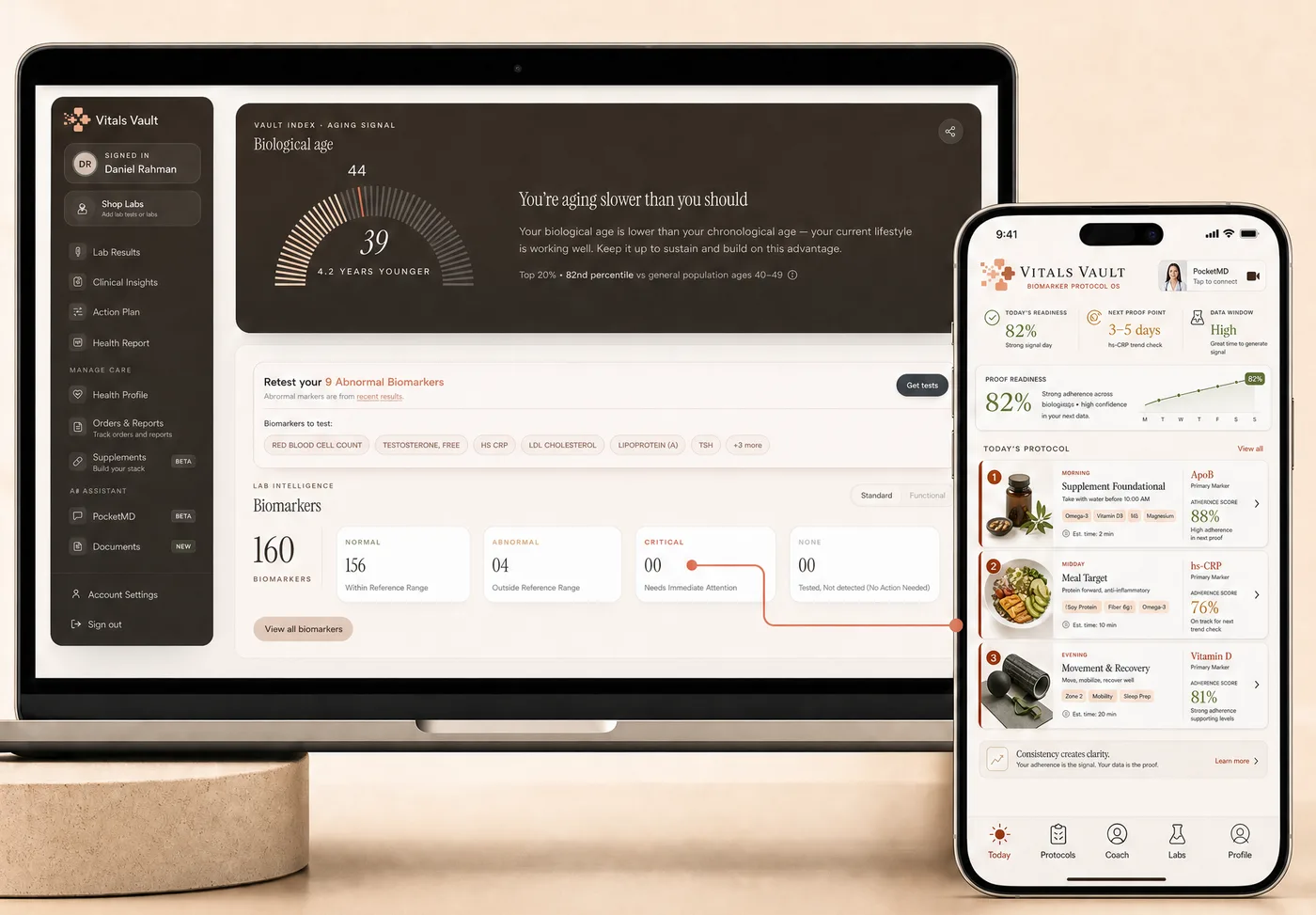
Find out if your body is aging faster or slower than your actual age — and see how you rank against the general population.
39
Biological age
44
Actual age
4.2
Years younger
DHEA-S
Results in about 4 days
DHEA-S (DHEA Sulfate) Immunoassay: what it measures and how to interpret your result. It measures DHEA-S, a stable adrenal androgen marker, to help assess androgen balance by age and sex—order through Vitals Vault with Quest labs.
DHEA-S (dehydroepiandrosterone sulfate) is one of the most useful “big picture” markers of adrenal androgen production because it is relatively stable throughout the day compared with many other hormones. A DHEA-S immunoassay can help explain symptoms that overlap with many conditions, such as acne, unwanted hair growth, scalp hair thinning, irregular cycles, low libido, fatigue, or changes in mood and resilience to stress. Your result is most meaningful when it is interpreted with your age, sex, symptoms, and any hormone or supplement use. It can support clinician-directed care, but it cannot diagnose a condition on its own.
What to expect before and at your draw.
Sample Type
Blood
Collection Method
In person at a Quest Diagnostics location
Age
18+
This order includes the lab markers used for DHEA-S.
Dhea Sulfate
Included in this Quest Diagnostics order and reported in your Vitals Vault account.
Order DHEA-S online.
Visit a Quest Diagnostics location near you for your blood draw. Appointments can be scheduled after checkout.
View easy-to-read results in your Vitals Vault account, with trends and a personalized action plan.
Included with every package
Function Health shows you numbers. Vitals Vault connects them — ratios, patterns, and a personalized action plan grounded in functional medicine.
Find out if your body is aging faster or slower than your actual age — and see how you rank against the general population.
39
Biological age
44
Actual age
4.2
Years younger
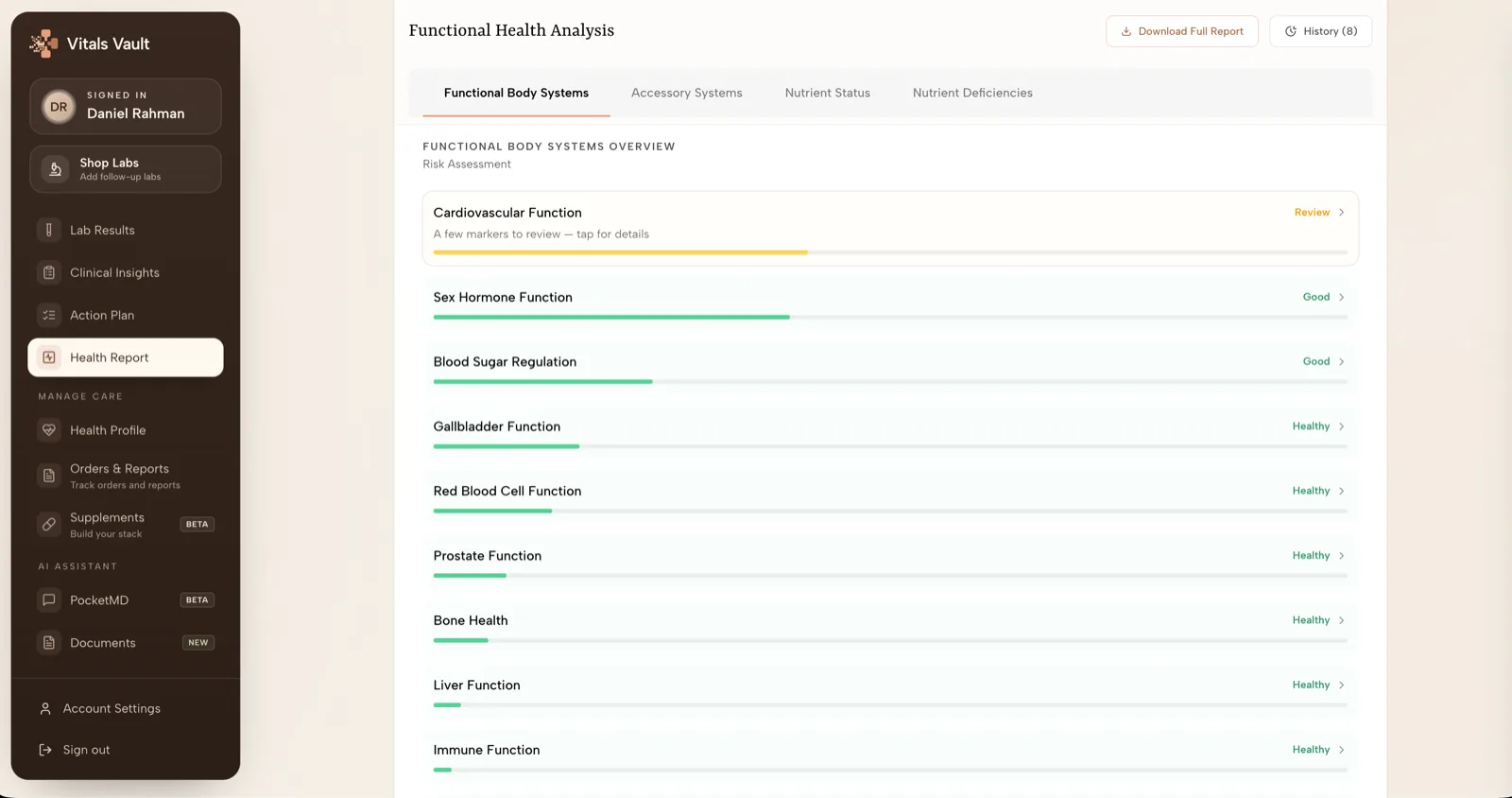
Turn lab data into what to do next—clear guidance on follow-ups, lifestyle context, and add-on testing when you need to go deeper. Make the healthy choice the obvious one.
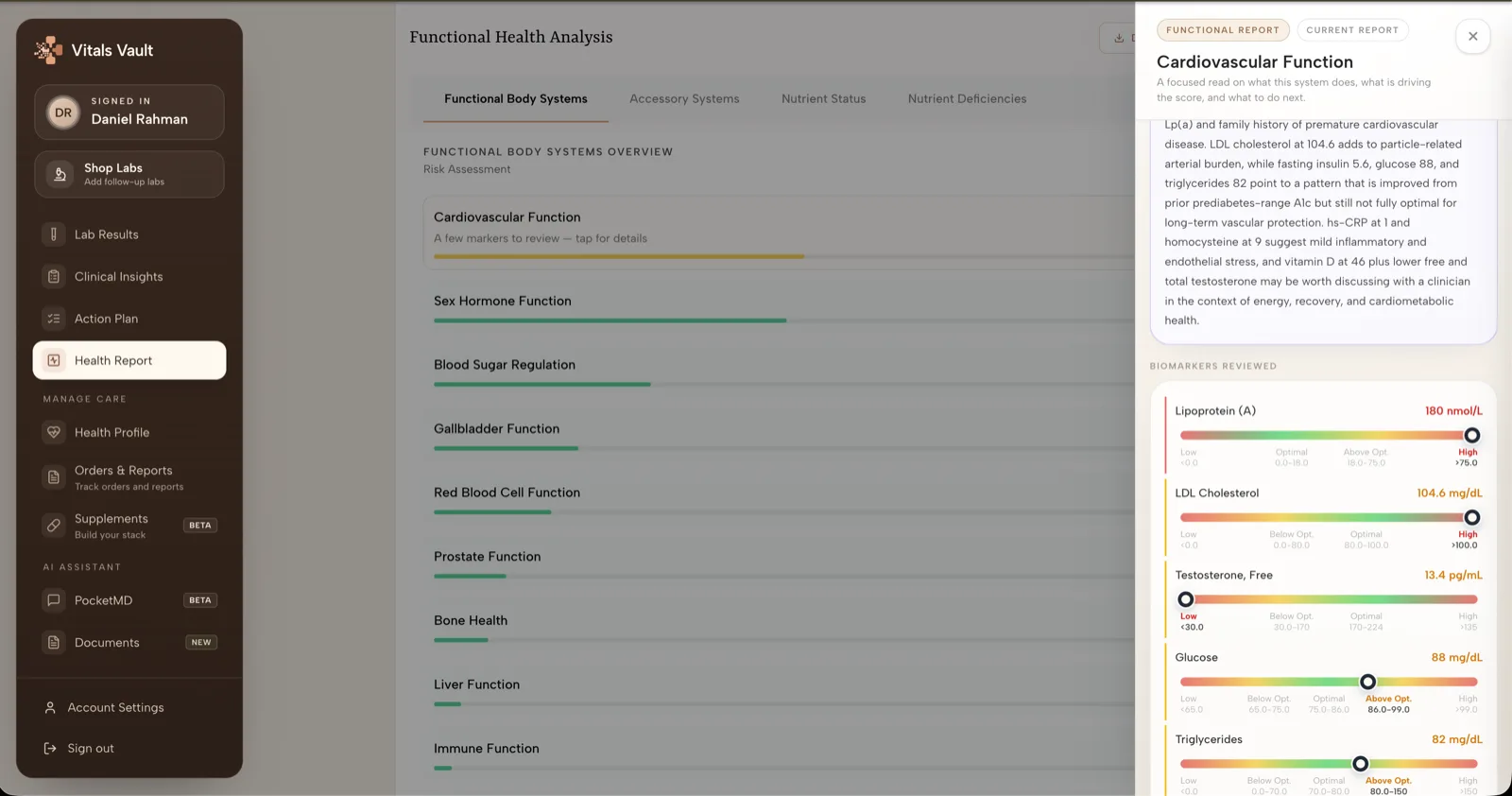
A personalized, plain-language walkthrough of your abnormal markers—reference ranges, pattern context, and what to watch next, grounded in your actual labs.
Personalized Insights
Clear Explanations
Actionable guidance
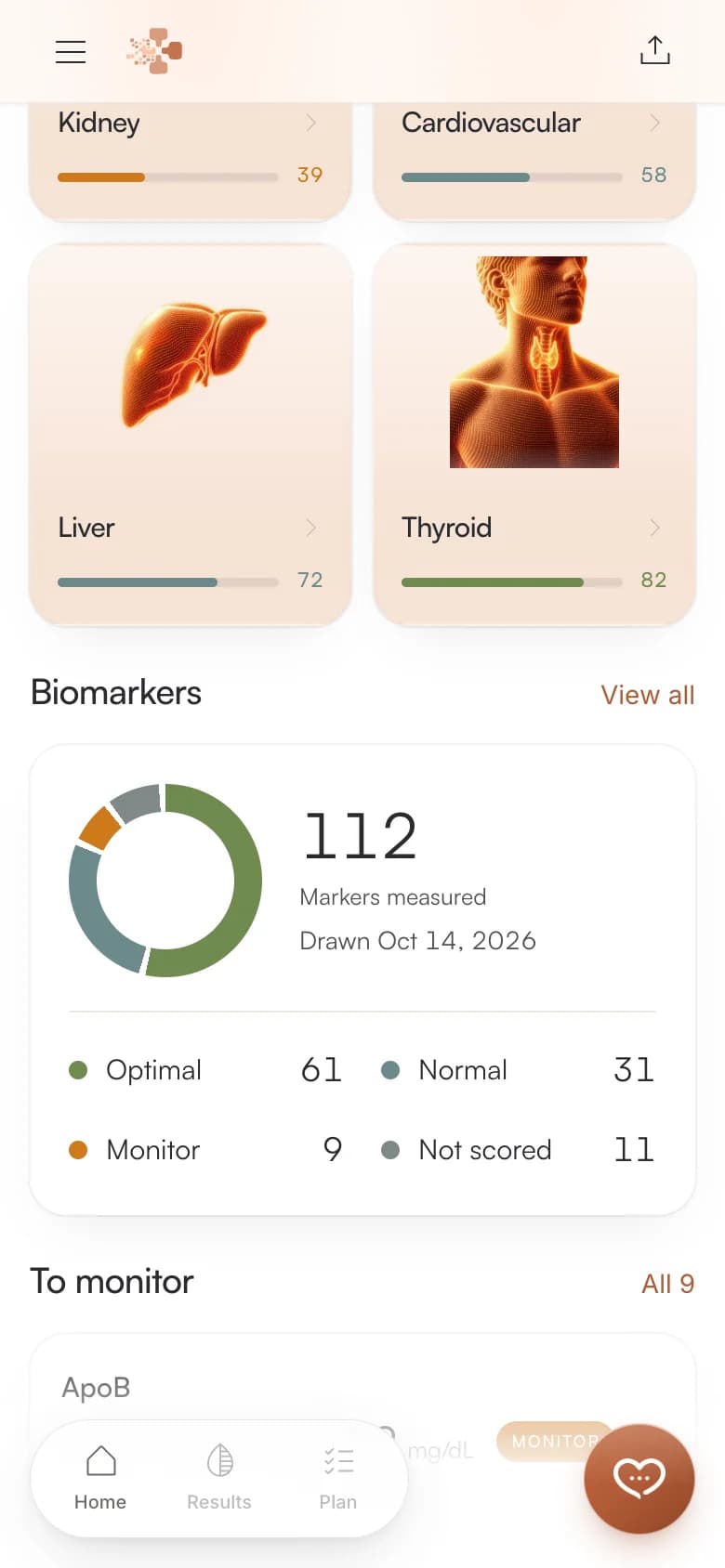
Explore your body systems with clear risk context — refresh your report, download the full PDF, and monitor hormones, heart, bone, and more in one place.
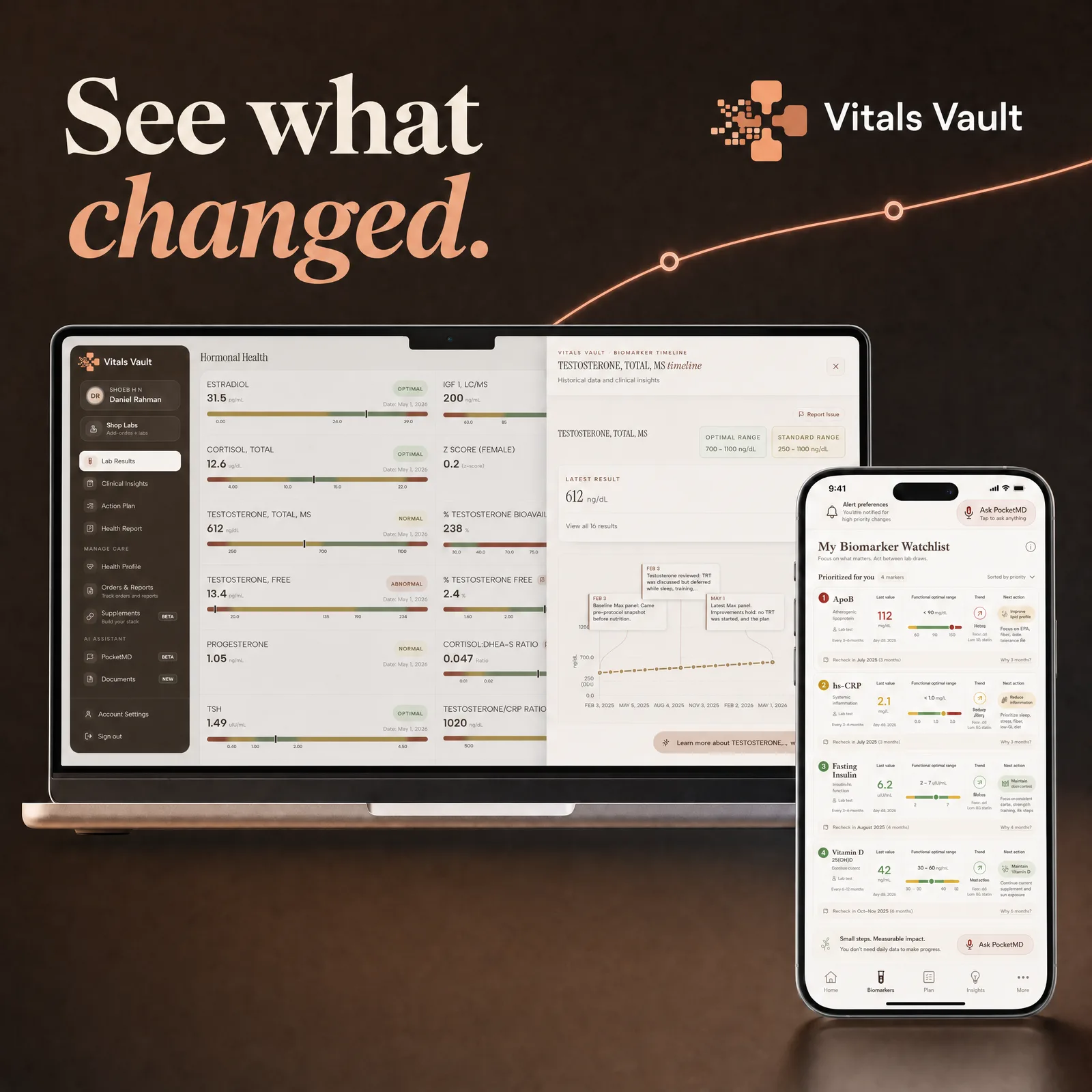
Explore hundreds of tests and panels, filter by concern, and manage your cart—member-exclusive pricing with quick checks and full-body options in one flow.
Wide test selection
300+ tests & panels available
Smart filtering
Find tests by symptoms or goals
Seamless ordering
Add to cart and manage easily
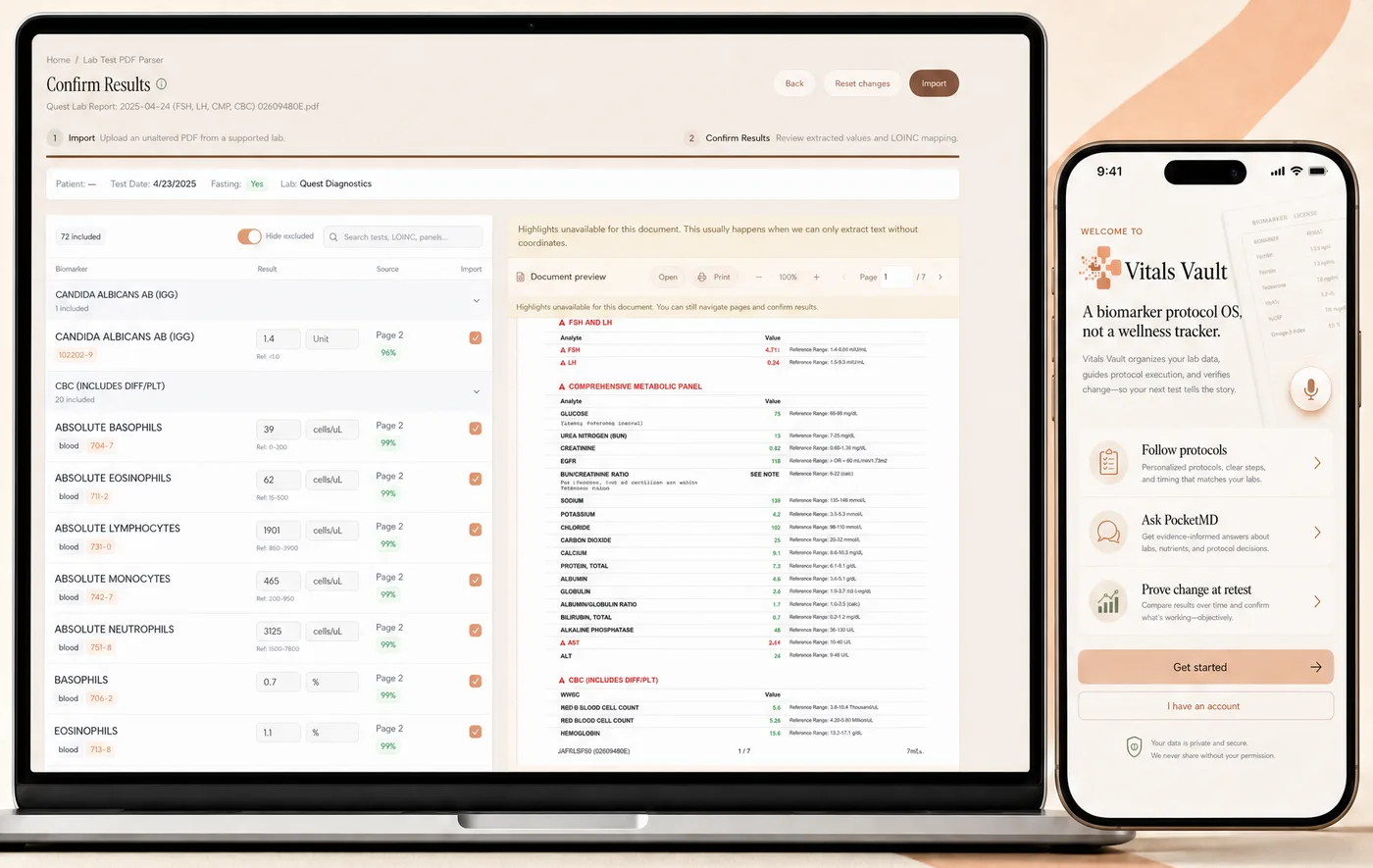
Upload past lab reports, search your documents, and keep appointments and results organized—our AI can extract biomarkers from PDFs so everything lives in one dashboard.
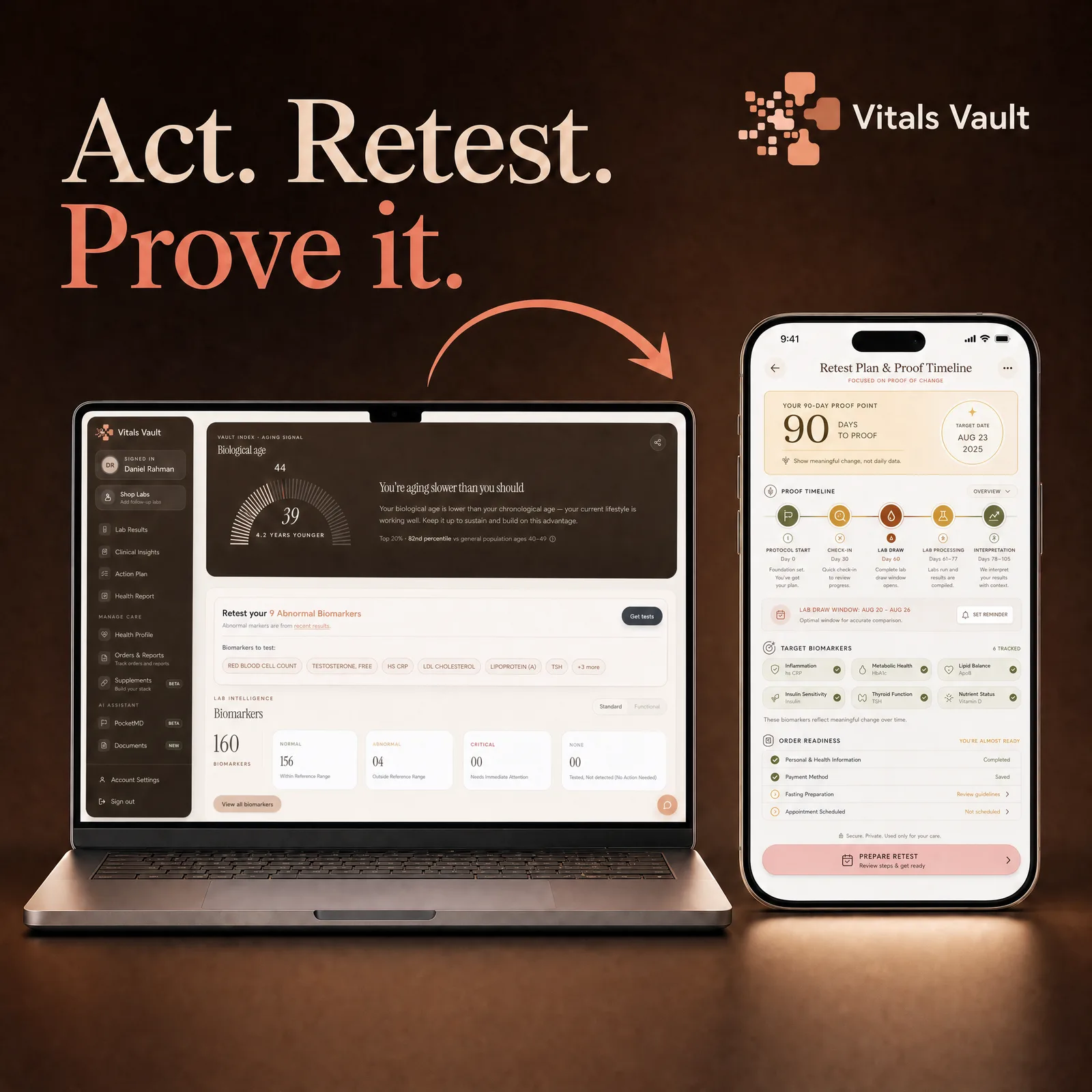
Browse longevity, nutrition, supplement, and movement protocols—structured plans you can follow with clear habits, labs, and targets tied to your profile.
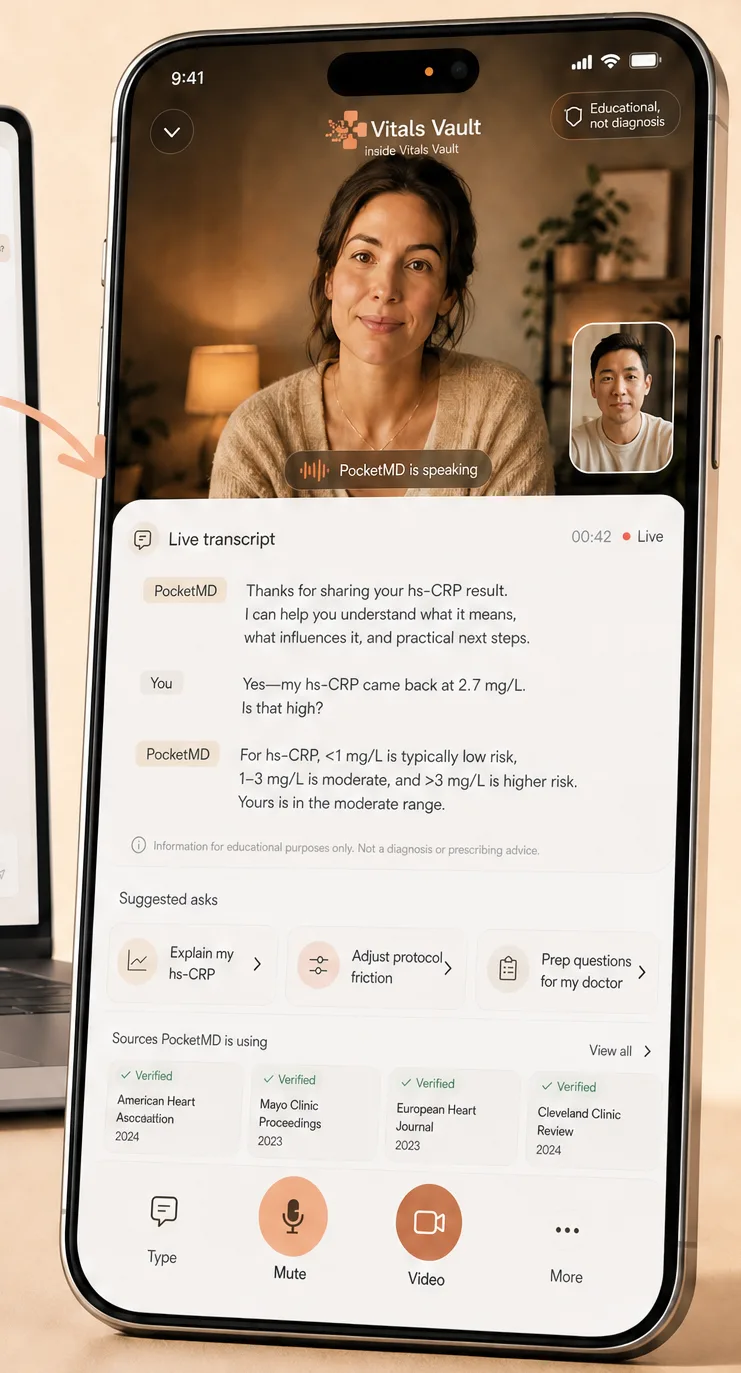
Ask for protocols, nutrition plans, supplement stacks, and education—context-aware suggestions powered by your labs and goals (beta experience).
Order online
Add DHEA-S to your cart and check out. No doctor referral is required.
Visit a Quest lab
Provide your blood sample at a Quest Diagnostics location. Appointments can be scheduled after checkout.
Review in Vitals Vault
Results in about 4 days. They stay in your Vitals Vault account for trends and follow-up.
No special preparation is usually needed unless noted at checkout.
This order includes the lab markers used for DHEA-S and reported in your Vitals Vault account.
Results
Results in about 4 days
HSA/FSA
Accepted
Who takes it
Must be taken by the purchaser
Preparation
No special preparation needed unless noted at checkout.
It measures DHEA-S, a stable adrenal androgen marker, to help assess androgen balance by age and sex—order through Vitals Vault with Quest labs.


DHEA-S (dehydroepiandrosterone sulfate) is one of the most useful “big picture” markers of adrenal androgen production because it is relatively stable throughout the day compared with many other hormones.
A DHEA-S immunoassay can help explain symptoms that overlap with many conditions, such as acne, unwanted hair growth, scalp hair thinning, irregular cycles, low libido, fatigue, or changes in mood and resilience to stress.
Your result is most meaningful when it is interpreted with your age, sex, symptoms, and any hormone or supplement use. It can support clinician-directed care, but it cannot diagnose a condition on its own.
You may want a DHEA-S test if you are trying to understand possible androgen excess or adrenal contributions to symptoms. Common reasons include new or worsening acne, increased facial or body hair, scalp hair thinning, irregular or absent periods, or signs of virilization (such as voice deepening), especially when symptoms appear quickly.
DHEA-S is also commonly checked when you are sorting out PCOS-like symptoms, because DHEA-S is produced mainly by the adrenal glands and can help distinguish adrenal androgen patterns from primarily ovarian patterns.
On the other side of the spectrum, you may consider testing if you have low libido, low energy, reduced stress tolerance, or you are tracking age-related hormone changes. DHEA-S naturally declines with age, so “normal” depends heavily on your life stage.
Testing is especially important if you take DHEA supplements or certain hormones, because your dose and timing can push levels outside your expected range and complicate symptom interpretation.
This is a laboratory immunoassay performed in a CLIA-certified setting; results should be interpreted in context and are not a standalone diagnosis.
from $31.99 at Quest Diagnostics
Results in days
Clear next steps
HSA / FSA
With Vitals Vault, you can order DHEA-S testing directly and complete your blood draw at a Quest location. This is helpful when you want a clear baseline before making changes, or when you are monitoring a trend after adjusting supplements or hormone therapy.
After your results post, you can use PocketMD to talk through what “low,” “in range,” or “high” means for you based on age, sex, symptoms, and related labs. That context matters because the same number can mean different things at different ages.
If your DHEA-S result raises more questions, you can expand to a broader hormone stack (for example, adding testosterone, SHBG, estradiol, LH/FSH, or cortisol-related testing) and then retest on a sensible timeline to confirm whether a change is persistent or temporary.
DHEA-S is the sulfated, longer-lasting form of DHEA (dehydroepiandrosterone). Most DHEA-S is produced by your adrenal glands, with smaller contributions from the ovaries or testes. In the body, DHEA-S acts as a reservoir that can be converted into other androgens (and, indirectly, estrogens) depending on tissue needs.
Because DHEA-S has a longer half-life than many hormones, it tends to fluctuate less across the day. That stability is why it is often preferred over DHEA itself when the goal is to understand baseline adrenal androgen production.
DHEA-S does not exist in isolation. Your symptoms and your risk assessment depend on how DHEA-S relates to other hormones (like testosterone and SHBG), metabolic markers (like insulin resistance indicators), and the clinical context (such as menstrual pattern, menopause status, or medication use).
An immunoassay uses antibodies to measure the amount of DHEA-S in your blood. It is widely used in clinical labs and is well-suited for routine screening and monitoring. If a result is surprising or does not match your symptoms, your clinician may consider repeat testing or method confirmation depending on the situation.
Testosterone reflects a mix of ovarian/testicular production and peripheral conversion, and it is strongly influenced by binding proteins such as SHBG (sex hormone–binding globulin). DHEA-S is more specifically an adrenal signal. Looking at both can help you understand where androgen activity may be coming from.
A low DHEA-S result can be a normal finding with aging, especially if you are older and your other hormones and symptoms fit that pattern. It can also show up with reduced adrenal androgen production, which may be seen in some chronic illness states or with certain medications. If your symptoms include low libido, low energy, or poor recovery, it is worth interpreting DHEA-S alongside cortisol-related testing and a broader sex-hormone panel rather than treating the number alone.
An in-range DHEA-S result generally suggests your adrenal androgen production is appropriate for the reference range used by the lab. The key is whether the range is age- and sex-adjusted and whether your value sits at a level that matches your symptoms and goals. If you still have androgen-excess symptoms with a normal DHEA-S, the driver may be ovarian androgens, altered SHBG, increased tissue sensitivity, or non-hormonal causes, so companion testing can help.
A high DHEA-S result often points toward increased adrenal androgen production. This can occur in PCOS-related patterns, physiologic stress states, or with DHEA supplementation, but it can also be a signal that needs timely medical follow-up if levels are markedly elevated or symptoms are rapidly progressive. Your next steps commonly include reviewing supplements and medications, confirming timing and repeatability, and checking related androgens (total/free testosterone, androstenedione) and, when appropriate, targeted adrenal evaluations.
Age is one of the biggest drivers of DHEA-S, with a general decline over time, so the same numeric value can mean different things at 25 versus 65. DHEA supplements can raise DHEA-S substantially, and the effect can persist depending on dose and consistency. Hormonal contraception, glucocorticoids, some anti-seizure medications, and other therapies can shift adrenal and sex-hormone dynamics. Acute illness, major training load, sleep disruption, and weight changes can also affect your hormone milieu, which is why repeating the test under stable conditions is sometimes the most informative step.
Fasting is not usually required for DHEA-S alone. If you are combining it with metabolic labs (like glucose or lipids), fasting rules may apply to the full order, so follow the instructions for your panel.
“Normal” depends strongly on age and sex because DHEA-S typically declines over time. Use the reference interval shown on your report and interpret it with your clinician or PocketMD, especially if you are near the upper or lower end of the range.
Yes. Supplemental DHEA can raise DHEA-S significantly, sometimes into a high range, and it can also influence downstream androgens and estrogens. If you are testing to understand your baseline, consider discussing a washout period with your clinician before the draw.
Not necessarily. DHEA-S is mainly an adrenal marker, while testosterone reflects gonadal production plus peripheral conversion and is influenced by SHBG. You can have high DHEA-S with normal testosterone, or vice versa, which is why paired testing is often more informative.
It can be a useful piece of the picture. Elevated DHEA-S may suggest a stronger adrenal androgen contribution to symptoms, but PCOS is diagnosed using clinical criteria and a broader workup that often includes testosterone, SHBG, menstrual history, and metabolic markers.
Retesting is most helpful after a meaningful change, such as starting/stopping DHEA, changing hormone therapy, or addressing a suspected driver like sleep or training load. Many people retest in the 6–12 week range to see a stable trend, but timing should match your clinical plan.
The most common cause is supplement use (DHEA). Medications that affect adrenal or sex-hormone pathways can also shift results, and acute illness or major stress can change your hormone environment. If the number does not fit your symptoms, repeating the test under stable conditions and reviewing all meds/supplements is a practical next step.
Purchase online through Vitals Vault. A licensed clinician reviews and approves your order, then you receive a digital requisition for a Quest Diagnostics blood draw.
Samples are collected in person at Quest Diagnostics locations nationwide. After checkout you can schedule your visit at a convenient site.
Most results in 3–5 business days. You can view them securely in your Vitals Vault account.
No separate referral appointment is required. Clinician review is included in the online order flow.
Yes. Eligible HSA/FSA cards can be used at checkout for qualifying lab orders.
Results are available in your secure Vitals Vault account. You control who you share them with, subject to applicable law.
Blood glucose shows the amount of sugar in your blood at a single moment. A1c (hemoglobin A1c) estimates your average blood sugar over roughly the past 8–12 weeks. Comparing them helps explain whether your long-term average lines up with your fasting glucose on draw day.
It helps you understand how this marker fits into your broader metabolic picture, with results tracked in your Vitals Vault account.
Elevated values can signal higher metabolic risk. Many people start with nutrition, activity, sleep, and weight management, then retest and review results with a clinician. This test is educational and does not replace medical advice or diagnosis.
Your sample is processed at CLIA-certified Quest Diagnostics laboratories. Results should still be interpreted with a qualified clinician alongside your history, symptoms, and other labs.
Consumer-initiated testing through Vitals Vault is limited to adults 18+ so ordering and interpretation stay aligned with clinical best practices for this channel.