Your Organs Age at Different Speeds: What Science Reveals
Your body does not age as one uniform thing.


Your body does not age as one uniform thing. Your liver, your brain's support cells, your heart muscle — each one accumulates biological wear at its own pace, and new research can now measure that difference at the level of individual cell types. That means your liver could be biologically a decade older than your heart, even though both have been inside the same body for the same number of years. This is not a fringe idea anymore. A wave of research, including work published in Nature, has pushed aging clocks beyond whole-body estimates and down to specific cell populations — a genuine scientific milestone that is reshaping how longevity medicine thinks about prevention. If you want to dig into your own baseline markers while this field matures, Vitals Vault's lab panels and PocketMD clinicians are a practical starting point for understanding where you stand today.
Why this is trending
The longevity community lit up this week when a Reddit thread in r/longevity highlighted new data showing that aging clocks can now track biological age at the level of specific brain cell types — including the immune-like cells called microglia and the support cells called astrocytes. That level of resolution was not possible even a few years ago, and it matters because different cell populations in the same organ can age at dramatically different rates. The excitement is real, but it is worth being honest about where the science sits. Most of this work is still in research settings, not clinical labs you can walk into tomorrow. What is genuinely new is the resolution — the ability to ask not just "how old is your brain?" but "how old are the specific cells that clear toxic debris from your brain?" That distinction has real implications for diseases like Alzheimer's, and it is why researchers and informed health enthusiasts are paying close attention.
What Cell-Type Aging Clocks Actually Are
Aging clocks read chemical tags on your DNA
Every cell in your body carries chemical marks on its DNA called methylation tags [epigenetic methylation], and the pattern of those marks shifts in predictable ways as you get older. Scientists can read those patterns and calculate a biological age that often diverges meaningfully from the number on your birth certificate — which is the whole point, because your biology is what drives disease risk, not the calendar.
Cell-type clocks zoom in far beyond whole-body estimates
Earlier aging clocks averaged signals across millions of mixed cells in a blood sample, which is a bit like judging a city's health by its average temperature. The newer generation of clocks can isolate specific cell populations — say, the brain's waste-clearing immune cells [microglia] — and calculate an age for that cell type alone, revealing patterns that a whole-tissue average would completely hide.
Different organs genuinely age at different speeds
Research has shown that biological age varies substantially across organs in the same person, and that the organs aging fastest are the ones most predictive of future disease in that individual. Your liver processes everything you eat and drink, so it often shows accelerated aging in people with metabolic stress, while your heart muscle cells may look considerably younger by the same measures.
Lab testing
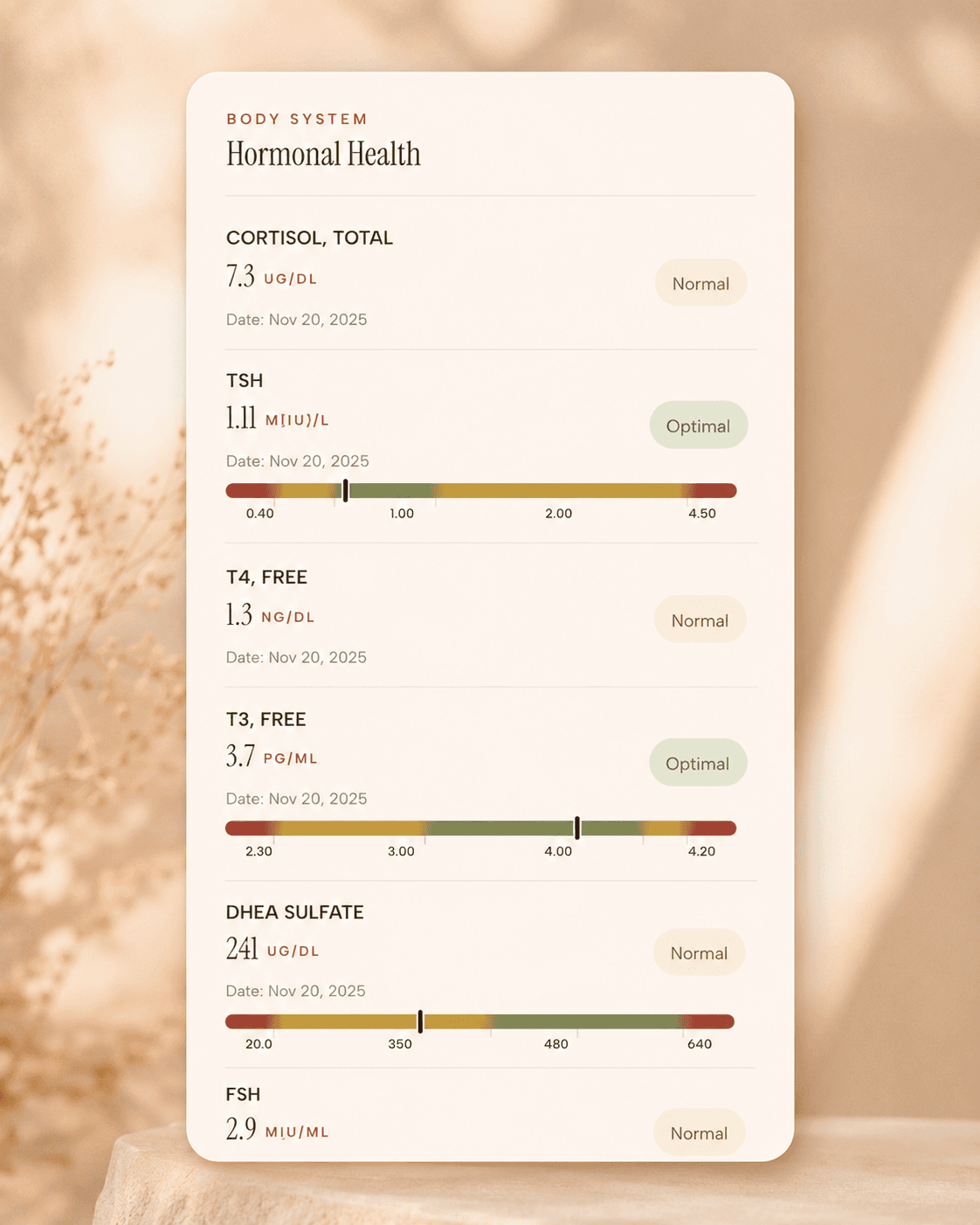
Your biological age shows up in your blood before symptoms do. A Vitals Vault starting-from-$99 panel with 100+ tests
one visit
covers the metabolic, inflammatory, and hormonal markers most linked to accelerated organ aging
About 1 week
Schedule online — results typically within a week
Clear next steps
Guidance included, with follow-up care available
HSA / FSA
Eligible for pre-tax health spending accounts
Why This Research Is Trending Now
Nature-level research just raised the resolution dramatically
The milestone generating discussion right now is that researchers have demonstrated aging clocks working at the level of named cell types within brain tissue — not just "brain" as a category, but the specific populations of cells that become dysfunctional in neurodegenerative disease. That kind of resolution opens the door to catching a problem in one cell type years before it shows up in any symptom or standard test.
Longevity communities recognized this as genuinely new
The Reddit longevity community, which tends to be scientifically literate and skeptical of hype, flagged this research as a real step forward rather than incremental noise. That signal matters because the same community often correctly identifies when a headline overstates the science — and in this case, the consensus was that the underlying work is solid and the implications are significant.
It connects to a broader shift toward precision prevention
This research lands at a moment when the broader medical conversation is moving away from population-average guidelines and toward individualized risk profiles. Knowing that your immune cells are aging faster than your neurons, or that your liver is a decade ahead of your heart, is exactly the kind of specific information that makes personalized prevention strategies possible rather than theoretical.
What the Evidence Actually Shows
Organ-level age gaps are real and measurable
Studies using multi-tissue epigenetic data have confirmed that biological age differences of five to fifteen years between organs in the same person are not unusual — they are common. The organs that tend to age fastest in most people are the liver, the lungs, and certain brain regions, while the heart and skeletal muscle often lag behind.
Faster-aging organs predict disease in that organ specifically
This is the finding that makes the research clinically meaningful: when one organ shows accelerated biological aging, the elevated disease risk tends to be specific to that organ rather than spread evenly across the body. A biologically old liver predicts liver disease and metabolic dysfunction more strongly than it predicts heart disease, which suggests these clocks are capturing something real about local tissue stress.
Brain cell-type clocks are revealing new Alzheimer's targets
Work on microglia and astrocytes — the brain's immune and support cells — has found that these populations can show dramatically accelerated aging even when neurons themselves look relatively healthy. Because microglia are responsible for clearing the protein debris associated with Alzheimer's disease, an aged and sluggish microglial population is now considered a meaningful early warning sign, not just a downstream consequence.
Lifestyle factors show up in cell-type clocks, not just whole-body ones
Early data suggest that interventions like sustained aerobic exercise, dietary changes, and sleep improvements can shift the biological age of specific cell populations — sometimes in different directions in different tissues. This is preliminary, but it supports the idea that targeted lifestyle changes might be able to slow aging in the organs or cell types that need it most, rather than producing only a generic whole-body effect.
How to Apply This to Your Own Health Now
Use standard labs as a proxy for organ-specific aging
Cell-type aging clocks are not yet available as consumer tests, but your existing bloodwork already tells a partial story about which organs are under the most stress. Liver enzymes, fasting insulin, inflammatory markers like high-sensitivity C-reactive protein, and kidney filtration rate are all proxies for biological wear in specific organs — and a Vitals Vault panel covers all of them in a single visit.
Match your lifestyle interventions to your weakest organ
If your labs suggest your liver is aging fastest — elevated enzymes, insulin resistance, high triglycerides — that is where your effort should concentrate first, which might mean reducing alcohol, cutting ultra-processed food, and adding resistance training before worrying about supplements aimed at brain longevity. The cell-type clock research supports this kind of targeted thinking rather than generic anti-aging protocols.
Track changes over time, not just a single snapshot
Biological aging is a trajectory, not a fixed number, so a single test result matters less than the direction you are moving. Retesting key markers every six to twelve months — and noting what changed in your habits between tests — gives you the kind of longitudinal signal that researchers use to evaluate whether an intervention is actually working in your body.
Risks, Limits, and What to Watch Out For
Consumer aging clocks vary widely in quality and validation
Several companies now sell epigenetic age tests directly to consumers, and their quality ranges from well-validated research tools to products built on much thinner science. Before spending money on one, it is worth checking whether the underlying clock has been validated in large independent populations and whether the company is transparent about what the test does and does not measure.
A high biological age in one organ is not a diagnosis
Knowing that your liver appears biologically older than your heart is a signal worth taking seriously, but it is not the same as a clinical diagnosis of liver disease — and treating it as one can lead to unnecessary anxiety or, worse, unnecessary interventions. The right response is to bring the information to a clinician who can put it in context alongside your full health picture.
The field is moving fast, which means today's findings may be refined
Cell-type aging clocks are a genuine scientific advance, but the research is young enough that specific numbers and thresholds will almost certainly be updated as larger studies accumulate. Staying curious and following the science is valuable — but holding any single finding too tightly, or making major health decisions based on one preliminary result, is premature.
Frequently Asked Questions
Can my liver really be 10 years older than my heart biologically?
Yes, and research confirms this kind of gap is common rather than exceptional. Biological age differences of five to fifteen years between organs in the same person have been documented in multiple large studies using epigenetic data. Your liver is particularly vulnerable because it processes everything you consume, so years of metabolic stress accumulate there faster than in tissues with less exposure to dietary and toxic load.
What is a cell-type aging clock and how is it different from a regular aging clock?
A standard aging clock reads chemical tags across a mixed sample of many cell types and produces a single average biological age. A cell-type aging clock isolates a specific population — like the brain's microglia or astrocytes — and calculates an age for that cell type alone. The difference matters because a problem brewing in one cell population can be completely invisible in a whole-tissue average, which is why the newer approach is considered a significant step forward for early detection.
Are cell-type aging clock tests available to consumers yet?
Not in a validated, widely available form as of mid-2026. The research is happening in academic and pharmaceutical settings, and the tools are not yet standardized for clinical or consumer use. What you can access today are whole-body epigenetic age tests from several companies, along with standard blood panels that serve as organ-specific proxies — both of which provide useful information while the more precise technology matures.
Which organs tend to age the fastest in most people?
Research consistently points to the liver, lungs, and certain brain regions as the tissues most likely to show accelerated biological aging in the general population. The liver's exposure to diet, alcohol, and metabolic stress makes it particularly prone to early aging, while the lungs accumulate damage from air quality and respiratory insults over time. The heart and skeletal muscle tend to age more slowly, especially in people who exercise regularly.
Can lifestyle changes actually reverse biological aging in a specific organ?
Preliminary evidence suggests yes, at least partially — sustained aerobic exercise, improved sleep, and dietary changes have all been associated with shifts in epigenetic age markers in specific tissues. The honest answer is that this research is still early, and we do not yet have large randomized trials confirming exactly how much reversal is possible or how durable it is. What the data does support clearly is that the same lifestyle factors that reduce disease risk also tend to slow biological aging in the organs most stressed by poor habits.