Weight Gain in Men: What It Usually Means and What to Do Next
Weight gain in men often comes from insulin resistance, low testosterone, or an underactive thyroid. Targeted labs are available at Quest—no referral needed.






Weight gain in men is usually not “random.” The most common drivers are insulin resistance (your body needing more insulin to handle carbs), low testosterone, and an underactive thyroid, and each one pushes your appetite, energy, and fat storage in a different direction. The good news is that a few targeted labs can often tell you which lane you’re in, so you stop guessing. If you feel like you’re doing the same things you always did but your waistline keeps creeping up, you’re not alone, and it’s not automatically a willpower problem. Men tend to notice it as more belly fat, less muscle definition, and a frustrating drop in energy that makes workouts feel harder than they used to. This page walks you through the most common medical and lifestyle mechanisms, what actually helps depending on the cause, and which blood tests can clarify the picture. If you want help connecting your symptoms to a plan, PocketMD can talk it through with you, and Vitals Vault labs can help you confirm what’s going on.
Why weight gain happens in men
Insulin resistance drives belly fat
When your muscles stop responding well to insulin, your body has to make more of it to keep blood sugar stable, and higher insulin makes it easier to store calories as fat. You often notice this as stubborn belly weight, stronger cravings later in the day, and feeling sleepy after carb-heavy meals. The takeaway is that this kind of weight gain usually responds best to changing how you time and build carbs, not just “eating less.”
Low testosterone shifts body composition
Testosterone helps you maintain muscle, and muscle is metabolically expensive tissue that keeps your daily calorie burn higher even when you’re not exercising. When testosterone is low, you can lose muscle quietly while gaining fat, so the scale climbs even if your habits haven’t changed much. If you’re also noticing lower libido, fewer morning erections, or reduced training recovery, it’s worth checking a morning testosterone level rather than assuming it’s just aging.
Underactive thyroid slows your engine
Your thyroid hormone sets the baseline “idle speed” of many body systems, including how quickly you burn energy and how you handle water and salt. When it runs low, you can gain weight from a mix of slightly lower calorie burn and fluid retention, and you may also feel cold, constipated, or mentally foggy. The practical point is that thyroid-related weight gain is usually modest, but treating true hypothyroidism can make your efforts finally feel effective again.
Poor sleep raises hunger signals
Short or broken sleep changes your appetite hormones so you feel hungrier and less satisfied after eating, and it also makes your brain reach for quick energy. In real life that looks like late-night snacking, bigger portions without meaning to, and less motivation to move the next day. If you snore, wake up unrefreshed, or your partner notices breathing pauses, sleep apnea is a common hidden driver in men and it is treatable.
Stress eating and alcohol add up
Stress doesn’t just “make you eat.” It makes high-calorie foods feel more rewarding in the moment, and alcohol lowers inhibition while also adding calories that your body burns before it burns fat. You might notice weight gain clustering around evenings and weekends, along with more anxiety or irritability. A useful takeaway is to treat the pattern like a system problem: change the environment and the routine, not just your intentions at 10 p.m.
What actually helps you lose it (based on the cause)
Build meals for insulin control
If cravings and belly fat are the main story, start by making your first meal protein-forward and fiber-forward, because that blunts the blood sugar spike that sets up later hunger. A simple target is 30–40 grams of protein at breakfast and lunch, and then add carbs after protein and vegetables rather than leading with bread or cereal. Give it two weeks and watch whether your afternoon slump and snacking urges calm down.
Lift for muscle, not just sweat
Cardio is great for your heart, but resistance training is what protects you from the slow muscle loss that makes weight gain easier over time. Aim for three full-body sessions per week and track progressive overload, which means you add a little weight, a rep, or a set over time. If you do this consistently, your waist often improves even before the scale does, because you’re changing body composition.
Fix sleep like it’s a prescription
Treat sleep as the lever that controls appetite the next day, because for many men it does. Pick a fixed wake time, keep caffeine earlier than noon, and get bright outdoor light within an hour of waking to anchor your body clock. If you suspect sleep apnea, ask for an evaluation, because using CPAP can reduce daytime hunger and make exercise feel possible again.
Use alcohol rules you can follow
If alcohol is part of your week, the goal is not perfection; it’s predictability. Choose alcohol-free days, decide your maximum drinks before you start, and pair drinks with a real meal so you don’t end up eating “drunk calories” afterward. Many men see the fastest waistline change from this one shift because it removes both liquid calories and late-night snacking.
Treat the medical driver you find
If labs show hypothyroidism, treating it can improve energy and reduce fluid retention, which makes your activity and appetite feel more normal again. If testosterone is clearly low on repeat morning testing and you have symptoms, a clinician can help you look for reversible causes like sleep apnea, certain medications, or excess body fat before jumping to long-term therapy. The point is to match the fix to the mechanism, because “try harder” is not a plan.
Lab tests that help explain weight gain in men
Insulin
Insulin is a master metabolic hormone that regulates glucose uptake, fat storage, and numerous cellular processes. In functional medicine, fasting insulin levels are one of the earliest and most sensitive markers of metabolic dysfunction. Elevated insulin (hyperinsulinemia) often precedes diabetes by years or decades and is central to metabolic syndrome. High insulin levels promote fat storage, inflammation, and contribute to numerous chronic diseases including cardiovascular disease, PCOS, and certain cancers.…
Learn moreTestosterone, Total, Ms
Total testosterone is the primary male sex hormone responsible for muscle mass, bone density, libido, energy levels, and cognitive function. In functional medicine, we recognize testosterone as a key marker of vitality and aging. Low testosterone (hypogonadism) affects up to 40% of men over 45 and is linked to metabolic syndrome, cardiovascular disease, depression, and reduced quality of life. Optimal testosterone levels support healthy body composition, sexual function, motivation, and overall masculine vitalit…
Learn moreTSH
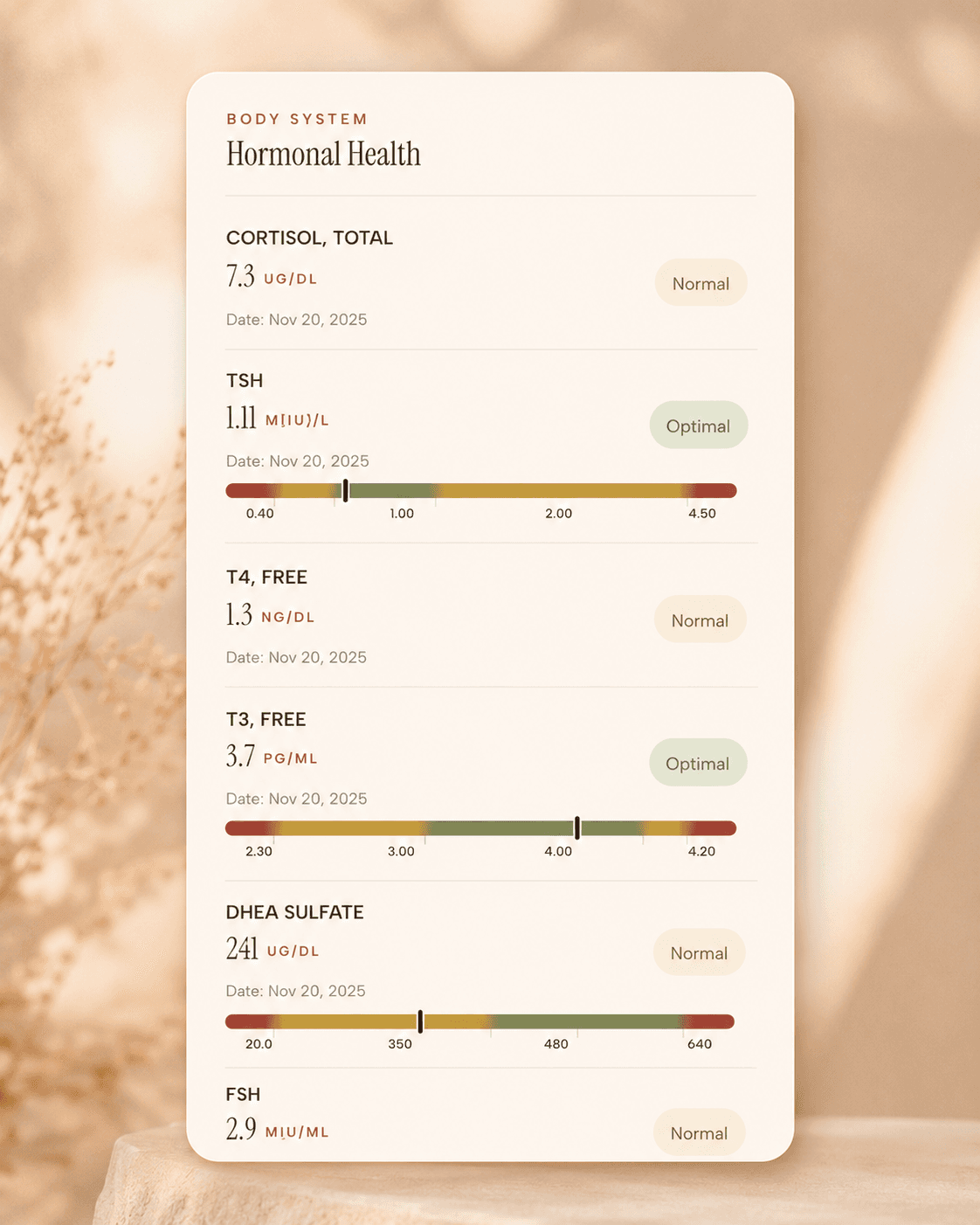
TSH is the master regulator of thyroid function, controlling the production of thyroid hormones T4 and T3. In functional medicine, we use narrower TSH ranges than conventional medicine to identify subclinical thyroid dysfunction early. Even mildly elevated TSH can indicate thyroid insufficiency, leading to fatigue, weight gain, depression, and metabolic dysfunction. TSH levels are influenced by stress, nutrient deficiencies, autoimmune conditions, and environmental toxins. Optimal TSH supports energy, metabolism…
Learn moreLab testing
Check testosterone, thyroid, and insulin resistance at Quest
starting from $99 panel with 100+ tests, one visit
No referral needed
About 1 week
Schedule online — results typically within a week
Clear next steps
Guidance included, with follow-up care available
HSA / FSA
Eligible for pre-tax health spending accounts
Pro Tips
Measure your waist at belly-button level once a week, not daily weight. In men, waist size tracks insulin resistance and visceral fat better than the scale, and it changes faster when your plan is working.
Try a 14-day “protein anchor” experiment: hit 30–40 grams of protein at breakfast and lunch, and keep dinner normal. If your cravings drop and your snacking fades, you just learned your weight gain is partly appetite-hormone driven.
If you suspect low testosterone, schedule labs between 7–10 a.m. and avoid testing the morning after heavy drinking or very poor sleep, because both can temporarily suppress your level and confuse the picture.
If you lift, track one main movement per session (like squat, row, or press) and aim to add 5 pounds or 1–2 reps every 1–2 weeks. When strength is rising, you are far less likely to be losing muscle while dieting.
Set a hard “kitchen closed” time that is earlier than your usual snack window, and pair it with a replacement ritual like tea, a shower, or a short walk. This works because it interrupts the cue-reward loop that drives stress eating at night.
Frequently Asked Questions
Why am I gaining weight even though I’m not eating more?
You can gain weight without obvious diet changes if your body composition shifts toward less muscle and more fat, or if hormones push you to store more energy as fat. Insulin resistance, low testosterone, and poor sleep are common culprits in men because they change hunger, recovery, and how your body partitions calories. Checking A1c, a morning total testosterone, and TSH can quickly narrow the “why,” so you’re not stuck guessing.
Can low testosterone cause belly fat in men?
Yes. Low testosterone makes it easier to lose muscle and harder to build it, and that lowers your daily calorie burn while encouraging fat gain, often around the abdomen. If you also have low libido, fewer morning erections, or reduced workout recovery, ask for a morning total testosterone test and confirm any low result with a repeat draw. Bring your symptoms to the conversation, because the number alone is not the whole story.
How much weight gain is typical with hypothyroidism?
True hypothyroidism usually causes modest weight gain, often in the 5–10 pound range, and some of that can be water retention rather than pure fat. The bigger clue is often how you feel: fatigue, constipation, feeling cold, dry skin, or brain fog along with weight changes. If your TSH is persistently elevated, treating the thyroid problem can make weight loss efforts feel “normal” again.
What blood tests should I get for unexplained weight gain as a man?
A practical starting trio is hemoglobin A1c for insulin resistance, TSH for thyroid function, and a morning total testosterone for androgen status. Those three cover the most common medical drivers of weight gain patterns in men and often point to the next step if something is off. If any result is abnormal, follow up with a clinician to interpret it in context and decide what to test next.
Is it normal to gain weight in your 30s and 40s as a man?
It’s common, but “common” doesn’t mean inevitable. Small drops in daily movement, slightly worse sleep, and gradual muscle loss can add up over a few years, and stress or alcohol often plays a bigger role than people realize. If your waist is rising despite consistent habits, use it as a signal to check A1c, TSH, and testosterone and adjust your plan based on what you find.