Cravings in Men: What They Mean and What Helps
Cravings in men often come from blood sugar swings, poor sleep, or stress hormones. Pinpoint your driver with targeted labs at Quest—no referral needed.






Cravings in men are most often your body pushing you to “fix” something fast, like a blood sugar dip after a carb-heavy meal, a sleep-debt brain looking for quick dopamine, or stress hormones that ramp up appetite. Sometimes they also show up when your metabolism is shifting, such as early insulin resistance or low testosterone, which can change hunger signals and impulse control. Targeted labs can help you figure out which driver fits you, so you stop guessing and start using the right strategy. Cravings feel personal, but they are usually predictable once you know your pattern. You might notice you are fine all day and then suddenly you are hunting for sweets at 9 pm, or you “need” salty snacks after a hard workout, or your diet falls apart during stressful weeks. This guide walks you through the most common causes in men, what actually helps in real life, and which blood tests can clarify the picture. If you want help connecting your symptoms to your habits, meds, and lab results, PocketMD can talk it through with you, and Vitals Vault labs can make the biology less mysterious.
Why you get cravings as a man
Blood sugar dips after carbs
If you eat a lot of refined carbs without much protein or fiber, your blood sugar can rise quickly and then drop faster than you expect. That drop can feel like sudden urgency: shaky hunger, irritability, and a very specific pull toward sweets or fast carbs because your brain wants the quickest fix. A useful clue is timing, because these cravings often hit 2–4 hours after a meal or late at night after a light dinner.
Early insulin resistance building
When your cells stop responding well to insulin, your body has to make more of it to keep blood sugar normal. High insulin can keep you on a “hunger roller coaster,” where you feel hungry again soon after eating and you crave calorie-dense foods even if you technically ate enough. If your waistline is creeping up or you feel sleepy after meals, it is worth treating cravings as a metabolic signal, not a willpower problem.
Sleep loss drives appetite hormones
Short sleep changes the balance of hunger hormones, so your body turns up the “eat” signal and turns down the “I’m satisfied” signal. The next day you often crave sugar and ultra-processed foods because your tired brain is trying to buy energy and focus. If cravings track with late nights, snoring, or waking unrefreshed, improving sleep can reduce cravings more than any supplement.
Stress and emotional eating loops
When you are stressed, your stress hormone system (cortisol) can increase appetite and make comfort foods feel extra rewarding. This is not just “in your head,” because stress also narrows your decision-making bandwidth, so you reach for whatever is easiest and most familiar. If cravings spike during work deadlines or conflict, the most effective lever is often changing the moment right before the craving, such as a 5-minute decompression routine, not trying to white-knuckle the craving itself.
Low testosterone and low drive
Low testosterone can change body composition over time, which can worsen insulin resistance and make cravings more frequent. It can also affect mood and motivation, which makes it harder to stick with a plan when cravings hit. If you also notice lower libido, fewer morning erections, or reduced training recovery, a morning testosterone test can help you decide whether hormones are part of your cravings story.
What actually helps curb cravings
Build a “steady” breakfast
If mornings set the tone for your cravings, start with a protein-forward breakfast that also has fiber and some fat, because that slows digestion and smooths blood sugar. Think in outcomes: you want to feel stable for 3–4 hours, not hungry again by 10 am. A simple test is to run this for a week and see whether your afternoon sugar cravings drop without extra effort.
Use a planned sweet, not a binge
If you try to ban sweets completely, cravings often get louder and then explode. Instead, choose a specific portion you actually enjoy, and pair it with a meal or a protein snack so it does not hit your bloodstream like a sugar bomb. This turns “I blew it” into “I chose it,” which is surprisingly powerful for consistency.
Train around cravings, not against them
Hard training can trigger cravings because your muscles are trying to refill glycogen, but the craving can overshoot what you need. A practical fix is to eat a recovery meal within 1–2 hours that includes carbs plus protein, so your body gets what it is asking for in a controlled way. If cravings hit late at night after evening workouts, moving some carbs earlier can calm the rebound.
Cut the decision points at night
Evening cravings are often a mix of fatigue, habit, and easy access. Make the “default” option something you can live with, such as a pre-portioned snack you choose ahead of time, and keep the trigger foods out of sight or out of the house for a couple of weeks. You are not weak for craving; you are human in an environment designed to make you snack.
Treat sleep like a craving tool
If you are sleeping under 7 hours most nights, cravings are doing exactly what biology predicts. Aim for a consistent wake time, and protect the last hour before bed from work and doom-scrolling because that is when your brain should be winding down. If you snore loudly or wake up choking or gasping, getting evaluated for sleep apnea can be a game-changer for cravings and weight.
Lab tests that help explain cravings in men
Glucose
Fasting glucose is a fundamental marker of glucose metabolism and insulin function. In functional medicine, we recognize that even 'normal' glucose levels in the upper range may indicate early insulin resistance. Optimal fasting glucose reflects efficient glucose regulation and insulin sensitivity. Elevated fasting glucose suggests the body's inability to maintain normal glucose levels overnight, indicating hepatic insulin resistance or insufficient insulin production. This marker is essential for early detectio…
Learn moreInsulin
Insulin is a master metabolic hormone that regulates glucose uptake, fat storage, and numerous cellular processes. In functional medicine, fasting insulin levels are one of the earliest and most sensitive markers of metabolic dysfunction. Elevated insulin (hyperinsulinemia) often precedes diabetes by years or decades and is central to metabolic syndrome. High insulin levels promote fat storage, inflammation, and contribute to numerous chronic diseases including cardiovascular disease, PCOS, and certain cancers.…
Learn moreCortisol, Total
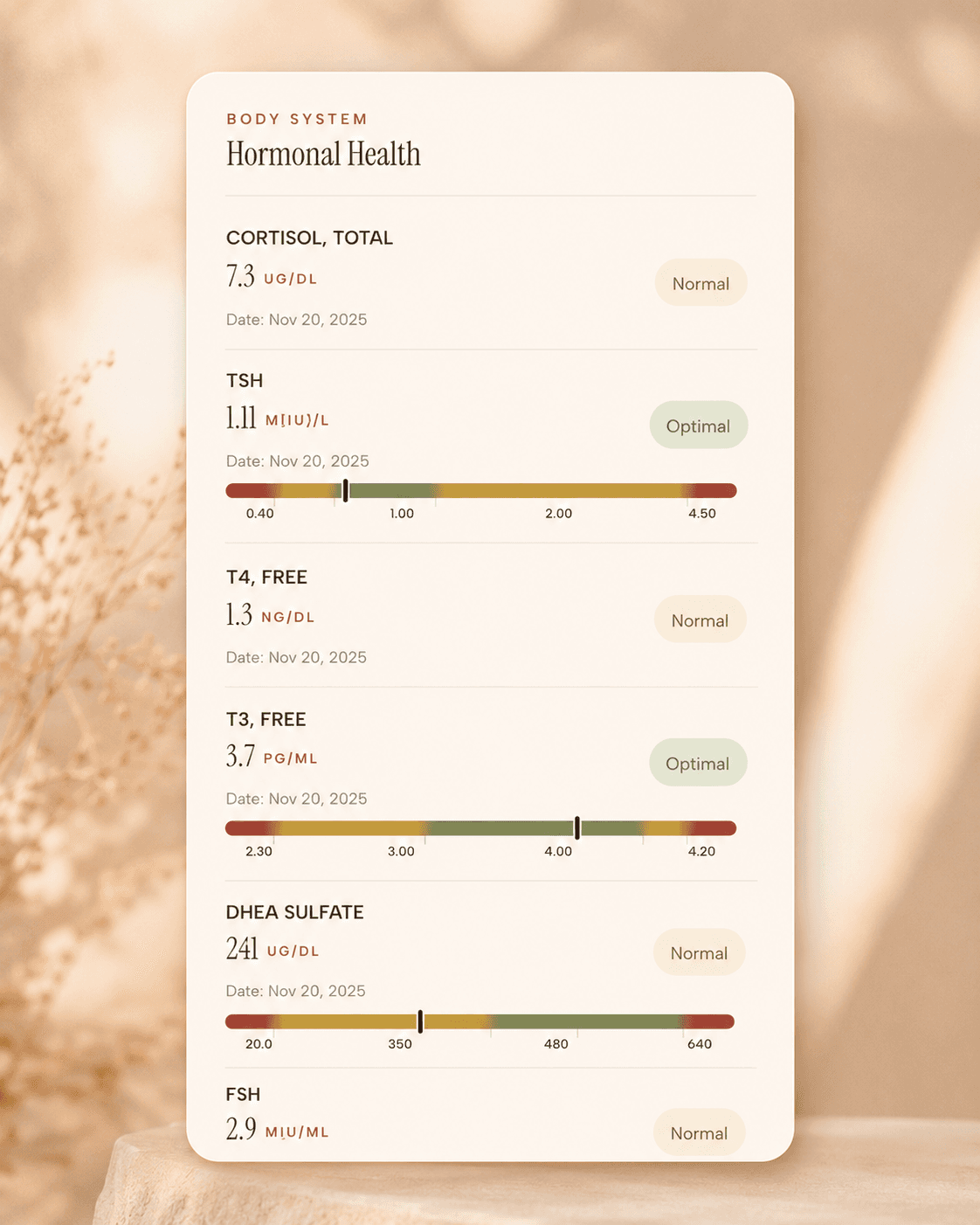
Cortisol is the primary stress hormone that regulates metabolism, immune function, and blood pressure. In functional medicine, cortisol assessment is crucial for understanding stress response and its impact on overall health. Chronic elevation suppresses testosterone production and immune function, while low cortisol indicates adrenal insufficiency. Optimal cortisol rhythm supports energy, mood stability, and hormone balance. Cortisol orchestrates the body's stress response and daily energy rhythms. Balanced cor…
Learn moreLab testing
Check fasting insulin, HbA1c, and morning testosterone at Quest
starting from $99 panel with 100+ tests, one visit
No referral needed
About 1 week
Schedule online — results typically within a week
Clear next steps
Guidance included, with follow-up care available
HSA / FSA
Eligible for pre-tax health spending accounts
Pro Tips
Run a 10-day “craving map” where you write down the time, what you last ate, your stress level from 1–10, and whether you slept under 7 hours. Patterns usually pop fast, and then your fix becomes obvious.
If your cravings hit mid-afternoon, try moving 25–35 grams of protein earlier in the day rather than adding willpower later. For many men, the craving is just a delayed protein deficit.
When a craving hits, set a 15-minute timer and drink something non-sweet while you decide what you will do. If you still want it when the timer ends, have a planned portion and move on without negotiating with yourself.
If you snack at night, make your kitchen “closed” after a specific time and brush your teeth right after your last planned food. That tiny ritual breaks the automatic loop better than motivation does.
If you suspect blood sugar swings, do one experiment: eat the same dinner you usually eat, but add a big serving of vegetables and a protein portion first. If your late-night cravings drop, you just learned something important about your glucose pattern.
Frequently Asked Questions
Why do I crave sugar at night as a man?
Nighttime sugar cravings often come from a mix of being overtired, under-eating earlier, and blood sugar dropping after a carb-heavy dinner. Alcohol can amplify this because it disrupts sleep and can make your blood sugar less stable overnight. Try a protein-and-fiber dinner for a week and aim for 7–8 hours of sleep to see if the pattern changes.
Are cravings a sign of low testosterone?
Cravings are not a classic “low testosterone” symptom by themselves, but low testosterone can contribute indirectly by worsening insulin resistance and lowering energy and motivation. If you also have low libido, fewer morning erections, or reduced gym recovery, a morning total testosterone blood test is a reasonable next step. If it is low, repeat testing and a clinician review help you interpret it correctly.
What blood tests should I get for constant cravings?
A practical starting trio is fasting insulin, HbA1c, and morning total testosterone because they cover blood sugar dynamics and a common male hormone driver. If fasting insulin is high with a borderline HbA1c, cravings may be an early insulin resistance signal even before diabetes shows up. Bring your results and your craving pattern to a clinician or use PocketMD to help you decide what to do next.
Can stress cause food cravings even if I’m not hungry?
Yes, because stress hormones can increase appetite and also make reward-seeking stronger, which is why cravings can feel urgent even when your stomach is not empty. You will often notice the craving is specific, like “chips” or “ice cream,” rather than general hunger. A quick, repeatable stress off-ramp, such as a 5-minute walk or breathing drill, works best when you do it before you open the pantry.
How do I stop cravings without cutting all carbs?
You usually do better by changing the type and timing of carbs rather than eliminating them. Pair carbs with protein and fiber, and put more of your carbs around workouts or earlier in the day if nights are your danger zone. Start with one change you can keep for two weeks, and track whether your cravings drop in intensity from, say, an 8/10 to a 4/10.
What the research says about cravings
Sleep restriction increases appetite and can shift food choices toward higher-calorie options
Higher ultra-processed food intake is associated with increased risk of overweight and obesity (systematic review and meta-analysis)
Endocrine Society guideline on testosterone therapy in men with hypogonadism (how testosterone is evaluated and treated)