Slow Metabolism in Men: What It Usually Means
Slow metabolism in men often comes from low thyroid, insulin resistance, or low testosterone with muscle loss. Targeted labs available—no referral needed.





Slow metabolism in men usually isn’t a mysterious “broken body” problem. It is most often a mix of lower thyroid drive, insulin resistance that keeps fat storage switched on, or low testosterone that quietly reduces muscle and daily calorie burn. A few targeted labs can help you figure out which one is most likely in your case so you stop guessing. What makes this frustrating is that the scale can stay stuck even when you are doing “the right things,” because your body can compensate by burning fewer calories at rest and by making you hungrier. Aging, repeated dieting, poor sleep, and some medications can all push you in that direction, but they do it through different pathways. This page walks you through the most common causes, what actually helps (beyond generic advice), and which blood tests are most useful. If you want help matching your symptoms and history to the most likely cause, PocketMD can talk it through with you, and Vitals Vault labs can help you confirm what your body is signaling.
Why your metabolism feels slow
Thyroid running a bit low
Your thyroid sets a lot of your baseline “idle speed,” so when it is underactive (hypothyroidism), you can feel like you are gaining weight on the same food and activity. You might also notice feeling colder than other people, constipation, dry skin, or a heavy, slowed-down feeling. The key takeaway is that mild thyroid problems can look like “just aging,” so checking TSH and free T4 is often the fastest way to rule this in or out.
Insulin resistance storing energy
If your cells stop responding well to insulin, your body has to make more of it to keep blood sugar steady, and higher insulin makes it easier to store fat and harder to tap into it. This often shows up as belly weight gain, strong cravings after carbs, and energy crashes a couple hours after eating. A practical clue is your waistline: if your waist is climbing even when your weight is stable, it is worth checking fasting insulin and glucose rather than relying on willpower alone.
Low testosterone, less muscle burn
Testosterone helps you build and keep muscle, and muscle is metabolically active tissue that burns calories even when you are sitting still. When testosterone is low (male hypogonadism), you may notice lower libido, fewer morning erections, reduced strength, and a softer body composition even if your weight barely changes. The takeaway is that “low T” is not diagnosed by symptoms alone, so a morning total testosterone test is the starting point before you consider any treatment.
Dieting lowered your energy output
After repeated calorie cuts, your body often adapts by unconsciously moving less, running cooler, and burning fewer calories at rest, which is sometimes called adaptive thermogenesis. It can feel like you are doing the same workouts but getting less payoff, and you may feel unusually tired or hungry for the amount you are eating. The useful move here is to stop chasing bigger deficits and instead rebuild muscle and daily movement for a few weeks so your “baseline burn” has room to come back up.
Sleep loss raising hunger hormones
When you sleep poorly, your appetite signals shift in a way that makes high-calorie food feel more rewarding, and your body handles glucose less smoothly the next day. That combination can look like a slow metabolism because you are hungrier, you snack more, and your workouts feel harder at the same time. If you are regularly getting under 6–7 hours or you snore and wake unrefreshed, treating sleep can move the needle on weight more than another supplement ever will.
What actually helps speed it up
Build muscle with progressive strength
If your metabolism feels slow, your most reliable lever is adding metabolically active tissue, which means strength training that gradually gets harder. Aim for 2–4 sessions per week where you track loads or reps so you can see progress, even if it is small. Pair it with enough protein at meals so your body has the building blocks to actually keep the muscle you earn.
Use a “carb timing” experiment
If insulin resistance is part of your picture, you do not have to go extreme, but you do need structure. Try putting most of your starchier carbs around workouts and keeping other meals built around protein, vegetables, and healthy fats for two weeks, then reassess cravings and waist measurement. If your hunger calms down and your afternoon energy improves, that is a strong sign you are working with your biology instead of against it.
Treat thyroid issues, not symptoms
If labs show true hypothyroidism, the fix is correcting the hormone signal, not “boosting metabolism” with stimulants. Proper thyroid treatment often improves cold intolerance, constipation, and energy first, and weight changes tend to be slower and more modest than people expect. Bring your lab values and symptoms to a clinician and ask what target they are aiming for, because “normal range” is not the same as “optimal for you.”
Address low testosterone thoughtfully
If your morning testosterone is repeatedly low and you have compatible symptoms, treatment can improve body composition mainly by making it easier to gain muscle and train consistently. It is not a fat-loss drug, and it is not the right choice if you want to preserve fertility, because it can suppress sperm production. The practical next step is to confirm with repeat morning testing and discuss causes like sleep apnea, obesity, or certain meds before jumping to therapy.
Stop the “all-or-nothing” deficit cycle
A lot of men get stuck in a loop of aggressive dieting during the week and rebound eating on weekends, which keeps average intake high while training quality stays low. Instead, pick a small, consistent deficit you can hold for 8–12 weeks and track one performance metric in the gym so you do not lose muscle while dieting. Consistency is what convinces your body it is safe to let go of stored energy.
Lab tests that help explain slow metabolism in men
TSH
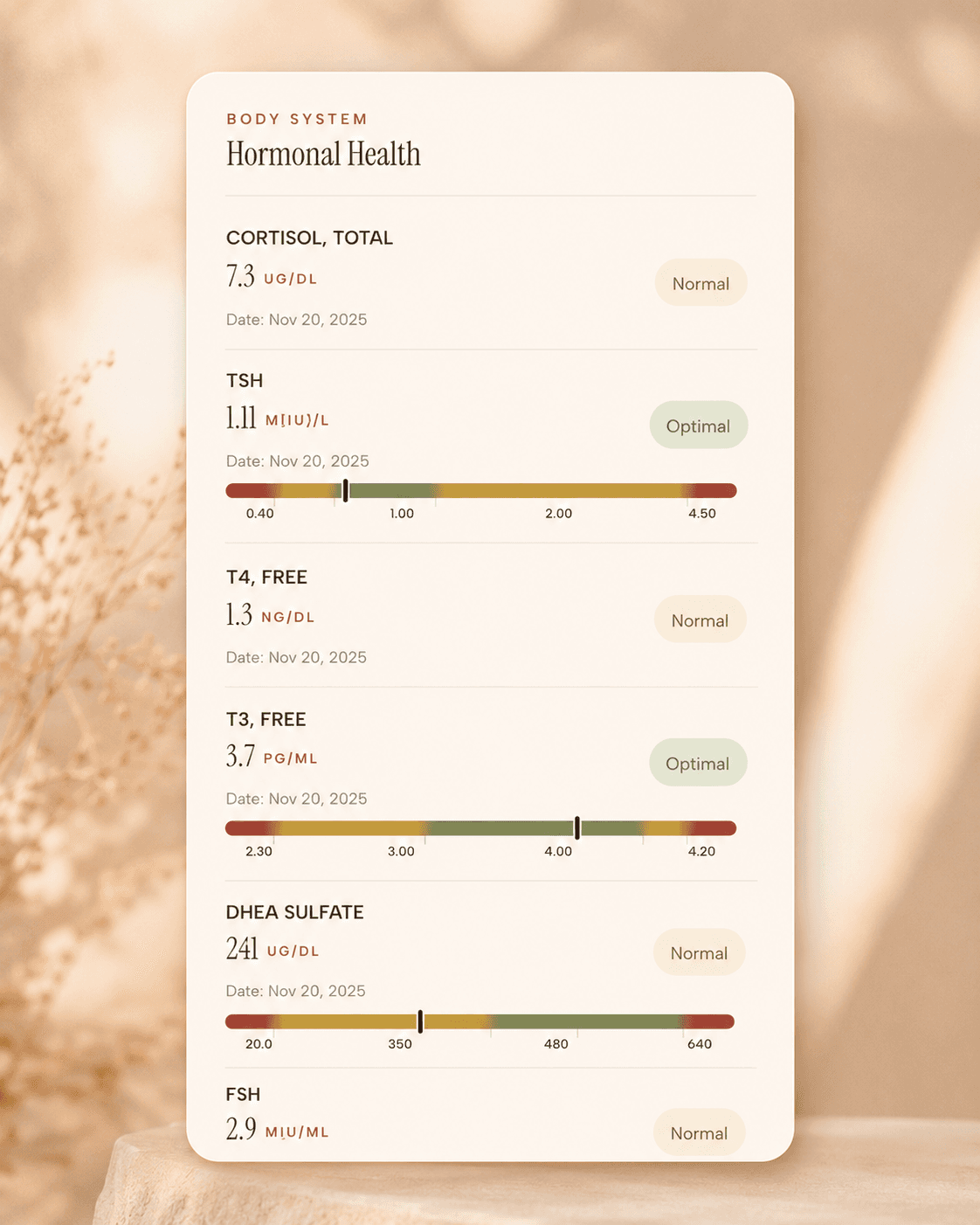
TSH is the master regulator of thyroid function, controlling the production of thyroid hormones T4 and T3. In functional medicine, we use narrower TSH ranges than conventional medicine to identify subclinical thyroid dysfunction early. Even mildly elevated TSH can indicate thyroid insufficiency, leading to fatigue, weight gain, depression, and metabolic dysfunction. TSH levels are influenced by stress, nutrient deficiencies, autoimmune conditions, and environmental toxins. Optimal TSH supports energy, metabolism…
Learn moreInsulin
Insulin is a master metabolic hormone that regulates glucose uptake, fat storage, and numerous cellular processes. In functional medicine, fasting insulin levels are one of the earliest and most sensitive markers of metabolic dysfunction. Elevated insulin (hyperinsulinemia) often precedes diabetes by years or decades and is central to metabolic syndrome. High insulin levels promote fat storage, inflammation, and contribute to numerous chronic diseases including cardiovascular disease, PCOS, and certain cancers.…
Learn moreTestosterone, Total, Ms
Total testosterone is the primary male sex hormone responsible for muscle mass, bone density, libido, energy levels, and cognitive function. In functional medicine, we recognize testosterone as a key marker of vitality and aging. Low testosterone (hypogonadism) affects up to 40% of men over 45 and is linked to metabolic syndrome, cardiovascular disease, depression, and reduced quality of life. Optimal testosterone levels support healthy body composition, sexual function, motivation, and overall masculine vitalit…
Learn moreLab testing
Check TSH, free T4, fasting insulin, and total testosterone at Quest
starting from $99 panel with 100+ tests, one visit
No referral needed
About 1 week
Schedule online — results typically within a week
Clear next steps
Guidance included, with follow-up care available
HSA / FSA
Eligible for pre-tax health spending accounts
Pro Tips
Measure your waist at the level of your belly button once a week, in the morning, and write it down. If your waist is shrinking while weight is flat, you are likely gaining muscle and losing fat even if the scale refuses to reward you yet.
Do a two-week “protein floor” before you cut more calories: aim for about 30–40 grams of protein at breakfast and lunch, then see if cravings and late-night snacking drop. For many men, appetite control is the missing piece that makes a plan finally feel doable.
If you suspect low testosterone, schedule labs between about 7–10 a.m. and avoid testing the morning after a terrible night of sleep or heavy drinking, because both can temporarily lower your result. A clean test day prevents a false alarm.
If you are lifting but not progressing, pick one compound movement and add 2.5–5 lb or 1–2 reps each week for a month. That small, boring progression is often what turns “I work out” into “my body is changing.”
Try a 10–15 minute walk right after your largest meal for a week. It is a simple way to blunt post-meal glucose spikes, and many people notice fewer energy crashes and less evening hunger.
Frequently Asked Questions
Can you really have a slow metabolism as a man?
Yes, but it is usually not a single broken switch. In men, “slow metabolism” most often reflects less muscle mass, lower thyroid output, insulin resistance, or a combination that lowers your daily calorie burn and increases hunger. If you want to stop guessing, start with TSH plus free T4, fasting insulin, and a morning total testosterone.
Why can’t I lose weight even with diet and exercise?
If you are consistently in a true calorie deficit, weight eventually moves, but your body can adapt by lowering non-exercise movement and increasing hunger, which makes the deficit smaller than you think. Insulin resistance can also make cravings and energy crashes stronger, which pushes intake back up without you noticing. Track waist circumference and consider fasting insulin testing to see whether the “math” is being distorted by physiology.
What TSH level is considered optimal for metabolism?
Most labs flag TSH as abnormal only when it is quite high, but many people feel best with TSH roughly around 0.5–2.5 when free T4 is solidly in range. A TSH persistently above about 2.5–3.0 with low or low-normal free T4 can fit with hypothyroid symptoms, including weight gain and cold intolerance. If your TSH is borderline, repeat it and include free T4 before drawing conclusions.
Does low testosterone cause weight gain in men?
Low testosterone can contribute to weight gain indirectly because it makes it easier to lose muscle and harder to train hard, and less muscle means fewer calories burned at rest. Many men also notice lower motivation, lower libido, and reduced strength alongside body composition changes. The actionable step is a morning total testosterone test, repeated if borderline, before you consider any therapy.
What is the best blood test panel for slow metabolism?
A focused starting set is TSH with free T4 for thyroid drive, fasting insulin (ideally paired with fasting glucose) for insulin resistance, and morning total testosterone for hormonal support of muscle. Those three pathways explain a large share of “stubborn weight plus low energy” in men. If one is abnormal, that result tells you what to test next rather than ordering everything at once.
Research worth knowing about
Endocrine Society guideline on testosterone therapy in men with hypogonadism (diagnosis and treatment thresholds)
American Thyroid Association guidelines for hypothyroidism in adults (how to interpret TSH and treat)
Sleep restriction reduces insulin sensitivity and shifts appetite regulation (mechanism behind “tired and gaining”)