Poor Sleep At Night: Causes, What Helps, and Lab Tests
Poor sleep at night often comes from stress hormones, sleep apnea, or iron/thyroid issues. Targeted labs are available—no referral needed.






Poor sleep at night usually happens because your brain is stuck in “alert mode” from stress and irregular schedules, because your breathing is disrupted during sleep, or because a fixable body issue like low iron or thyroid imbalance is keeping your nervous system revved up. The frustrating part is that these can feel identical at 2 a.m., but a few targeted labs and the right questions can help you figure out which one fits you. If you’re lying there wide awake, you’re not failing at sleep. Your body is doing something on purpose, even if it’s the wrong thing for the moment. Sometimes it’s a habit loop (you’ve trained your brain to associate bed with effort), sometimes it’s biology (your airway collapses, your legs feel “wired,” or your hormones are off), and often it’s a mix. This guide walks you through the most common root causes, what tends to help in real life, and which tests are actually worth checking. If you want help sorting your pattern quickly, PocketMD can talk it through with you, and Vitals Vault labs can help confirm (or rule out) the common medical contributors.
Why you’re sleeping poorly at night
Your stress system won’t downshift
When your body stays in “threat mode,” your stress hormones and adrenaline stay higher than they should be at night, which keeps your brain scanning instead of drifting. It often feels like you’re tired but wired, or you fall asleep and then pop awake with your mind suddenly busy. The takeaway is to treat this like a timing problem, not a willpower problem: you need a predictable wind-down and fewer late-night “activators” like intense work, doomscrolling, or heavy exercise close to bed.
Breathing disruptions during sleep
If your airway narrows or collapses during sleep (sleep apnea), your brain briefly wakes you up to reopen it, even if you don’t remember waking. You can end up with light, broken sleep and morning headaches, dry mouth, or daytime sleepiness that feels out of proportion to your bedtime. If you snore, wake up gasping, or your partner notices pauses in breathing, a sleep study is more useful than any supplement.
Iron is low, and your legs won’t settle
Low iron stores can make your nervous system more twitchy and can contribute to restless legs, which is that uncomfortable urge to move that shows up the moment you try to relax. You might describe it as crawling, buzzing, or a deep “can’t get comfortable” feeling that delays sleep or keeps pulling you out of it. A ferritin test (your iron storage marker) is the key one here, because you can have normal hemoglobin and still have low iron stores.
Thyroid imbalance keeps you “on”
When your thyroid is overactive, your metabolism runs hot and fast, which can feel like a racing mind, a pounding heart, heat intolerance, or waking up too early. Even mild shifts can make sleep shallow and make anxiety feel worse at night. If poor sleep comes with new palpitations, unexplained weight change, or tremor, checking thyroid-stimulating hormone (TSH) is a practical first step.
Your sleep drive got uncoupled
Insomnia often becomes a learned pattern: you start associating bed with effort, frustration, and clock-watching, so your brain treats bedtime like a performance. That creates a loop where you spend more time in bed trying to sleep, which actually makes sleep lighter and more fragile. The most effective fix is counterintuitive but proven: you tighten the sleep window and rebuild a strong bed-sleep association using CBT-I (cognitive behavioral therapy for insomnia).
What actually helps you sleep tonight (and long-term)
Use a CBT-I style sleep window
If you’re spending nine hours in bed to get six hours of sleep, your brain learns that bed equals wakefulness. For two weeks, set a consistent wake time and only allow yourself the amount of time in bed you’re actually sleeping (many people start with 6–7 hours), then expand by 15 minutes once sleep becomes solid. It feels strict, but it’s one of the fastest ways to rebuild deep sleep if your main issue is lying awake.
Make your wind-down boring on purpose
Your nervous system needs a clear signal that the day is over, and “scrolling until you drop” is not that signal. Pick a 30–45 minute routine that you can repeat nightly, such as dim lights, a warm shower, and a paper book, and keep it the same even on weekends. The point is repetition: your brain starts predicting sleep, which makes falling asleep less of a fight.
Treat breathing first if it’s suspicious
If you snore loudly, wake up choking, or feel unrefreshed despite enough hours, focus on airway evaluation rather than stacking sleep aids. Side-sleeping, reducing alcohol in the evening, and addressing nasal congestion can help a bit, but they are not substitutes for diagnosis and treatment. A proper sleep study and therapies like CPAP or a dental device can be life-changing when apnea is the driver.
Fix the “3 a.m. wake-up” loop
Waking up at the same time nightly often becomes conditioned, and it’s reinforced when you check the clock, start problem-solving, or stay in bed getting more frustrated. If you’re awake for about 20 minutes, get out of bed and do something quiet in dim light until you feel sleepy again, then return. It’s annoying, but it breaks the association between your bed and being awake.
Use supplements with a clear target
Magnesium glycinate can be helpful if you feel physically tense, while low-dose melatonin is most useful for shifting timing rather than “knocking you out.” If you suspect restless legs, iron replacement only makes sense after checking ferritin, because taking iron blindly can cause side effects and misses the real issue if ferritin is already adequate. The best supplement plan is the one that matches your pattern and has a stop date if it doesn’t help.
Useful biomarkers to discuss with your clinician
Iron, Total
Serum iron measures the amount of iron circulating in your blood at the time of testing. In functional medicine, we recognize that serum iron alone provides limited information about iron status, as it fluctuates throughout the day and is affected by recent iron intake, inflammation, and diurnal variation. However, when combined with other iron studies, it helps assess iron metabolism and transport. Iron is essential for oxygen transport, energy production, DNA synthesis, and immune function. Optimal serum iron…
Learn moreTSH
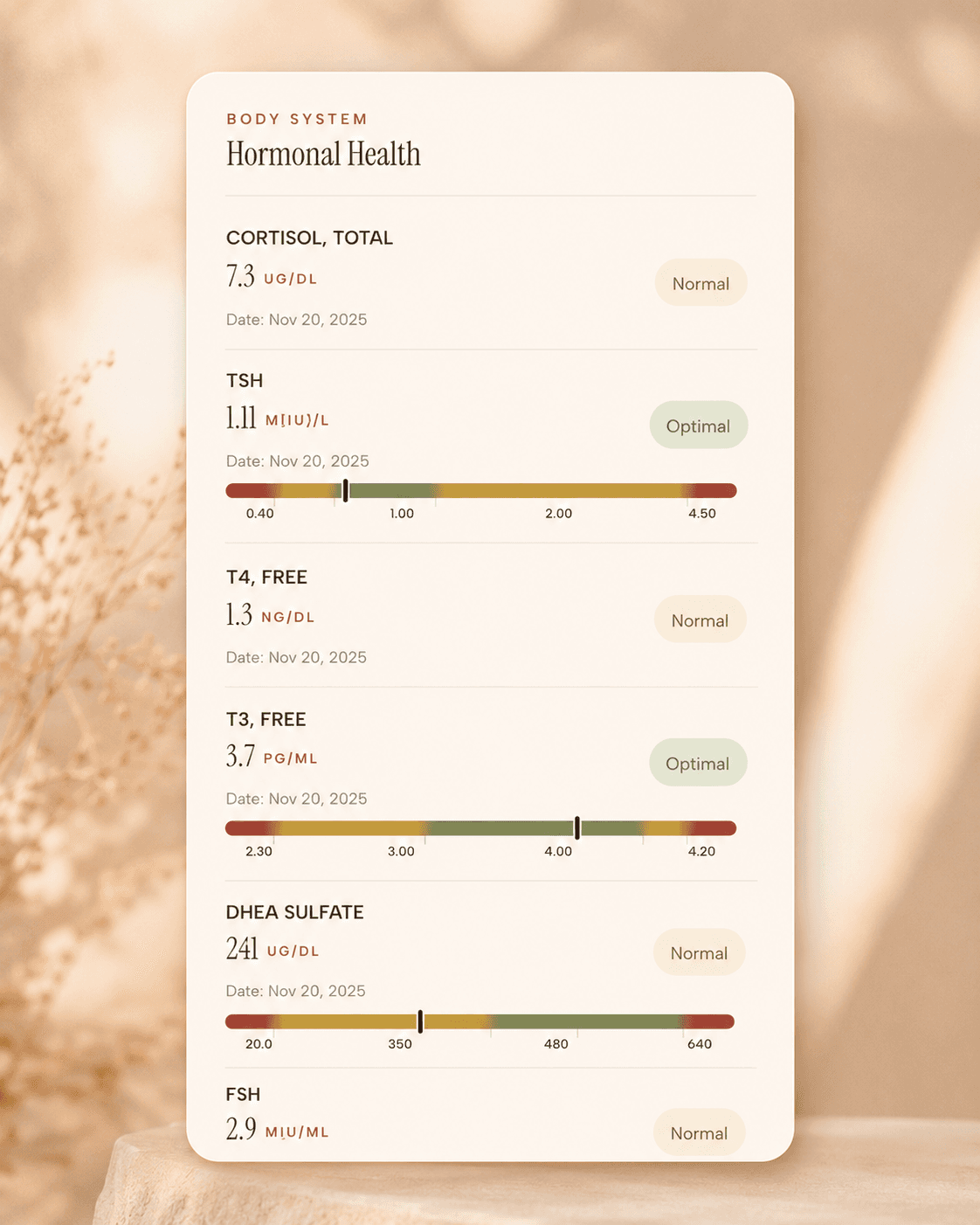
TSH is the master regulator of thyroid function, controlling the production of thyroid hormones T4 and T3. In functional medicine, we use narrower TSH ranges than conventional medicine to identify subclinical thyroid dysfunction early. Even mildly elevated TSH can indicate thyroid insufficiency, leading to fatigue, weight gain, depression, and metabolic dysfunction. TSH levels are influenced by stress, nutrient deficiencies, autoimmune conditions, and environmental toxins. Optimal TSH supports energy, metabolism…
Learn moreCortisol, Total
Cortisol is the primary stress hormone that regulates metabolism, immune function, and blood pressure. In functional medicine, cortisol assessment is crucial for understanding stress response and its impact on overall health. Chronic elevation suppresses testosterone production and immune function, while low cortisol indicates adrenal insufficiency. Optimal cortisol rhythm supports energy, mood stability, and hormone balance. Cortisol orchestrates the body's stress response and daily energy rhythms. Balanced cor…
Learn moreLab testing
Check ferritin, TSH, and vitamin D at Quest
starting from $99 panel with 100+ tests, one visit
No referral needed
About 1 week
Schedule online — results typically within a week
Clear next steps
Guidance included, with follow-up care available
HSA / FSA
Eligible for pre-tax health spending accounts
Pro Tips
Run a 10-night “pattern log” that takes under two minutes: write down your bedtime, wake time, how long it took to fall asleep, and one sentence about what was different that day. Patterns show up faster than you think, especially around alcohol, late workouts, and late meals.
Pick one wake time and protect it for two weeks, even after a bad night. That’s how you rebuild your sleep drive, and it usually works better than trying to “catch up” by sleeping in.
If you wake up anxious, try a physical reset before you think: put one hand on your belly and do 6 slow breaths with a longer exhale than inhale. It won’t solve your life, but it often turns down the alarm enough for sleep to return.
If you suspect restless legs, test ferritin before you buy iron. If ferritin is below about 50 ng/mL, bring that number to your clinician and ask what dose and duration make sense for you.
Stop clock-checking by making it slightly inconvenient: turn the clock away, keep your phone out of reach, and use an old-school alarm. Knowing it’s 3:12 a.m. rarely helps, and it often trains your brain to wake at that time.
Frequently Asked Questions
Why can’t I fall asleep even when I’m exhausted?
Usually it’s because your arousal system is still switched on, so your brain treats bedtime like a problem to solve instead of a cue to power down. That can happen from stress, irregular sleep timing, or a learned insomnia loop where bed equals effort. A consistent wake time plus a CBT-I style sleep window is often the fastest way to reset it, and it’s worth checking ferritin and TSH if you also feel jittery or “wired.”
What’s the difference between insomnia and sleep apnea?
Insomnia is mainly trouble falling asleep, staying asleep, or waking too early even when you have the chance to sleep. Sleep apnea is repeated breathing interruptions that fragment sleep, so you may get “hours” of sleep but still wake unrefreshed, often with snoring, dry mouth, or morning headaches. If apnea signs fit you, a sleep study is the right next step because treating the airway can improve sleep dramatically.
What labs should I get for poor sleep at night?
A practical starting trio is ferritin (iron stores), TSH (thyroid screening), and 25-hydroxy vitamin D, because low iron and thyroid imbalance can directly disrupt sleep and vitamin D deficiency often overlaps with fatigue and low mood. For restless legs specifically, ferritin above about 50–75 ng/mL is a common target even if your lab flags “normal.” Bring your results and your sleep pattern (can’t fall asleep vs wake-ups) to a clinician so the numbers get interpreted in context.
Why do I wake up at 3 a.m. every night?
Sometimes it’s biology, like alcohol wearing off, reflux, or breathing disruptions, but often it becomes a conditioned wake-up where your brain expects to be awake at that time. The habit gets reinforced when you check the clock, scroll, or lie there frustrated. If you’re awake for about 20 minutes, get out of bed in dim light and return only when sleepy, and consider screening for apnea if you also snore or wake up gasping.
Is melatonin safe, and how much should I take?
Melatonin is generally safe for short-term use, but it works best as a timing signal rather than a strong sedative. Many people do better with a low dose like 0.3–1 mg taken 1–2 hours before the desired bedtime, because higher doses can cause next-day grogginess or vivid dreams. If your main issue is staying asleep, focus first on CBT-I strategies and ruling out apnea or low ferritin rather than escalating melatonin.