Why Are You Such a Light Sleeper at Night?
Light sleep at night often comes from stress hormones, sleep apnea, or thyroid overdrive. Targeted blood tests available—no referral needed.





Light sleep at night usually means your brain is staying on “guard” instead of dropping into stable deep sleep, and common drivers include stress hormones running high, breathing disruptions like sleep apnea, and an overactive thyroid. It can also happen when your internal clock is mis-timed from shift work, late light exposure, or irregular sleep hours. A few targeted labs can help you sort out which body-system issue is pushing you into shallow sleep. If you’re waking up at every little sound, feeling like you never fully “conk out,” or popping awake at 2–4 a.m. with a busy mind, you’re not imagining it. Sleep depth is a real, measurable thing, and it changes with age, stress load, medications, and health conditions. This page walks you through the most common reasons light sleep happens, what tends to help in real life, and which tests are worth considering. If you want help matching your exact pattern to the most likely cause, PocketMD can talk it through with you, and Vitals Vault labs can help you check the basics without a long wait.
Why you’re such a light sleeper at night
Stress chemistry stays switched on
When your stress system is revved up, your body releases alerting chemicals like cortisol and adrenaline that keep your brain closer to “wake mode,” even if you’re exhausted. You might fall asleep fine, but you wake easily, dream more, or feel like you never get that heavy, dead-to-the-world sleep. The most useful clue is timing: if you’re wide awake after a stressful day or you wake with a racing mind, your next step is to build a wind-down that lowers arousal on purpose, not just “go to bed earlier.”
Breathing disruptions (sleep apnea)
Sleep apnea happens when your airway narrows during sleep, which briefly drops oxygen and forces tiny “rescue” wake-ups so you can breathe normally again. You often don’t remember these arousals, but your sleep becomes fragmented and light, and you can wake with a dry mouth, morning headache, or a partner who notices snoring or gasping. If you’re sleepy during the day despite enough hours in bed, or your blood pressure is creeping up, it’s worth asking about a home sleep test because no supplement can outwork untreated apnea.
Your body clock is out of sync
Your sleep depth depends on your internal clock, which is set mostly by light and timing. Shift work, late-night screens, or sleeping in on weekends can push your brain to treat the first half of the night like “not bedtime yet,” so you hover in lighter stages and wake more easily. A strong hint is when you sleep deeper at odd hours, like late morning after a night shift, but struggle at a “normal” bedtime. The fix is usually about consistent anchors—light in the morning and darkness at night—rather than chasing more time in bed.
Thyroid overdrive keeps you wired
If your thyroid is running fast, your whole system speeds up, which can feel like restlessness, heat intolerance, a fast heart rate, or anxiety that doesn’t match your situation. Even mild thyroid overactivity can make sleep feel thin and easily interrupted because your baseline “idle speed” is too high. If light sleep comes with new palpitations, unexplained weight loss, or frequent bowel movements, a simple TSH blood test is a practical place to start.
Low iron or restless legs
Low iron stores can irritate the nervous system and contribute to restless legs, which is that uncomfortable urge to move your legs when you’re trying to relax. Even if you don’t label it “restless legs,” you might notice fidgeting, calf discomfort, or repeated micro-wake-ups that keep you from sinking into deep sleep. Ferritin is the key iron-storage test here, and many sleep specialists aim for ferritin above about 50–75 ng/mL when restless legs symptoms are present. If you’re also having heavy periods, frequent blood donation, or a mostly plant-based diet, this cause jumps higher on the list.
What actually helps you sleep deeper
Build a real downshift routine
If your nervous system is stuck in “on,” you need a predictable off-ramp. Try a 20–30 minute routine that stays the same each night, such as a warm shower, dim lights, and a low-stimulation activity like reading paper pages, because repetition teaches your brain what comes next. Keep it boring on purpose, and if your mind spins, write a quick “tomorrow list” to park the thoughts outside your head.
Treat breathing issues, not just symptoms
If snoring, gasping, or daytime sleepiness is part of your story, prioritize screening for sleep apnea instead of stacking sleep aids. A home sleep apnea test can be enough for many people, and treatment (often CPAP, sometimes oral appliances or weight changes) can transform sleep depth within days to weeks. The practical takeaway is simple: if you suspect apnea, make that your main project first, because fragmented breathing keeps pulling you back to light sleep all night.
Use light to reset your clock
Morning light is a powerful signal that tells your brain when “day” starts, which helps it allow deeper sleep at night. Get 10–20 minutes of outdoor light soon after waking, and then protect your evenings by dimming lights and reducing bright screens for the last hour before bed. If you’re a shift worker, you can still use this idea by choosing a consistent “morning” after your main sleep and using bright light then, while wearing sunglasses on the commute home to avoid confusing your clock.
Stabilize blood sugar before bed
Some people wake lightly because their blood sugar dips overnight, which triggers adrenaline and a sudden “ping” awake. You’ll often notice this pattern if you wake around 2–4 a.m. feeling hungry, shaky, or oddly alert, especially after a light dinner or alcohol. A practical experiment is to eat a balanced dinner with protein and fiber, and if needed try a small snack that combines protein with a slow carb, then see whether the middle-of-the-night wake-ups ease over a week.
Targeted supplements, used carefully
Magnesium glycinate can help some people feel less “twitchy” at night, and low-dose melatonin can be useful when your schedule is shifted, but more is not better. If you try melatonin, start low (around 0.3–1 mg) taken 2–3 hours before your intended bedtime, because high doses can cause vivid dreams and next-day grogginess that makes sleep feel even lighter. If you’re on sedatives, drink alcohol at night, or have suspected sleep apnea, talk with a clinician before adding anything that could further relax your airway.
Useful biomarkers to discuss with your clinician
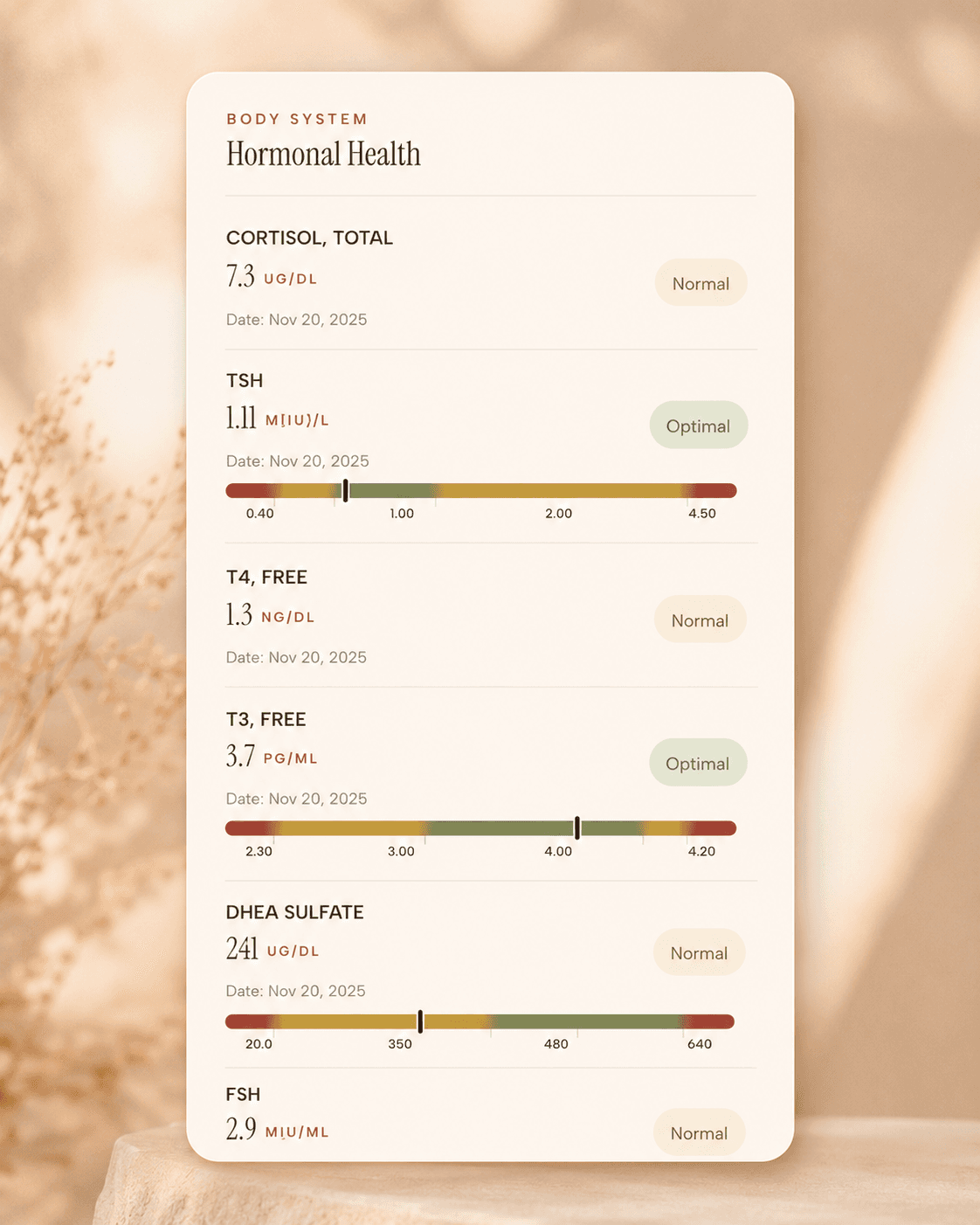
Cortisol, Total
Cortisol is the primary stress hormone that regulates metabolism, immune function, and blood pressure. In functional medicine, cortisol assessment is crucial for understanding stress response and its impact on overall health. Chronic elevation suppresses testosterone production and immune function, while low cortisol indicates adrenal insufficiency. Optimal cortisol rhythm supports energy, mood stability, and hormone balance. Cortisol orchestrates the body's stress response and daily energy rhythms. Balanced cor…
Learn moreTSH
TSH is the master regulator of thyroid function, controlling the production of thyroid hormones T4 and T3. In functional medicine, we use narrower TSH ranges than conventional medicine to identify subclinical thyroid dysfunction early. Even mildly elevated TSH can indicate thyroid insufficiency, leading to fatigue, weight gain, depression, and metabolic dysfunction. TSH levels are influenced by stress, nutrient deficiencies, autoimmune conditions, and environmental toxins. Optimal TSH supports energy, metabolism…
Learn moreGlucose
Fasting glucose is a fundamental marker of glucose metabolism and insulin function. In functional medicine, we recognize that even 'normal' glucose levels in the upper range may indicate early insulin resistance. Optimal fasting glucose reflects efficient glucose regulation and insulin sensitivity. Elevated fasting glucose suggests the body's inability to maintain normal glucose levels overnight, indicating hepatic insulin resistance or insufficient insulin production. This marker is essential for early detectio…
Learn moreLab testing
Check TSH, ferritin, and vitamin D at Quest
starting from $99 panel with 100+ tests, one visit
No referral needed, and it can clarify why your sleep stays shallow
About 1 week
Schedule online — results typically within a week
Clear next steps
Guidance included, with follow-up care available
HSA / FSA
Eligible for pre-tax health spending accounts
Pro Tips
Do a 7-night “wake map”: each morning, jot down roughly when you woke (even if you didn’t check the clock), what you felt (hot, hungry, anxious, needing to pee), and what time you had caffeine or alcohol. Patterns show up fast, and they point to the right fix.
If you wake at 2–4 a.m. with a jolt, try a 60-second exhale-focused breathing drill in bed, such as inhaling for 4 and exhaling for 6–8, because longer exhales nudge your body toward the calming side of your nervous system.
If noise wakes you, don’t just buy earplugs and hope. Add a steady sound (fan or white noise) so sudden changes don’t stand out, and you’ll often notice fewer “micro-wake” moments within a few nights.
If you suspect restless legs, test a simple rule: symptoms that get worse at rest, feel better with movement, and are worse in the evening are a strong clue. Bring that pattern to your clinician and ask specifically about ferritin and iron replacement targets.
If you’re a shift worker, pick one anchor that stays consistent even on days off, such as your wake time after your main sleep. Your brain handles a weird schedule better than a constantly changing one.
Frequently Asked Questions
Why do I sleep lightly and wake up at every sound?
That usually happens when your brain is staying in a higher-alert state, so it doesn’t spend as long in deep sleep. Stress, late-night light exposure, alcohol, and sleep apnea can all keep your sleep “surface level,” even if you’re in bed for 8 hours. Try a one-week experiment with a consistent wind-down plus a steady background sound, and if you also snore or feel unrefreshed, ask about a sleep apnea test.
Is light sleep the same thing as insomnia?
Not exactly. Insomnia is trouble falling asleep, staying asleep, or feeling restored, while “light sleep” is more about sleep depth and frequent arousals that you may or may not remember. You can have both, but if you fall asleep quickly and still feel wrecked, think about fragmented sleep from breathing issues, restless legs, or an out-of-sync body clock. Tracking when you wake and how you feel can help you tell which pattern you have.
Can sleep apnea cause light sleep even if I’m not overweight?
Yes. Airway anatomy, nasal congestion, alcohol, and sleeping on your back can contribute to sleep apnea at many body sizes. The clue is repeated arousals with snoring, gasping, dry mouth, morning headaches, or daytime sleepiness despite enough hours in bed. If that sounds like you, a home sleep test is a practical next step.
What vitamin deficiency causes light sleep at night?
Low iron stores are a big one because they can contribute to restless legs and frequent micro-awakenings, and ferritin is the test that reflects iron reserves. Low vitamin D is also linked with poorer sleep quality in many studies, although it’s rarely the only cause. If you’re supplementing, recheck ferritin or 25-hydroxy vitamin D after a consistent plan so you know whether the numbers actually moved.
What labs should I get for waking up a lot at night?
If your sleep feels light and fragmented, a useful starting trio is TSH for thyroid overactivity, ferritin for iron stores (especially if you have restless legs or heavy periods), and 25-hydroxy vitamin D as a common correctable contributor to poor sleep quality. Abnormal results don’t automatically explain everything, but they can point you toward a fix that’s more specific than generic sleep hygiene. If your symptoms include loud snoring or gasping, pair labs with a sleep apnea evaluation because labs won’t detect breathing-related wake-ups.