Why Do You Get Memory Loss Before Eating?
Memory loss before eating often comes from low blood sugar, dehydration, or vitamin B12 deficiency. Targeted labs available at Quest—no referral needed.






Memory loss before eating is often your brain running low on fuel or fluid, which can happen with low blood sugar, dehydration, or nutrient issues like low vitamin B12. It can also show up when stress hormones rise during fasting and make you feel scattered rather than “sharp.” Simple blood tests can help you tell the difference between a reversible problem and something that needs a deeper workup. This symptom is unsettling because it can feel like your memory is “slipping,” especially if you have a family history of dementia or you’re recovering from an illness like COVID. The good news is that timing matters: when forgetfulness reliably shows up before meals and improves after you eat, that pattern often points to a body-level trigger you can address. Below, you’ll learn the most common causes, what actually helps in the moment, and which labs are worth checking. If you want help matching your exact pattern to the most likely cause, PocketMD can walk through your symptoms with you, and Vitals Vault labs can help you confirm what’s going on.
Why Do You Get Memory Loss Before Eating?
Low blood sugar dips
Your brain depends on a steady supply of glucose, so when your blood sugar drops before a meal, you can feel forgetful, slow, or oddly irritable. This can happen if you go a long time without food, if you drink alcohol without eating, or if you take diabetes medications that lower glucose. A useful clue is that the “memory” problem often improves within 10–20 minutes of eating something with carbs plus protein.
Dehydration and low blood volume
Even mild dehydration can reduce blood flow to the brain a bit, which can feel like you can’t hold onto a thought or you keep losing your place mid-task. People often notice it more before meals because they have not had fluids for hours, especially after coffee, exercise, or diuretics. If your mouth feels dry or you get a lightheaded “head rush” when standing, try water first and see if your thinking clears before you assume it’s memory decline.
Low vitamin B12 (cobalamin)
Vitamin B12 helps maintain the insulation around nerves, and when it is low, your brain can feel foggy and your recall can get unreliable. It can sneak up on you if you eat little or no animal foods, take metformin or acid blockers long-term, or have absorption problems. If you also have tingling in your feet, balance changes, or a sore tongue, B12 testing becomes especially important because treatment can prevent long-term nerve damage.
Thyroid slowing your thinking
When your thyroid runs low, your whole system slows down, including attention and working memory, so you may feel like you are “buffering” before meals. The timing can be misleading because fatigue and brain fog often peak when you are hungry and already low on energy. If you also feel unusually cold, constipated, or notice hair thinning, a thyroid check is a practical next step because thyroid-related brain fog is often very treatable.
Stress-hormone surge while fasting
If fasting makes your body feel stressed, it can release more adrenaline and cortisol, which can make your mind jumpy and your memory unreliable. Instead of calm forgetfulness, it often feels like you cannot focus long enough to encode what you just heard or read. This is common when you are sleeping poorly, overtraining, or living on caffeine, and it is a sign your body may do better with smaller, steadier meals rather than long gaps.
What Actually Helps Before Meals
Use a fast “rescue snack”
If you suspect a blood sugar dip, try 15 grams of fast carbs, such as glucose tablets or 4 ounces of juice, and then follow with protein within 30 minutes. The goal is to get your brain fuel back quickly and then keep it steady so the fog does not rebound. If you have diabetes or take glucose-lowering meds, confirm with a fingerstick or CGM when possible so you are not guessing.
Hydrate with a plan, not vibes
If your fog shows up late morning or mid-afternoon, drink a full glass of water when you first notice it and another with your next meal. If you sweat a lot or you are on a low-salt diet, adding electrolytes can help because water alone may not restore circulation as well. A simple way to track this is to aim for pale-yellow urine most of the day, not clear all day and not dark by noon.
Build a steadier breakfast
A breakfast that is mostly refined carbs can spike glucose and then drop it, which sets you up for pre-lunch brain fog. Instead, anchor breakfast with 25–35 grams of protein and add fiber, such as eggs with vegetables or Greek yogurt with chia and berries. You are not “eating perfectly” here; you are preventing the kind of hunger that makes your brain feel unreliable.
Adjust fasting to your nervous system
If you are doing intermittent fasting and you feel mentally worse before you eat, that is useful feedback, not a failure of willpower. Try shortening the fasting window for two weeks, or add a small protein-forward snack earlier in the day and see if your memory stabilizes. If your symptoms include shaking, sweating, or confusion, prioritize regular meals and talk with a clinician because those can be signs your body is not tolerating long gaps.
Treat the underlying deficiency or thyroid issue
If labs show low B12 or thyroid imbalance, targeted treatment often improves attention and recall more than any “brain supplement.” For B12, the right form and dose depends on whether the problem is diet versus absorption, and you may need injections if absorption is poor. For thyroid issues, the key is getting to a dose that improves symptoms while keeping TSH in a healthy range, which is something you can track over time with repeat testing.
Useful biomarkers to discuss with your clinician
Glucose
Fasting glucose is a fundamental marker of glucose metabolism and insulin function. In functional medicine, we recognize that even 'normal' glucose levels in the upper range may indicate early insulin resistance. Optimal fasting glucose reflects efficient glucose regulation and insulin sensitivity. Elevated fasting glucose suggests the body's inability to maintain normal glucose levels overnight, indicating hepatic insulin resistance or insufficient insulin production. This marker is essential for early detectio…
Learn moreVitamin B12
Vitamin B12 (cobalamin) is essential for DNA synthesis, red blood cell formation, neurological function, and energy metabolism. In functional medicine, we recognize that B12 deficiency is surprisingly common, especially in older adults, vegetarians, vegans, and those with digestive issues. B12 deficiency can cause irreversible neurological damage if left untreated. The vitamin is crucial for methylation reactions, which affect cardiovascular health, detoxification, and gene expression. Even subclinical deficienc…
Learn moreTSH
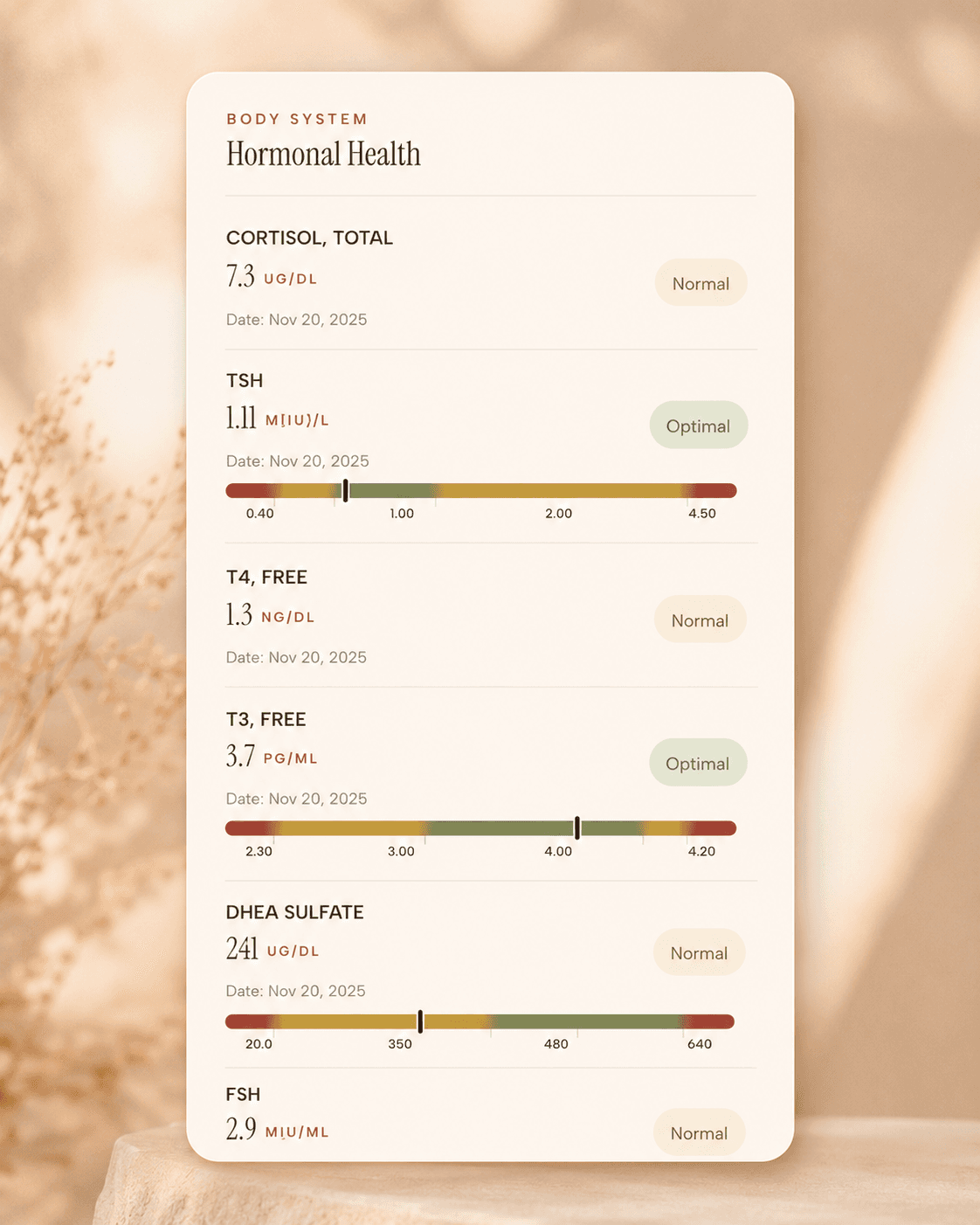
TSH is the master regulator of thyroid function, controlling the production of thyroid hormones T4 and T3. In functional medicine, we use narrower TSH ranges than conventional medicine to identify subclinical thyroid dysfunction early. Even mildly elevated TSH can indicate thyroid insufficiency, leading to fatigue, weight gain, depression, and metabolic dysfunction. TSH levels are influenced by stress, nutrient deficiencies, autoimmune conditions, and environmental toxins. Optimal TSH supports energy, metabolism…
Learn moreLab testing
Check glucose control, B12 status, and thyroid function at Quest
starting from $99 panel with 100+ tests, one visit
No referral needed
About 1 week
Schedule online — results typically within a week
Clear next steps
Guidance included, with follow-up care available
HSA / FSA
Eligible for pre-tax health spending accounts
Pro Tips
Run a 7-day pattern check: write down the time your fog starts, when you last ate, and whether it improves within 20 minutes of carbs plus protein. That timing is one of the fastest ways to separate “fuel problem” from “memory disease.”
If you wake up foggy and skip breakfast, try a two-week experiment where you eat within 60 minutes of waking and include at least 25 grams of protein. If your pre-lunch forgetfulness fades, you just found a lever you can keep using.
Keep a “hydration trigger” rule: every time you make coffee or tea, drink an equal amount of water right after. This prevents the common pattern where caffeine blunts hunger cues while dehydration quietly worsens brain fog.
If you take metformin or a long-term acid reducer, put “B12 check” on your calendar once a year. Those medications can lower B12 over time, and catching it early is much easier than chasing symptoms later.
When you feel foggy before eating, do a 60-second safety check: can you state the date, your location, and what you were about to do? If you cannot, or if someone notices new confusion, treat it as urgent rather than “just hunger.”
Frequently Asked Questions
Can low blood sugar cause memory loss before eating?
Yes. When your blood sugar drops, your brain has less fuel, so you can feel forgetful, confused, or unable to focus, especially right before meals. If symptoms improve quickly after 15 grams of fast carbs and then a protein-containing snack, that pattern supports a glucose dip. If you use insulin or sulfonylureas, check a fingerstick or CGM during symptoms and share the numbers with your clinician.
How do I know if this is dementia or just hunger?
Hunger-related memory problems usually have a clear timing pattern and improve after you eat or drink, while dementia tends to be progressive and shows up even when you are well-fed. If you notice missed bills, getting lost in familiar places, or repeated questions that do not improve with meals, that deserves a formal evaluation. Start by tracking when it happens and bring that timeline to a clinician or PocketMD for triage.
Why is my brain fog worse in the morning before breakfast?
Overnight you go many hours without food or fluids, so you can wake up mildly dehydrated and low on readily available glucose. If you also slept poorly, stress hormones can be higher in the morning, which makes focus and short-term memory worse. Try water on waking and a protein-forward breakfast within an hour for two weeks and see if the pattern changes.
What vitamin deficiency causes forgetfulness before meals?
Low vitamin B12 is a common, treatable cause of brain fog and memory issues, and it can be more noticeable when you are already tired or hungry. Testing is important because “borderline” B12 can still cause symptoms, especially if methylmalonic acid (MMA) is elevated. If you are vegan, older, or take metformin or acid blockers, ask specifically about B12 and MMA.
What labs should I get for memory loss that improves after eating?
A practical starting trio is hemoglobin A1c for glucose patterns, vitamin B12 (ideally with MMA) for nerve support, and TSH for thyroid-related brain fog. These tests help identify reversible drivers that can mimic “memory decline,” especially when symptoms cluster around fasting. If results are normal but symptoms persist, bring your log of timing, meals, sleep, and medications to a clinician for the next step.