Why Do You Lose Focus Before Eating?
Lack of focus before eating often comes from blood sugar dips, dehydration, or low iron. Targeted labs are available—no referral needed at Quest.






Lack of focus before eating usually happens because your brain is running low on easy fuel, your stress hormones are rising to keep you going, or you are dealing with an underlying issue like low iron that makes “hungry” feel like brain fog. For some people it is a true blood sugar dip, and for others it is the combination of caffeine, dehydration, and a long gap between meals. A few targeted labs can help you tell the difference so you stop guessing. This symptom is common in students, remote workers, and anyone who gets “in the zone” and forgets to eat until their brain suddenly refuses to cooperate. It can also overlap with ADHD-style attention issues, because hunger makes your brain less tolerant of boring tasks and more likely to chase quick dopamine. The good news is that you can usually improve it quickly with a better pre-meal plan, and you can use PocketMD to talk through your pattern and decide whether lab testing through Vitals Vault makes sense for you.
Why Do You Lose Focus Before Eating?
A real blood sugar dip
If your blood sugar drops lower than your brain likes, your attention can feel jittery, scattered, or oddly emotional, because your body releases adrenaline to keep glucose available. This is why you might notice shaky hands, sweating, or a racing heart along with the “I can’t think” feeling. A practical clue is timing: it often hits after a long gap between meals or after a high-sugar breakfast that burns off fast. If you can, check a fingerstick glucose during symptoms or bring the pattern to your clinician, because the fix depends on whether it is true hypoglycemia.
Blood sugar swings after carbs
Sometimes the problem is not low blood sugar all day, but a sharp rise and then a faster-than-expected fall after a carb-heavy meal earlier. That swing can leave you feeling foggy and irritable before your next meal, even if your glucose is not technically “dangerously low.” You might notice it more after sweet coffee drinks, pastries, or a lunch that is mostly refined carbs. The takeaway is to test a different breakfast or lunch for a week: add protein and fiber, and see if the pre-meal crash softens.
Dehydration plus caffeine overreach
When you are slightly dehydrated, your brain gets less efficient, and caffeine can push you into a wired-but-unfocused state that feels like hunger brain fog. If you also skipped breakfast, caffeine can suppress appetite early and then leave you with a sudden attention cliff late morning. This often shows up as a headache, dry mouth, or feeling “floaty” when you stand up. Try pairing your first caffeine with water and something small to eat, because caffeine works better when your body is not scrambling to compensate.
Low iron stores (ferritin)
Low iron does not always announce itself as obvious fatigue; it can show up as poor concentration, low motivation, and a sense that your brain is moving through mud, especially when you are hungry. Iron helps your body deliver oxygen and supports brain energy metabolism, so low stores can make any stressor—like a missed meal—feel bigger. This is more likely if you have heavy periods, follow a low-meat diet, or have frequent blood donation. Ferritin testing is useful here, because you can have “normal” hemoglobin and still have iron stores that are too low for you to feel sharp.
Stress hormones masking hunger
When you are under pressure, your body can run on stress hormones like cortisol and adrenaline, which keep you moving but make deep focus harder. You may not feel hungry until the stress response fades, and then you suddenly feel foggy, irritable, and unable to prioritize. This pattern is common during long meetings, intense study sessions, or deadline sprints. The key takeaway is that you need a planned “fuel break” before you feel hungry, because waiting for hunger is waiting until your brain is already struggling.
What Actually Helps You Focus Before Meals
Build a “steady fuel” breakfast
If your focus falls apart late morning, start by changing the first meal of the day, because it sets your blood sugar rhythm. Aim for protein plus fiber, which slows digestion and reduces the spike-and-crash feeling. For example, eggs with whole-grain toast and fruit tends to hold you steadier than a pastry or sweet cereal. Give it five weekdays, because one good breakfast does not erase a week of swings.
Use a planned mini-snack
If you regularly go more than 4–5 hours without eating, a small snack can prevent the “brain off” moment without ruining your appetite. Think of it as a bridge, not a second meal: something like yogurt, a handful of nuts, or a cheese stick with an apple. The goal is to keep your brain supplied while you finish the task you are in, so you do not end up panic-eating later. Set a quiet timer if you tend to hyperfocus and forget meals.
Pair caffeine with food and water
Caffeine on an empty stomach can amplify anxiety and make your attention jumpy, which feels like poor focus even if you have energy. Try drinking a full glass of water first, then have caffeine with or after a few bites of food. If you are using caffeine to replace breakfast, that is a strong signal your routine needs a different anchor. Many people notice the biggest improvement by simply moving their first coffee 30–60 minutes later.
Try a short “reset walk”
A 5–10 minute walk before you eat can lower stress hormones and improve glucose handling, which makes the pre-meal fog less intense. It also gives your brain a clean break from screens, which helps if the “lack of focus” is partly mental overload. Keep it easy; you are not trying to do cardio. The win is that you come back more able to choose a balanced meal instead of grabbing the fastest sugar.
Treat the underlying deficiency
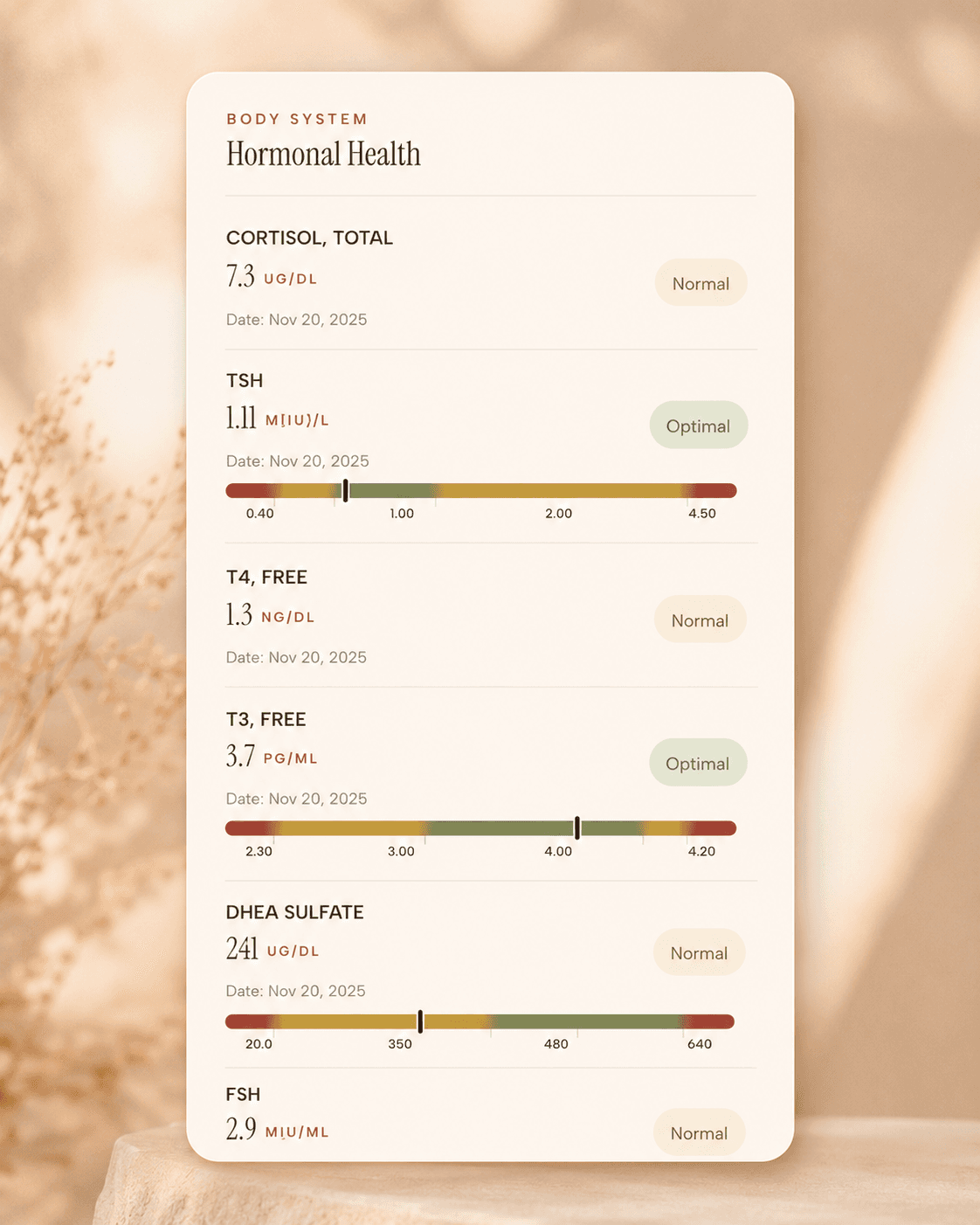
If ferritin, thyroid function, or blood sugar markers are off, lifestyle tweaks alone can feel like pushing a boulder uphill. Iron repletion, thyroid treatment, or a structured plan for glucose swings can change your baseline so hunger does not knock you out. This is especially important if your symptoms are new, worsening, or paired with hair shedding, shortness of breath, palpitations, or unintentional weight change. Use your results to guide the next step with a clinician rather than adding random supplements.
Useful biomarkers to discuss with your clinician
Glucose
Fasting glucose is a fundamental marker of glucose metabolism and insulin function. In functional medicine, we recognize that even 'normal' glucose levels in the upper range may indicate early insulin resistance. Optimal fasting glucose reflects efficient glucose regulation and insulin sensitivity. Elevated fasting glucose suggests the body's inability to maintain normal glucose levels overnight, indicating hepatic insulin resistance or insufficient insulin production. This marker is essential for early detectio…
Learn moreFerritin
Ferritin is your body's iron storage protein, reflecting total iron stores in the body. In functional medicine, ferritin assessment is crucial for identifying both iron deficiency and iron overload, conditions that can significantly impact energy levels and overall health. Low ferritin is the earliest sign of iron deficiency, often occurring before anemia develops. This can cause fatigue, weakness, restless leg syndrome, and cognitive impairment. Conversely, elevated ferritin may indicate iron overload, inflamma…
Learn moreIron, Total
Serum iron measures the amount of iron circulating in your blood at the time of testing. In functional medicine, we recognize that serum iron alone provides limited information about iron status, as it fluctuates throughout the day and is affected by recent iron intake, inflammation, and diurnal variation. However, when combined with other iron studies, it helps assess iron metabolism and transport. Iron is essential for oxygen transport, energy production, DNA synthesis, and immune function. Optimal serum iron…
Learn moreLab testing
Get ferritin, HbA1c, and TSH checked at Quest
starting from $99 panel with 100+ tests, one visit
No referral needed
About 1 week
Schedule online — results typically within a week
Clear next steps
Guidance included, with follow-up care available
HSA / FSA
Eligible for pre-tax health spending accounts
Pro Tips
Do a 7-day “pre-meal focus log” where you rate focus from 1–10 right before lunch and right before dinner, then write what you ate at the previous meal. Patterns show up fast when you track the meal before the crash.
If you suspect low blood sugar, try the 15–15 test once: take 15 grams of fast carbs, wait 15 minutes, and see if your focus noticeably improves. If it does, you have a strong clue that glucose is part of your story, so bring that to your clinician.
When you are deep in work, schedule your next meal like a meeting and set a two-step reminder: one alert 20 minutes before to wrap up, and one at mealtime to actually eat. This prevents the “I forgot to eat, now I’m useless” spiral.
If mornings are the problem, swap a sweet breakfast for a protein-forward one and keep everything else the same for five days. That single change is often enough to tell you whether blood sugar swings are driving the focus drop.
If you have heavy periods and this symptom is new, do not assume it is just stress. Low ferritin can sneak up on you, so checking ferritin and treating low iron can be a surprisingly direct fix.
Frequently Asked Questions
Is lack of focus before eating a sign of low blood sugar?
It can be, especially if you also feel shaky, sweaty, anxious, or get a fast heartbeat that improves quickly after eating. True hypoglycemia is usually confirmed by measuring glucose during symptoms, not just by “feeling hungry.” If this happens often, ask about checking HbA1c and discussing targeted glucose monitoring during episodes.
Why do I get brain fog when I skip breakfast?
Skipping breakfast can leave you running on stress hormones for a few hours, which keeps you awake but makes sustained attention harder. If your first meal the day before was high in sugar or low in protein, the next morning crash can feel even sharper. Try a protein-plus-fiber breakfast for five weekdays and see if late-morning focus improves.
Can iron deficiency cause trouble concentrating when hungry?
Yes. Low iron stores can reduce oxygen delivery and brain energy efficiency, so hunger feels like a bigger hit to your concentration. Ferritin is the key test because you can have normal hemoglobin and still have low iron reserves. If ferritin is low, work with a clinician on iron dosing and on finding the cause, such as heavy periods.
Does caffeine make it harder to focus on an empty stomach?
For many people it does, because caffeine can increase adrenaline and make your attention feel scattered rather than steady. It can also delay hunger signals, so you realize you need food only when your focus has already crashed. A simple experiment is to drink water first and have coffee with or after food for one week.
When should I worry about focus problems before meals?
Pay extra attention if the symptom is new, worsening, or paired with fainting, confusion, chest pain, or unintentional weight loss, because those deserve prompt medical evaluation. If it is frequent but not severe, it is still worth checking ferritin, HbA1c, and TSH to rule out common, fixable drivers. Bring a short symptom-and-meal log to your appointment so you get a faster, more specific plan.