Irregular Periods in Your 60s: What It Usually Means
Irregular periods in your 60s usually mean postmenopausal bleeding, uterine growths, or hormone shifts from thyroid issues. Targeted labs—no referral needed.






Irregular periods in your 60s are usually not “a late cycle” — they are bleeding after menopause, and the most common reasons are thinning vaginal/uterine tissue, polyps or fibroids, or a hormone problem like thyroid disease. Less commonly, bleeding can be a sign of changes in the uterine lining that need quick evaluation. A few targeted labs can help show whether hormones or thyroid function are part of the story, but any new bleeding after menopause still deserves a clinician’s workup. If you are seeing spotting on toilet paper, bleeding after sex, or what feels like a light period years after your last one, it can be scary because you do not know what category you fit into. The good news is that many causes are treatable, and the first steps are usually straightforward. This page walks you through the most likely causes, what you can do right now, and which blood tests are actually useful. If you want help sorting your exact pattern and risk factors before you call a clinic, PocketMD can talk it through with you, and Vitals Vault labs can support the workup when testing makes sense.
Why you might bleed in your 60s
Bleeding after menopause isn’t a period
Once you have gone 12 months without a period, any new bleeding is considered bleeding after menopause (postmenopausal bleeding). That can still be caused by benign things, but your body is no longer supposed to cycle monthly, which is why doctors take it seriously. If you are soaking a pad an hour, feeling lightheaded, or passing large clots, treat it as urgent and get seen the same day.
Thinning, fragile vaginal tissue
After menopause, lower estrogen makes the vaginal and vulvar tissue thinner and drier, so small blood vessels break more easily. You might notice spotting after sex, burning with urination, or irritation that comes and goes. A helpful clue is that the bleeding is often light and tied to friction, and it typically improves with local estrogen treatment that your clinician can prescribe.
Uterine or cervical polyps
Polyps are small growths that can form on the cervix or inside the uterus, and they can bleed unpredictably because they are easy to irritate. The bleeding often shows up as random spotting or bleeding after sex rather than a steady “flow.” Polyps are usually benign, but they are diagnosed with a pelvic exam and ultrasound, and removal often fixes the problem quickly.
Fibroids that still have blood supply
Fibroids are muscle knots in the uterus, and although they often shrink after menopause, some keep enough blood supply to cause spotting or pressure. You might also feel pelvic heaviness or notice more frequent urination because the uterus is pushing on the bladder. An ultrasound can usually tell whether a fibroid is present and whether it looks typical, which helps guide whether you watch it, treat symptoms, or remove it.
Uterine lining changes need ruling out
Sometimes bleeding happens because the uterine lining becomes thicker than it should, which can range from a benign overgrowth to precancerous changes or cancer. You cannot tell which one it is based on how much you bleed, because even light spotting can matter. The key takeaway is simple: if you are postmenopausal and bleeding, ask specifically about a transvaginal ultrasound and whether an endometrial biopsy is needed based on your lining thickness and risk factors.
What helps and what to do next
Treat it as a check-in, not a wait
If you are truly in your 60s and you have had a year or more without periods, schedule an evaluation rather than waiting to see if it “settles.” The usual first step is a pelvic exam and transvaginal ultrasound, because that can quickly point toward thinning tissue, polyps, fibroids, or a thickened lining. When you call, say the words “postmenopausal bleeding,” because it often changes how quickly you are booked.
Track the pattern like a detective
Write down the start date, stop date, and how heavy it is using something concrete, like “panty liner only” versus “pad changes every 3–4 hours.” Also note whether it happens after sex, after starting a new medication, or alongside pelvic pain. This kind of short log makes your appointment more efficient and helps your clinician decide which tests are most useful first.
Review meds that can trigger bleeding
Blood thinners and some hormone products can make minor irritation look like a bigger problem, and they can also unmask bleeding you would not otherwise notice. Do not stop a prescribed anticoagulant on your own, but do bring the exact name and dose to your visit. If you are using any estrogen, progesterone, or “bioidentical” hormones, mention the form (pill, patch, cream), because dosing and absorption change the workup.
Ask about local estrogen for dryness
If your bleeding is tied to sex, dryness, or burning, local estrogen (a low-dose vaginal tablet, ring, or cream) can rebuild tissue and reduce spotting over weeks. It is not the same as full-body hormone therapy, because the dose is much smaller and mostly stays local. A practical step is to ask your clinician whether your symptoms fit thinning tissue and whether local treatment is appropriate while you complete the evaluation.
Know what “normal” tests look like
For many people, the workup is normal and the cause is benign, but you still want a clear explanation of what was ruled out. If your ultrasound shows a thin uterine lining and your exam points to dryness, you can usually focus on symptom relief and follow-up if bleeding returns. If the lining is thicker than expected or bleeding keeps recurring, ask what the next step is and when you should expect results, so you are not left in limbo.
Useful biomarkers to discuss with your clinician
Estradiol
Estradiol in men is produced from testosterone via aromatase enzyme. In functional medicine, we recognize that men need optimal estradiol levels for bone health, cognitive function, and cardiovascular protection. However, excessive estradiol can suppress testosterone production and cause feminizing effects. The testosterone-to-estradiol ratio is crucial for male health, with optimal balance supporting vitality while preventing estrogen dominance. Balanced estradiol levels in men support bone health and cognitive…
Learn moreProgesterone
While primarily known as a female hormone, progesterone plays important roles in men including neuroprotection, sleep quality, and as a precursor to other hormones. In functional medicine, male progesterone assessment helps evaluate overall hormone synthesis pathways and stress response. Low progesterone in men may indicate chronic stress or adrenal dysfunction, while optimal levels support brain health and sleep quality. Progesterone in men supports neurological health, sleep quality, and serves as a building b…
Learn moreTSH
TSH is the master regulator of thyroid function, controlling the production of thyroid hormones T4 and T3. In functional medicine, we use narrower TSH ranges than conventional medicine to identify subclinical thyroid dysfunction early. Even mildly elevated TSH can indicate thyroid insufficiency, leading to fatigue, weight gain, depression, and metabolic dysfunction. TSH levels are influenced by stress, nutrient deficiencies, autoimmune conditions, and environmental toxins. Optimal TSH supports energy, metabolism…
Learn moreLab testing
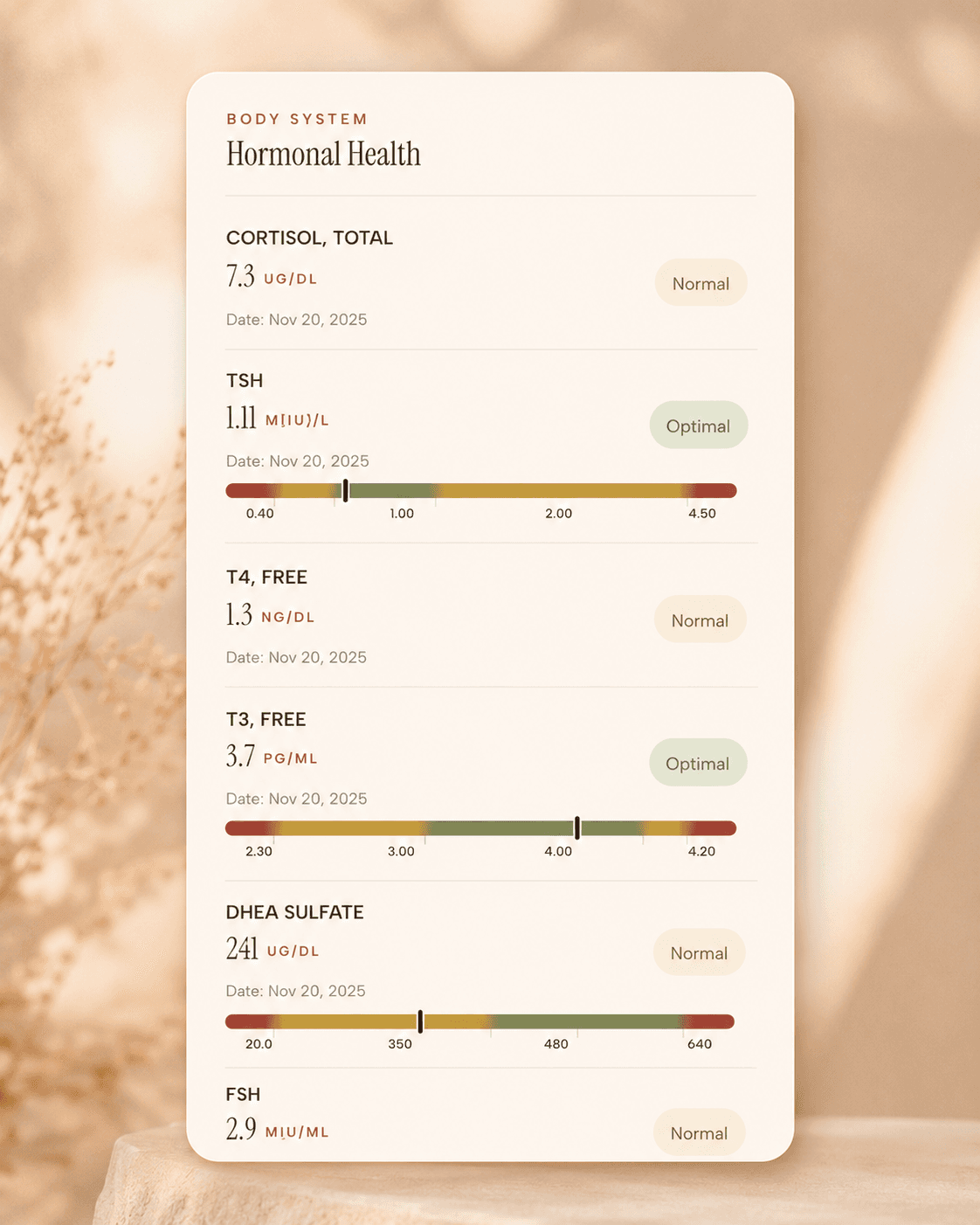
Get TSH, free T4, and FSH with estradiol checked at Quest
starting from $99 panel with 100+ tests, one visit
No referral needed
About 1 week
Schedule online — results typically within a week
Clear next steps
Guidance included, with follow-up care available
HSA / FSA
Eligible for pre-tax health spending accounts
Pro Tips
Do a quick “menopause reality check”: if you truly went 12+ months with no bleeding and then it returned, label it as postmenopausal bleeding in your notes and in your appointment request so it gets triaged appropriately.
If spotting happens after sex, try a two-part experiment while you book care: use a water-based lubricant plus a vaginal moisturizer twice weekly for two weeks and see if the bleeding stops, because that pattern strongly points to fragile tissue.
Bring one photo of the product you used (liner, pad, tampon) and how often you changed it, because “light” means different things to different people and this helps your clinician gauge blood loss fast.
If you are on blood thinners, write down the exact reason you take them and who prescribes them, because your gynecology plan often needs coordination rather than stopping anything abruptly.
Ask one direct question at the end of the visit: “If my ultrasound is normal, what would make you want me back sooner?” Having that trigger list reduces anxiety when you go home.
Frequently Asked Questions
Can you still get a period in your 60s?
If you have gone 12 months without a period, bleeding in your 60s is not considered a normal period, even if it feels similar. It is called bleeding after menopause, and it needs evaluation because causes range from dryness and polyps to uterine lining changes. Book a pelvic exam and transvaginal ultrasound, and bring a simple bleeding log.
Is spotting after sex in your 60s normal?
Spotting after sex is common with vaginal dryness from low estrogen, because the tissue gets thin and tears easily. It can also come from a cervical polyp or other cervical changes, so you still want an exam rather than assuming it is “just dryness.” Ask your clinician whether local vaginal estrogen is appropriate once serious causes are ruled out.
What tests do doctors do for bleeding after menopause?
The usual first-line tests are a pelvic exam and a transvaginal ultrasound to look at the uterine lining and check for polyps or fibroids. If the lining looks thicker than expected or bleeding persists, an endometrial biopsy is often the next step. Blood tests like a CBC and thyroid tests (TSH, free T4) can add context, especially if you feel tired or symptomatic.
Could thyroid problems cause irregular bleeding at 60?
Thyroid dysfunction can contribute to abnormal bleeding patterns and can also make you feel fatigued, cold, constipated, or mentally foggy. A TSH with free T4 helps show whether your thyroid is underactive or overactive, which can change how your body handles hormones and clotting. If your TSH is outside the typical target range (often around 0.5–2.5 mIU/L for many symptomatic people), discuss treatment and follow-up testing with your clinician.
When should I worry about bleeding after menopause?
You should take any new bleeding after menopause seriously, even if it is just spotting, because you cannot tell the cause by heaviness alone. Get urgent care if you are soaking a pad an hour, feeling faint, or passing large clots, because that can become dangerous quickly. Otherwise, schedule prompt evaluation and ask about ultrasound and whether biopsy is indicated based on the findings.