Why You Feel So Tired in Perimenopause (and What Helps)
Fatigue in perimenopause often comes from sleep disruption, iron deficiency, or thyroid shifts. Targeted blood tests available—no referral needed.






Fatigue in perimenopause is usually not “just getting older.” It often comes from sleep being quietly wrecked by hormone shifts, from low iron stores that make your muscles and brain run on fumes, or from a thyroid slowdown that can show up right around this life stage. The right blood tests can help you figure out which one is driving your exhaustion so you can treat the cause instead of pushing through. Perimenopause can make you feel like your battery never fully charges, even when you do everything “right.” Some days you can function and other days you feel flattened, which is frustrating and honestly a little scary. The tricky part is that several common issues can stack together: lighter sleep plus heavier periods plus stress, for example, can create a fatigue spiral. Below, you’ll see the most common reasons this happens, what tends to help in real life, and which labs can clarify the picture. If you want help connecting your exact symptoms and cycle pattern to next steps, PocketMD can talk it through with you, and Vitals Vault labs can help you confirm what your body is doing.
Why you feel so tired in perimenopause
Your sleep gets lighter and broken
As estrogen and progesterone fluctuate, your sleep architecture can change, which means you spend less time in the deep, restoring stages even if you’re “in bed” for eight hours. You might wake at 3 a.m. with a busy mind, or you might sleep through the night but still feel unrefreshed. The takeaway is to treat sleep disruption as a real medical clue, not a character flaw, because improving sleep often improves fatigue faster than any supplement.
Low iron stores from heavier periods
Perimenopause can bring unpredictable, sometimes heavier bleeding, and that can drain your iron stores before you ever become anemic. When iron is low, your body struggles to deliver oxygen efficiently, so you feel winded on stairs, your workouts feel harder, and your brain feels slower. If your periods have changed and fatigue is new, checking ferritin (your iron “savings account”) is often more revealing than a basic blood count.
Thyroid slowdown overlaps with perimenopause
Thyroid hormone sets the pace for your metabolism, and mild hypothyroidism can feel like heavy, sticky fatigue with brain fog, dry skin, constipation, and feeling colder than everyone else. Because symptoms overlap with perimenopause, thyroid issues are easy to miss unless you test. A simple TSH test can quickly tell you whether your “hormone fatigue” might actually be thyroid-related.
Blood sugar swings drain your energy
Hormone shifts can make your body a bit more insulin-resistant, which means a carb-heavy breakfast might spike your blood sugar and then drop it fast. That drop can feel like sudden sleepiness, shakiness, irritability, or a desperate need for snacks by late morning. The practical clue is timing: if your fatigue hits 1–3 hours after meals, meal composition and glucose patterns may be part of the story.
Mood strain and burnout amplify fatigue
Perimenopause is a time when anxiety and low mood can flare, and that changes how your brain spends energy and how your body recovers. This is not “all in your head,” because chronic stress hormones can fragment sleep and make your muscles feel heavy even on easy days. If fatigue comes with loss of interest, frequent worry, or feeling emotionally flat for two weeks or more, it’s worth treating mood as a driver, not just a consequence.
What actually helps with perimenopause fatigue
Fix the 3 a.m. wake-ups first
If you’re waking in the middle of the night, start with a two-week “sleep experiment” rather than vague sleep hygiene. Keep the room cool, avoid alcohol within 4 hours of bed, and set a consistent wake time even after a rough night, because that anchors your body clock. If hot flashes or night sweats are the reason you wake, bring that up specifically, because treating those symptoms often restores sleep and energy together.
Eat to prevent the crash
Build breakfast and lunch around protein plus fiber, because that smooths the blood sugar curve that can otherwise tank your energy mid-morning or mid-afternoon. A practical target many people can feel is 25–35 grams of protein at the first meal, then add a slow carb like oats or beans instead of juice or pastries. If you want proof, a simple fingerstick or continuous glucose monitor for a couple of weeks can show whether your “fatigue” is actually a predictable post-meal dip.
Treat iron deficiency on purpose
If ferritin is low, the fix is not just “eat spinach,” because food alone can take a long time to rebuild stores. Many clinicians aim to get ferritin into a more functional zone (often around 50–100 ng/mL) when fatigue and heavy periods are present, although your plan should match your labs and history. Ask about an iron plan that includes dose, timing, and a recheck in 6–8 weeks, because guessing can lead to either no improvement or stomach side effects.
Strength train for energy, not punishment
When you’re depleted, long intense cardio can backfire and leave you wiped out for days, but short strength sessions often do the opposite. Two or three 20–30 minute sessions per week, focused on big movements and leaving a couple reps “in the tank,” can improve sleep quality and daytime stamina without spiking stress. The key is to stop chasing your old peak and train for recovery first.
Consider hormone therapy when appropriate
If fatigue is tied to classic perimenopause symptoms like night sweats, hot flashes, and worsening sleep, hormone therapy can be a very effective lever for some people because it treats the root sleep disruption. It is not a DIY project, and it is not right for everyone, but a clinician can help you weigh benefits and risks based on your personal history. A useful way to start the conversation is to describe your symptom cluster and what it is doing to your functioning, not just to ask for a specific medication.
Useful biomarkers to discuss with your clinician
Ferritin
Ferritin is your body's iron storage protein, reflecting total iron stores in the body. In functional medicine, ferritin assessment is crucial for identifying both iron deficiency and iron overload, conditions that can significantly impact energy levels and overall health. Low ferritin is the earliest sign of iron deficiency, often occurring before anemia develops. This can cause fatigue, weakness, restless leg syndrome, and cognitive impairment. Conversely, elevated ferritin may indicate iron overload, inflamma…
Learn moreTSH
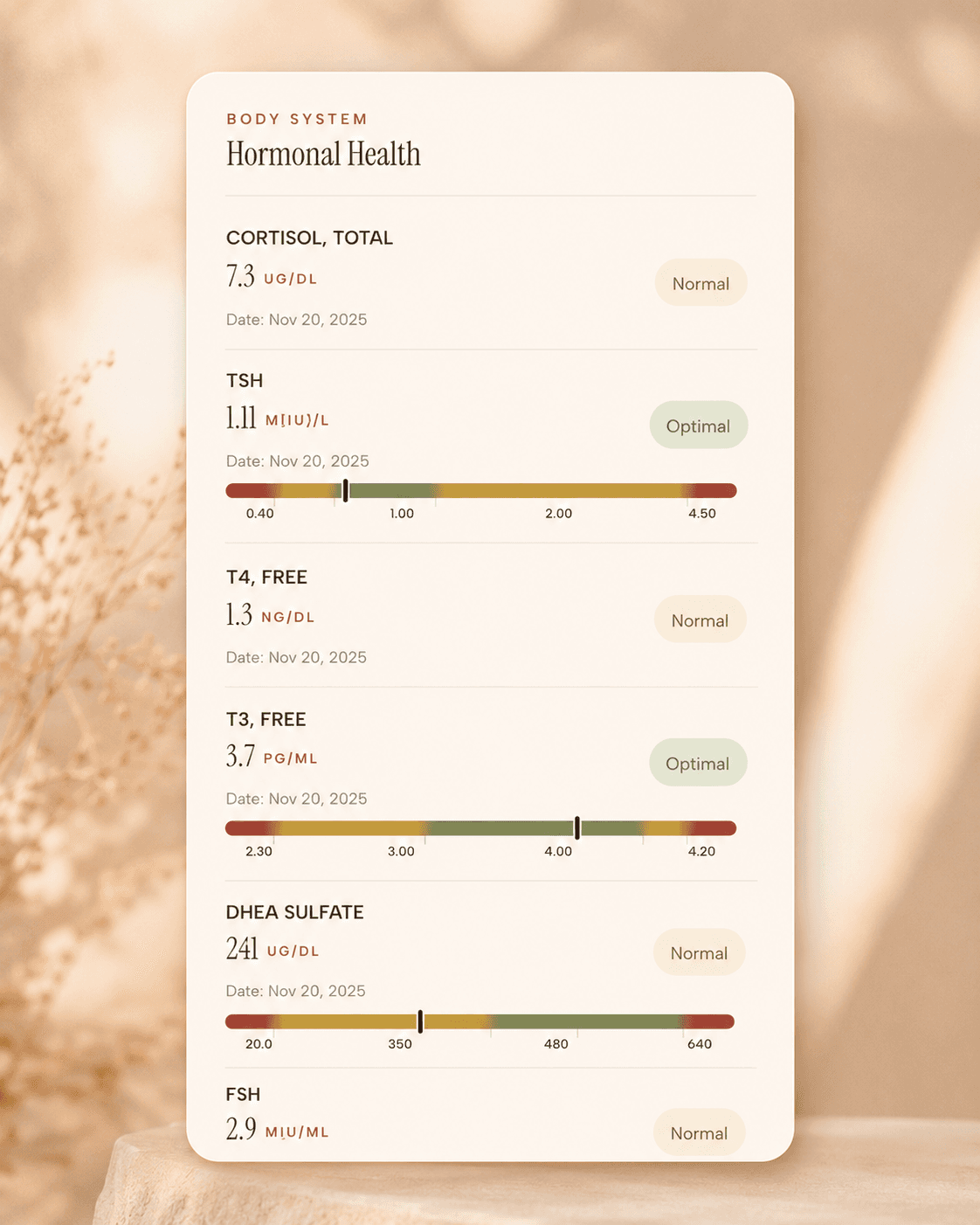
TSH is the master regulator of thyroid function, controlling the production of thyroid hormones T4 and T3. In functional medicine, we use narrower TSH ranges than conventional medicine to identify subclinical thyroid dysfunction early. Even mildly elevated TSH can indicate thyroid insufficiency, leading to fatigue, weight gain, depression, and metabolic dysfunction. TSH levels are influenced by stress, nutrient deficiencies, autoimmune conditions, and environmental toxins. Optimal TSH supports energy, metabolism…
Learn moreGlucose
Fasting glucose is a fundamental marker of glucose metabolism and insulin function. In functional medicine, we recognize that even 'normal' glucose levels in the upper range may indicate early insulin resistance. Optimal fasting glucose reflects efficient glucose regulation and insulin sensitivity. Elevated fasting glucose suggests the body's inability to maintain normal glucose levels overnight, indicating hepatic insulin resistance or insufficient insulin production. This marker is essential for early detectio…
Learn moreLab testing
Get TSH, ferritin, and vitamin B12 checked at Quest
starting from $99 panel with 100+ tests, one visit
No referral needed
About 1 week
Schedule online — results typically within a week
Clear next steps
Guidance included, with follow-up care available
HSA / FSA
Eligible for pre-tax health spending accounts
Pro Tips
Do a 14-day energy log that tracks three things: when you feel your worst, what you ate in the 3 hours before, and whether you woke up overnight. Patterns usually show up fast, and they point you toward sleep-driven fatigue versus iron or blood sugar issues.
If your fatigue is paired with heavier or more frequent bleeding, don’t wait for anemia. Ask for ferritin specifically, because that is the test that often catches “running on empty” early.
Try a “protein-first” breakfast for one week and see if your late-morning crash improves. If you notice a big change, you’ve learned something important about your glucose stability without needing fancy gear.
If exercise wipes you out for more than 24 hours, switch to shorter strength sessions and easy walking for two weeks. Your goal is to finish feeling better than when you started, because that is how you rebuild capacity during hormone transition.
When you talk to a clinician, describe your fatigue in functional terms: what you can’t do now that you could do six months ago, and how your sleep and cycle changed. That story often gets you better help than saying “I’m tired.”
Frequently Asked Questions
Is extreme fatigue normal in perimenopause?
Fatigue is common in perimenopause, but “extreme” fatigue that interferes with work, parenting, or exercise deserves a real workup. Sleep disruption, low ferritin (iron stores), and thyroid changes are three of the most common fixable drivers. A practical next step is to check ferritin, TSH, and vitamin B12 and then match treatment to what’s actually abnormal.
Why am I exhausted even when I sleep 8 hours?
You can get 8 hours of time in bed and still miss deep, restorative sleep if hormones are causing lighter sleep or frequent micro-awakenings. That often shows up as waking at the same time nightly, vivid dreams, or feeling “wired but tired.” Track one week of wake-ups and night sweats, and bring that pattern to your clinician because it points to treatable sleep disruption.
What ferritin level causes fatigue in women?
There is no single cutoff, but many women feel fatigue and exercise intolerance when ferritin is low even if hemoglobin is normal. In practice, clinicians often aim for ferritin around 50–100 ng/mL when symptoms and heavy periods suggest iron depletion. If your ferritin is low, ask for a clear iron plan and a repeat test in 6–8 weeks to confirm it is rising.
Can perimenopause cause thyroid problems or just mimic them?
Perimenopause can mimic thyroid symptoms because both can cause fatigue, brain fog, and weight changes, but thyroid disease can also appear around midlife. A TSH test helps separate the two, especially if you also feel colder than usual, have constipation, or notice dry skin and hair changes. If TSH is abnormal, ask whether you need follow-up tests like free T4 to clarify what’s going on.
What supplements help perimenopause fatigue the most?
Supplements help most when they correct a real deficiency, so vitamin B12 and iron are the big ones to consider based on labs rather than guesswork. If your ferritin or B12 is low, targeted supplementation can noticeably improve energy over weeks, while random “energy blends” often just add stimulants. Start by testing ferritin, TSH, and B12, and then choose supplements that match your results.
Research and guidelines worth knowing
North American Menopause Society (NAMS) position statement on hormone therapy (updated guidance)
USPSTF recommendation statement on screening for iron deficiency anemia (context for when testing matters)
American Thyroid Association guidelines for hypothyroidism in adults (how TSH is interpreted clinically)