Why You Feel So Tired After Menopause
Fatigue after menopause often comes from sleep disruption, low iron, or thyroid slowdown. Targeted blood tests are available—no referral needed.






Fatigue after menopause is usually a mix of sleep disruption from hot flashes or insomnia, a slower thyroid, or low iron stores that quietly drain your stamina. It can also come from mood changes or untreated sleep apnea, especially if your sleep looks “long enough” on paper but never feels restorative. The good news is that a few targeted labs can often show which bucket you’re in, so you can stop guessing. If you feel like you’re doing everything “right” and you’re still running on fumes, you’re not imagining it. After menopause, your hormones stop fluctuating the way they used to, but your brain, muscles, and metabolism still have to adapt to a new baseline. That transition can expose problems that were previously compensated for, like borderline thyroid function or low iron. This page walks you through the most common reasons you feel wiped out, what tends to help in real life, and which blood tests are most useful. If you want help matching your exact pattern to the most likely causes, PocketMD and a focused set of labs can make the next step feel a lot clearer.
Why fatigue can hit after menopause
Sleep that stops being restorative
After menopause, you can spend plenty of hours in bed and still wake up feeling like you barely slept. Hot flashes, night sweats, and lighter sleep stages can fragment your night in ways you don’t fully remember, which means your brain never gets the deep “reset” it needs. The takeaway is to treat sleep quality as the main symptom, not just the number of hours, because improving sleep often improves everything else.
Thyroid slowdown (hypothyroidism)
Your thyroid is your body’s metabolic “idle speed,” and when it runs low, everything feels heavier. You might notice slower thinking, dry skin, constipation, feeling cold, or a lower exercise tolerance along with the fatigue. Because symptoms overlap with normal aging, a simple TSH blood test can be the difference between “I guess this is my life now” and a fixable problem.
Low iron stores without anemia
Even if your hemoglobin is normal, low iron storage (ferritin) can make your muscles and brain feel underpowered. This often shows up as getting winded or wiped out faster than you used to, restless legs at night, or hair shedding that seems out of proportion. If you stopped having periods years ago, low ferritin can also be a clue to look for poor absorption or slow blood loss, so it’s worth checking rather than self-treating indefinitely.
Vitamin B12 running low
Vitamin B12 helps your nerves and red blood cells do their jobs, so low levels can feel like fatigue plus “weird” symptoms. You might notice tingling in your hands or feet, balance changes, a sore tongue, or brain fog that feels out of character. The practical move is to test before you supplement heavily, because true deficiency sometimes needs higher-dose treatment and a reason-finding approach.
Sleep apnea hiding in plain sight
Sleep apnea is not just a “loud snoring” problem, and it can become more common after menopause as airway tone and body composition change. If you wake with a dry mouth, morning headaches, or you feel sleepy during meetings or while driving, your sleep may be repeatedly interrupted by brief breathing pauses. A home sleep study can be life-changing here, because treating apnea often improves energy within weeks rather than months.
What actually helps you feel human again
Do a two-week energy-and-sleep audit
For 14 days, track your wake time, bedtime, night awakenings, and a simple 1–10 energy score at three points in the day. Add one line about what happened before your worst slump, like a late workout, alcohol, a stressful evening, or a heavy dinner. This turns “I’m always tired” into a pattern you can act on, and it makes your next clinician visit dramatically more efficient.
Treat hot flashes as a sleep problem
If you’re waking up sweaty or wired, your fatigue is often downstream of temperature swings, not laziness or lack of willpower. A cooler bedroom, breathable bedding, and avoiding alcohol close to bedtime can reduce awakenings, but many people also benefit from targeted menopause treatments. If your sleep is falling apart, talk with a clinician about options like hormone therapy or non-hormonal prescriptions, because better nights are the fastest route to better days.
Strength train for energy, not weight
After menopause, muscle becomes more “expensive” to maintain, and losing it can make everyday tasks feel tiring even when your heart is healthy. Two to three short sessions per week that focus on legs, hips, back, and pushing movements can improve stamina and glucose handling, which often reduces that heavy, drained feeling. Start lighter than you think you need, and aim to leave 2–3 reps in the tank so you build consistency instead of soreness.
Fix the specific deficiency you have
If ferritin is low, you usually feel better when you replenish iron in a way your stomach can tolerate, and you also look for why it dropped in the first place. If B12 is low, oral high-dose B12 or injections may be needed depending on absorption, and symptoms can take weeks to improve even after levels rise. The key is that “random supplements” rarely work as well as matching the fix to the lab result.
Screen for apnea if you’re sleepy
If you’re nodding off in the afternoon or waking unrefreshed despite enough time in bed, don’t assume it’s just menopause. A quick screening questionnaire and a home sleep test can confirm whether breathing interruptions are the real culprit. If apnea is present, treatment like CPAP or an oral appliance often improves daytime energy, mood, and blood pressure at the same time.
Useful biomarkers to discuss with your clinician
Ferritin
Ferritin is your body's iron storage protein, reflecting total iron stores in the body. In functional medicine, ferritin assessment is crucial for identifying both iron deficiency and iron overload, conditions that can significantly impact energy levels and overall health. Low ferritin is the earliest sign of iron deficiency, often occurring before anemia develops. This can cause fatigue, weakness, restless leg syndrome, and cognitive impairment. Conversely, elevated ferritin may indicate iron overload, inflamma…
Learn moreVitamin B12
Vitamin B12 (cobalamin) is essential for DNA synthesis, red blood cell formation, neurological function, and energy metabolism. In functional medicine, we recognize that B12 deficiency is surprisingly common, especially in older adults, vegetarians, vegans, and those with digestive issues. B12 deficiency can cause irreversible neurological damage if left untreated. The vitamin is crucial for methylation reactions, which affect cardiovascular health, detoxification, and gene expression. Even subclinical deficienc…
Learn moreTSH
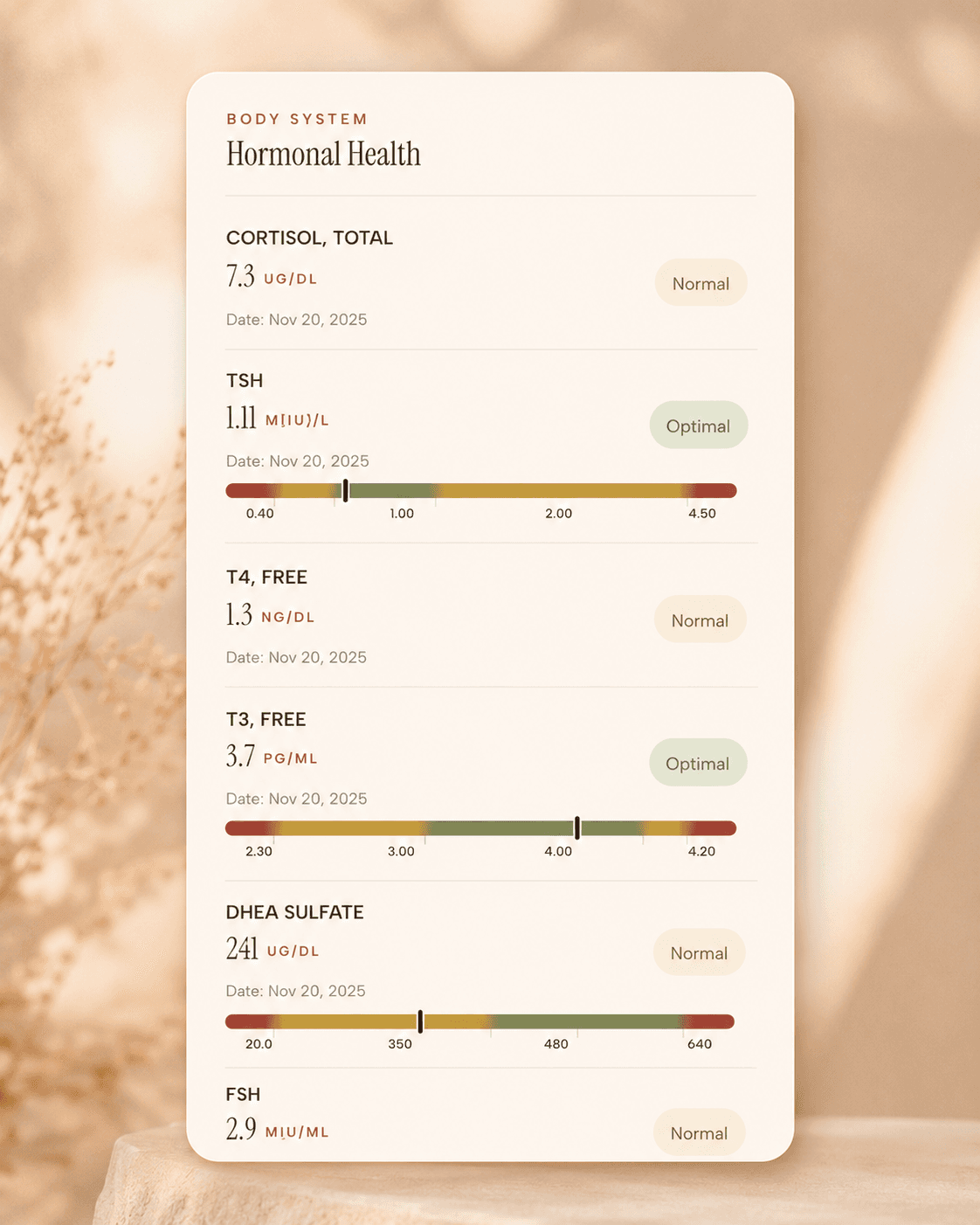
TSH is the master regulator of thyroid function, controlling the production of thyroid hormones T4 and T3. In functional medicine, we use narrower TSH ranges than conventional medicine to identify subclinical thyroid dysfunction early. Even mildly elevated TSH can indicate thyroid insufficiency, leading to fatigue, weight gain, depression, and metabolic dysfunction. TSH levels are influenced by stress, nutrient deficiencies, autoimmune conditions, and environmental toxins. Optimal TSH supports energy, metabolism…
Learn moreLab testing
Check TSH, ferritin, and vitamin B12 at Quest
starting from $99 panel with 100+ tests, one visit
No referral needed
About 1 week
Schedule online — results typically within a week
Clear next steps
Guidance included, with follow-up care available
HSA / FSA
Eligible for pre-tax health spending accounts
Pro Tips
Try a “caffeine curfew” for one week: keep coffee or tea to the first 8 hours after you wake up, because late caffeine can quietly shred deep sleep even when you fall asleep fine.
If you wake at 2–4 a.m. feeling hot or wired, keep a spare dry top by the bed and change quickly rather than lying there uncomfortable; reducing the awake time in the middle of the night protects your next-day energy.
When you start strength training, begin with a minimum effective dose, like two 20-minute sessions per week, and only add volume after your soreness is mild; consistency beats intensity when fatigue is the problem.
If you suspect low iron, take iron away from calcium and coffee, and pair it with vitamin C; that one timing change can improve absorption enough to make supplementation actually work.
Use a simple “sleepiness safety check”: if you feel drowsy while driving or you need to fight sleep in meetings, treat that as a medical clue, not a personality flaw, and ask about a home sleep apnea test.
Frequently Asked Questions
Is it normal to be exhausted years after menopause?
It can happen, but it is not something you have to accept as “just aging.” Ongoing fatigue years after menopause is often driven by non-restorative sleep, thyroid slowdown (check TSH), or low iron stores (check ferritin), and those are all fixable once identified. If your fatigue is new, worsening, or paired with shortness of breath, chest pain, or unintentional weight loss, get evaluated promptly.
What labs should I get for fatigue after menopause?
A practical starting trio is TSH for thyroid function, ferritin for iron storage, and vitamin B12 for nerve and red blood cell support. Those three catch common, treatable reasons you feel drained even when your basic labs look “fine.” If symptoms suggest it, your clinician may add tests like CBC, vitamin D, or a sleep study rather than piling on random supplements.
Can low ferritin make you tired even if you’re not anemic?
Yes. Ferritin measures iron reserves, and low reserves can reduce exercise tolerance and make you feel worn out before your hemoglobin drops enough to be called anemia. Many people with fatigue feel better when ferritin is at least around 50 ng/mL, and restless legs often improves when ferritin is above 75 ng/mL. If ferritin is low after menopause, ask what might be causing it instead of only replacing iron.
Could my thyroid be causing my postmenopausal fatigue?
It could, especially if fatigue comes with feeling cold, constipation, dry skin, hair thinning, or slower thinking. TSH is the usual first test, and a persistently high-normal or elevated TSH can be meaningful when your symptoms fit. Bring any older thyroid results if you have them, because a trend upward can matter even more than a single number.
How do I know if my fatigue is from sleep apnea?
Clues include loud snoring, waking with a dry mouth or headache, needing naps you never used to need, or feeling sleepy while driving. After menopause, sleep apnea can show up even without dramatic weight gain, because airway tone and sleep architecture change. If these signs fit, ask for a home sleep study, since treating apnea can improve energy within weeks.
Research and guidelines worth knowing
North American Menopause Society (NAMS) 2023 position statement on nonhormone therapy for vasomotor symptoms (sleep-disrupting hot flashes)
USPSTF recommendation on screening for obstructive sleep apnea in adults (why symptoms still matter even when screening is “insufficient”)
NIH Office of Dietary Supplements: Vitamin B12 fact sheet (deficiency symptoms and testing context)