Why Is Your Sleep So Bad in Perimenopause?
Poor sleep perimenopause often comes from progesterone drops, night sweats, or anxiety spikes. Targeted blood tests at Quest—no referral needed.






Poor sleep in perimenopause is usually driven by shifting hormones, especially lower progesterone and more erratic estrogen, which can make your brain more alert at night. Night sweats and hot flashes can also jolt you out of deeper sleep, and stress or anxiety can keep your nervous system “on” even when you’re exhausted. A few targeted labs can help you rule out look-alikes like thyroid overactivity or low iron so you’re not guessing. If you feel like you’re doing “all the right things” and still waking up at 2–4 a.m., you’re not imagining it. Perimenopause can change sleep architecture, body temperature control, and mood all at once, which is why the fix is rarely one magic supplement. This page walks you through the most common reasons sleep falls apart in this transition, what tends to help in real life, and which blood tests are worth considering. If you want help matching your exact pattern to the most likely cause, PocketMD can talk it through with you, and Vitals Vault labs can help you confirm what’s going on.
Why your sleep gets worse in perimenopause
Progesterone drops, so you feel wired
Progesterone is one of the hormones that tends to feel “calming” in your body, and in perimenopause it often declines earlier than estrogen. When it drops, you can feel more alert at bedtime, more sensitive to noise, and more likely to wake up and stay awake. If your insomnia clusters in the second half of your cycle or right before a period that’s getting irregular, that timing is a clue worth tracking.
Night sweats interrupt deep sleep
Hormone swings can make your brain’s temperature control center (hypothalamus) overreact, which means you can overheat at night even if the room feels normal. The problem is not just the sweating; it’s the micro-awakenings that happen as your body cools itself down. If you wake up damp, throw off covers, and then feel chilled, treating the temperature swings often improves sleep more than any sedating pill.
Your stress system stays switched on
Perimenopause can amplify anxiety and make your body more reactive to stress, which keeps your “fight-or-flight” system humming after you get into bed. That can look like a racing mind, a pounding heart, or waking up at 3 a.m. with a sense of dread even when nothing is wrong. The takeaway is practical: you need a wind-down that lowers arousal, not just a longer time in bed.
Thyroid shifts can mimic insomnia
An overactive thyroid can make you feel restless, hot, and unable to settle, and it can also cause frequent waking and light sleep. In perimenopause it’s easy to blame hormones and miss this, especially if you also notice palpitations, tremor, or unexplained weight change. A simple TSH test is often the fastest way to rule this in or out so you can treat the real driver.
Low iron makes sleep less restorative
When your iron stores are low, your brain may not get what it needs for dopamine signaling, which can worsen restless legs and make sleep feel shallow. This is common if you’ve had heavier or more frequent bleeding during perimenopause, even if your hemoglobin looks “fine.” Checking ferritin (your iron storage marker) matters because improving low stores can reduce nighttime leg sensations and help you stay asleep.
What actually helps you sleep again
Try CBT-I before adding more pills
Cognitive behavioral therapy for insomnia (CBT-I) is a structured approach that retrains sleep drive and breaks the cycle of “trying hard” to sleep. It usually includes a consistent wake time, tighter time-in-bed at first, and tools for the 2 a.m. spiral so your bed stops feeling like a battleground. If you can access a CBT-I therapist, great, but even a reputable digital CBT-I program can be enough to get traction within a few weeks.
Cool the bedroom like it matters
If night sweats are part of your story, treat temperature control as a primary intervention, not a comfort upgrade. Aim for a cooler room, use breathable bedding, and consider a fan or cooling mattress pad so your body can dump heat without fully waking you. You’ll know it’s working when you stop doing the “covers on, covers off” routine and your first stretch of sleep gets longer.
Use light and timing to reset sleep
Perimenopause can make your internal clock more fragile, so small timing shifts can have outsized effects. Get outdoor light soon after waking, and keep evenings dimmer so your brain gets a clear “day vs night” signal. If you’re waking at 3–4 a.m., resist the urge to go to bed earlier the next night, because that often locks in the early-wake pattern.
Consider hormone therapy with a clinician
For some people, treating the underlying hormone volatility improves sleep more than any sleep aid, especially when night sweats and mood changes are prominent. Options can include menopausal hormone therapy, and in certain situations progesterone-focused approaches may be discussed, but what fits depends on your symptoms and risk factors. The practical next step is to bring a simple symptom-and-cycle log to your clinician so the conversation is specific, not vague.
Use supplements strategically, not randomly
Magnesium glycinate can help some people with muscle tension and sleep onset, while low-dose melatonin can be useful when your schedule or light exposure is the main issue. The key is to trial one change at a time for 10–14 nights so you can tell what actually helps, and to avoid stacking sedating products that leave you groggy. If you snore loudly or wake up gasping, skip self-experimenting and get evaluated for sleep apnea because sedatives can worsen it.
Useful biomarkers to discuss with your clinician
Progesterone
While primarily known as a female hormone, progesterone plays important roles in men including neuroprotection, sleep quality, and as a precursor to other hormones. In functional medicine, male progesterone assessment helps evaluate overall hormone synthesis pathways and stress response. Low progesterone in men may indicate chronic stress or adrenal dysfunction, while optimal levels support brain health and sleep quality. Progesterone in men supports neurological health, sleep quality, and serves as a building b…
Learn moreEstradiol
Estradiol in men is produced from testosterone via aromatase enzyme. In functional medicine, we recognize that men need optimal estradiol levels for bone health, cognitive function, and cardiovascular protection. However, excessive estradiol can suppress testosterone production and cause feminizing effects. The testosterone-to-estradiol ratio is crucial for male health, with optimal balance supporting vitality while preventing estrogen dominance. Balanced estradiol levels in men support bone health and cognitive…
Learn moreTSH
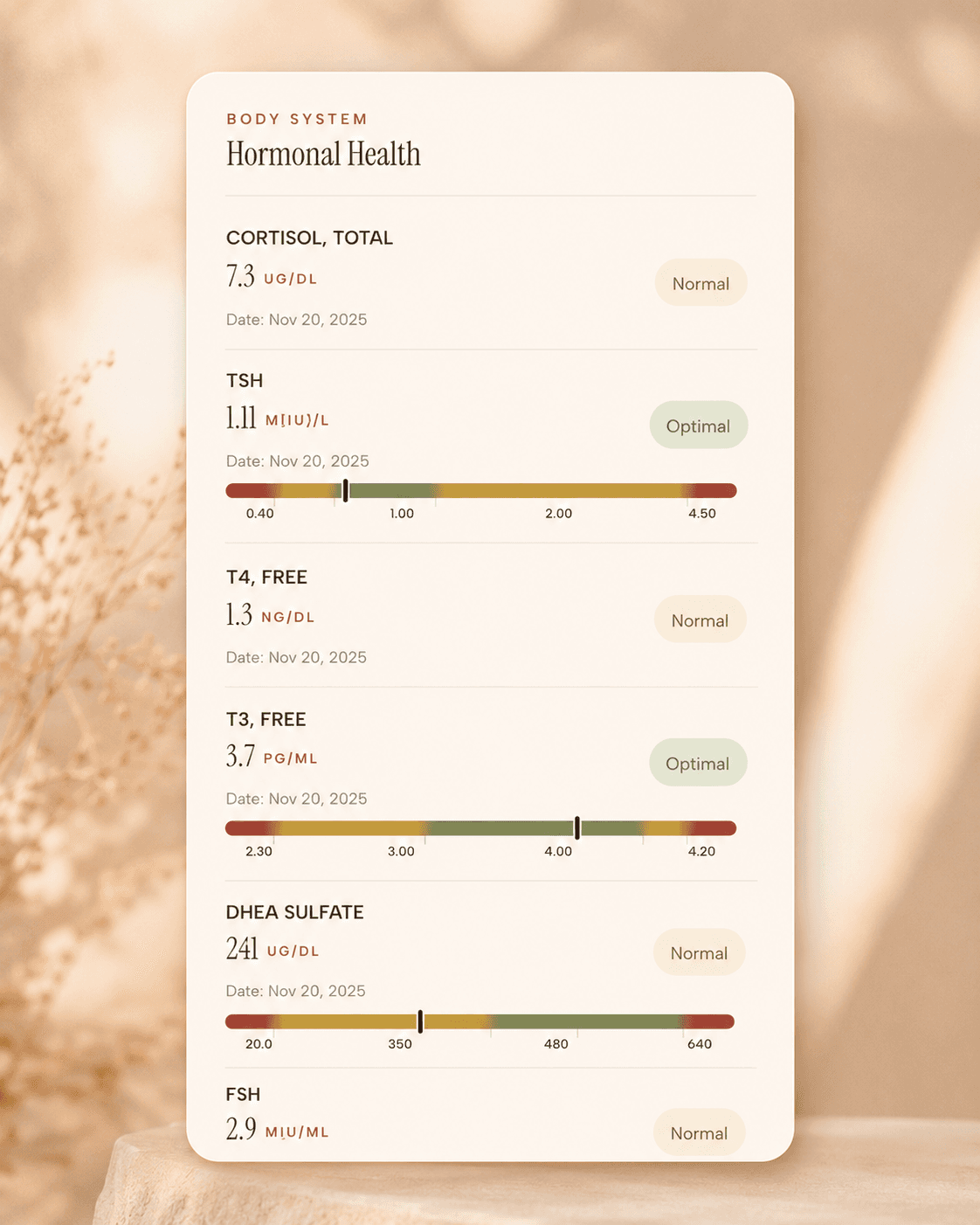
TSH is the master regulator of thyroid function, controlling the production of thyroid hormones T4 and T3. In functional medicine, we use narrower TSH ranges than conventional medicine to identify subclinical thyroid dysfunction early. Even mildly elevated TSH can indicate thyroid insufficiency, leading to fatigue, weight gain, depression, and metabolic dysfunction. TSH levels are influenced by stress, nutrient deficiencies, autoimmune conditions, and environmental toxins. Optimal TSH supports energy, metabolism…
Learn moreLab testing
Get TSH, ferritin, and vitamin D checked at Quest
starting from $99 panel with 100+ tests, one visit
No referral needed
About 1 week
Schedule online — results typically within a week
Clear next steps
Guidance included, with follow-up care available
HSA / FSA
Eligible for pre-tax health spending accounts
Pro Tips
Keep a 14-night sleep log that includes bedtime, wake time, and one line on what woke you (heat, worry, bathroom, noise). Patterns show up fast, and that tells you whether to prioritize cooling, CBT-I, or medical workup.
If you wake up hot, try a “cool-down protocol” instead of scrolling: sit up, sip cool water, and use a fan for 3–5 minutes. The goal is to drop your core temperature without turning your brain fully on.
Pick a non-negotiable wake time for two weeks, even after a bad night, because it rebuilds sleep drive. Sleeping in feels like relief, but it often buys you another night of being wide awake at bedtime.
If you suspect restless legs, test it: when the urge to move hits, get up and walk for two minutes. If that reliably relieves the sensation, ask about ferritin and iron repletion rather than assuming it’s “just anxiety.”
If you use melatonin, start low (around 0.3–1 mg) and take it 2–3 hours before your target bedtime. Higher doses can cause vivid dreams or morning grogginess, which makes perimenopause fatigue worse.
Frequently Asked Questions
Is insomnia a sign of perimenopause?
Yes, it can be. Hormone shifts in perimenopause can lower your natural calming signals (often tied to progesterone) and increase night sweats, both of which fragment sleep. If your sleep worsened alongside cycle changes, new anxiety, or hot flashes, perimenopause is a plausible driver, but it’s still smart to rule out thyroid issues with a TSH test.
Why do I keep waking up at 3am in perimenopause?
Early-morning waking is common when your stress system is overactive or when night sweats trigger micro-awakenings that become full wake-ups. It can also happen when you start going to bed earlier to “catch up,” which shifts your sleep window earlier. Try holding a consistent wake time and dimming light at night for two weeks, and consider CBT-I if the pattern sticks.
What is the best supplement for perimenopause sleep?
There isn’t one best option for everyone because the cause matters. Magnesium glycinate can help if tension and muscle tightness are keeping you awake, while low-dose melatonin (around 0.3–1 mg) can help if your timing is off. If you have night sweats, supplements alone often disappoint, so prioritize cooling strategies and talk with a clinician about treating vasomotor symptoms.
Which blood tests help explain poor sleep in perimenopause?
The most useful “triage” tests are often TSH for thyroid-driven insomnia, ferritin for low iron stores linked with restless legs and light sleep, and 25-hydroxy vitamin D for fatigue and low mood that worsen sleep quality. These don’t diagnose perimenopause itself, but they can uncover fixable contributors. If you’re ordering labs, bring your results to a clinician so the next step is targeted.
When should I worry about poor sleep and see a doctor?
Get help sooner if insomnia lasts more than 3 months, if you’re relying on alcohol or nightly sedatives to sleep, or if you’re having panic symptoms, significant depression, or thoughts of self-harm. Also ask for evaluation if you snore loudly, wake up gasping, or have morning headaches, because sleep apnea is common in midlife and is treatable. A good first visit includes a sleep log, a medication review, and basic labs like TSH and ferritin.