Why You Get Brain Fog in Perimenopause (and What Helps)
Brain fog in perimenopause often comes from estrogen swings, poor sleep, or thyroid and iron issues. Targeted labs at Quest—no referral needed.





Brain fog in perimenopause is usually your brain reacting to hormone swings, sleep disruption, and sometimes “fixable” issues like low iron or an underactive thyroid. When estrogen and progesterone fluctuate, your attention, word-finding, and working memory can feel unreliable even if you’re still smart and capable. A few targeted blood tests can help you sort out what’s driving it in your body. Perimenopause is a long transition, and your hormones can change week to week, which is why your focus might feel fine on Tuesday and awful by Friday. Add night sweats, anxiety, heavier periods, or a busier life stage, and your brain starts running on fumes. This page walks you through the most common causes, what tends to help in real life, and which labs are worth checking. If you want help connecting your exact pattern of symptoms to a plan, PocketMD can talk it through with you, and Vitals Vault labs can help you confirm (or rule out) common contributors.
Why You Get Brain Fog in Perimenopause
Estrogen swings change brain signaling
In perimenopause, estrogen can spike and drop unpredictably, and that affects brain chemicals that support attention and memory. The “so what” is that you can feel slower to process information, lose your train of thought mid-sentence, or struggle to find words even in familiar conversations. A useful clue is timing: if fog clusters around cycle changes, new PMS-like symptoms, or skipped periods, hormone variability is often part of the story.
Sleep fragmentation drains your focus
Even one or two weeks of broken sleep can make your brain feel like it has fewer tabs open. Night sweats, early-morning waking, and a racing mind are common in this transition, and they reduce deep sleep, which is when your brain consolidates memory and clears metabolic waste. If your fog is worst after nights with awakenings, treating sleep as the main problem (not your willpower) usually pays off fastest.
Low iron from heavier bleeding
Heavier or more frequent periods can quietly drain iron stores, and your brain is sensitive to that because it needs oxygen delivery and efficient energy production. You might notice mental fatigue, shortness of breath on stairs, restless legs at night, or feeling “wired but tired.” Ferritin is the lab that often catches this early, and many people feel better when ferritin is brought into a more optimal zone rather than barely normal.
Thyroid slowdown mimics brain fog
Your thyroid sets the pace for how your cells use energy, and when it runs low, thinking can feel sticky and slow. The fog often comes with other hints like feeling colder than others, constipation, dry skin, or unexplained weight changes. Because thyroid symptoms overlap with perimenopause, checking a TSH can be a practical way to avoid blaming everything on hormones.
Mood and stress chemistry take over
Perimenopause can amplify anxiety and low mood, and that changes how your brain allocates attention. When your nervous system is on high alert, you can feel distractible, forgetful, and unable to “get into flow,” even if you’re sleeping enough. If your fog comes with panic sensations, persistent sadness, or loss of interest, it’s worth treating that as a primary driver rather than a side effect.
What Actually Helps Brain Fog
Build a sleep repair plan first
Pick one sleep target for two weeks: fewer awakenings, earlier bedtime, or a consistent wake time, and track it like an experiment. If night sweats are waking you, cooling the bedroom and using breathable layers can reduce the number of full wake-ups, which is what wrecks next-day focus. If you snore, wake with headaches, or feel unrefreshed despite enough hours, ask about sleep apnea testing because treating it can dramatically improve cognition.
Use a “single-task” focus reset
Brain fog often feels like you can’t start, so make starting smaller. Set a 10-minute timer, choose one concrete output (one email draft, one slide, one paragraph), and keep your phone in another room until the timer ends. This works because it reduces decision load, and once you’re moving, your brain usually finds traction.
Eat for steady glucose, not perfection
Blood sugar swings can feel like fog, irritability, and a sudden need for caffeine, and perimenopause can make you more sensitive to those dips. A practical fix is to anchor breakfast and lunch with protein and fiber so you’re not running on a carb-only meal that crashes two hours later. If your fog reliably hits mid-morning or mid-afternoon, try adjusting meal composition before assuming it’s “just hormones.”
Treat iron or B12 deficiencies directly
If ferritin or vitamin B12 is low, lifestyle tweaks alone often won’t touch the fog because your brain is missing raw materials. Work with a clinician on dosing and recheck timing, since iron is absorbed better away from calcium and some people need a gentler schedule to avoid stomach upset. The payoff is that improvement can be noticeable within weeks, especially for mental stamina and word-finding.
Discuss menopause hormone therapy if appropriate
For some people, stabilizing hormones improves sleep and reduces the “brain on static” feeling, even if it doesn’t turn you into a different person overnight. The biggest cognitive benefit is often indirect: fewer night sweats and less anxiety means your brain can finally recover. If you’re also having hot flashes, sleep disruption, or significant quality-of-life impact, it’s reasonable to ask a menopause-informed clinician about options and risks for your situation.
Useful biomarkers to discuss with your clinician
Ferritin
Ferritin is your body's iron storage protein, reflecting total iron stores in the body. In functional medicine, ferritin assessment is crucial for identifying both iron deficiency and iron overload, conditions that can significantly impact energy levels and overall health. Low ferritin is the earliest sign of iron deficiency, often occurring before anemia develops. This can cause fatigue, weakness, restless leg syndrome, and cognitive impairment. Conversely, elevated ferritin may indicate iron overload, inflamma…
Learn moreVitamin B12
Vitamin B12 (cobalamin) is essential for DNA synthesis, red blood cell formation, neurological function, and energy metabolism. In functional medicine, we recognize that B12 deficiency is surprisingly common, especially in older adults, vegetarians, vegans, and those with digestive issues. B12 deficiency can cause irreversible neurological damage if left untreated. The vitamin is crucial for methylation reactions, which affect cardiovascular health, detoxification, and gene expression. Even subclinical deficienc…
Learn moreTSH
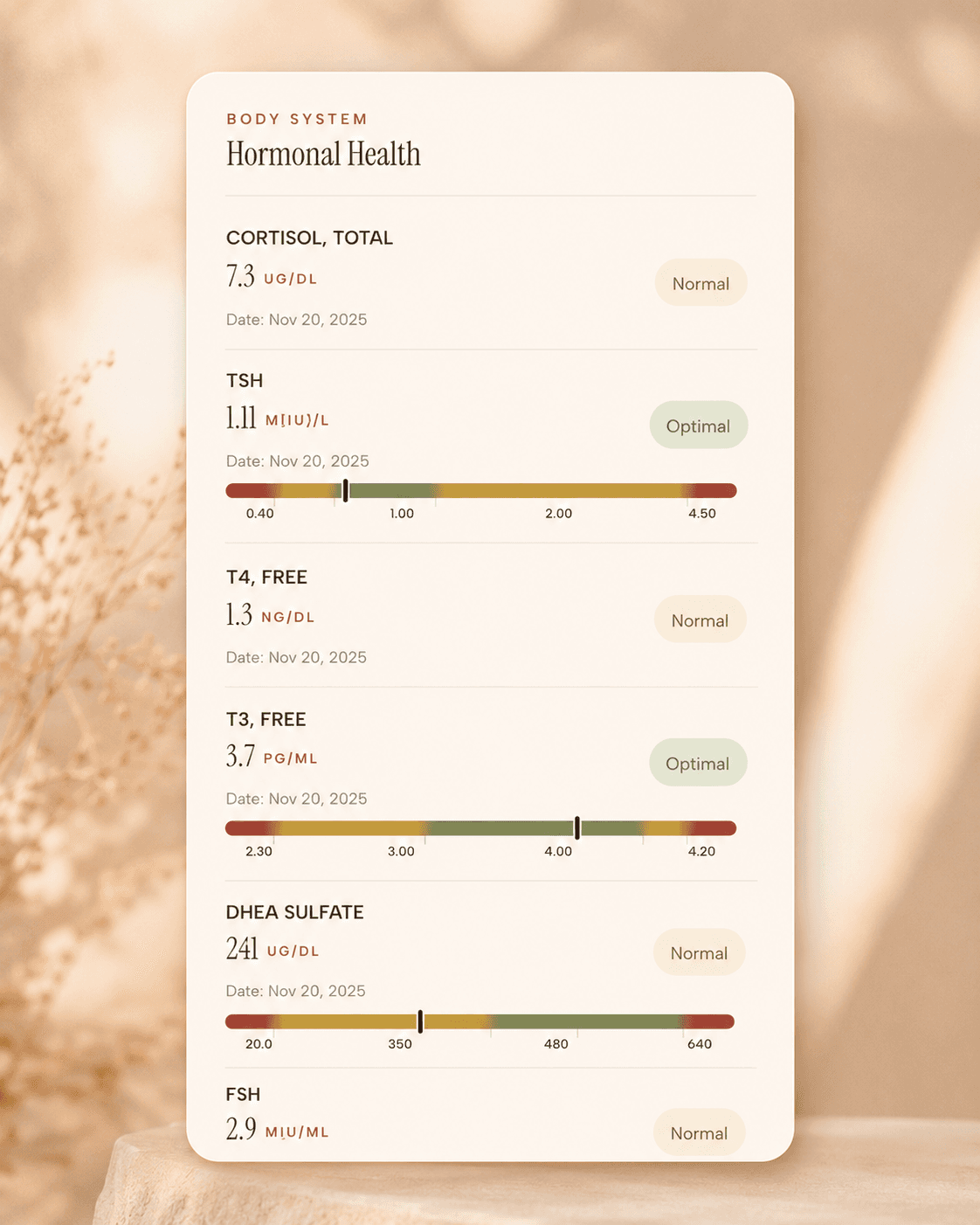
TSH is the master regulator of thyroid function, controlling the production of thyroid hormones T4 and T3. In functional medicine, we use narrower TSH ranges than conventional medicine to identify subclinical thyroid dysfunction early. Even mildly elevated TSH can indicate thyroid insufficiency, leading to fatigue, weight gain, depression, and metabolic dysfunction. TSH levels are influenced by stress, nutrient deficiencies, autoimmune conditions, and environmental toxins. Optimal TSH supports energy, metabolism…
Learn moreLab testing
Get TSH, ferritin, and vitamin B12 checked at Quest
starting from $99 panel with 100+ tests, one visit
No referral needed
About 1 week
Schedule online — results typically within a week
Clear next steps
Guidance included, with follow-up care available
HSA / FSA
Eligible for pre-tax health spending accounts
Pro Tips
Try a 14-day “fog log” that tracks three things: your cycle day (or whether you bled), your sleep quality (0–10), and one sentence about what the fog felt like. Patterns usually show up faster than you expect, and they make your next appointment far more productive.
If word-finding is your main issue, practice a gentle workaround: pause, describe the thing you mean, and move on instead of forcing the word. The pressure to “perform” often makes the block worse, and reducing that stress can improve fluency over time.
If you suspect iron is involved, notice whether your fog is paired with heavier bleeding, new clots, or needing to change protection more often. That combination is a strong reason to check ferritin rather than guessing with supplements.
Use caffeine like a tool, not a rescue: keep it to the morning and stop at least 8 hours before bed. In perimenopause, late caffeine often shows up as 3 a.m. waking, and that sleep loss is a direct brain-fog generator.
When you have a high-stakes day, plan a “cognitive warm-up” 30 minutes before: a brisk walk, a shower, or a short breathing drill. It sounds simple, but shifting your nervous system state can noticeably improve recall and verbal speed.
Frequently Asked Questions
Is brain fog a normal symptom of perimenopause?
Yes, it’s common for perimenopause to affect attention, word-finding, and short-term memory because hormone swings and sleep disruption both hit cognition. “Normal” doesn’t mean you have to tolerate it, though, especially if it’s affecting work or confidence. If it’s new or worsening, checking TSH, ferritin, and vitamin B12 is a practical way to rule out common contributors.
How long does perimenopause brain fog last?
For many people it comes and goes over the perimenopause years rather than staying constant, and it often improves when hormones stabilize after the transition. The timeline depends on what’s driving it, because iron deficiency or thyroid issues can persist until treated. If your fog has lasted more than 8–12 weeks without a clear pattern, it’s worth doing labs and a focused sleep review.
Can low estrogen cause brain fog even if my periods are regular?
Yes, because perimenopause is often about variability more than a steady low level, and you can have regular periods while estrogen and progesterone still swing widely. Those swings can affect sleep and brain signaling, which shows up as “off” days. Tracking symptoms across two cycles can help you see whether fog clusters before bleeding or around ovulation.
What ferritin level causes brain fog in women?
There isn’t one magic number, but brain fog and fatigue are more likely when ferritin is low or borderline, especially if you have heavy periods. Many clinicians consider ferritin below about 30 ng/mL clearly low, and many symptomatic people aim for at least ~50 ng/mL as a more functional target. If you suspect this, ask for ferritin specifically because a normal hemoglobin does not rule out low iron stores.
When should I worry that brain fog is something serious?
Get urgent help if you have sudden confusion, new one-sided weakness, trouble speaking, fainting, or the “worst headache of your life,” because those are not typical perimenopause symptoms. Also take it seriously if fog is rapidly worsening, comes with significant depression, or you’re getting lost in familiar places. For slower, persistent fog, start with sleep review and basic labs (TSH, ferritin, vitamin B12) and bring a short symptom timeline to your clinician.
What Research Says About Perimenopause and Brain Fog
NAMS 2022 position statement on hormone therapy (covers cognitive symptoms and the role of sleep and vasomotor symptoms)
Cognitive performance changes across the menopause transition in the SWAN cohort
NICE guideline NG23: Menopause—diagnosis and management (includes brain fog and when to consider treatment options)