Cravings After Exercise: Causes, Fixes, and Lab Tests
Cravings after exercise usually come from low blood sugar, dehydration, or under-fueling protein and carbs. Targeted labs available—no referral needed.






Cravings after exercise usually happen because your body is trying to correct an energy mismatch: your blood sugar dips, your stress hormones stay high, or you simply did not refuel enough protein and carbs for the workout you did. Sometimes the “I need sugar now” feeling is also dehydration or poor sleep showing up as hunger. A few targeted labs can help you tell the difference, especially if cravings feel intense, frequent, or out of proportion to your training. This symptom is frustrating because it can feel like your workout “caused” you to lose control, when your body is often doing something reasonable: protecting your brain and muscles from running low on fuel. The fix is rarely willpower. It is usually timing, composition, and intensity. If you want help matching your pattern to a likely cause, PocketMD can talk it through with you, and Vitals Vault labs can help confirm things like blood sugar swings or iron-related fatigue that pushes you toward quick calories.
Why You Get Cravings After Exercise
Your blood sugar drops afterward
If you train hard or long without enough carbs on board, your muscles keep pulling glucose out of your blood even after you stop. That can feel like sudden shakiness, irritability, or a very specific urge for something sweet because sugar is the fastest fix your brain recognizes. A simple experiment is to eat a small carb-plus-protein snack within 30–60 minutes after training and see if the “urgent” craving fades.
You under-ate for the workout
When you consistently burn more than you replace, your body pushes back by turning up appetite signals, and it often does it later in the day when you are tired and less picky. The craving can feel like a bottomless pit, especially if you have been dieting or skipping meals. The takeaway is not “eat everything,” but to plan a real recovery meal so your hunger does not ambush you at night.
Stress hormones stay elevated
High-intensity training can keep your “fight-or-flight” hormones (cortisol and adrenaline) elevated for hours, which can make you crave quick energy and salt. You might notice you want candy or chips even if your stomach is not truly empty. If this fits, swapping one weekly all-out session for a steadier workout and adding a longer cool-down often reduces cravings within a week.
Dehydration feels like hunger
After sweating, your body can mistake thirst and electrolyte loss for hunger because both show up as fatigue, headache, and a “something is off” feeling. That can turn into cravings for salty foods or sugary drinks because they temporarily perk you up. A practical check is to drink water plus electrolytes right after training and see whether the craving intensity drops before you eat.
Low iron makes you chase energy
If your iron stores are low, workouts feel harder than they should, and your body often reaches for fast calories to compensate for that drained feeling. You might also notice shortness of breath on easy runs, restless legs at night, or unusually heavy fatigue the day after training. If cravings come with those signs, checking ferritin can be more useful than changing your diet rules.
What Actually Helps After a Workout
Use a 2-step refuel plan
Within an hour of finishing, aim for a snack that includes both carbs and protein, and then eat a normal meal later if it is mealtime. This works because carbs refill muscle fuel while protein reduces the “keep hunting for food” signal. If you do not want to track, a simple template is yogurt plus fruit, or a sandwich with a protein filling.
Match workout intensity to your goal
If you are training for fitness or fat loss, doing every session at maximum effort often backfires by driving cravings and rebound eating. Keeping most workouts at a conversational pace makes your appetite more predictable, even if it feels less dramatic. You can still keep one harder session, but treat it like a tool, not a daily default.
Add electrolytes when you sweat
If your workouts leave salt marks on clothes, or you get headaches and cravings afterward, you may need more than plain water. An electrolyte drink or salty food with your post-workout snack can reduce the “I need something now” feeling that is really fluid and sodium debt. This is especially helpful in hot weather or long sessions.
Build protein into breakfast
Morning workouts followed by a light breakfast often set up an afternoon sugar crash, even if you feel fine right after training. A higher-protein breakfast helps stabilize appetite hormones and reduces grazing later. If you are not hungry early, start small and consistent for a week and watch what happens to your late-day cravings.
Plan for the “danger window”
Many people crave hardest 2–6 hours after training, when they are back at work, driving home, or winding down. Decide in advance what you will eat in that window so you are not negotiating with yourself while hungry. If cravings feel compulsive or come with binge episodes, that is a good moment to talk with a clinician or PocketMD about a structured plan and screening for disordered eating.
Lab tests that help explain cravings after exercise
Glucose
Fasting glucose is a fundamental marker of glucose metabolism and insulin function. In functional medicine, we recognize that even 'normal' glucose levels in the upper range may indicate early insulin resistance. Optimal fasting glucose reflects efficient glucose regulation and insulin sensitivity. Elevated fasting glucose suggests the body's inability to maintain normal glucose levels overnight, indicating hepatic insulin resistance or insufficient insulin production. This marker is essential for early detectio…
Learn moreInsulin
Insulin is a master metabolic hormone that regulates glucose uptake, fat storage, and numerous cellular processes. In functional medicine, fasting insulin levels are one of the earliest and most sensitive markers of metabolic dysfunction. Elevated insulin (hyperinsulinemia) often precedes diabetes by years or decades and is central to metabolic syndrome. High insulin levels promote fat storage, inflammation, and contribute to numerous chronic diseases including cardiovascular disease, PCOS, and certain cancers.…
Learn moreCortisol, Total
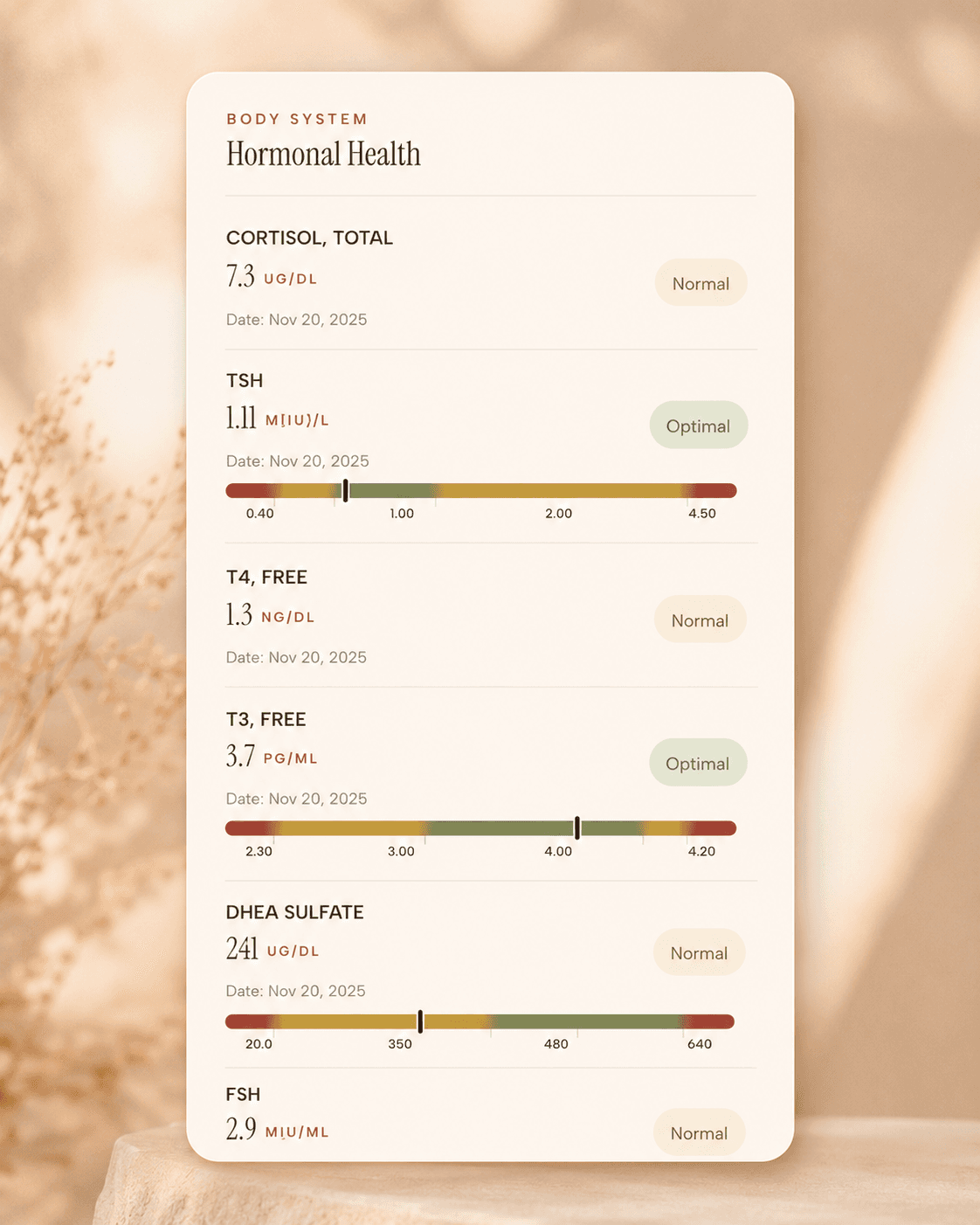
Cortisol is the primary stress hormone that regulates metabolism, immune function, and blood pressure. In functional medicine, cortisol assessment is crucial for understanding stress response and its impact on overall health. Chronic elevation suppresses testosterone production and immune function, while low cortisol indicates adrenal insufficiency. Optimal cortisol rhythm supports energy, mood stability, and hormone balance. Cortisol orchestrates the body's stress response and daily energy rhythms. Balanced cor…
Learn moreLab testing
Check fasting insulin, ferritin, and HbA1c at Quest
starting from $99 panel with 100+ tests, one visit
No referral needed
About 1 week
Schedule online — results typically within a week
Clear next steps
Guidance included, with follow-up care available
HSA / FSA
Eligible for pre-tax health spending accounts
Pro Tips
Try a one-week “refuel test”: after every workout, eat 25–35 g protein plus a fist-sized carb source within 60 minutes, and rate your cravings later that day from 1–10 to see if the pattern changes.
If sugar cravings hit on the drive home, keep a planned option in your bag or car, like a protein shake and a banana, so you are not relying on gas-station decisions when your brain wants fast glucose.
If cravings are worst after HIIT, do the same total weekly exercise time but shift two sessions to zone-2 cardio (you can talk in sentences). Many people notice cravings calm down before their fitness drops.
If you sweat heavily, weigh yourself before and after a long workout once. If you are down more than about 2% of body weight, you likely need more fluids and electrolytes to prevent “hunger” that is really dehydration.
If you suspect low iron, do not start high-dose supplements blindly. Get ferritin checked first, because the right dose and duration depend on how low you are and whether you are also anemic.
Frequently Asked Questions
Why do I crave sugar after a workout?
Sugar cravings after exercise often mean your available fuel ran low, so your blood sugar dipped and your brain is pushing you toward the fastest energy source. It can also happen when a hard session keeps stress hormones high, which makes quick carbs feel extra rewarding. Try a carb-plus-protein snack within 30–60 minutes after training and see if the craving becomes less urgent.
Is it normal to be ravenously hungry after exercise?
It can be normal, especially after long endurance sessions or if you trained in a calorie deficit, because your body is trying to restore muscle glycogen and repair tissue. It is less “normal” when hunger feels panicky, leads to bingeing, or happens after short workouts that should not deplete you. If it keeps happening, track what you ate before and after training for a week and adjust refueling first.
Can cravings after exercise mean low blood sugar?
Yes. A post-workout dip can feel like shakiness, sweating, anxiety, or a sudden need to eat right now, and it is more likely if you trained fasted or did intense intervals. If you have diabetes or use glucose-lowering meds, treat symptoms of low blood sugar promptly and talk to your clinician about safe exercise fueling. If you do not have diabetes, consider checking HbA1c and fasting insulin if the pattern is frequent.
What should I eat after a workout to stop cravings?
Most people do best with protein plus carbs, because protein supports repair while carbs replace muscle fuel and reduce the “keep searching” hunger signal. A practical target is roughly 25–35 g protein with a moderate carb portion, adjusted up for longer sessions. If cravings are still intense, increase carbs on training days rather than cutting them further.
Which lab tests help explain post-workout cravings?
HbA1c helps you see your longer-term blood sugar trend, fasting insulin can point toward insulin resistance that drives swings and cravings, and ferritin checks iron stores that affect fatigue and “quick energy” seeking. If your A1c is above about 5.3% or fasting insulin is persistently elevated, it is worth discussing a blood-sugar stabilization plan. If ferritin is low, treating iron deficiency can make workouts feel easier and cravings less intense.
What Research Says About Appetite
Exercise reduces acylated ghrelin and can temporarily suppress appetite (systematic review and meta-analysis)
Physical activity and appetite control: how exercise influences energy intake and regulation (review)
American Diabetes Association Standards of Care: guidance on glycemic targets and interpreting HbA1c