01
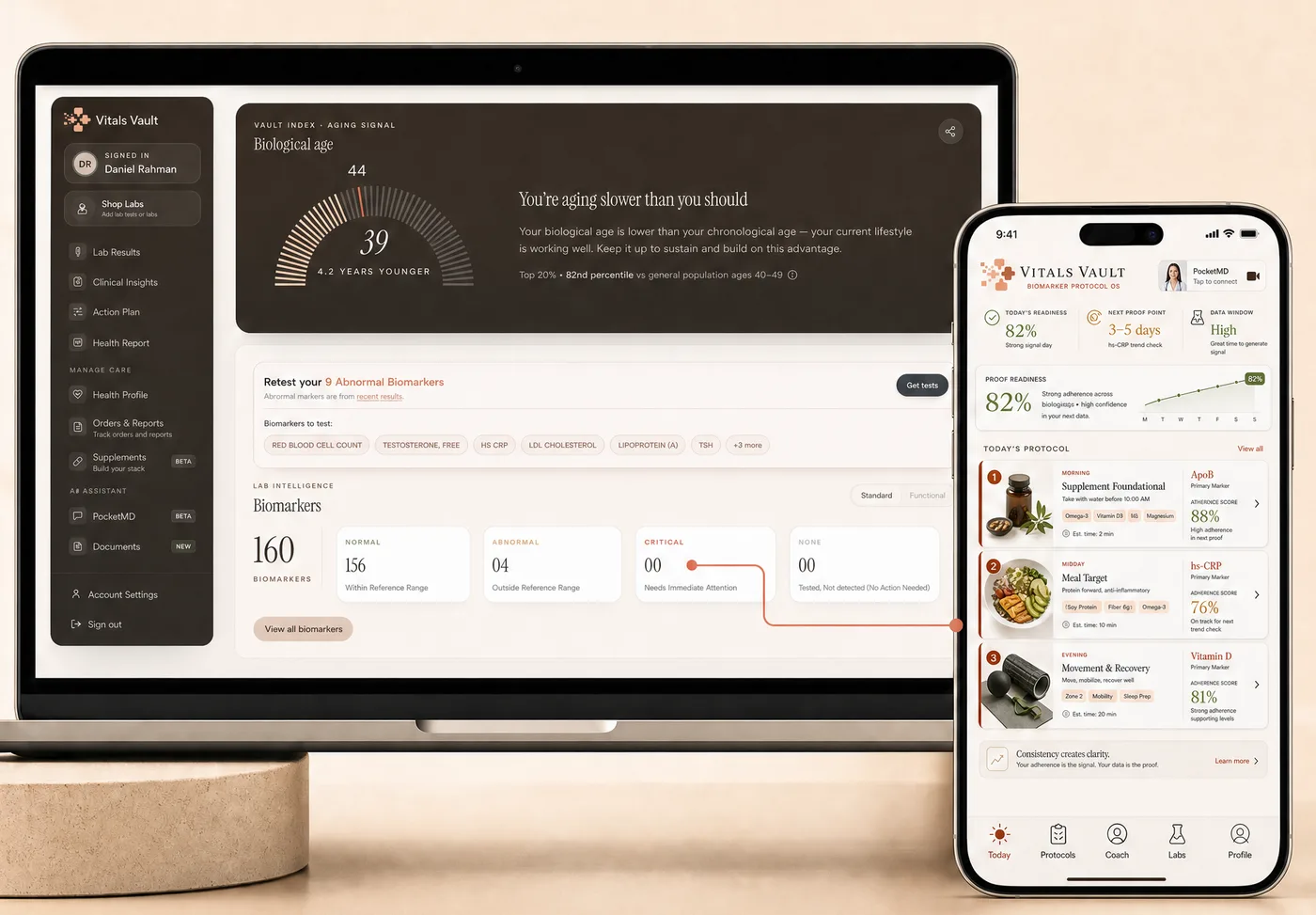
Biological age
Find out if your body is aging faster or slower than your actual age — and see how you rank against the general population.
39
Biological age
44
Actual age
4.2
Years younger
Vitamin B12 & Folate
Results in about 1–2 days
Vitamin B12 And Folate Blood Test Panel: B12 status, folate status, and anemia patterns in one draw. This Vitamin B12 and Folate blood test panel checks B12, folate, and related anemia markers so you can interpret fatigue and deficiency patterns together.
This is a lab panel, meaning you get multiple related results in one blood draw. Instead of guessing whether “it’s B12” or “it’s folate,” this panel helps you see how B12 status, folate status, and common anemia patterns fit together—especially when symptoms are vague or your CBC looks only slightly off.
What to expect before and at your draw.
Sample Type
Blood
Collection Method
In person at a Quest Diagnostics location
Age
18+
This order includes the lab markers used for Vitamin B12 & Folate.
Vitamin B12
Included in this Quest Diagnostics order and reported in your Vitals Vault account.
Folate, Serum
Included in this Quest Diagnostics order and reported in your Vitals Vault account.
Order Vitamin B12 & Folate online.
Visit a Quest Diagnostics location near you for your blood draw. Appointments can be scheduled after checkout.
View easy-to-read results in your Vitals Vault account, with trends and a personalized action plan.
Included with every package
Function Health shows you numbers. Vitals Vault connects them — ratios, patterns, and a personalized action plan grounded in functional medicine.
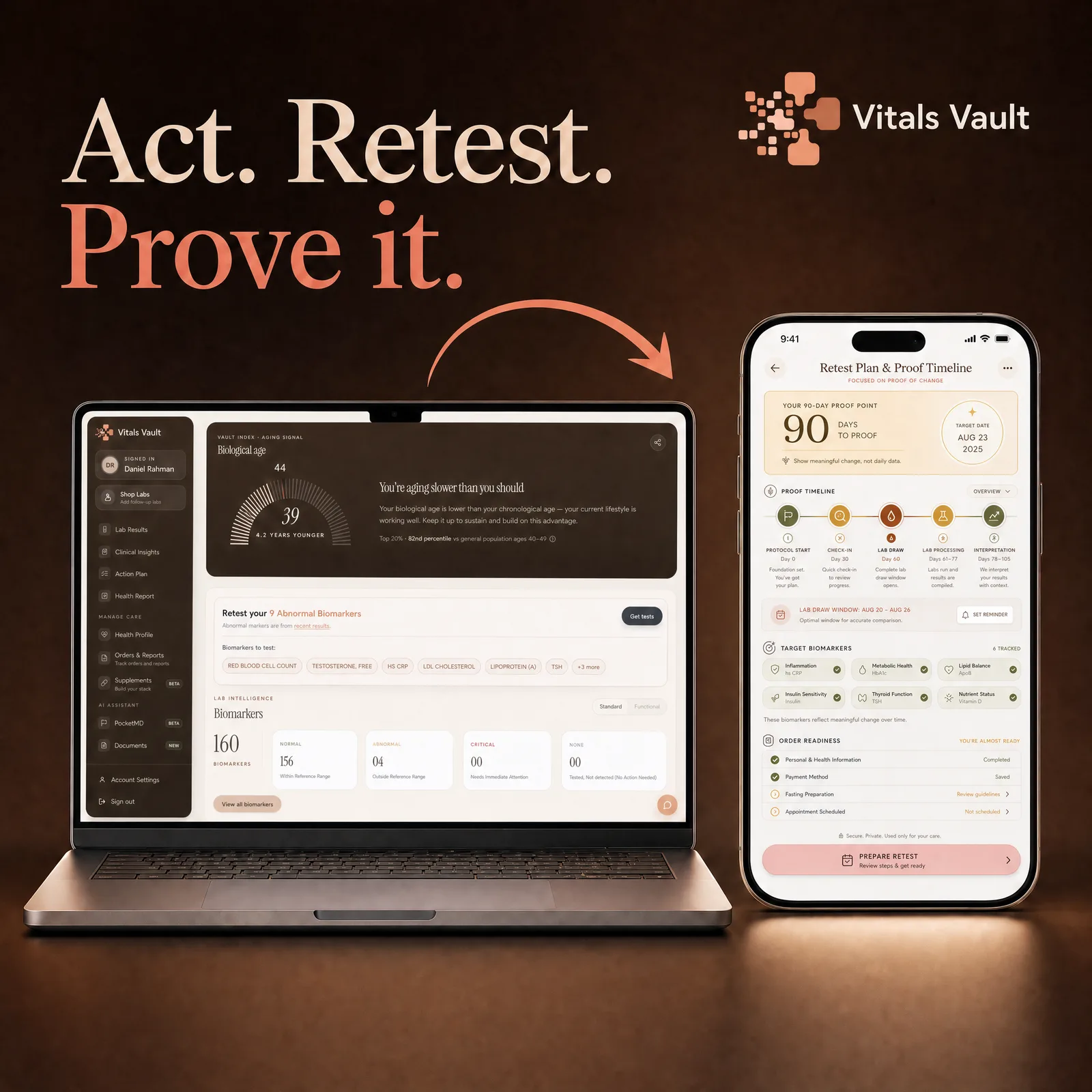
Find out if your body is aging faster or slower than your actual age — and see how you rank against the general population.
39
Biological age
44
Actual age
4.2
Years younger
Turn lab data into what to do next—clear guidance on follow-ups, lifestyle context, and add-on testing when you need to go deeper. Make the healthy choice the obvious one.
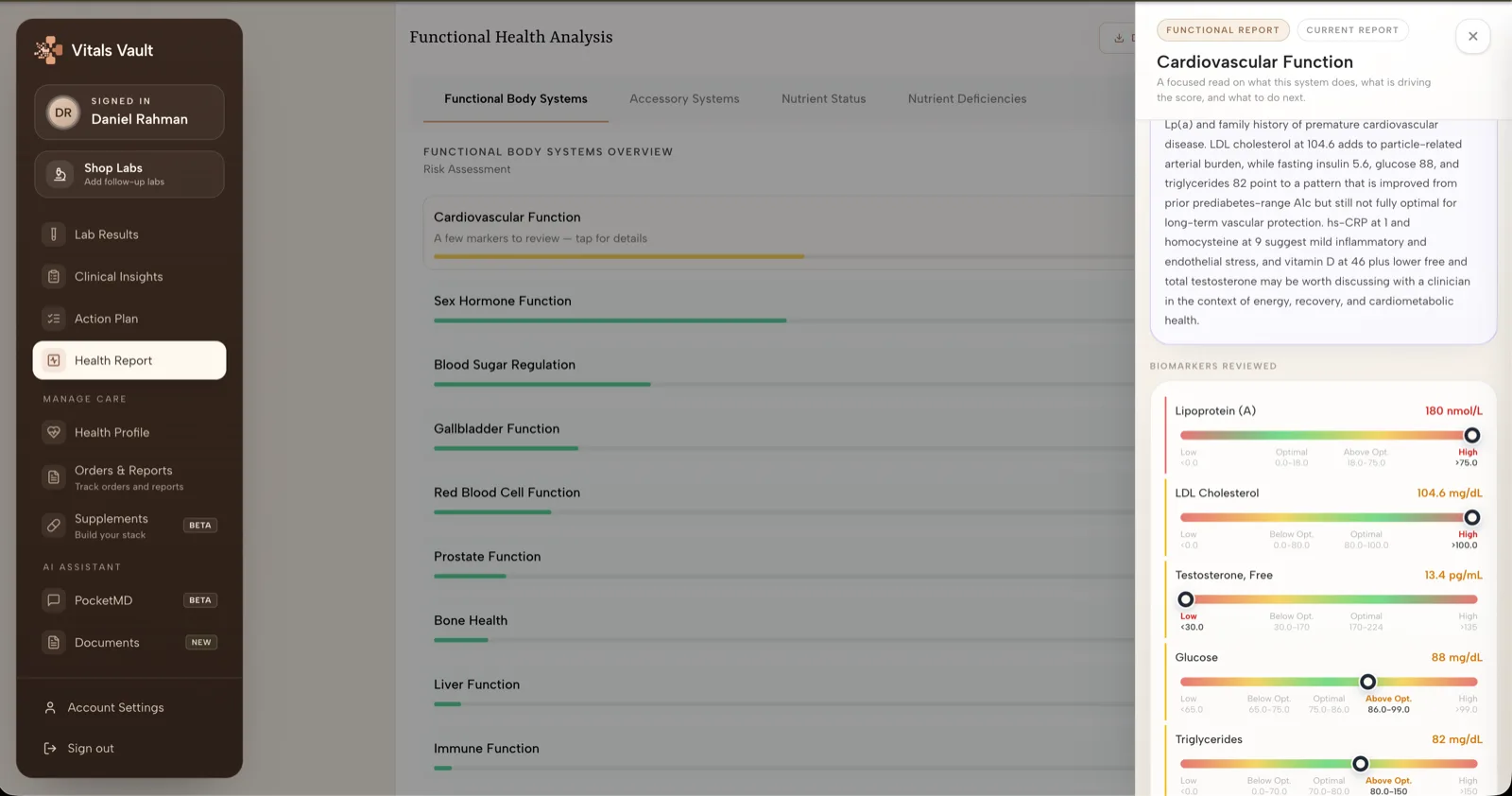
A personalized, plain-language walkthrough of your abnormal markers—reference ranges, pattern context, and what to watch next, grounded in your actual labs.
Personalized Insights
Clear Explanations
Actionable guidance
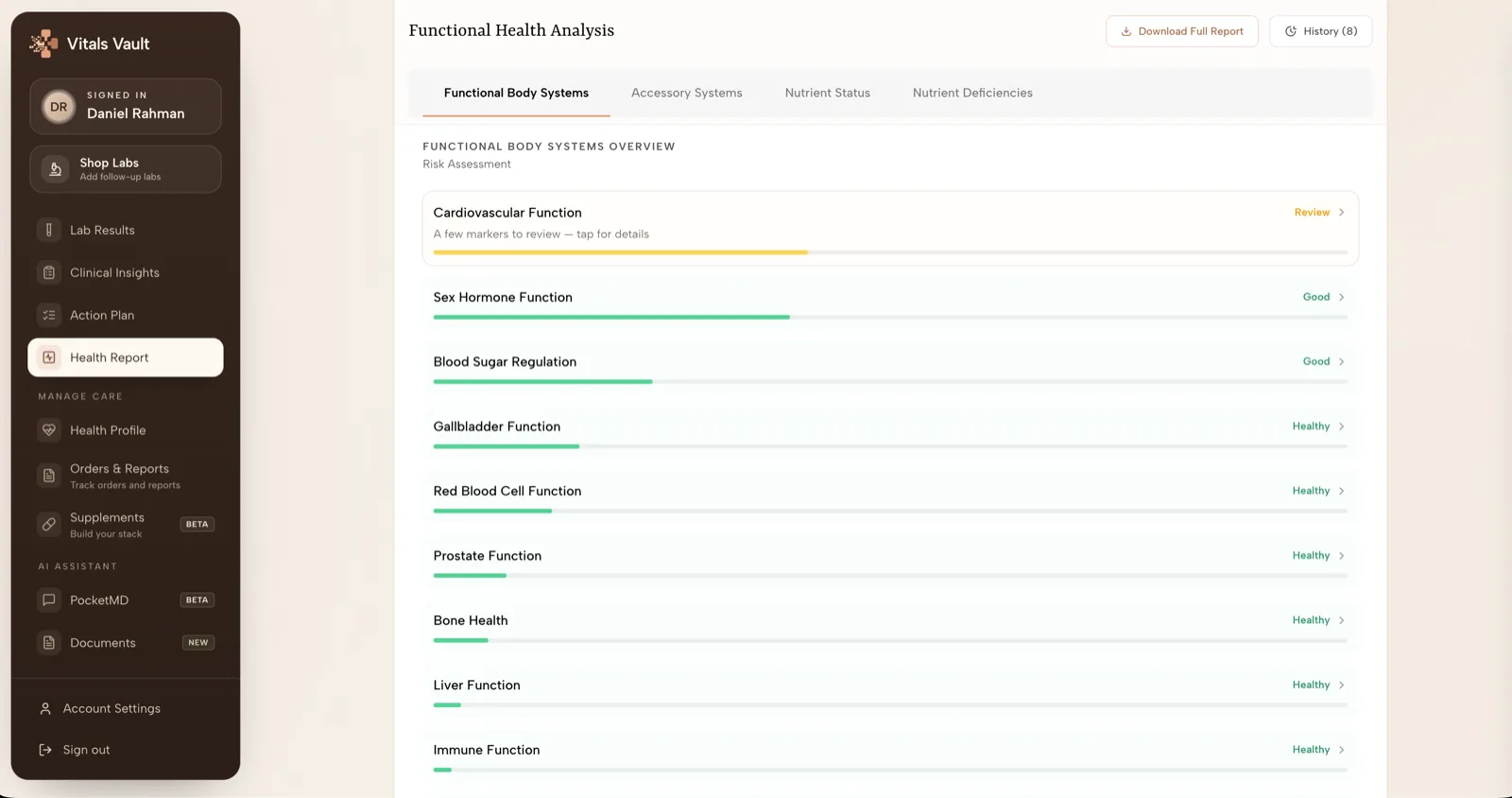
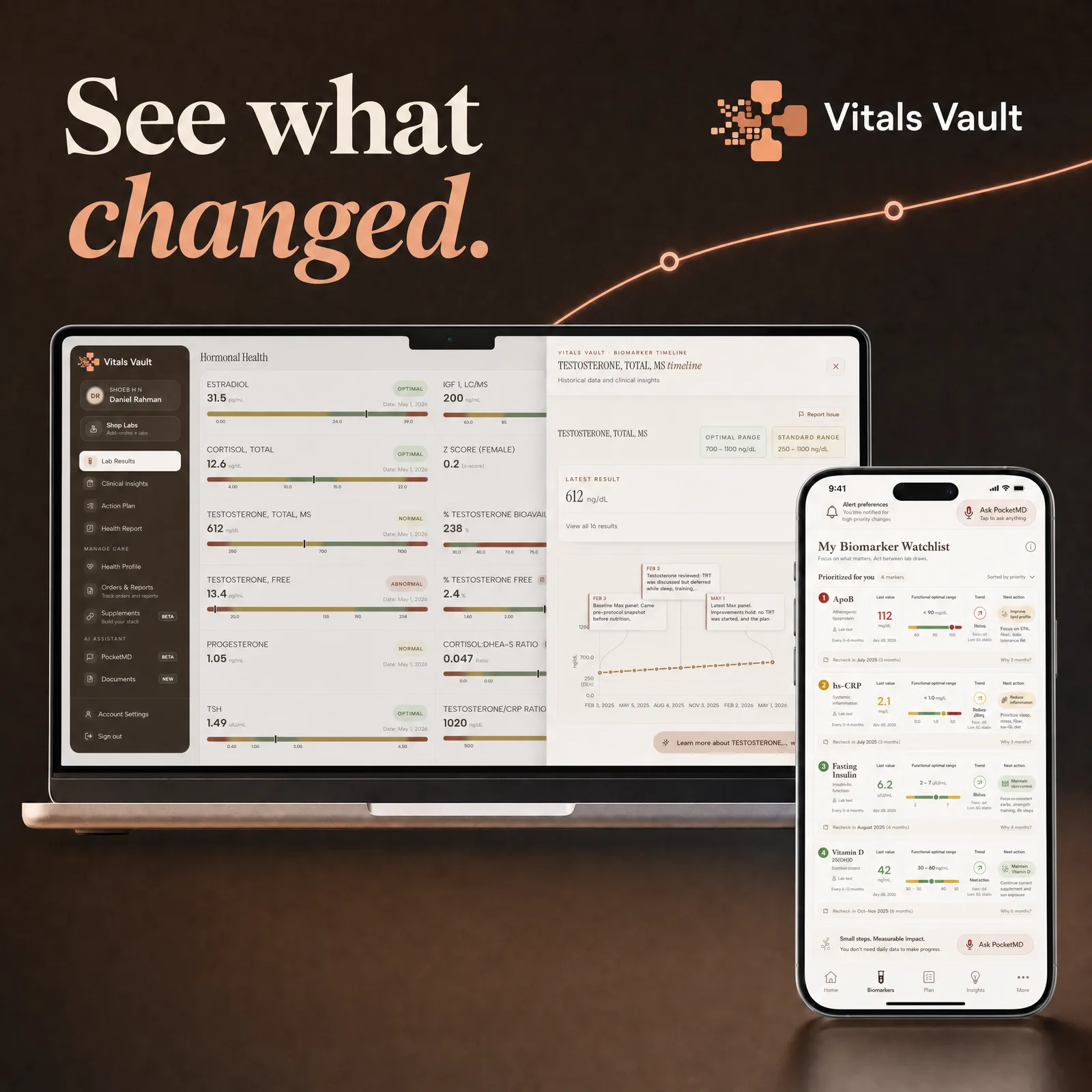
Explore your body systems with clear risk context — refresh your report, download the full PDF, and monitor hormones, heart, bone, and more in one place.
Explore hundreds of tests and panels, filter by concern, and manage your cart—member-exclusive pricing with quick checks and full-body options in one flow.
Wide test selection
300+ tests & panels available
Smart filtering
Find tests by symptoms or goals
Seamless ordering
Add to cart and manage easily
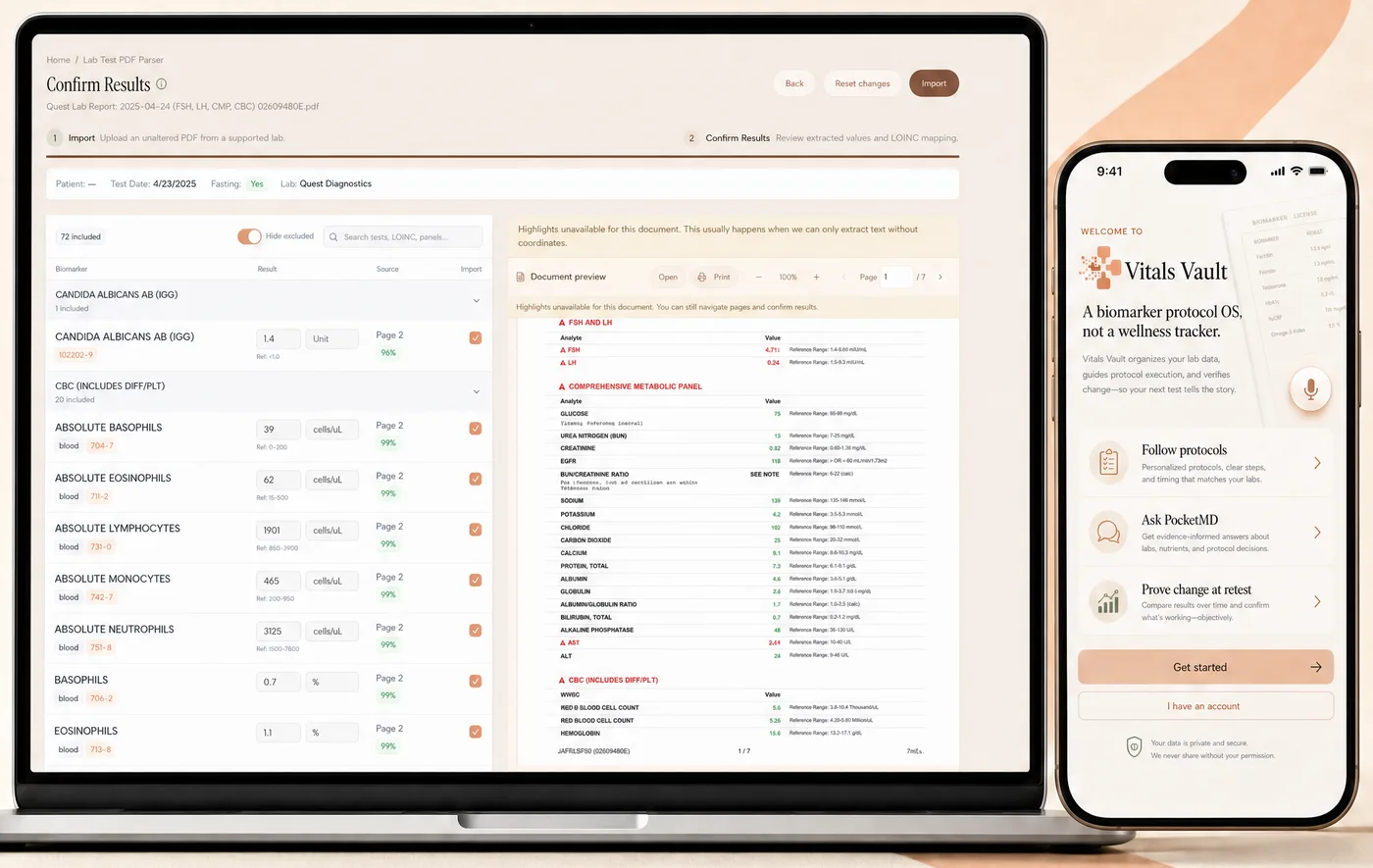
Upload past lab reports, search your documents, and keep appointments and results organized—our AI can extract biomarkers from PDFs so everything lives in one dashboard.
Browse longevity, nutrition, supplement, and movement protocols—structured plans you can follow with clear habits, labs, and targets tied to your profile.
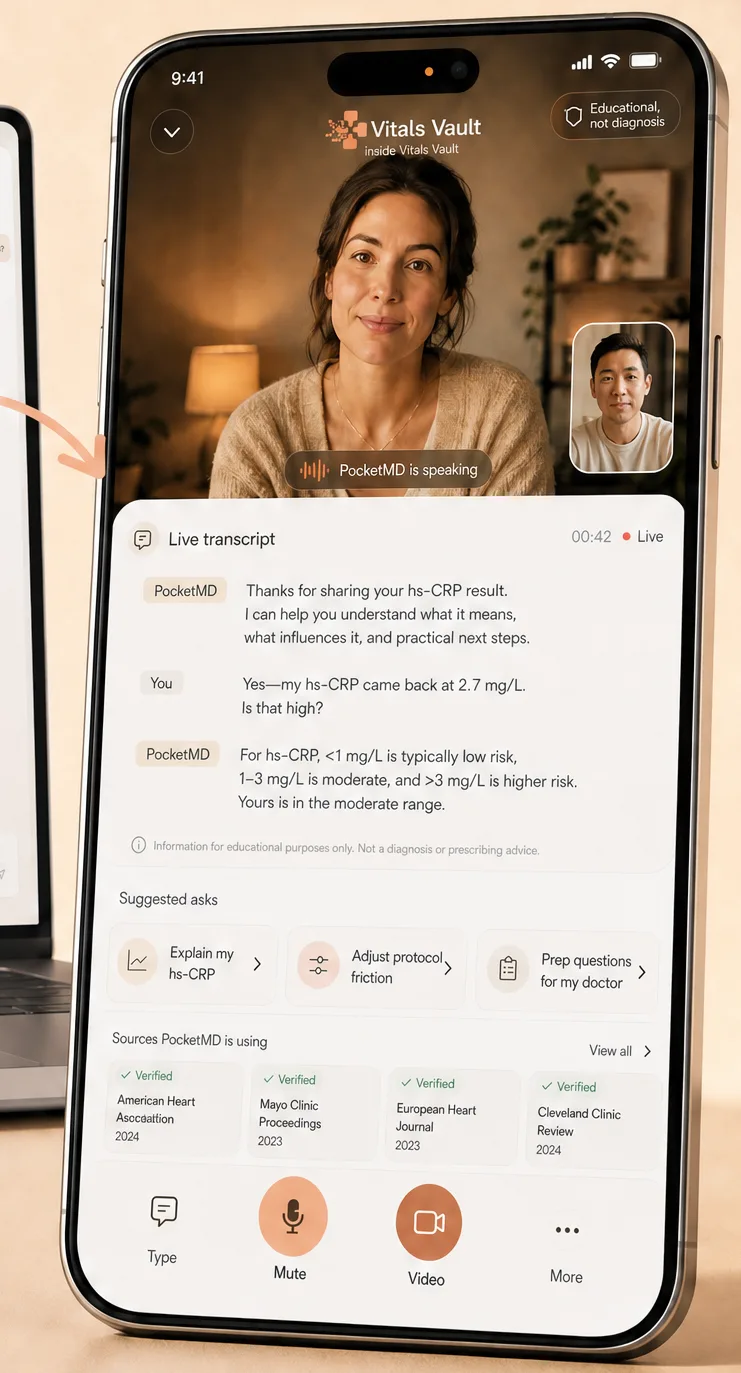
Ask for protocols, nutrition plans, supplement stacks, and education—context-aware suggestions powered by your labs and goals (beta experience).
Order online
Add Vitamin B12 & Folate to your cart and check out. No doctor referral is required.
Visit a Quest lab
Provide your blood sample at a Quest Diagnostics location. Appointments can be scheduled after checkout.
Review in Vitals Vault
Results in about 1–2 days. They stay in your Vitals Vault account for trends and follow-up.
No special preparation is usually needed unless noted at checkout.
This order includes the lab markers used for Vitamin B12 & Folate and reported in your Vitals Vault account.
Results
Results in about 1–2 days
HSA/FSA
Accepted
Who takes it
Must be taken by the purchaser
Preparation
No special preparation needed unless noted at checkout.
This Vitamin B12 and Folate blood test panel checks B12, folate, and related anemia markers so you can interpret fatigue and deficiency patterns together.





This is a lab panel, meaning you get multiple related results in one blood draw. Instead of guessing whether “it’s B12” or “it’s folate,” this panel helps you see how B12 status, folate status, and common anemia patterns fit together—especially when symptoms are vague or your CBC looks only slightly off.
You may want a Vitamin B12 and Folate panel if you have fatigue, low stamina, brain fog, numbness or tingling, mouth sores, or unexplained mood changes—especially when these symptoms persist despite good sleep and training adjustments.
This panel is also useful if you follow a restrictive diet (vegan/vegetarian, very low-calorie, limited animal foods), have heavy menstrual bleeding, are pregnant or trying to conceive, or have digestive issues that can reduce absorption (for example, chronic gastritis, celiac disease, inflammatory bowel disease, or a history of bariatric surgery).
If you are already supplementing, the panel can help you avoid “false reassurance” from a single number. For example, serum B12 can look acceptable after supplements while functional markers still suggest your tissues are not getting what they need.
Your results are most helpful when you review them with a clinician who can connect symptoms, diet, medications, and medical history. This panel supports clinician-directed care; it is not meant for self-diagnosis.
Methods and reference ranges vary by lab; interpretation should focus on patterns across the panel and your clinical context rather than any single cutoff.
from $18.99 at Quest Diagnostics
Results in days
Clear next steps
HSA / FSA
Vitals Vault makes it straightforward to order a nutrient-focused lab panel and get a clear, practical interpretation path. You can use this panel to check B12 and folate status alongside common blood-count clues that point toward (or away from) deficiency-related anemia.
After your blood draw, you can review your results in one place and use PocketMD to ask targeted questions like whether your pattern fits B12 deficiency, folate deficiency, mixed causes, or something unrelated to these vitamins.
If you are correcting a documented deficiency, this panel can also be used for follow-up testing to confirm that your repletion plan is working and that your blood counts are moving in the right direction.
If your results suggest a broader issue (for example, iron deficiency patterns, inflammation, or multiple micronutrient gaps), you can expand testing with related bundles rather than ordering one-off markers repeatedly.
The Vitamin B12 And Folate panel is a bundled set of blood tests that looks at your vitamin B12 status and folate status, plus related markers that help interpret whether those vitamins are affecting red blood cell production and cellular metabolism.
Vitamin B12 (cobalamin) and folate (vitamin B9) work together in DNA synthesis and red blood cell formation. When one is low, your bone marrow may produce fewer red blood cells or larger-than-normal red blood cells (macrocytosis). Both nutrients also influence neurologic function and methylation pathways, which is why deficiency can show up as fatigue, cognitive changes, mood symptoms, or nerve-related symptoms.
A key reason this is a panel (not a single test) is that individual markers can be misleading. Serum B12 can rise quickly after supplements without guaranteeing adequate tissue delivery. Folate status can look normal in serum while longer-term stores are low. And anemia patterns can be subtle—sometimes “almost normal”—especially early on or when multiple factors (iron status, inflammation, thyroid disease, alcohol intake, medications) are also in play.
By combining vitamin measurements with functional and blood-count context, the panel helps you and your clinician decide whether the next step is dietary adjustment, targeted supplementation, evaluation for absorption problems, medication review, or looking beyond B12/folate altogether.
B12 and folate deficiencies can overlap in symptoms and can both contribute to macrocytic anemia. Testing them together reduces the chance that you treat the wrong deficiency or miss a combined problem. It also matters because high folic acid intake can improve anemia labs while neurologic issues from B12 deficiency continue, so pairing results helps keep interpretation safer.
Some markers reflect what is circulating in your blood at that moment (which can be influenced by recent supplements), while others reflect downstream metabolic effects. Functional markers such as methylmalonic acid (MMA) and homocysteine can add clarity when B12 or folate results are borderline, when symptoms are out of proportion to a single lab value, or when you want confirmation that repletion is actually correcting the underlying physiology.
A “low” pattern on this panel usually means one or more vitamin markers are low (B12 and/or folate) and the supporting context points in the same direction. Common supportive clues include elevated MMA (more specific for B12-related cellular deficiency), elevated homocysteine (can rise with either B12 or folate deficiency), and CBC changes such as low hemoglobin/hematocrit or higher MCV (larger red blood cells). If your CBC is still normal, low or borderline vitamin markers with elevated functional markers can still be meaningful—especially if you have neurologic symptoms, restrictive intake, or absorption risk. Your clinician may also consider whether the pattern fits diet-related deficiency versus malabsorption (for example, chronic acid suppression, pernicious anemia risk, or GI disease).
An “optimal” pattern typically means B12 and folate markers are in range and functional markers do not suggest a cellular shortfall, while the CBC does not show macrocytosis or anemia consistent with these deficiencies. If you still feel unwell, this pattern makes it less likely that B12/folate deficiency is the primary driver, and it can help you pivot your investigation toward other common contributors (iron status, thyroid function, sleep, training load, inflammation, medication effects, or other micronutrients). If you are supplementing, an optimal pattern can also support maintaining a lower, maintenance-style dose rather than escalating without a clear need.
High serum B12 or high folate often reflects supplementation or fortified foods, and it does not automatically mean “too much” in a harmful sense. The more important question is whether functional markers and blood counts look healthy. For example, a high serum B12 with elevated MMA can happen when blood levels are high but tissue utilization is still impaired, or when there is an underlying condition affecting binding/transport; this is a pattern to review with a clinician rather than assuming you are fully replete. High folate with low or borderline B12 deserves careful interpretation because folate can partially correct anemia labs while B12-related neurologic risk persists. If your CBC shows macrocytosis or anemia despite high vitamin levels, your clinician may look for non-nutrient causes (alcohol use, liver disease, hypothyroidism, certain medications, bone marrow disorders) and may recommend additional testing.
Recent supplements (oral, sublingual, injections), fortified foods, and multivitamins can raise serum values quickly and may not reflect long-term stores. Medications can shift results and risk: metformin and acid-suppressing drugs can reduce B12 absorption over time; certain anticonvulsants and methotrexate can affect folate pathways; and heavy alcohol intake can contribute to macrocytosis independent of vitamin status. Pregnancy and rapid growth states increase folate needs. GI conditions (celiac disease, inflammatory bowel disease), bariatric surgery, and autoimmune gastritis/pernicious anemia can impair B12 absorption. Finally, timing and context matter: interpreting B12/folate alongside MMA, homocysteine, and CBC patterns is usually more informative than focusing on one number in isolation.
Fasting is not always required for B12 and folate testing, but requirements can vary by lab and by any add-on tests included with your order. If you can, an overnight fast can reduce variability for some markers and makes it easier to add other labs later. Follow the collection instructions provided with your order.
This is common. Serum B12 or serum folate can look “normal” while functional markers (MMA or homocysteine) suggest a problem, or vice versa. The most useful approach is to interpret the pattern: vitamin levels plus functional markers plus CBC indices (like MCV and RDW) and your symptoms, diet, and medication history.
Serum folate reflects more recent intake and can change quickly with diet or supplements. RBC folate reflects folate incorporated into red blood cells and is often considered a better indicator of longer-term folate status. Your clinician may weigh them differently depending on your situation.
Yes. Supplements can raise serum B12 and folate quickly. That can be helpful, but it can also make a single serum value less representative of tissue status. Functional markers (especially MMA for B12) and CBC patterns can add context when supplementation is in the mix.
It evaluates anemia patterns related to B12/folate and provides CBC context, but anemia has many causes. If your results suggest anemia or if symptoms persist, your clinician may recommend additional tests such as iron studies (ferritin, iron, TIBC/transferrin saturation), inflammation markers, kidney function, thyroid testing, or other micronutrients.
Retesting depends on severity, the form and dose of supplementation, and whether absorption is impaired. Many people recheck within weeks to a few months to confirm the pattern is improving. If you are treating a documented deficiency or neurologic symptoms, follow your clinician’s timeline rather than relying on a generic schedule.
If you are trying to understand symptoms or borderline results, the panel is often more informative because it includes complementary markers that help explain why a single number might be misleading. If you are doing simple maintenance monitoring with a clear prior diagnosis and stable plan, your clinician may choose fewer tests.
Purchase online through Vitals Vault. A licensed clinician reviews and approves your order, then you receive a digital requisition for a Quest Diagnostics blood draw.
Samples are collected in person at Quest Diagnostics locations nationwide. After checkout you can schedule your visit at a convenient site.
Most results in 3–5 business days. You can view them securely in your Vitals Vault account.
No separate referral appointment is required. Clinician review is included in the online order flow.
Yes. Eligible HSA/FSA cards can be used at checkout for qualifying lab orders.
Results are available in your secure Vitals Vault account. You control who you share them with, subject to applicable law.
Blood glucose shows the amount of sugar in your blood at a single moment. A1c (hemoglobin A1c) estimates your average blood sugar over roughly the past 8–12 weeks. Comparing them helps explain whether your long-term average lines up with your fasting glucose on draw day.
It helps you understand how this marker fits into your broader metabolic picture, with results tracked in your Vitals Vault account.
Elevated values can signal higher metabolic risk. Many people start with nutrition, activity, sleep, and weight management, then retest and review results with a clinician. This test is educational and does not replace medical advice or diagnosis.
Your sample is processed at CLIA-certified Quest Diagnostics laboratories. Results should still be interpreted with a qualified clinician alongside your history, symptoms, and other labs.
Consumer-initiated testing through Vitals Vault is limited to adults 18+ so ordering and interpretation stay aligned with clinical best practices for this channel.